Last updated 2026-07-26
TL;DR
The best duck food plots use moist-soil plants like Japanese millet and chufa, or flooded row crops like corn and grain sorghum. Plant summer annuals in late spring, flood in early fall as birds migrate south, and always check your state's baiting rules before hunting over any planted field.
what is a food plot, and how is a duck plot different from a deer plot
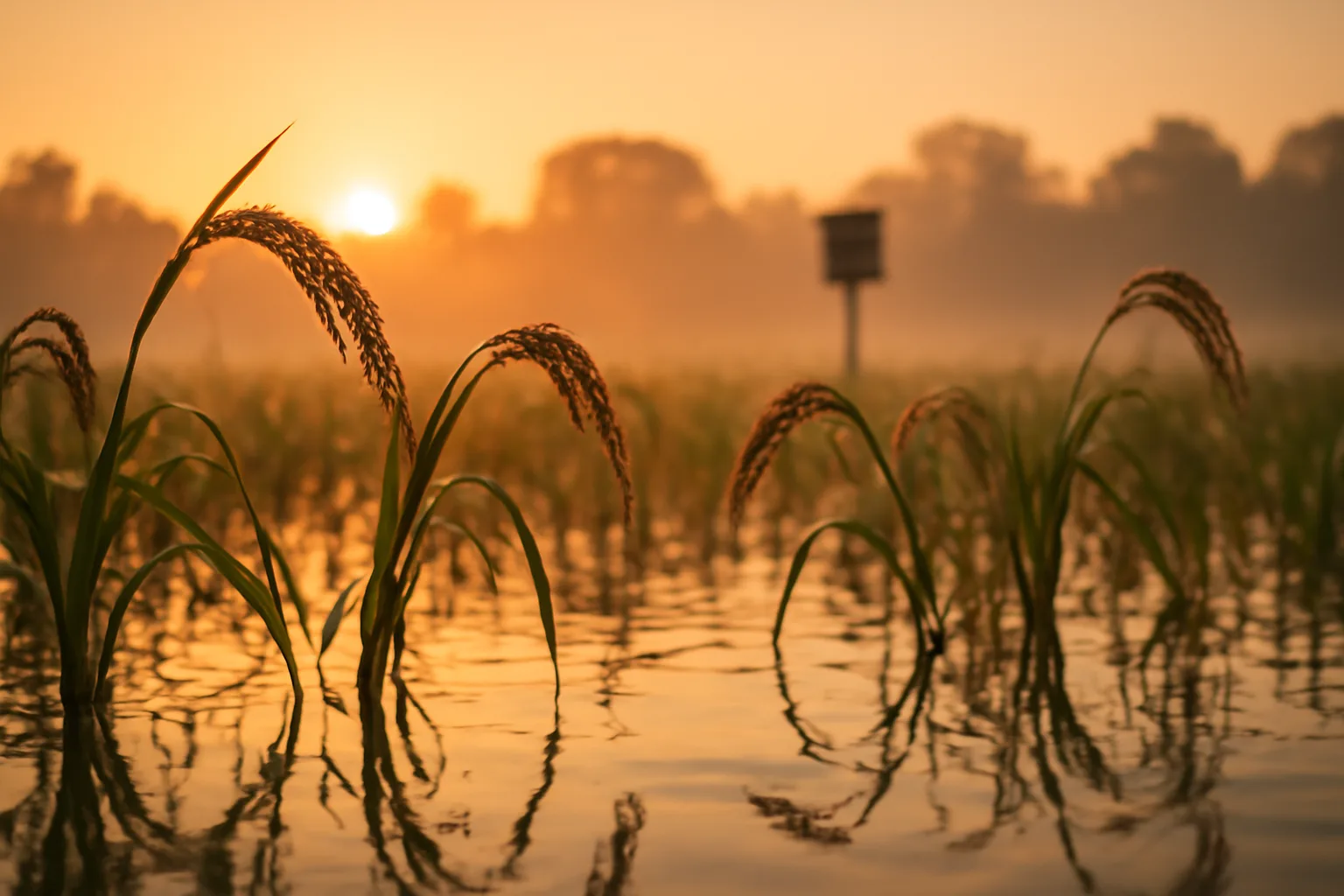
A food plot is just a planted area meant to feed wildlife and, usually, hold them close enough to hunt legally. For deer, that's clover, brassicas, or cereal grains growing in a dry field. For ducks, the plot only works once it's underwater. Duck hunters aren't managing standing forage the way a deer hunter does. You're growing a seed crop, letting it mature, then flooding it shallow (2 to 12 inches usually) so dabbling ducks can tip up and feed on the flooded grain or waste seed. Mallards, teal, wood ducks and pintails all feed this way in flooded fields, moist-soil units, and shallow impoundments. The U.S. Fish and Wildlife Service and state agencies that manage waterfowl refuges rely on exactly this model: plant, let it seed out, flood it in fall. Many public wildlife management areas run their moist-soil units and green-tree reservoirs on this same cycle [1]. A private duck plot on leased or owned ground works the same way, just smaller and privately managed. If you're new to plots generally and want the deer-side comparison, see food plot whitetail for how dry-ground plots differ in purpose and timing.
what are ducks' favorite foods in a planted plot
Dabbling ducks key in on a short list of high-energy seeds: millet, smartweed, corn, milo (grain sorghum), and the tubers of sedges like chufa. Diving ducks favor submerged aquatic vegetation and invertebrates more than upland seed crops, so most planted duck plots are built for puddle ducks like mallards, wood ducks, gadwall, and teal. Japanese millet (Echinochloa esculenta) is probably the single most planted duck food in the South and Midwest. It germinates fast, tolerates wet soil, matures in 60 to 90 days, and produces seed heads ducks love once flooded [2]. Browntop millet works similarly on a slightly faster timeline. Chufa (Cyperus esculentus), a sedge that produces underground tubers, is a favorite of wood ducks and teal, and turkeys eat the tubers too. It needs to be planted in well-drained soil and doesn't like standing water during the growing season, only at flood-up. Corn and grain sorghum (milo) are heavier lifts agronomically (more fertility, more equipment, more time) but hold huge amounts of energy per acre, which is why refuge and WMA moist-soil programs often rotate them with millet and native smartweed [1]. Smartweed (Polygonum spp.) is a native moist-soil plant many managers don't plant at all. It shows up on its own when you draw down water and disturb the soil in spring, then reflood in fall. Some of the best duck food out there costs nothing but water control.
do deer eat sorghum
Yes. Grain sorghum (milo) is eaten by deer as well as ducks, turkeys, and dove, which is part of why it shows up on multi-species food plot lists. Whitetails browse the leaves and stalks some in summer, then hit the grain heads hard once they mature and dry down in fall [3]. That overlap matters for mixed-use ground. A sorghum field planted for a duck impoundment will also draw deer before you ever flood it, especially in ag-heavy areas where deer already key on grain crops. If you're running a property with both deer and duck goals, sorghum planted on the high end of a field (out of the flood zone) can double as a fall deer draw before water goes on the low end. Sorghum needs a full growing season, decent fertility, and warm soil to establish, similar to corn. It's not a low-input option. If your ground can't support corn agronomically, it usually can't support a good sorghum stand either.
do deer eat clover, and do deer like clover
Yes, and it's one of the most consistently preferred forages in whitetail diet studies. Clover is a legume, so it's high in protein (often 20 to 25% crude protein in vegetative growth) and deer hit it hard spring through fall as long as it's kept mowed and isn't overgrown. Clover isn't a duck food, though. It's not moist-soil tolerant long-term and produces no seed head ducks use. If you're planning a property with both a duck impoundment and deer ground, clover belongs on the dry upland acres, not in the flood zone. For deer-specific clover strategy, see deer food plots and deer food plot seed for variety and seeding rate guidance.
when to plant food plots for deer vs when to plant duck plots
| Japanese millet | Late May to July | 60-90 days | Flood late Sept-Oct | |
|---|---|---|---|---|
| Browntop millet | Late May to June | 60-70 days | Flood Sept-Oct | |
| Chufa | May to June | 90-120 days | Flood Oct-Nov | |
| Grain sorghum | Late May to June | 90-120 days | Flood Oct-Nov | |
| Corn | April to May | 100-120 days | Flood Oct-Nov | Timing shifts by 2 to 4 weeks depending on your zone and local frost dates, so check your state land-grant extension's planting calendar rather than a national one. |
These run on different clocks, which is exactly why properties with both deer and duck goals need two planting windows, not one. Deer food plots split into spring plantings (clover, chicory, some brassica blends) from March through May depending on zone, and late-summer plantings (brassicas, cereal grains, more clover) from late July through September, timed so forage is peaking when hunting season opens [4]. Extension guidance from Mississippi State and Penn State both anchor fall plot timing to roughly 6 to 10 weeks before first frost for brassicas, and August into early September for cereal grains in most of the whitetail's range [4]. Duck plots run on a summer annual schedule tied to flood-up, not hunting season opening day. You plant in late spring once soil warms (millet needs soil around 65°F to germinate reliably), let the crop mature over the summer, then flood in September or October as summer draws down and migration starts. The goal is standing, seeded-out grain under a few inches of water by the time birds arrive, not a green plot on opening day. | Crop | Plant window | Days to maturity | Flood/harvest timing |
when to plant oats for deer
Oats are a fall planting in most of the whitetail's range, going in the ground anywhere from late August in northern zones to mid-October in the Deep South, generally 6 to 8 weeks before your first killing frost so they can establish before growth slows [4]. Oats aren't part of a duck plot plan. They're a cool-season cereal grain grown dry, grazed green by deer through fall and into winter in milder climates, and they winterkill in the coldest zones (oats generally survive down to about 20°F before serious damage, though hardened plants can take brief colder snaps). If you want the deer side of cereal grain timing broken down by region, food plot seed and deer for food cover blend options and regional adjustments.
when to plant turnips for deer
Turnips go in from mid-July to early September depending on zone, generally 80 to 90 days before your average first frost, since they need that long to bulb up and reach peak palatability after a frost sweetens the starches into sugars [4]. Like oats, turnips have nothing to do with a duck plot. They're a dry-ground brassica for deer, and the frost-triggered sugar conversion is well documented by extension research on brassica forage quality [4]. Deer often ignore turnip bulbs early in the season and hit them hard after the first hard freeze, which is why late planting windows matter more for brassicas than almost any other deer plot species.
do deer like honey (honey locust and honey-based deer attractants)
If the question is about honey locust trees, yes, deer readily eat the sweet pods that drop from honey locust (Gleditsia triacanthos) in fall, and the tree is sometimes managed or planted specifically as a mast source in the Southeast and Midwest [5]. If the question is about honey itself, or honey-scented mineral/attractant products, there's no solid research showing deer are drawn to honey as a food source the way they're drawn to acorns, clover, or corn. Most 'honey' scented attractants on the market lean on sugar content and scent, not any documented deer preference for honey specifically. None of this applies to duck plots. Honey locust and honey attractants are deer-specific curiosities, unrelated to what you'd plant in a flooded impoundment.
how much water does a duck plot actually need
Most managed duck impoundments flood 2 to 12 inches deep, with 4 to 8 inches being the sweet spot for dabbling ducks like mallards and teal to feed comfortably by tipping up [1]. Deeper water past about 18 inches puts seed out of reach for puddle ducks and shifts the field toward diving duck use instead. You need water control to do this right: a levee, a flashboard riser or similar structure, and a way to draw the water back down in spring so you can plant again. This is infrastructure, not seed selection, and it's usually the most expensive part of building a duck plot from scratch. Many state wildlife agencies and NRCS wetland programs offer cost-share for exactly this kind of water control structure on private land, since it mimics natural moist-soil wetland function . If you don't have levee and water control capacity, you're better off managing a natural moist-soil unit (mowing or disking in spring to encourage native smartweed and grasses, then flooding what comes up naturally) than trying to force a planted crop without the ability to hold water on it.
do you need a permit or is baiting a concern with duck plots
This is the part duck hunters can't skip. A legitimately planted and flooded crop, left to grow and mature naturally, is legal to hunt over under federal law. But the line between a legal food plot and illegal baiting is strict and federally enforced. Under federal migratory bird regulations, it is illegal to hunt waterfowl over bait, defined as any area where salt, grain, or other feed has been placed, exposed, deposited, distributed, or scattered to lure or attract birds, if you know or reasonably should know bait is present. The regulation specifically states that normal agricultural planting, harvesting, and manipulation of a crop is not baiting, as long as it follows 'official recommendations of state extension specialists' for that planting or harvest practice . That exception is doing a lot of work, and it's exactly why matching your practice to your state extension's actual published guidance matters. Mowing, disking, flooding, or burning a crop in a way that doesn't match normal agricultural practice for that crop in your area can turn a legal field into an illegal baited one. Rules and enforcement guidance also vary by state on top of the federal baseline, so check your state wildlife agency's current waterfowl regulations before you flood anything you plan to hunt over . If you're at all unsure whether a manipulation (early mowing, spreading harvested grain, etc.) crosses the line, call your state agency's law enforcement division or a USFWS office before the season, not after.
building a mixed deer-and-duck property plan
Plenty of properties have both wet bottomland suited to ducks and upland acres suited to deer. The mistake is planning them as one plot instead of two systems with different soil, water, and calendar needs. Start with a soil test on both the upland deer ground and the impoundment area separately; pH and fertility needs differ (millet and sorghum tolerate more variable pH than clover, which wants closer to 6.0 to 6.5 for good nodulation) [3]. Your soil test lab's recommendation is the actual authority here, not a generic number pulled off the internet, since regional lime and fertilizer needs vary by soil type. A $99 one-time Custom Food Plot Plan from PlotSeason (built at /plot-plan-builder) can lay out species, timing, and seeding rates for your specific zone and acreage if you'd rather not piece together extension bulletins from three different states. It's general planning guidance based on your inputs, not a site visit or a substitute for your soil test lab's lime and fertilizer recommendations. For the deer side of a mixed property, deer food plot seed and domain food plot seed cover variety selection by region in more depth than this article can.
Frequently asked questions
Do deer eat sorghum?
Yes. Deer eat grain sorghum (milo) leaves and stalks through summer and hit the mature grain heads hard in fall, similar to corn. It's also a strong duck food when flooded, making it a useful dual-purpose crop on mixed properties, though it needs a full warm season and decent fertility to establish well.
Do deer eat clover?
Yes, clover is one of deer's most preferred forages, often running 20 to 25% crude protein in vegetative growth. Deer graze it spring through fall as long as it's mowed and kept from going to seed heavily. It's a deer-only forage, though, not something you'd plant in a duck impoundment.
When should you plant food plots for deer?
Spring plots (clover, chicory) generally go in March through May depending on zone. Fall plots (brassicas, cereal grains) go in late July through September, timed 6 to 10 weeks before first frost so forage peaks around hunting season. Exact dates shift by 2 to 4 weeks based on your local extension's frost data.
Do deer like clover more than other food plot options?
Clover consistently ranks among the top preferred forages in deer diet studies, largely because of its high protein content. Preference varies by season and what else is available (acorns and ag crops can pull deer off clover temporarily), but as a season-long staple, clover is hard to beat for consistent use.
When should you plant oats for deer?
Oats go in as a fall cereal grain, typically 6 to 8 weeks before your first killing frost. That's late August in northern zones and into October in the Deep South. Oats winterkill in the coldest climates, generally suffering serious damage below about 20°F, so far-northern hunters often lean on wheat or rye instead.
When should you plant turnips for deer?
Turnips go in mid-July through early September, roughly 80 to 90 days before your average first frost. Deer often ignore the bulbs early and hit them hard after a hard freeze converts starches to sugar, so timing the planting to that frost window matters more than exact calendar dates.
What is a food plot?
A food plot is a planted area of forage or grain designed to feed wildlife, usually while also holding animals in range for legal hunting. Deer plots grow standing forage like clover or brassicas on dry ground. Duck plots grow a seed crop like millet or corn that's flooded shallow once mature.
What are deer's favorite foods?
Deer strongly prefer acorns when available, along with clover, soybeans, and other high-protein legumes and cereal grains. Preference shifts seasonally: brassicas and turnips become favorites after a hard frost sweetens them, while corn and grain crops draw heavily in fall. No single 'favorite' holds across every season and region.
Do deer like honey?
There's no solid research showing deer are drawn to honey itself as a food source. Deer do readily eat the sweet pods of honey locust trees in fall, which is sometimes confused with 'honey' preference. Most honey-scented deer attractants rely on general sugar appeal rather than any documented honey-specific preference.
What's the best food plot for ducks specifically?
Japanese millet is the most widely planted duck food because it establishes fast, tolerates wet soil, and matures in 60 to 90 days. Chufa, browntop millet, corn, and grain sorghum round out the common options, chosen based on your flood timing, soil drainage, and how much fertility and equipment you can put into the field.
Is it legal to hunt ducks over a planted food plot?
Yes, as long as the crop was planted, grown, and manipulated (mowed, disked, or flooded) using normal agricultural practices recommended by state extension specialists for that crop. Federal regulation prohibits hunting over bait, defined as grain or feed placed to lure birds, so manipulation outside normal practice can cross into illegal baiting.
How deep should you flood a duck plot?
Most managed impoundments flood 2 to 12 inches, with 4 to 8 inches being ideal for dabbling ducks like mallards and teal to tip up and feed comfortably. Water deeper than about 18 inches puts seed out of reach for puddle ducks and shifts the field toward diving duck use instead.
Can you plant the same field for deer and ducks?
Not really as one plot, but a bottomland property can run both: sorghum or corn on the flood-zone acres for ducks, with clover or brassicas on the drier upland acres for deer. Treat them as two separate plans with different soil tests, planting windows, and fertility needs rather than one blended plot.
Sources
- U.S. Fish and Wildlife Service, Moist-Soil Management on National Wildlife Refuges: Refuges and WMAs manage moist-soil units and flooded impoundments on a plant-then-flood cycle for waterfowl
- USDA Forest Service, Gleditsia triacanthos Plant Guide: Deer readily consume honey locust seed pods as a fall mast source
- USDA Natural Resources Conservation Service, Wetland Reserve Easements: NRCS offers cost-share programs for wetland and water control infrastructure on private land
- U.S. Fish and Wildlife Service, Migratory Bird Hunting Baiting Regulations, 50 CFR 20.21(i): Federal regulation defines baiting and exempts normal agricultural planting and harvest practices recommended by state extension specialists
- U.S. Fish and Wildlife Service, Waterfowl Hunting and Baiting Guidance: Hunters should confirm state-specific waterfowl baiting rules on top of the federal baseline before hunting a planted field