Last updated 2026-07-25
TL;DR
Michigan food plot seed choices depend on your zone and planting window. Brassicas and cereal grains go in late July through early September for fall use; clover and chicory go in spring or late summer. Frost dates run from mid-September in the Upper Peninsula to mid-October in the south, and that gap drives almost every planting decision in the state.
What is a food plot, exactly?
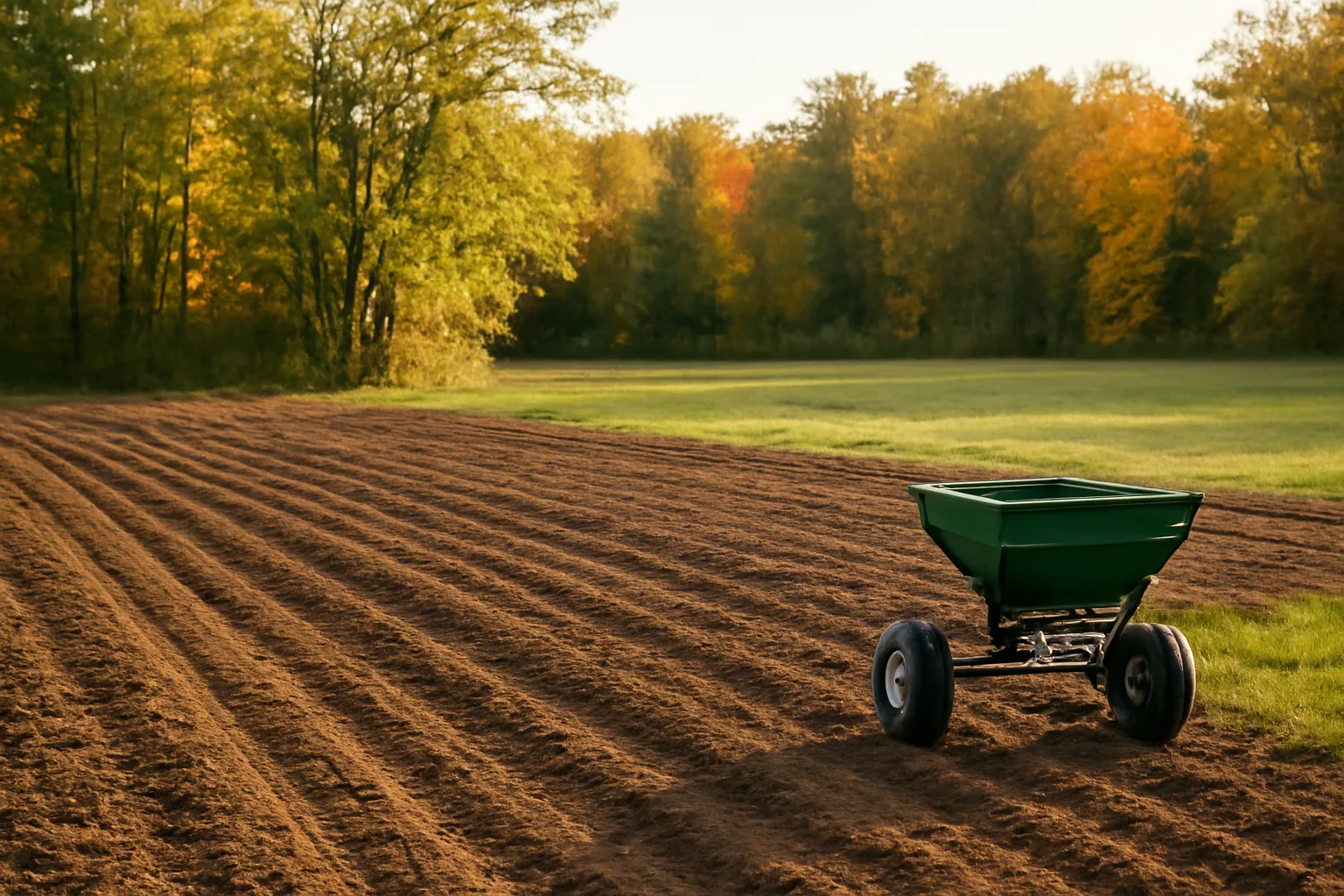
A food plot is a planted area, usually somewhere between a quarter acre and several acres, established specifically to grow forage that deer and other wildlife will eat. It's not a garden and it's not a farm field in the commercial sense, even though the tools overlap. Landowners plant them to concentrate deer activity, supplement natural browse during lean months, and in a lot of cases just to get more consistent daylight movement on a piece of hunting ground. In Michigan, food plots range from small kill plots tucked into a quarter-acre clearing near a stand, to larger destination or feeding plots of an acre or more planted with brassicas, cereal grains, or clover blends. The Michigan DNR treats food plots as a legal form of habitat management on private and leased land, distinct from bait piles or supplemental feeding, which fall under separate rules that have shifted repeatedly over the last decade because of chronic wasting disease management in specific counties. If you're placing feed or minerals rather than growing a standing crop, check current DNR guidance before you do it, since those rules are not static and vary by where you hunt. The basic idea does not change from state to state: pick a species suited to your soil and season, get the pH and fertility right, plant at the correct depth and time, and give the plot enough sunlight and size to survive grazing pressure. Michigan's challenge is its range. A food plot plan that works in Berrien County in the southwest corner is often two to three weeks off for someone hunting near Marquette in the Upper Peninsula.
When to plant food plots for deer in Michigan?
| Upper Peninsula | July 15 - Aug 5 | May 1 - June 1 | |
|---|---|---|---|
| Northern Lower Peninsula | July 25 - Aug 15 | April 20 - June 1 | |
| Southern Lower Peninsula | Aug 1 - Sept 10 | April 10 - May 25 | These are general windows, not guarantees. Always check your own local frost data and soil temperature before committing seed to the ground. A food plot whitetail planting calendar built around your specific county will save you from the single most common mistake: planting brassicas too late for them to bulb before frost. |
Timing splits into two windows: spring plantings (April through June) for clover, chicory, and some warm-season annuals, and late-summer plantings (late July through early September) for brassicas, cereal grains, and fall blends. Northern Michigan needs to plant everything seven to fourteen days earlier than southern Michigan because of shorter growing seasons and earlier frost. Average first fall frost across Michigan runs roughly two to three weeks apart end to end. Northern Lower Peninsula and Upper Peninsula counties typically see first frost around mid to late September, while southern tier counties often hold off until early to mid October, based on long-term climate normals tracked by NOAA's National Centers for Environmental Information [1]. That gap matters more than most people think. A brassica blend that needs 80 to 90 days to bulb up properly has to go in the ground by late July in Marquette or Alpena, but can wait until mid-August in Hillsdale or Monroe County. For perennial clover and alfalfa, spring planting (April to early June) works well statewide once soil temperatures hit the mid-40s and frost risk has passed. Some hunters also frost-seed clover in late winter (March) into existing plots, broadcasting seed onto frozen or thawing ground so freeze-thaw cycles work it into the soil. It's a low-cost trick that works reasonably well on clover and less well on anything with a bigger seed. Here's a rough planting window by zone: | Region | Brassicas/cereal grains (fall plot) | Clover/perennials (spring) |
When to plant oats for deer in Michigan?
Oats go in the ground in late summer, typically August 1 through September 10 depending on where you are in the state, so they have six to eight weeks of growth before the first hard frost. Oats are a cool-season annual cereal grain that germinates fast, often in five to seven days, and produces a lot of tonnage quickly, which makes it a favorite for fall food plots and blend components. Oats tolerate a wider pH range than clover, generally doing fine between 5.5 and 7.0, though Michigan State University Extension soil fertility guidance for forage crops still points toward optimal cereal grain production closer to pH 6.0 to 6.5. Deer hit oats hard in the early fall when the leaves are still tender, and the plant often gets more attractive again after a light frost, because frost converts starches to sugars. A straight oat plot in Michigan usually gets hammered down to nothing by December in areas with moderate to high deer density. That's fine if the goal is early-season hunting, but if you want a plot that lasts into late season, pair oats with brassicas or winter rye in a blend. Winter rye is more frost- and snow-tolerant than oats and will often outlast it through a Michigan winter, regreening in spring.
When to plant turnips for deer in Michigan?
Turnips need to go in the ground between late July and mid-August across most of Michigan, giving them roughly 80 to 90 days to mature before a hard frost locks up the ground. Plant too late and you get leafy growth with no bulb; plant too early in warm soil and you risk flea beetle damage before the plants establish. Turnip is a brassica, and deer typically ignore the bulb and leaves early in the season, then switch hard to eating both once repeated frosts sweeten the plant through starch-to-sugar conversion. University extension brassica forage research documents this pattern clearly: cold temperatures trigger starch conversion to sugars in brassica leaf and root tissue, which is exactly why so many Michigan hunters see turnip plots get ignored in October and then get devoured in late November and December [2]. Seeding rate for turnips alone runs 4 to 6 pounds per acre when broadcast, planted at a shallow 1/4 to 1/2 inch depth. Most experienced growers blend turnips with radish or rape rather than planting a monoculture, since a blend spreads out palatability and reduces the odds of the whole plot getting wiped out early by one especially hungry deer herd. If you're building your first brassica plot, a deer food plot seed blend already balanced for Michigan's growing season takes the guesswork out of matching turnip, radish, and rape ratios.
Do deer like clover, and do deer eat clover in Michigan?
Yes, clover is one of the most consistently preferred forages for whitetail deer, and it's a staple food plot choice across Michigan. Deer eat clover readily from spring green-up through fall, and it regrows after grazing, which is exactly why it's the backbone species for so many perennial plots. White clover varieties (Dutch white, ladino) and red clover both do well in Michigan's climate. MSU Extension forage guidance notes that clover performs best in well-drained soils with a pH of 6.0 to 6.5 and benefits heavily from phosphorus and potassium correction based on a soil test, since clover is a poor competitor in acidic or nutrient-poor ground. A properly maintained clover plot can produce for three to five years before it needs to be renovated or reseeded, which makes it one of the better costs-per-year options compared to annual replanting. The tradeoff: clover needs mowing two to four times a season to stay in a vegetative, high-protein state and to knock back weed competition. Skip mowing for a full season and you'll often see the stand get overtaken by grasses or broadleaf weeds, especially in Michigan's wetter western counties. If maintenance time is limited, a lower-input option like deer food plots planted to a cereal grain and brassica rotation might suit an absentee landowner better than a perennial clover stand that needs regular mowing.
Do deer eat sorghum?
Yes, deer eat sorghum, particularly grain sorghum heads once they mature, and sorghum also has value as cover and as a component in wildlife food plot blends, though it's a secondary choice in Michigan compared to corn, soybeans, or brassicas. Sorghum is a warm-season annual that needs warm soil (above 60 degrees F) to germinate, so in Michigan that generally means planting between mid-May and mid-June depending on latitude, similar to corn's planting window. It has real drought tolerance advantages over corn, which matters in the sandier soils found in parts of central and northern Michigan. The practical issue is that Michigan's growing season is short enough that some sorghum varieties, especially longer-season grain types bred for the Corn Belt or the South, may not fully mature before frost in northern counties. If you're set on sorghum, choose an early-maturing variety (under 100 days) and stick to southern Michigan or plant it as a blend component with other warm-season species rather than a standalone plot. Most food plot programs in Michigan lean on brassicas and cereal grains instead, simply because the fall planting window aligns better with hunting season and the agronomy is more forgiving.
What are deer's favorite foods, and do deer like honey?
Deer preference is seasonal and regional, but across most whitetail research and food plot field experience, the most consistently preferred food plot forages are soybeans and clover during the growing season, and brassicas and cereal grains after frost. Natural browse preferences shift constantly based on availability, mast crops (acorns especially), and agricultural crop stages nearby. Acorns deserve a mention here because in a heavy mast year, Michigan whitetails will often ignore a food plot entirely in favor of oak flats, especially white oak acorns which have lower tannin content and are more palatable than red oak acorns. This is one of the most common reasons a food plot that performed great one year seems dead the next. It's not the plot. It's the acorn crop. On honey specifically: deer do not eat honey in any meaningful dietary sense, and honey isn't a component of natural deer diet or standard food plot mixes. Deer occasionally show interest in sugary or fermented substances, which is part of why some hunters have experimented with molasses-based mineral or attractant products, but honey itself is not a recognized food plot ingredient or research-documented deer attractant. Treat any claim that deer specifically seek out honey with real skepticism; there's no established wildlife biology literature supporting it as a preferred forage or attractant.
How do I choose the right food plot seed for my part of Michigan?
Start with your soil test, not the seed bag. A basic soil test through MSU's Soil and Plant Nutrient Lab costs around $25 for a standard analysis with lime and fertilizer recommendations, and it will tell you your current pH, phosphorus, potassium, and organic matter, which drives every decision after that [3]. Michigan soils vary enormously. The Lower Peninsula's southern tier tends toward heavier clay loams with decent natural fertility, while much of the northern Lower Peninsula and Upper Peninsula sits on sandy, more acidic outwash soils left behind by glaciation, often needing more lime and more frequent fertility inputs to hold a good pH. A pH below 6.0 will hurt clover and alfalfa production significantly, and lime takes months to fully react in the soil, so testing in fall for a spring planting (or vice versa) gives the lime time to work. Once you know your pH and fertility numbers, match seed to your realistic planting window and your goals: early-season attraction, late-season food source, or year-round perennial forage. A quick gut check most Michigan planters use: if you can't get seed in before your zone's brassica cutoff (see the table above), pivot to cereal grains or a clover frost-seed instead of forcing a brassica planting that won't bulb in time. Your soil test lab is the real authority on lime and fertilizer rates for your specific field; general planting guides, including this one, can only give you the regional range.
How big should a Michigan food plot be, and what equipment do I actually need?
Most hunting-focused food plots in Michigan run somewhere between a quarter acre (small kill plots tucked near a stand) and 2 to 5 acres (larger destination or feeding plots). Bigger isn't always better; a small, well-hidden plot close to bedding cover often produces better daylight hunting opportunities than a large open field that deer only enter after dark. For equipment, you don't need a full farm setup to get a plot in the ground. A soil test kit or mail-in test, a way to spread lime and fertilizer (broadcast spreader, even a hand-crank one for small plots), a disc or tiller to work the seedbed, and a way to pack the seed in (cultipacker, ATV tire drag, or even foot traffic on small plots) covers the basics. A no-till drill is a step up in cost but pays off on larger acreages or on ground you don't want to disturb repeatedly. For herbicide-tolerant systems or larger acreage, a sprayer becomes worthwhile, but plenty of Michigan food plotters run entirely mechanical weed control (disking, mowing, timing) on smaller plots and do fine. If you're deciding what to buy first, buy the soil test before the tractor attachment. Correcting a pH problem with the right lime rate will do more for plot success than any piece of equipment.
Frequently asked questions
Do deer eat sorghum in food plots?
Yes, deer eat grain sorghum heads once mature, and it also provides cover. It's a warm-season crop planted mid-May to mid-June in Michigan, similar to corn. Choose an early-maturing variety (under 100 days) since Michigan's shorter season can leave longer-season sorghum unfinished before frost, especially in northern counties.
Do deer eat clover, and do deer like clover?
Yes, clover is one of the most preferred whitetail forages and a backbone species for Michigan perennial plots. Deer browse it from spring through fall since it regrows after grazing. It needs a pH of 6.0-6.5 and regular mowing (2-4 times per season) to stay productive and weed-free, per MSU Extension forage guidance.
When should I plant food plots for deer in Michigan?
Plant brassicas and cereal grains late July through mid-September depending on your zone (Upper Peninsula earliest, southern Lower Peninsula latest). Plant clover and other perennials in spring, roughly April through early June, or frost-seed clover into existing stands in March while the ground is still freezing and thawing.
When do I plant oats for deer in Michigan?
Plant oats between August 1 and September 10, giving them six to eight weeks before the first hard frost. Oats germinate fast, often within five to seven days, and get more attractive to deer after a light frost converts starches to sugars in the leaves.
When should I plant turnips for deer?
Plant turnips late July through mid-August across most of Michigan, allowing 80 to 90 days before a hard frost. Deer often ignore turnip bulbs and leaves early in the season, then switch to eating both heavily after repeated frosts sweeten the plant through starch conversion.
What exactly is a food plot?
A food plot is a planted area, usually a quarter acre to several acres, established specifically to grow forage for deer and other wildlife. It's distinct from bait piles or supplemental feeding, which are regulated separately by the Michigan DNR. Food plots use standing crops like clover, brassicas, or cereal grains rather than placed feed.
What are deer's favorite foods overall?
Preference shifts by season and region, but soybeans and clover rank high during the growing season, and brassicas and cereal grains rank high after frost sweetens them. Acorns, especially white oak, often outcompete any food plot in a heavy mast year, since deer prefer them when abundant and available.
Do deer like honey?
No, there's no established wildlife biology evidence that deer seek out honey as a food source or attractant. Honey isn't part of natural deer diet or standard food plot seed mixes. Some hunters use molasses-based mineral products, which is a different and separate practice, but honey itself isn't documented as a deer attractant.
What pH does a Michigan food plot need?
Most food plot species do best between pH 6.0 and 6.5, with clover and alfalfa particularly sensitive to acidic soil. Many northern and sandy Michigan soils run more acidic naturally and need lime correction. A soil test through MSU's Soil and Plant Nutrient Lab, roughly $25, gives you your actual number and a lime recommendation.
How big does a food plot need to be to work in Michigan?
Most hunting plots run a quarter acre to 5 acres. Small kill plots near bedding cover often produce better daylight hunting than large open fields, since deer are more comfortable entering a small, secluded plot before dark. Size should match your goal (hunting access versus feeding volume), more than available open ground.
Can I plant a food plot without a soil test?
You can, but you're guessing at lime and fertilizer rates, which is the single biggest driver of plot success or failure. A basic test costs around $25 through university labs and tells you pH, phosphorus, and potassium levels. Skipping it often means wasted seed and fertilizer money on a plot that never reaches its potential.
Is baiting or feeding deer legal in Michigan, and does that affect food plots?
Food plots are legal and distinct from baiting or supplemental feeding, which the Michigan DNR regulates separately and has restricted in parts of the state due to chronic wasting disease management. Rules on baiting and feeding change periodically and vary by county, so check current DNR regulations before placing any feed, mineral, or bait product.
Sources
- Michigan Department of Natural Resources, 2024 Michigan Hunting Digest, Baiting and Feeding Regulations: Michigan regulates baiting and feeding of deer separately from food plots, with restrictions tied to disease management that vary by area of the state
- NOAA National Centers for Environmental Information, U.S. Climate Normals: Average first fall frost dates vary from mid-September in northern Michigan to mid-October in southern Michigan based on 30-year climate normals
- University of Wisconsin-Madison Extension, Brassicas for Deer and Other Wildlife: Brassica palatability increases after frost due to starch-to-sugar conversion in leaves and bulbs
- Michigan State University, Soil and Plant Nutrient Lab, Lawn and Garden Soil Test Fee Schedule: Basic soil test with lime and fertilizer recommendations costs approximately $25 through MSU's lab
- Michigan Department of Natural Resources, Deer Management, Chronic Wasting Disease in Michigan: Baiting and feeding restrictions tied to CWD management zones have changed multiple times and vary by county