Last updated 2026-07-24
TL;DR
Spring food plots work best with warm-season plants like clover, soybeans, and sorghum, planted after your last frost date and once soil hits about 50-55°F. Clover is the highest-value spring choice for most of the whitetail range. Turnips and oats are fall plants, not spring ones, despite common confusion.
what is a food plot, exactly
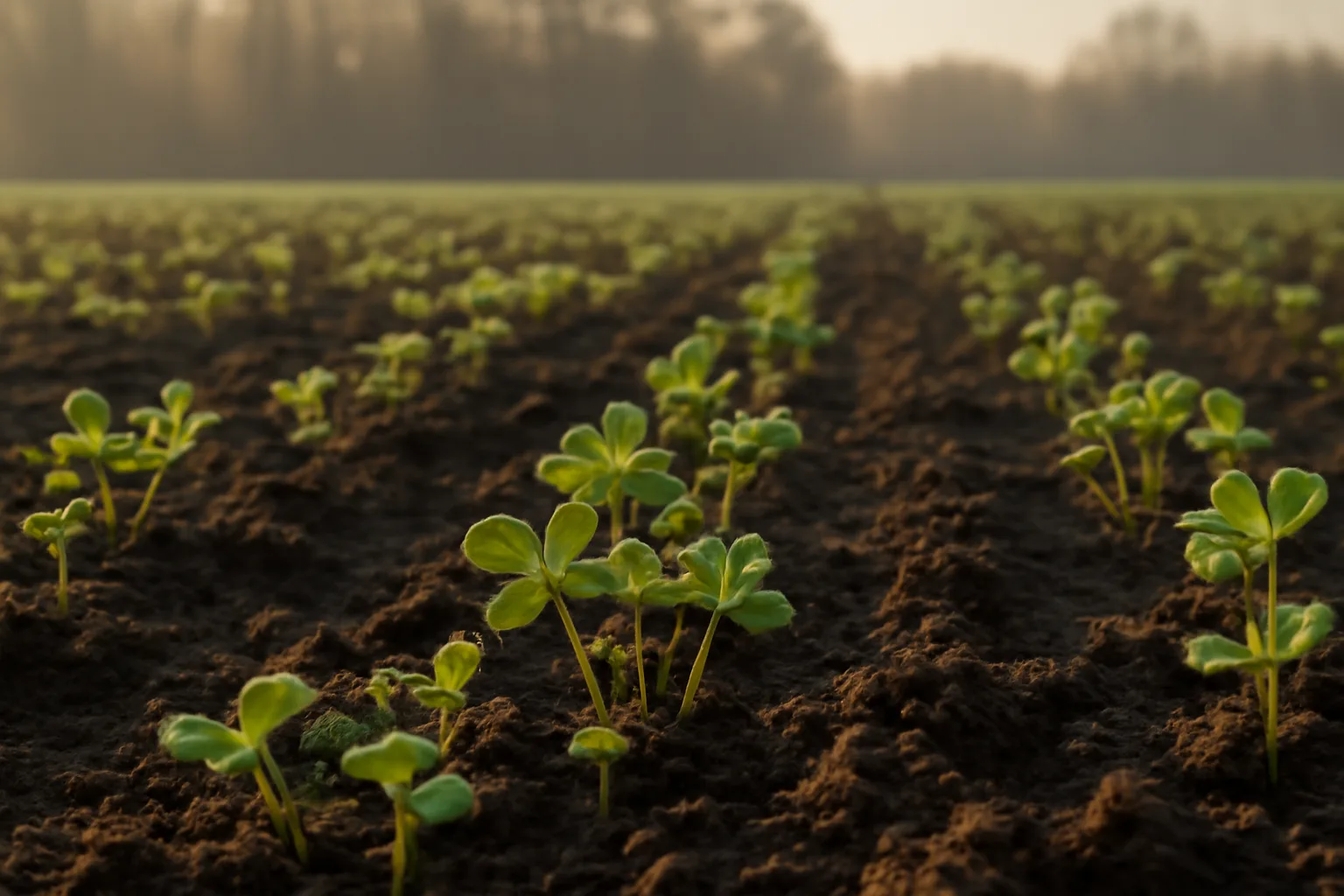
A food plot is a planted patch of ground, usually somewhere between a quarter acre and a few acres, seeded with forage that deer (and often turkey, rabbits, and other wildlife) will eat. It's not the same as a wildlife opening left to grow wild, and it's not baiting, though the line between plot and bait pile matters a lot legally in some states. Most hunters plant plots for one of two reasons: to hold deer on their property through better nutrition, or to create a huntable opening with predictable deer movement. Good plots do both, but they rarely do both equally well. A clover field tucked in the interior of a property tends to pull deer in and hold them. A small brassica plot near a bedding edge tends to get hunted hard in November and then abandoned. The USDA Natural Resources Conservation Service treats food plots as a wildlife habitat practice under its Working Lands for Wildlife program, and many state wildlife agencies publish their own food plot guides because plots interact with soil conservation, herbicide use, and in some cases baiting law [1]. That's worth knowing before you break ground. What counts as a legitimate planted plot versus an illegal bait pile depends on your state, not on your intentions.
when to plant food plots for deer
| Deep South (zone 8-9) | Mid-March to April | January to February | |
|---|---|---|---|
| Transition zone (zone 6-7) | Late April to May | February to March | |
| North/upper Midwest (zone 3-5) | Late May to mid-June | March to April | Your local university extension office publishes frost date tables and can tell you exactly where your county falls. That's a better source than any national blog chart, including this one. |
The honest answer is: it depends on what you're planting and where you live, and there is no single spring calendar date that works from Texas to Minnesota. What matters is soil temperature and your local last-frost date, not the calendar month. For warm-season spring plots (soybeans, cowpeas, sorghum, sunflowers), most extension guidance says wait until soil temperatures reach the mid-50s°F and the risk of frost has passed [2]. Planting too early into cold, wet soil is one of the most common food plot mistakes; seed just sits there and rots or gets eaten by birds before it germinates. For perennial clover, spring planting works well as a frost-seeding in late winter to very early spring, broadcasting seed onto existing ground while there's still freeze-thaw action to work it into the soil. In the North (roughly zone 4-5), that's March into early April. In the transition zone and South, clover can go in earlier, February into March, or you can wait for fall instead since fall-seeded clover often establishes with less weed pressure. Here's a rough framework by region. Treat it as a starting point, not gospel, because microclimates and elevation shift things by two to three weeks in either direction. | Region | Warm-season plots (beans, sorghum, sunflowers) | Clover frost-seeding |
do deer like clover, and is it worth planting
Yes. Deer eat clover heavily, and it's one of the most reliable spring and summer plot choices across the whitetail's range. White clover and red clover both show up constantly in deer diet studies and extension forage guides as high-preference, high-protein forage [3]. Clover's real advantage is duration. A well-maintained perennial clover stand can produce forage for three to five years off one planting, versus replanting an annual every single season. Crude protein in good clover typically runs 25-30%, which is well above what deer need for antler growth and lactation in spring and early summer [3]. The catch is maintenance. Clover needs mowing two to four times a season to keep it from getting shaded out by weeds, and it wants a soil pH close to neutral, generally 6.0-7.0, to really produce [4]. If your soil test comes back at 5.2, clover will survive but it won't thrive, and you'll be disappointed in the tonnage. Lime takes months to fully react in soil, so if you're starting from acidic ground, get lime down as early as possible relative to planting, ideally the prior fall. For readers weighing clover against other spring options, our food plot whitetail guide breaks down how clover compares to brassicas and cereal grains plot by plot.
do deer eat sorghum
Yes. Deer will browse grain sorghum (milo) and forage sorghum, especially the leaves and young growth, and sorghum heads that mature also draw deer along with turkey and other wildlife once grain is available. Sorghum is more commonly grown as a summer/fall standing crop or as a component of a warm-season blend than as a stand-alone spring green plot, because it's slow to become attractive relative to soybeans or cowpeas. Sorghum's real value on deer ground is usually structure and late-season food rather than early spring nutrition. It grows tall. It stands through winter better than corn in some systems. Deer will hit the grain heads hard in late fall. If your goal is a spring plot specifically, soybeans, cowpeas, and clover give you faster, more reliable early-season tonnage than sorghum does. One caution: some grain sorghum varieties can carry higher tannin content that reduces palatability compared to soybeans, and forage sorghum/sudangrass can develop dangerous prussic acid (cyanide) levels under drought stress or after a frost, a documented risk that extension agronomists warn about for the forage sorghum family. That's a real hazard, not a rare edge case. If you plant sorghum-sudangrass hybrids, don't graze or expect deer to hammer stressed, frosted, or drought-stunted stands without checking with your extension office first.
when to plant turnips for deer, and why not now
Turnips are a fall food plot crop, not a spring one, and planting them in spring is one of the most common beginner mistakes. Brassicas like turnips need to mature into cool fall temperatures to convert starches to sugars, which is exactly what makes them attractive to deer once frost hits. Most extension and wildlife agency guidance recommends planting turnips roughly 60-90 days before your first fall frost, which usually lands somewhere between late July and early September depending on latitude. Plant turnips in April or May instead and you'll get a crop that bolts, gets bitter, and goes to seed well before deer season, with none of the sweetness that makes them a magnet in November and December. If you're planning your season now in spring, the move is to pencil turnips into your calendar for late summer, not to plant them today. Spring is the right time to prep the ground: pull a soil test, get lime applied if you need it, and kill off existing vegetation with a burndown herbicide application so you're not fighting weeds when your actual turnip planting window opens in July or August.
when to plant oats for deer
Oats are primarily a fall and early-winter plot in the whitetail world, though they're technically a cool-season cereal grain that can also be planted in early spring in northern climates for a quick green-up. Most food plotters plant oats in late summer to early fall, generally August through September depending on zone, timed so oats reach a leafy, palatable stage right as bow season opens [4]. A spring planting of oats is possible and some northern growers do it for quick spring forage or as a nurse crop for clover, but oats planted in spring will typically head out, mature, and lose palatability by mid-summer, well before hunting season. If your main goal is fall hunting attraction, spring-planted oats won't be there when you need them. Where oats do fit a spring program: as a fast-growing companion seed mixed in with spring clover to protect young clover seedlings and suppress weeds, then mowed off once the clover is established. That's a legitimate agronomic use. Just don't expect the oats themselves to be your fall deer magnet if you plant them in April.
what are deer's favorite foods overall
There's no single universal favorite; deer preference shifts by season, region, and what's locally available, and researchers who've built deer forage preference indexes consistently find this variability rather than one clear winner [3]. That said, some patterns show up again and again across studies and extension forage trials. High-preference natural browse includes acorns (both white and red oak groups, though white oak acorns are generally preferred for lower tannin content), honeysuckle, greenbrier, and forbs. Among planted forages, clover, soybeans, cowpeas, and chicory rank consistently high in preference trials and browse surveys, while corn and cereal grains rank lower on protein but higher on late-season energy value [3]. Here's a rough way to think about it: in spring and summer deer are chasing protein for antler growth, doe lactation, and fawn development, so clover, alfalfa, soybeans, and natural forbs top the list. In fall, energy becomes king as deer prep for winter and the rut, so acorns, brassicas (after a frost sweetens them), and standing corn or soybeans move up. A food plot plan that only offers one season's forage is only doing half the job. That's part of why most serious plot programs run both a perennial (clover) and rotating annuals across the property.
do deer like honey, and does it belong in a food plot program
There's no research support for deer specifically seeking out honey, and it isn't a recognized food plot ingredient or attractant backed by any extension or wildlife agency source. Deer are herbivores built around browse, forbs, mast, and agricultural forage. There's no natural context in which they'd encounter or key in on honey the way they do salt, mineral, or sugar-rich forage like brassicas after a frost. What probably drives the question is confusion with commercial mineral and attractant products, some of which use molasses or sugar-based scent additives (not honey specifically) to draw deer to a mineral site. Those products fall under scent/attractant use, which many states regulate separately from food plots, and some states classify any placed feed, mineral, or scent attractant as bait subject to hunting-over-bait restrictions [5]. If you're using any attractant product near a stand, check your state wildlife agency's baiting regulations before hunting season, because rules vary widely and enforcement is real.
how do I pick species for a spring plot on my ground
Start with a soil test, not a seed bag. A basic soil test from your state's land-grant university extension lab, often 15-20 dollars per sample, tells you your pH and nutrient levels, and that data should drive lime and fertilizer decisions more than any seed tag recommendation [4]. Your soil test lab is the actual authority on how much lime and fertilizer your specific ground needs; general planting guides like this one can't replace a site-specific test result. Once you know your pH, match species to what your ground and climate can support. Clover wants near-neutral pH and full to partial sun and rewards you with multi-year production. Soybeans and cowpeas want warm soil and decent fertility and give you fast summer tonnage plus a fall standing crop if deer don't hammer them down first. Sorghum and sunflowers tolerate drier, less fertile ground better than clover or beans but give you lower protein value. Equipment matters too. A no-till drill lets you plant into existing sod or a killed cover crop without heavy tillage, which saves topsoil and moisture, especially useful on smaller or sloped plots. If you're broadcasting clover as a frost-seeding, you don't need a drill at all, just a broadcast spreader and good seed-to-soil contact from freeze-thaw cycles or a light cultipacking pass. For a full rundown on choosing between drills, no-till approaches, and broadcast methods, see our guide on food plot seed selection and our breakdown of deer food plot seed options by region.
how big should a spring food plot be
There's no fixed rule, but most wildlife biologists and extension foresters suggest food plots occupy somewhere around 1-5% of total property acreage as supplemental forage, not a replacement for natural habitat [1]. On smaller properties (under 40 acres), a half-acre to one-acre clover plot is usually plenty. On larger tracts, multiple smaller plots (a half-acre to two acres each) scattered through the property tend to outperform one giant field for both nutrition distribution and hunting setups. Spring plots specifically can run a bit larger than fall hunting plots if the goal is pure nutrition rather than a huntable ambush point, since you're not worried about pressure or wind the way you are with a bow-season kill plot. If you want a plan tailored to your specific acreage, soil test results, and region rather than a generic size rule, that's exactly the gap our $99 one-time Custom Food Plot Plan is built to fill. It takes your test results and property details and turns them into a specific species and layout recommendation, more than a rule of thumb.
what about weeds, herbicide, and burndown timing in spring
Spring is prime burndown season, and it's one of the most overlooked steps in a successful plot. A glyphosate burndown application two to three weeks before planting kills existing vegetation and gives your new seed a clean start without competition [2]. Skip this step and cool-season weeds that overwintered will outcompete slow-germinating clover or beans before they ever get established. Timing matters: apply burndown herbicide when weeds are actively growing, generally once daytime temps are consistently above 50-60°F, not on a random warm day in February when most weeds are still dormant. Always follow label rates and any pre-planting interval listed on the herbicide label; those intervals exist because residual herbicide can prevent your new seed from germinating if you plant too soon after application. For clover specifically, a grass-selective herbicide applied once the clover is established (not at planting) can knock back grass competition without killing the clover, since clover is a broadleaf and most grass-selective products won't touch it. Check your state extension's weed control guide for product-specific rates. This varies enough by region and weed species that a national blanket recommendation isn't responsible.
Frequently asked questions
Do deer eat sorghum?
Yes, deer browse both grain and forage sorghum, especially young leaves and mature grain heads. It's more valuable as a late-season standing crop than a spring green plot. Watch for prussic acid risk in sudangrass hybrids after frost or drought stress, a documented hazard in forage sorghum species.
Do deer eat clover, and is it their favorite?
Deer eat clover heavily and it's consistently one of the highest-preference planted forages in extension studies, running 25-30% crude protein. It isn't a universal single favorite since preference shifts seasonally, but for spring and summer nutrition, clover is hard to beat among planted options.
When should I plant food plots for deer in spring?
Time warm-season annuals (soybeans, cowpeas, sorghum) after your last frost date once soil hits the mid-50s°F. Frost-seed clover in late winter to early spring while freeze-thaw cycles work seed into bare soil. Exact dates shift by 6-8 weeks between the Deep South and upper Midwest, so check your local extension frost tables.
When do you plant turnips for deer?
Turnips are a fall crop, planted roughly 60-90 days before your area's first fall frost, usually late July through early September. Spring-planted turnips bolt and turn bitter well before hunting season, so use spring to soil test and prep ground instead, then plant turnips in late summer.
When should oats be planted for deer plots?
Oats are mainly planted in late summer to early fall, August through September in most regions, to be leafy and palatable when bow season opens. Spring-planted oats head out and lose palatability by summer, so they don't work as a fall attraction crop unless used as a spring clover nurse crop.
What exactly is a food plot?
A food plot is a planted patch, typically a quarter acre to a few acres, seeded with forage like clover, brassicas, or grain to feed deer and other wildlife and often to create a huntable opening. It differs from a wildlife opening left wild and, done correctly, differs legally from baiting.
What is a deer's favorite food overall?
There's no single universal favorite. In spring and summer, deer favor clover, soybeans, cowpeas, and forbs for protein. In fall, acorns, frost-sweetened brassicas, and standing corn or soybeans rank higher as deer prioritize energy for winter and the rut.
Do deer like honey?
There's no research or extension evidence that deer seek out honey specifically. Deer are herbivores oriented around browse, forbs, mast, and forage crops. The idea likely comes from confusion with sugar or molasses-based attractant products, which some states regulate as bait.
Is planting a food plot considered baiting deer?
Generally no, a properly planted, rooted food plot is legal in most states and distinct from a bait pile of loose feed, but rules vary significantly by state and some restrict hunting over any planted plot within certain distances or timeframes. Always check your state wildlife agency's current baiting regulations before hunting season.
How big should a spring deer food plot be?
Most wildlife biologists suggest food plots total roughly 1-5% of overall property acreage. On smaller properties, a half-acre to one-acre plot works well; larger properties often do better with several smaller plots (0.5 to 2 acres) spread out rather than one large field.
What soil pH does clover need for deer plots?
Clover generally performs best in soil pH between 6.0 and 7.0. Below that range it will still grow but production drops noticeably. A soil test from your state extension lab is the only reliable way to know your actual pH and how much lime you need.
Can I plant both clover and oats together in spring?
Yes, oats are sometimes used as a nurse crop mixed with spring-seeded clover. The oats grow fast, suppress weeds, and protect young clover seedlings, then get mowed off once clover establishes. The oats themselves won't persist as a fall attractant if planted in spring.
Sources
- USDA Natural Resources Conservation Service, Working Lands for Wildlife: Food plots are treated as a wildlife habitat practice, and plots should occupy a modest share of overall property acreage.
- University of Missouri Extension, Warm-Season Food Plots for Deer and Turkey (G9421): Warm-season plot species should be planted after frost risk passes and soil warms; burndown herbicide timing before planting.
- Mississippi State University Extension, Establishing Wildlife Food Plots (Publication 2111): Clover and other planted forages rank consistently high in deer forage preference, with crude protein values in the 25-30% range.
- University of Missouri Extension, Soil Testing for Lawns, Gardens, and Wildlife Food Plots: Clover and most food plot forages perform best at near-neutral soil pH, and a soil test should guide lime and fertilizer application.
- Pennsylvania Game Commission, Baiting Regulations: Placed feed, mineral, or attractant use can be classified as bait subject to state hunting-over-bait restrictions, and rules vary by state.