Last updated 2026-07-25
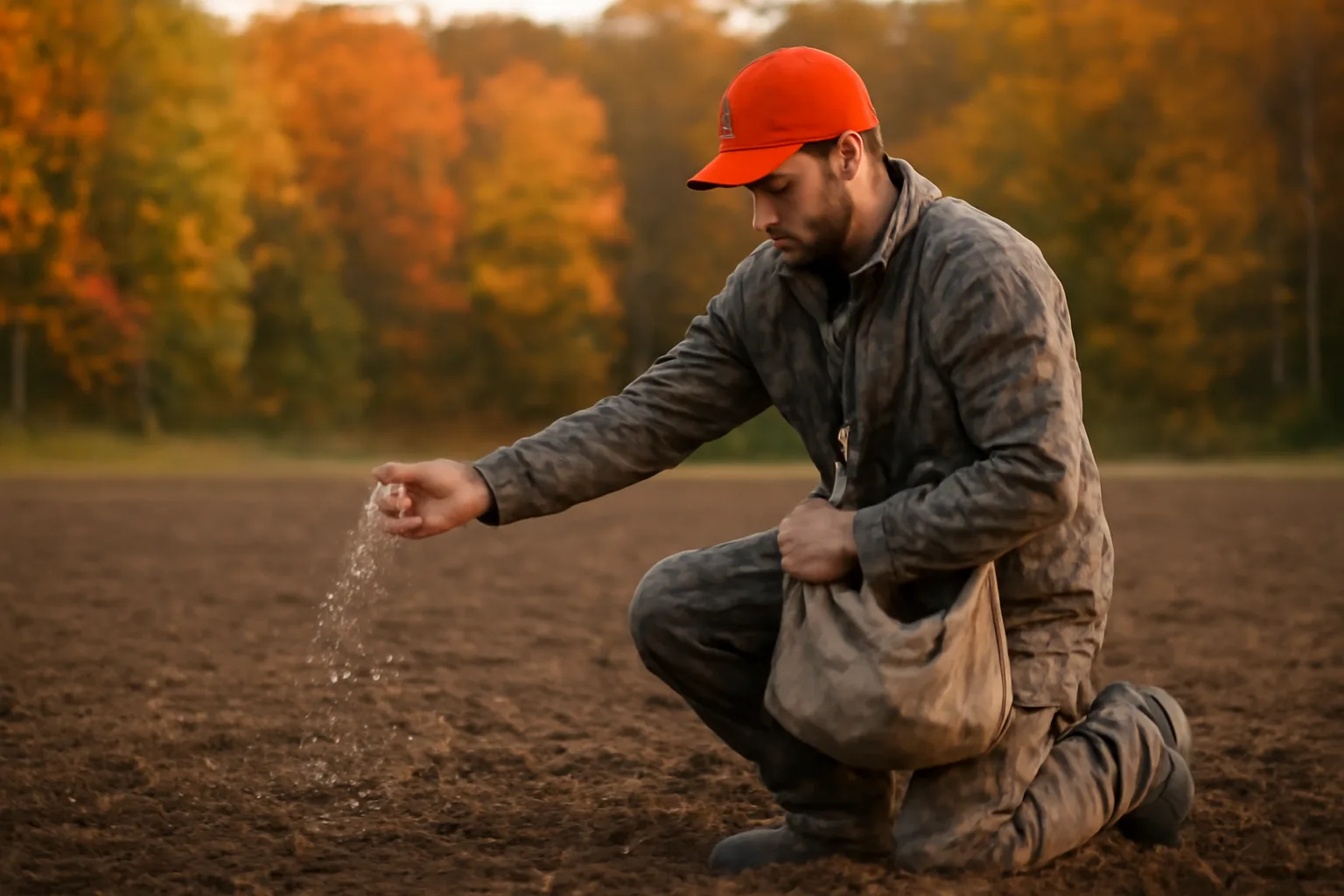
TL;DR
Yes, October is a good food plot month in much of the whitetail range, especially for cool-season plants. Brassicas planted early October can still bulb up in the South. Cereal grains (oats, wheat, rye) and clover do well planted anywhere from early to late October depending on your latitude and first frost date.
can you plant a food plot in October?
Yes, in most of the country October is squarely inside the planting window, not outside it. What you plant and how late in the month you can still get away with it depends heavily on where you hunt. October is prime time for cool-season annuals: cereal grains like oats, wheat, and winter rye, plus brassicas (turnips, radishes, rape) and clover. These species germinate in cooler soil and actually prefer the shorter days and cooler nights of fall. Warm-season plots like soybeans, corn, or sorghum need to already be in the ground by October, since those crops require 90 to 120 degree soil temps and a long enough growing season to mature before frost. The honest answer is: October planting works great for the right species, and it's often too late for the wrong ones. A late-October brassica planting in Wisconsin risks not bulbing up before hard frost, while that same date in Georgia or Texas is right on schedule. Your local frost date and soil temperature matter more than the calendar page. If you want species-specific ground rules by planting zone, the food plot whitetail guide breaks down zone maps in more detail.
when to plant food plots for deer (by zone)
| North (MN, WI, MI, ME, northern NY) | Mid-September to early October | Late July to early September | |
|---|---|---|---|
| Transition (IA, IL, IN, OH, PA, southern NY) | Early to mid-October | Mid-August to mid-September | |
| Mid-South (KY, TN, VA, NC, AR) | Late October to mid-November | Late August through September, into early October for grains | |
| Deep South (GA, AL, MS, FL, LA, TX) | Mid-November to December | September through late October, sometimes into November | These are approximate windows drawn from general USDA plant hardiness zone data and typical extension planting guidance for the region. Your local extension office will have county-level frost date averages that beat any national chart, so it's worth a quick call or search for your county's ag extension. If your ground sits in the Mid-South or Deep South, October planting is often ideal, not a fallback. If you're in the North, October plantings of anything except maybe a quick cereal grain nurse crop are pushing your luck. |
Cooperative extension programs generally split the whitetail range into planting zones based on average first frost date and growing degree days. There's no single national planting date, because a grower in the Upper Midwest and one in the Deep South are working with completely different windows. As a rough framework used by land-grant extension offices and seed companies alike: | Zone (approx.) | First frost | Fall plot window |
when to plant oats for deer
Oats are one of the most forgiving fall food plot plants, and they're a strong pick for October planting in the transition and mid-South zones. Oats germinate fast, tolerate cooler soil than corn or beans, and deer hit them hard as soon as they emerge. General extension guidance for oats as a forage crop puts fall planting anywhere from 6 to 8 weeks before the first killing frost, which lines up with September in northern zones and October across much of the mid-South and transition belt. Oats aren't as cold-hardy as winter wheat or cereal rye though. A hard freeze in the low 20s will usually kill oats outright, while wheat and rye keep growing through winter and green back up in spring. If you're planting oats in October and worried about an early freeze, mixing in some winter rye as insurance isn't a bad idea. Rye survives temperatures that will wipe out a pure oat stand. For a broader rundown of grain options and mixes, see deer food plot seed.
when to plant turnips for deer
Turnips need roughly 80 to 90 days from planting to maturity to bulb up properly, and that clock matters a lot for October plantings. Plant turnips too late and you'll get leafy green tops that deer will still eat, but no bulb development, which cuts the plot's late-winter value significantly. For most of the transition zone and upper mid-South, turnip planting should happen by mid-August to early September to hit that 80-90 day window before a hard frost locks the ground or kills the plant. In the Deep South, where first frost doesn't show up until mid-November or later, an October turnip planting can still mature just fine. So the real answer on turnips in October: it depends entirely on your frost date working backward from that 80-90 day maturity window. If you're in Georgia or the Gulf Coast, plant away. If you're in Ohio or Pennsylvania, an October turnip plot is mostly going to give you tops, not bulbs, and deer will eat both, but you're leaving food value on the table.
do deer eat sorghum?
Yes, deer eat sorghum, particularly the grain heads once they mature, and standing sorghum also works well as cover and a late-season food source when other plots have been picked clean. Sorghum (grain sorghum, sometimes called milo) is a warm-season annual though, and it needs to be planted in late spring to early summer, not October. If you already have a sorghum plot standing from a summer planting, October and into winter is exactly when it becomes valuable, since deer will work the grain heads as a fall and winter food source, especially once acorns and other soft mast run out. But you can't plant new sorghum in October in the vast majority of the country. Soil temps are dropping, not rising, and sorghum needs warm soil (65+ degrees) to germinate reliably [1]. Bottom line: sorghum is a deer food, not an October planting option.
do deer eat clover, and do deer like clover?
Yes, clover is one of the most consistently preferred food plot forages for whitetail deer across nearly every region of the country. Both white clover (Ladino types especially) and red clover show up repeatedly in extension forage preference studies and are staples of commercial food plot blends for good reason. Clover offers high crude protein, often in the 25 to 30 percent range for well-managed stands, which matters a lot in spring and summer for antler growth and lactating does. It's also a perennial in most varieties, meaning a properly established clover plot can produce for 3 to 5 years with the right maintenance, mowing, and occasional herbicide to knock back grass competition. October is actually a solid clover planting window in cooler regions, since fall-seeded clover gets a head start on root development before winter dormancy, then explodes with growth the following spring. In warmer zones, clover is more commonly planted in September through November as part of a fall seeding window. For species comparisons within clover blends and other perennials, deer food plots covers plot type tradeoffs in more depth.
what is a food plot?
A food plot is a planted area, usually somewhere between a quarter acre and several acres, established specifically to provide supplemental forage for deer and other wildlife on hunted land. Food plots aren't a new idea. State wildlife agencies and university extension programs have published food plot guidance for decades as part of broader habitat management recommendations [2]. The basic goal is straightforward: give deer a reliable, nutritious food source that also happens to concentrate deer activity in a spot where you can hunt them, or at minimum improve herd health and carrying capacity on the property. Plots range from simple clover or brassica patches planted with a hand spreader and an ATV, to multi-acre rotations of corn, beans, and cereal grains run with real farm equipment. Worth noting: some states regulate what counts as a food plot versus baiting, especially around timing of planting relative to hunting season and whether the crop is standing (planted normally) or piled (which crosses into baiting in most states). Check your state wildlife agency's specific regulations before you plant or hunt near a plot, since rules vary a lot state to state [3].
what are deer's favorite foods?
Deer preference isn't fixed, it shifts by season, region, and what's available, but a few foods show up again and again in food habit studies and extension forage trials as consistent favorites. Acorns are often cited as one of the most preferred natural foods where oaks are present, largely because of their high fat content, which matters a lot heading into winter [4]. Among planted forages, clover, soybeans (both forage and grain stage), and brassicas like turnips and radishes rank consistently high in deer preference and utilization studies conducted by university wildlife programs. Corn is also heavily used, especially late season, mostly for its calorie density rather than protein. Chicory, cowpeas, and alfalfa round out a lot of commercial blends because deer hit them reliably across most of the whitetail range. The honest caveat: preference studies vary by region, deer density, and what else is on the landscape. A plot that gets hammered in one county might get largely ignored in another county three hours away because deer there have easier food sources nearby.
do deer like honey?
There's no meaningful evidence that deer specifically seek out or prefer honey, and it's not a food plot or attractant recommendation from any extension or wildlife agency source. Deer are herbivores built around a rumen digestive system suited to browse, forbs, and mast, not concentrated sugars like honey. Some hunters use sweet liquid attractants (molasses-based products, syrup) as scent or taste additives on mineral sites or in commercial deer attractant products, and deer will sometimes investigate or lick these. But that's different from honey being a preferred food source or forage crop, and there's no research base suggesting it belongs anywhere near a serious food plot strategy. If you're looking at attractant products with honey or molasses listed, treat them as a minor supplement at best, and check your state's baiting regulations first, since many states classify any concentrated feed or sweetened attractant the same as bait, which can carry real legal restrictions during hunting season [3].
how do I decide what to plant in October on my ground?
Start with your soil test, not the seed bag. A basic soil test run through your state's land-grant lab (usually 10 to 20 dollars) tells you your pH and nutrient levels, and your lab's recommendation is the real authority on how much lime and fertilizer your specific plot needs, not a generic chart online [5]. Once you know your soil pH, cross-reference your planting zone and first frost date against what you want to plant. If you're in the mid-South or Deep South, October is genuinely one of your best planting windows for brassicas, cereal grains, and clover. If you're in the North or transition zone, October is really only working for quick cereal grains like oats and rye, or clover in the early part of the month. A lot of hunters try to plant everything in one shot without thinking through species timing, then wonder why the brassica plot never bulbed or the clover got smothered by weeds. Matching species to your actual frost date and soil conditions matters more than following a national calendar. If you want it mapped out for your specific property, PlotSeason's $99 one-time Custom Food Plot Plan (/plot-plan-builder) takes your soil test results and location and builds a planting plan around your actual zone and frost dates, rather than a generic national calendar. It's general planning guidance though, not a substitute for your soil lab's specific lime and fertilizer recommendations.
what equipment do I need for an October planting?
For most fall food plot work, you don't need heavy iron. A basic setup: a way to kill existing vegetation (glyphosate spray or disking), a way to spread seed (broadcast spreader, either handheld or ATV-mounted), and a way to get seed-to-soil contact (light disking, cultipacker, or just dragging a chain harrow or section of chain-link fence behind an ATV). Brassicas and clover have small seeds and need to be planted shallow, often just pressed into the surface rather than buried, so a cultipacker or roller after broadcasting works well. Cereal grains like oats and wheat can be drilled slightly deeper (around 1 to 1.5 inches) or broadcast and lightly disked in. If you're planting into an existing plot rotation rather than breaking new ground, October is often a no-till frost-seeding scenario, especially for clover, where you're broadcasting into an already-established or recently mowed area rather than tilling fresh dirt. For a rundown of specific seed blends suited to fall planting, food plot seed and domain food plot seed cover blend options in more depth.
Frequently asked questions
Is October too late to plant a food plot?
Not necessarily. In the mid-South and Deep South, October is often ideal for brassicas, cereal grains, and clover. In the North and transition zone, October is mostly limited to quick-germinating cereal grains like oats and rye, or early-month clover plantings, since first frost arrives sooner there.
Do deer eat sorghum?
Yes, deer eat sorghum grain heads and use standing sorghum as late-season food and cover. Sorghum is a warm-season annual though, planted in late spring to early summer, not October. If you already have a summer-planted sorghum plot standing, fall and winter is when deer use it most heavily.
Do deer like clover, and do deer eat it?
Yes, clover is one of the most consistently preferred whitetail forages nationwide. It's high in crude protein (often 25-30 percent in well-managed stands) and, as a perennial, can produce for 3 to 5 years. Both fall and spring plantings work depending on your region and clover variety.
When should I plant oats for deer?
Oats should generally go in 6 to 8 weeks before your area's first killing frost, per general forage extension guidance. That's September in northern zones, and often into October across the transition zone and mid-South. Oats aren't very cold-hardy, so mixing in winter rye adds insurance against an early hard freeze.
When should I plant turnips for deer?
Turnips need about 80 to 90 days to bulb up before a hard frost, so backward-plan from your local first frost date. That usually means mid-August to early September in the transition zone, but October works fine in the Deep South where frost doesn't hit until mid-November or later.
What is a food plot exactly?
A food plot is a planted area, typically a quarter acre to several acres, established to give deer and other wildlife supplemental forage. It's also often positioned to concentrate deer activity for hunting. State agencies and university extensions have published food plot guidance for decades as part of habitat management.
What are deer's favorite foods?
Acorns rank high due to fat content, and among planted forages, clover, soybeans, and brassicas consistently show strong deer preference in university forage trials. Corn is heavily used late season for calories. Preference varies by region and what else is available on the landscape, so results differ property to property.
Do deer like honey?
There's no real evidence deer seek out honey specifically, and no wildlife agency or extension source recommends it as forage or attractant. Deer are built to digest browse, forbs, and mast, not concentrated sugars. Some sweetened attractant products exist, but they aren't backed by research as effective food plot strategy.
When is the best overall time to plant food plots for deer?
There's no single national date. It depends on your planting zone: roughly late July to September in the North, August through September in the transition zone, and September through October (sometimes into November) in the mid-South and Deep South. Match species timing to your local first frost date.
Can I plant clover and brassicas in the same October plot?
Yes, clover-brassica mixes are common, but timing gets tricky since brassicas need 80-90 days to bulb and clover establishes more slowly. If you're planting both in October, you're generally in a zone with a late first frost (mid-South to Deep South), otherwise the brassicas likely won't bulb properly.
Does soil temperature matter more than the calendar date for fall planting?
Yes. Cool-season plants like oats, wheat, clover, and brassicas germinate best in soil in the 50-65 degree range, while warm-season crops like corn, beans, and sorghum need soil near 65 degrees or warmer to establish. A soil thermometer gives a better planting signal than the date on the calendar.
Are food plots considered baiting under state law?
It depends on the state. Standing crops planted in the normal course of agriculture are usually legal to hunt over, while piled or spread feed often counts as baiting. Rules vary significantly by state, so check your state wildlife agency's specific regulations before planting near a hunting area.
Sources
- University of Nebraska-Lincoln Extension, grain sorghum production: Sorghum requires warm soil temperatures to germinate reliably
- Mississippi State University Extension, food plots for white-tailed deer: Definition and purpose of food plots as habitat management tool
- State wildlife agency baiting regulations (example: Michigan DNR): Baiting and feeding regulations vary by state and affect food plot legality
- USDA Forest Service, wildlife food value of oak mast: Acorns are a highly preferred, fat-rich natural deer food
- University of Tennessee Extension, soil testing guidance: Soil test cost and role of state lab in lime/fertilizer recommendations