Last updated 2026-07-25
TL;DR
Yes, food plots are legal statewide in Michigan. The DNR treats a planted food plot differently from bait or feed piles, but Michigan's baiting and feeding restrictions (tighter in the Lower Peninsula, looser in the Upper Peninsula) can trip up hunters who mix plots with supplemental feed. Check current Michigan DNR regulations before season.
Are food plots legal in Michigan?
Yes. Planting a food plot on land you own or lease in Michigan is legal in every part of the state. There's no statute banning agricultural plantings for wildlife, and the Michigan Department of Natural Resources treats a growing crop as fundamentally different from bait. The confusion comes from Michigan's baiting and feeding law, which is genuinely restrictive compared to a lot of Midwest states. Michigan restricts baiting and feeding deer across most of the Lower Peninsula, with narrow exceptions, following the discovery of chronic wasting disease (CWD) and ongoing concern about bovine tuberculosis (bTB) in parts of the state. This framework runs through the state's Wildlife Conservation Order, which the Natural Resources Commission updates and reissues under authority granted in Michigan's Natural Resources and Environmental Protection Act, Act 451 of 1994. The Upper Peninsula has separate, somewhat looser rules. A food plot is not bait under Michigan law as long as it's a standing crop planted in the ground and not harvested, piled, or spread to attract deer. The DNR draws this line clearly in its hunting digest guidance: growing a crop in place is agriculture, not baiting. Where hunters get in trouble is when they mow a plot down and leave cut forage in a pile, or spread minerals, corn, or apples near the plot. That crosses into feeding territory and can violate state rule. Before you plant anything, check that year's Michigan Hunting Digest for the current baiting and feeding language, because the boundaries of the bTB and CWD management zones shift and the rules get updated almost every season.
What is a food plot, legally and practically?
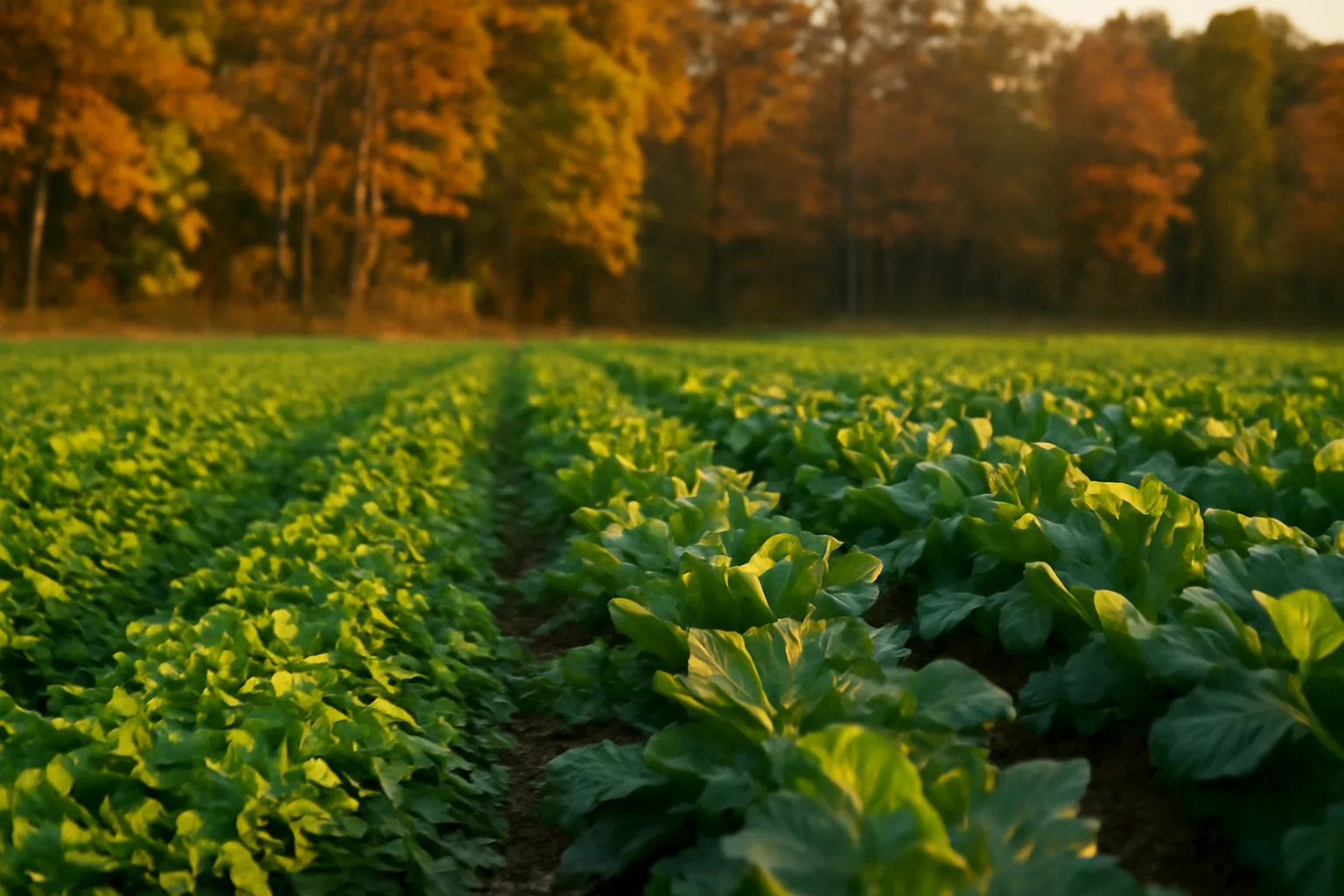
A food plot is a planted area of forage, usually somewhere between a quarter acre and several acres, grown specifically to attract and feed deer or other wildlife. It's agriculture in miniature: you till or no-till the ground, you fertilize based on a soil test, and you plant a crop suited to your soil and season. Legally, the key feature that keeps a food plot out of Michigan's baiting definition is that the crop stays rooted and growing. Michigan's Wildlife Conservation Order defines bait broadly to include grain, minerals, and other food placed to attract deer, but standing agricultural crops are specifically treated differently under DNR guidance. Once you cut, pile, or scatter that forage instead of letting deer browse it standing in the field, you've changed its legal status. Practically, food plots range from small kill plots tucked into timber (a quarter acre to half acre, meant for close bow shots) to larger destination or feeding plots of 2 to 5 acres or more meant to hold deer on your property through fall and winter. Most hunters run some combination of both. For a broader rundown on plot types and how to size them for your ground, see food plot whitetail.
What are Michigan's baiting and feeding rules for deer hunters?
Michigan restricts baiting and feeding deer across most of the Lower Peninsula, with rules tightened repeatedly since 2018 in response to CWD detections in Ionia, Kent, Clinton, Montcalm, and other counties, plus ongoing bTB concerns concentrated in the northeast Lower Peninsula. In the Upper Peninsula, baiting has historically been allowed with volume and timing limits, though the DNR has tightened rules there too as CWD has been found in Menominee County and nearby areas. Because these zones and rules change from year to year based on new disease detections, there's no single number that stays accurate for long. The honest answer is: check the current year's regulations before you put out anything besides a standing food plot. The Michigan DNR's hunting digest, published each year ahead of archery season, is the source to check every August or September. A mineral lick, a pile of apples, a corn feeder, or a mowed and windrowed plot can all be treated as bait under current rule in banned zones. Baiting violations in Michigan are misdemeanors enforced under the state's Natural Resources and Environmental Protection Act, Act 451 of 1994, and conservation officers do patrol for this, especially near CWD core areas.
When should I plant food plots for deer in Michigan?
| Southern Lower Peninsula | early-mid May | early-mid October | mid-May to early June | late July to mid-August | |
|---|---|---|---|---|---|
| Northern Lower Peninsula | late May | late September | late May to mid-June | mid-July to early August | |
| Upper Peninsula | early-mid June | mid-September | June | mid-July to late July | These are averages from long-term NOAA climate normals as referenced by Michigan State University Extension climate guidance; actual frost dates vary year to year, so watch your local forecast, more than the calendar [1]. |
Michigan spans two USDA plant hardiness zones broadly, roughly zone 5 in the southern Lower Peninsula down to zone 4 and even pockets of zone 3 in the Upper Peninsula and far north. That range matters a lot for timing. For spring/summer annuals like soybeans, corn, and sorghum, plant after your last frost date, which runs anywhere from mid-May in the southern Lower Peninsula to early June or later in the U.P. and northern Lower Peninsula. For fall plots (brassicas, cereal grains, clover establishment), the target is 60 to 90 days before your first hard frost, which typically means late July through late August across most of Michigan, with U.P. growers planting earlier in that window. Here's a rough planting calendar by region: | Region | Last spring frost (avg) | First fall frost (avg) | Spring plot window | Fall plot window |
When should I plant clover for Michigan deer plots?
Plant clover in Michigan either in early spring (April into early May, as soon as soil is workable) or late summer (mid-August into early September) to give roots time to establish before winter dormancy. Spring seedings let clover compete better with weeds since it's actively growing during the flush; late summer seedings avoid heavy weed pressure but need enough fall moisture to germinate. Most extension agronomists lean toward spring establishment for pure clover stands in northern climates like Michigan's, because clover seedlings are slow and small in fall and can get smothered by weeds or winterkilled if they haven't developed a strong root system. Michigan State University Extension recommends a firm, fine seedbed and shallow seeding depth (no more than a quarter inch) for clover establishment [2]. Clover needs a soil pH in the 6.0 to 7.0 range to really perform, and it's a legume, meaning it fixes its own nitrogen once inoculated rhizobium bacteria colonize the roots. That's why your soil test matters more than your calendar here: if your pH is low, lime takes months to fully react in the soil, so get lime down the fall before you plant clover if you can. For seed selection specific to whitetail plots, deer food plot seed breaks down blend options by region.
When should I plant oats for deer food plots?
Plant oats in Michigan in early fall, generally mid-August through early September, as a fast-growing annual grain that deer hit hard through October and November before winterkill takes it out. Oats germinate quickly (5 to 10 days in warm soil) and can put on 12 to 18 inches of forage in 6 to 8 weeks, which makes them one of the fastest plots you can get going before archery season. Oats will winterkill in most of Michigan once temperatures drop into the teens for extended periods, so they're not a season-long food source like winter wheat or rye. If you want something that survives into late winter, blend oats with winter rye or triticale, both of which are more cold-hardy and will keep feeding deer after a hard freeze takes the oats out. Some hunters also plant a small spring oat plot (April to May) purely as an early-season green attractant, though this competes with natural spring green-up and tends to get less attention from deer than a fall planting timed to coincide with hunting season.
When should I plant turnips for deer food plots?
Plant turnips in Michigan between late July and mid-August, giving them 80 to 90 days to reach full bulb size before a hard frost, since frost actually improves palatability by converting starches to sugars. Turnips are a brassica, and deer often ignore the tops and bulbs early in the season, then hammer them hard in late fall and winter once a few frosts sweeten them up. That timing lag confuses a lot of first-time brassica planters. Don't panic if your turnip plot looks untouched in September; that's normal, and it's often the plot deer return to hardest in December when other food is gone. Turnips need decent soil fertility (they're heavy nitrogen feeders) and a pH close to 6.0 to 6.5, so this is another crop where your soil test result on lime and nitrogen recommendations should drive your fertilizer decision, not a generic bag rate. Blending turnips with cereal grains like oats or winter wheat is common practice, since the grain gives deer something to eat in the early weeks while the turnip bulbs are still maturing underground.
Do deer eat clover?
Yes, clover is one of the most consistently preferred forages for whitetail deer across their range, and it's a foundation species for perennial food plots in Michigan and most of the Midwest. Deer graze clover from spring green-up through fall, and it regrows after grazing pressure better than almost any other plot forage, which is why it shows up in nearly every food plot seed blend on the market. White clover and red clover are the two most common species planted for deer, with white clover (including Ladino types) generally preferred for its lower growth habit and higher palatability, while red clover tends to be more drought and heat tolerant but slightly coarser. Clover also carries protein levels commonly in the 20 to 30% range on a dry matter basis during active growth, which matters a lot for antler development and lactating does in spring and summer, per land-grant forage research summarized by university extension forage programs [2]. A well-maintained clover plot can produce for 3 to 5 years before it needs to be reseeded, especially with annual mowing and a maintenance lime/fertilizer application based on soil test results.
Do deer eat sorghum, and do deer like clover more?
Deer will eat sorghum, particularly the grain heads once they mature, but it's generally considered a secondary food plot crop compared to clover, soybeans, or corn. Sorghum (including grain sorghum and sorghum-sudangrass types) is more often planted as a screening crop, a drought-tolerant summer annual, or a component in a diverse summer blend rather than as a primary deer attractant on its own. for preference, clover generally outperforms sorghum for season-long deer use, mostly because clover is available and palatable across a longer window (spring through fall, sometimes into winter in mild years) while sorghum is really only attractive once it heads out in late summer/early fall. That said, sorghum has real value: it's cheap, it's drought-tolerant, and the standing stalks provide cover and structure that a low-growing clover plot doesn't. If you're choosing one crop for a small plot and limited budget, most experienced plot managers would put their money on clover or a brassica/grain blend before sorghum, unless screening cover or drought tolerance is the specific problem you're solving for.
What are deer's favorite foods, and do deer like honey?
Deer preference shifts by season and region, but across whitetail range, acorns, soybeans, clover, and standing corn consistently rank as top-preference foods, with acorns often cited as the single most sought-after natural food source in fall due to high fat content that helps deer build winter reserves [3]. Agricultural crops like soybeans and corn get hit hard in late summer and fall when they're available, which is part of why food plots planted near ag fields sometimes get less pressure than plots isolated from row crop country. Deer do not have a natural draw to honey in the way hunting folklore sometimes suggests. There's no research support for honey as a meaningful deer attractant, and it's not a legal bait or feed additive in most states in the way mineral or grain products are regulated. Deer are drawn to sugar and salt in general, which is part of why molasses-based products and mineral licks (where legal) get used, but straight honey isn't a standard or well-supported food plot or attractant strategy, and in Michigan's baited/fed zones, using it near a hunting site could run afoul of the same rules that apply to any other attractant.
How do Michigan's CWD and bTB zones affect food plot hunting?
Michigan's chronic wasting disease and bovine tuberculosis management areas layer additional restrictions on top of the general baiting and feeding rules, and these zones have expanded over time as new cases get confirmed. CWD has been detected in multiple Lower Peninsula counties including Kent, Ionia, Montcalm, Clinton, and Ingham, along with detections in the Upper Peninsula's Dickinson and Menominee counties, prompting the DNR to designate CWD management areas with their own carcass transport and feeding restrictions. bTB has been a longer-running concern concentrated in Alcona, Alpena, Montmorency, and Oscoda counties in the northeastern Lower Peninsula, where supplemental feeding restrictions have been in place since the early 2000s specifically to reduce nose-to-nose contact at feed and bait piles that spreads the disease. None of this restricts food plots themselves. A standing crop doesn't concentrate deer nose-to-nose the way a bait pile does, which is exactly why the DNR treats it differently. But if you hunt in or near a CWD or bTB zone, don't assume old rules still apply; check the current year's zone map and regulations in the Michigan Hunting Digest, because boundaries shift almost every season as new test results come in.
How do I plan a legal, effective food plot in Michigan?
Start with a soil test. Your local soil test lab, whether through MSU Extension or a private ag lab, is the authority on your lime and fertilizer recommendations, not a generic bag rate off a seed label. Soil pH below 6.0 will limit clover and brassica performance no matter how good your seed is, and Michigan has plenty of naturally acidic ground, especially in sandy northern soils [2]. Next, match your species to your calendar and your zone using the frost date ranges above, and pick a mix of annuals (for tonnage and fall draw) and perennials (for season-long, multi-year cover) rather than betting everything on one crop. Finally, keep your plot legally clean: plant it, let it grow standing, and don't supplement it with piled grain, minerals, or feed if you're inside a baiting-restricted zone. If you want a starting point that accounts for your specific soil test numbers, frost dates, and acreage instead of guessing at a generic blend, PlotSeason's $99 one-time Custom Food Plot Plan builds a planting plan around your actual numbers. It's general planning guidance built from your inputs, not site-specific agronomy advice, so your soil lab's lime and fertilizer recommendation should always take precedence over any generic plan. For more on matching seed to your soil and region, see food plot seed and deer food plots.
Frequently asked questions
Are food plots legal in Michigan on leased land?
Yes. Food plot legality in Michigan applies to the land, not the ownership structure, so leased hunting ground follows the same rules as owned land. You need the landowner's or lease agreement's permission to plant, but the state places no separate restriction on food plots for leased versus owned property.
Is it legal to hunt over a food plot in Michigan?
Yes, hunting over a standing food plot is legal statewide in Michigan. The DNR's baiting and feeding restrictions target bait piles, mineral licks, and feeders, not planted crops left growing in the ground. Once you cut and pile the forage, though, it can be reclassified as bait under current rule.
Can you use minerals with a food plot in Michigan?
It depends on your zone. In much of the Lower Peninsula and increasingly in parts of the Upper Peninsula, mineral licks fall under the same baiting and feeding restrictions as grain and corn. Check the current year's Michigan Hunting Digest before placing any mineral product near your plot.
Do deer eat sorghum in food plots?
Yes, deer eat sorghum, mostly the grain heads once mature in late summer and fall. It's usually planted as a secondary crop or screening cover rather than a primary attractant, since clover, soybeans, and brassicas typically draw more consistent deer use across a longer season.
Do deer like clover better than other food plot crops?
Clover is one of the most consistently preferred food plot forages for whitetail deer, often rated above sorghum and comparable to soybeans in preference studies. It's high in protein (commonly 20-30% on a dry matter basis) and available across a longer season than most annuals, which is why it anchors most perennial plot programs.
When is the best time to plant food plots for deer in Michigan?
Spring annuals go in mid-May through June depending on your region's last frost date. Fall plots (brassicas, cereal grains, clover) go in late July through late August, roughly 60-90 days before your area's first hard frost. Southern Lower Peninsula hunters can plant later than Upper Peninsula hunters.
When should I plant oats for a Michigan deer plot?
Plant oats mid-August through early September for a fall attractant plot. Oats germinate in 5-10 days and grow fast, making them a good quick-establishment option before archery season, but they winterkill in most Michigan winters, so pair them with rye or triticale if you want winter-long forage.
When should I plant turnips for deer?
Plant turnips late July through mid-August, giving them 80-90 days before a hard frost. Deer often ignore turnips early and hit them hard after a few frosts sweeten the bulbs and tops, typically in November and December, making turnips a strong late-season food source.
What exactly counts as a food plot under Michigan law?
A food plot is a standing, growing agricultural planting done specifically for wildlife forage. Michigan's DNR distinguishes it from bait or feed because the crop stays rooted in the ground rather than being harvested, piled, or scattered. Mowing and windrowing a plot can change its legal status to feed in restricted zones.
Do deer like honey as an attractant?
There's no solid research support for honey as an effective deer attractant, and it's not a standard product in food plot or mineral site management. Deer respond to sugar and salt generally, but straight honey isn't proven or commonly recommended, and using it as bait in restricted Michigan zones could violate baiting rules.
What are deer's favorite foods overall?
Acorns rank as one of the most preferred natural fall foods due to high fat content, alongside soybeans, corn, and clover among planted crops. Preference shifts seasonally: deer favor high-protein greens like clover in spring and summer, then shift toward high-energy foods like acorns and grain crops as fall and winter approach.
Do I need a permit to plant a food plot in Michigan?
No state hunting or wildlife permit is required to plant a food plot in Michigan. It's treated as a normal agricultural planting. You do need landowner permission if you're on leased ground, and local zoning or conservation easement terms could occasionally restrict land use, so check those separately.
Sources
- Michigan Department of Natural Resources, 2024 Hunting Digest (baiting and feeding order summary): Michigan restricts baiting and feeding deer in most of the Lower Peninsula and treats standing crops differently from bait or feed
- Michigan DNR, Chronic Wasting Disease in Michigan: county detections and management: CWD has been detected in multiple Lower Peninsula and Upper Peninsula counties, prompting management zone designations
- Michigan Legislature, Natural Resources and Environmental Protection Act, Act 451 of 1994, MCL 324.40113a (baiting and feeding of deer): Wildlife conservation violations including baiting infractions are enforced under Michigan's Natural Resources and Environmental Protection Act
- Michigan State University Extension, climate and frost date guidance: Average frost dates vary significantly between southern Lower Peninsula and Upper Peninsula Michigan
- Michigan State University Extension, forage legume establishment guidance: Clover establishment requires firm seedbeds, shallow seeding depth, and soil pH in the 6.0-7.0 range
- USDA Forest Service, Fire Effects Information System: White-tailed Deer food habits: Acorns are a high-preference, high-fat fall food source for white-tailed deer