Last updated 2026-07-25
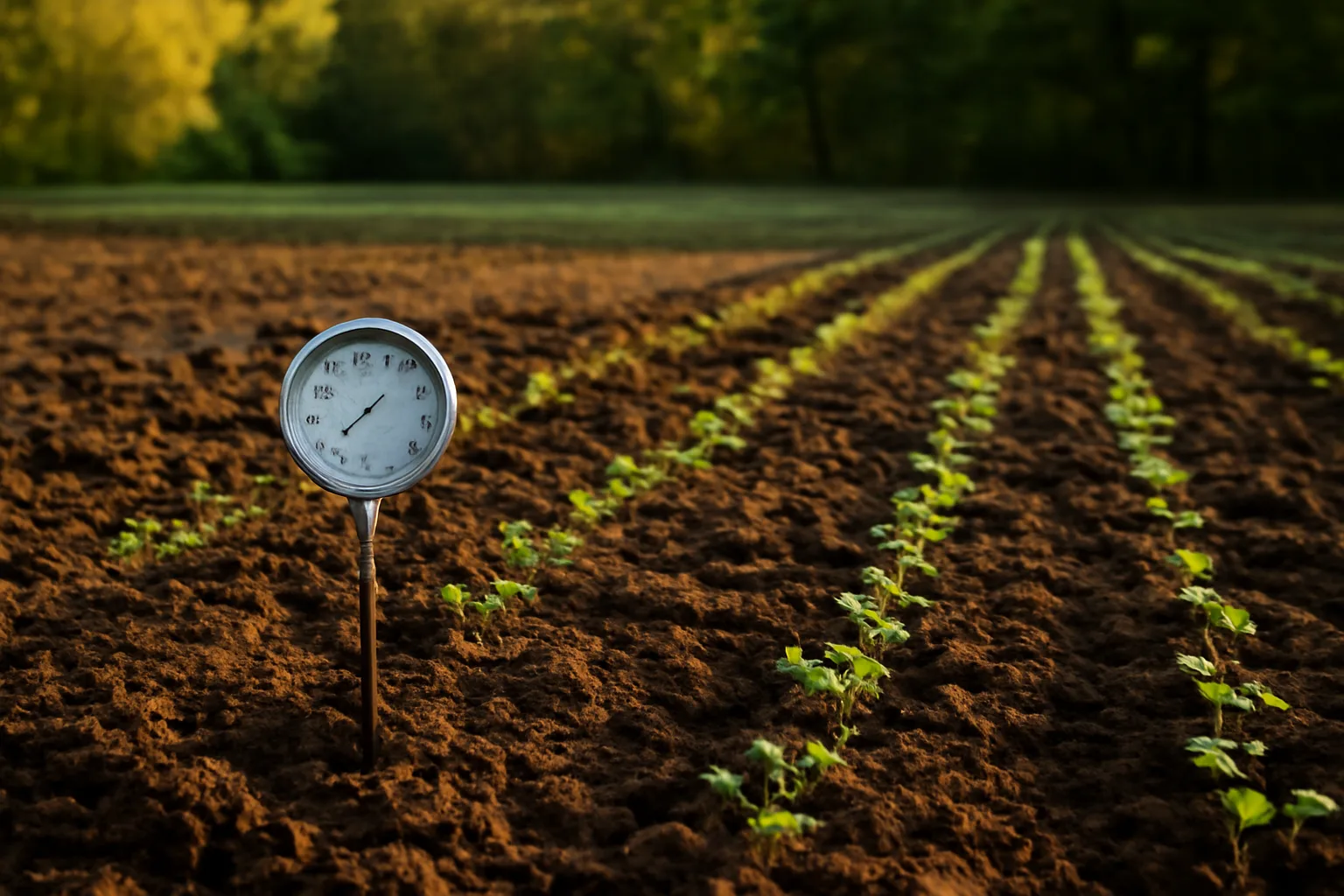
TL;DR
Plant spring/summer plots (clover, chicory, beans) after your last frost, roughly March-May depending on zone. Plant fall plots (brassicas, oats, cereal grains) 60-90 days before your first hard frost, usually late August through September. Soil temperature and moisture matter more than the calendar date, and a current soil test should drive your fertilizer and lime timing either way.
When should you plant deer food plots?
The honest answer is that it depends on what you're planting and where you hunt, but there are two real windows: a spring/summer planting window and a late summer/fall window. Most food plotters in the eastern half of the country are working with one or both of these. Spring plots (clover, chicory, alfalfa, soybeans, cowpeas) go in after your last frost date, when soil temps hit around 50-55°F for legumes and warm further for beans. That's typically mid-March in the Deep South, April in the mid-South and lower Midwest, and late April into May in the northern tier and Canada border states [1]. Fall plots (brassicas, cereal grains, oats, winter peas) get planted 60 to 90 days before your average first hard frost. Brassicas like turnips need that runway to bulk up roots and sweeten with cold, and cereal grains like oats or winter wheat need enough fall growth to establish before dormancy [2]. In much of the whitetail belt that lands somewhere between mid-August and late September. A lot of guys get this backwards and plant fall food plots too late, chasing a cheap Labor Day sale on seed. If you plant brassicas in October in Wisconsin, you'll get a thin, bitter stand that never bulks up. Timing beats convenience every single year. If you want a planting calendar built around your actual zip code instead of a national average, that's the whole point behind a food plot whitetail planning approach, matching species to your specific frost dates rather than a generic bag instructions.
When to plant food plots for deer, by region
| Deep South (LA, MS, AL, GA, FL panhandle) | Mid-Feb to April | Late Sept to Oct | |
|---|---|---|---|
| Mid-South (TN, AR, NC, SC) | March to April | Late Aug to mid-Sept | |
| Lower Midwest (KS, MO, southern IL/IN, OH) | Mid-April to mid-May | Mid-Aug to early Sept | |
| Upper Midwest/Northeast (WI, MN, MI, NY, PA north) | Late April to May | Early to mid-Aug | |
| Canada border/far north | May to early June | Late July to mid-Aug | These are general windows drawn from typical frost-free dates published by NOAA's National Centers for Environmental Information [3] and university extension planting guides [1] [2]. Your soil test report will also usually list a recommended application window for lime and fertilizer, and lime especially needs lead time (ideally applied months ahead) to adjust pH before you plant. |
Frost dates drive almost everything here, and your local NOAA/NWS climate normals or your state extension's planting guide will give you a real date range instead of a guess [3]. Below is a rough national breakdown. Treat it as a starting point, not gospel; microclimates, elevation, and a wet spring can shift these by two or three weeks either direction. | Region | Spring plot window | Fall plot window |
When to plant oats for deer
Oats go in as a fall planting, generally 6 to 10 weeks before your first frost, so you get several inches of leafy growth before cold shuts it down. In most of the whitetail range that's late August through mid-September; in the Deep South you can push into October [2]. Oats are a cool-season annual grass. They germinate fast, often in 5 to 7 days with decent soil moisture, and they're one of the most attractive early-season food plot options because deer key in on tender, high-sugar leaf growth. Oats will winterkill in the far north once temps drop into the low teens for extended periods, so in Zone 3-4 country oats work best as an early fall attraction plot rather than a plant you expect to hold all winter. A lot of hunters blend oats with brassicas or winter wheat/rye. The oats germinate and green up fast (giving you early fall attraction), while the brassicas or cereal rye carry the plot through winter after the oats die back.
When to plant turnips for deer
Turnips need to go in the ground 80 to 90 days before your first killing frost. That's usually late July to mid-August in the northern half of whitetail country, and August into early September further south [2]. Here's the part people miss: turnips (and other brassicas like radishes and rape) don't get palatable until after a hard frost converts starches to sugars in the leaves and bulbs. Plant them too late and they never bulb up. Plant them right and you get a plot that gets more attractive as the season goes, not less, which lines up nicely with late season hunting. Turnip seed is tiny, roughly 150,000-220,000 seeds per pound depending on variety, so it's easy to overseed. Extension guidance generally recommends 4-6 lbs/acre when drilled shallow (a quarter inch or less) or broadcast onto a firm, well-prepared seedbed. Deep planting is the single most common turnip failure; the seed simply doesn't have the reserves to push up through more than a half inch of soil.
Do deer eat sorghum?
Yes, deer will eat grain sorghum (milo), both the standing seed heads and the young leaves, but it's not a top-tier deer food plot choice on its own. Sorghum is more commonly grown as a cover crop, a wildlife food source for turkey and quail, or a screening/security cover planting than as a primary deer attractant [4]. Whitetail research and extension forage-quality studies consistently rank sorghum below soybeans, cowpeas, clover, and brassicas in crude protein and preference when deer have a choice [4]. If you're planting sorghum for deer specifically, it works better as a small side planting for late-season standing grain (turkeys and other wildlife benefit too) than as your main food plot species. Most food plot programs use it, if at all, as a nurse crop or screen, not the primary draw.
Do deer eat clover, and do they actually like it?
Yes. Clover, particularly white clover and red clover, is one of the most consistently preferred forages in whitetail deer diet studies, and it's the backbone of most perennial food plot programs for good reason [5]. It's high in crude protein (often 20-30% in vegetative growth stages), it regrows after grazing, and it's available across spring, summer, and fall in a single planting that can last 3-5 years with maintenance. University extension deer nutrition research repeatedly places clover among the top preferred food plot forages, alongside soybeans and cowpeas during the growing season [5]. Clover also fixes nitrogen in the soil through its root nodules, which is one reason it's often rotated with or planted alongside brassicas or grains that need nitrogen. The catch with clover is establishment. It needs a firm, weed-free seedbed, correct pH (most clover species want soil pH between 6.0 and 7.0), and it's slow to establish in year one. If your soil test comes back at pH 5.2, don't expect a great clover stand until you've limed and given it time to react; lime can take 6 to 12 months to fully adjust soil pH depending on how finely it's ground and how it's incorporated .
What is a food plot?
A food plot is a planted area, usually somewhere between a quarter acre and several acres, established specifically to provide supplemental forage for deer and other wildlife. It's not the same as agriculture done for harvest and sale; the crop stays in the field and gets consumed by wildlife (and sometimes hayed or left standing). Food plots generally fall into two categories: annual plots (replanted each year, like brassicas, oats, or soybeans) and perennial plots (clover, alfalfa, chicory blends that persist for multiple years with mowing and fertility maintenance). Most serious deer managers run both: a perennial plot for spring/summer protein and a rotating annual plot for fall attraction and hunting season nutrition. State wildlife agencies generally regulate food plots the same as any other agricultural planting; the legal question that actually matters is whether hunting over a food plot counts as baiting under your state's law, and that answer varies. Standing crops planted and left in place are legal to hunt over in the vast majority of states, but check your state wildlife agency's specific baiting and feeding regulations before you plant near a stand, since a few states do restrict hunting over certain planted or supplemental feed situations.
What are deer's favorite foods?
There's no single universal answer because preference shifts by season, region, and what's naturally available, but food plot and deer nutrition research points to a consistent short list: soybeans and cowpeas in summer, clover across spring through fall, acorns and other hard mast in early fall, and brassicas and cereal grains in late fall and winter [5]. Deer are also opportunistic browsers of natural vegetation most of the year; food plots supplement, they don't replace, native browse, forbs, and mast. A whitetail's diet composition study from the Mississippi State University Deer Lab and similar university deer programs consistently shows soybeans and native forbs carrying a huge share of summer diet where available, with acorns dominating fall diet when there's a mast crop. If you're picking one plot type to start with, clover or a soybean/cowpea blend for spring-summer, and a brassica/cereal grain blend for fall, covers most of what the research says deer actually prefer across the year. That's also roughly the logic behind putting together a deer food plots rotation instead of planting one species and hoping.
Do deer like honey, or are 'honey hole' plots really about something else?
Deer don't eat honey in any meaningful dietary sense; it's not part of natural whitetail forage, and there's no wildlife nutrition research treating honey as a deer food. The term "honey hole" that hunters use refers to a highly productive hunting spot, often a food plot or pinch point, not an actual honey-based attractant. That said, some commercial deer attractant sprays and mineral products do contain sugar, molasses, or honey-derived scent components meant to draw deer through smell and taste appeal, similar to how apple or persimmon scent attractants work. These are supplemental attractants, not food plot species, and they're a different category entirely from what you'd plant in a plot. If a product claims deer are drawn to a literal honey scent, that's a marketing claim, not an established deer biology finding.
How does soil temperature (more than the calendar) decide planting timing?
Calendar dates are a proxy for soil temperature and moisture, and the soil is what actually triggers germination. Clover and brassica seed germinate reliably once soil temps hit about 45-50°F at planting depth; warm-season legumes like soybeans and cowpeas want soil closer to 60-65°F before you drill or broadcast [1]. A $10 soil thermometer is one of the better investments a food plotter can make. Take a reading at your actual planting depth (usually a half inch to an inch) in the morning for a few consecutive days. If it's climbing and holding above the threshold for your species, you're clear to plant even if the calendar says you're early. If a cold snap is forecast, wait it out; seed that sits in cold, wet soil for two weeks without germinating is much more vulnerable to rot and predation by birds and rodents. Moisture matters as much as temperature. Extension guidance across the Midwest and South generally recommends planting into a seedbed with adequate moisture reserves rather than dry-planting and hoping for rain, especially for small-seeded species like clover and brassicas that can't push through crusted, dry soil after a light rain event.
Spring vs. fall food plots: which should you plant first?
If you can only manage one plot per property this year, most whitetail managers and extension deer programs would point you toward a fall plot first, because that's the plot that lines up with hunting season and gives you the most direct return on effort during the time you're actually in the woods [2]. But the honest, complete answer is that spring and fall plots serve different biological jobs. Spring/summer plots (clover, beans, cowpeas) support antler growth in bucks and lactation demands in does, when protein needs are highest. Fall plots (brassicas, cereals) support fat reserves and rut recovery heading into winter, and they're what you're actually hunting over in October and November. If you're building out a property from scratch, a reasonable sequence is: get a soil test done in late winter, establish a perennial clover plot in spring once soil temps allow, then plant your annual fall blend in a separate plot 60-90 days ahead of your local frost date. That two-plot approach is the backbone of most food plot seed programs recommended by university extension wildlife specialists.
What does a soil test actually tell you about timing?
Your soil test report tells you pH, phosphorus, potassium, and often organic matter, and from that your lab or extension office will recommend lime and fertilizer rates. It does not tell you the calendar date to plant; that's still driven by frost dates and species choice. Where the soil test does affect your timeline is lime. Agricultural lime reacts slowly; university extension guidance generally states it can take several months to a year to fully raise soil pH depending on particle size and how well it's incorporated into the soil . That means if your test comes back needing 2 tons/acre of lime and you're aiming for a fall brassica plot, you want that lime down in early spring, not two weeks before you plant seed. Your soil test lab is the authority on your specific lime and fertilizer numbers; a national planting guide can't know your field's exact chemistry. Take the test, follow the lab's rate recommendations, and use the planting calendar above to time the seed itself. If you want a plan that pulls your test results and frost dates together into one seasonal schedule, that's what a $99 Custom Food Plot Plan is built to do, though a soil test and a good extension planting guide will get most people 90% of the way there on their own.
What planting equipment actually changes your timing decisions?
Your equipment doesn't change when you should plant, but it changes how much margin for error you have. A no-till drill lets you plant into standing residue or slightly less-than-perfect seedbed conditions and still get good seed-to-soil contact, which means you can plant closer to the edge of your ideal window with less risk. Broadcast-and-cultipack setups (common on small ATV/UTV rigs) need a firmer, cleaner seedbed and are more sensitive to a poorly timed rain, so those growers benefit from being more conservative and planting a little earlier in the window rather than pushing the late edge. If you're broadcasting brassica or clover seed by hand or with a spreader, get it down right before a rain if you can, since surface-broadcast small seed depends heavily on moisture and rainfall timing to make contact with soil and germinate, more so than drilled seed at a controlled depth.
Frequently asked questions
When to plant deer food plots in general?
Spring/summer plots (clover, beans) go in after your last frost, typically March-May depending on your zone. Fall plots (brassicas, oats, cereal grains) go in 60-90 days before your first hard frost, usually mid-August through September across most of the whitetail range. Local frost dates from NOAA climate normals are the best starting reference.
Do deer eat sorghum?
Yes, deer will browse young sorghum leaves and eat mature grain heads, but it ranks below soybeans, cowpeas, and clover in deer forage preference studies. Most food plotters use sorghum as a screening cover crop or turkey/quail planting rather than a primary deer attractant plot.
Do deer eat clover, and do deer like clover?
Yes, clover is one of the most preferred whitetail food plot forages, often 20-30% crude protein in vegetative growth. White and red clover are staples of perennial food plot programs and consistently rank near the top in university deer forage preference research.
When to plant oats for deer?
Plant oats 6-10 weeks before your first fall frost, typically late August through mid-September in most whitetail range, later in the Deep South. Oats germinate fast and provide early fall attraction but will winterkill in far northern zones once hard freezes set in.
When to plant turnips for deer?
Turnips need 80-90 days before your first killing frost, usually late July into mid-August in the north and August into early September further south. Turnips need a hard frost to convert starches to sugar, so planting too late means the bulbs never sweeten or fully develop.
What is a food plot for deer?
A food plot is a planted area, from a quarter acre to several acres, established to provide supplemental forage like clover, brassicas, or beans for deer and other wildlife. Unlike commercial agriculture, the crop is left in the field for wildlife to eat rather than harvested.
What are deer's favorite foods overall?
Research points to soybeans and cowpeas in summer, clover across spring through fall, acorns and hard mast in early fall, and brassicas or cereal grains in late fall and winter. Preference shifts by season and region, and natural browse and mast still make up a large share of a whitetail's diet.
Do deer like honey?
No, honey isn't a natural part of whitetail diet and there's no wildlife research treating it as deer food. Some commercial attractant products use honey or molasses scent to draw deer by smell, but that's a marketing additive, not a food plot species or documented food preference.
Is it better to plant food plots in spring or fall?
Both serve different purposes: spring/summer plots support antler growth and lactation with high-protein forage, while fall plots support fat reserves and rut recovery and line up with hunting season. Most experienced food plotters run both, but if choosing one, fall plots give the most direct return during hunting season.
How do I know the soil temperature is right for planting?
Use a soil thermometer at your actual planting depth (about a half inch to an inch) for a few consecutive mornings. Clover and brassicas germinate reliably around 45-50°F soil temp, while soybeans and cowpeas want closer to 60-65°F before planting.
Can I plant a food plot too late in fall?
Yes, and it's one of the most common food plot mistakes. Brassicas planted less than 80 days before frost never bulb up properly, and oats or cereal grains planted too late don't get enough fall growth before dormancy, leaving a thin, unattractive stand.
Does a soil test tell me when to plant?
No, a soil test tells you pH and nutrient levels so your lab can recommend lime and fertilizer rates; it doesn't set your planting date. Planting timing still comes from frost dates and species requirements, though lime needs months of lead time to adjust pH before you plant.
Sources
- University of Tennessee Extension, Establishing Wildlife Food Plots: Spring planting windows and soil temperature thresholds for warm-season food plot species
- NOAA National Centers for Environmental Information, Climate Normals: Regional first and last frost date normals used to build planting windows
- NRCS/USDA Plants Database, Sorghum bicolor: Sorghum use as a wildlife and cover crop planting rather than primary deer forage
- University of Georgia Warnell School, Deer Food Plot Guide: Clover crude protein content and preference ranking among food plot forages
- University of Missouri Extension, Soil Acidity and Liming: Lime reaction time of several months to a year to fully adjust soil pH