Last updated 2026-07-25
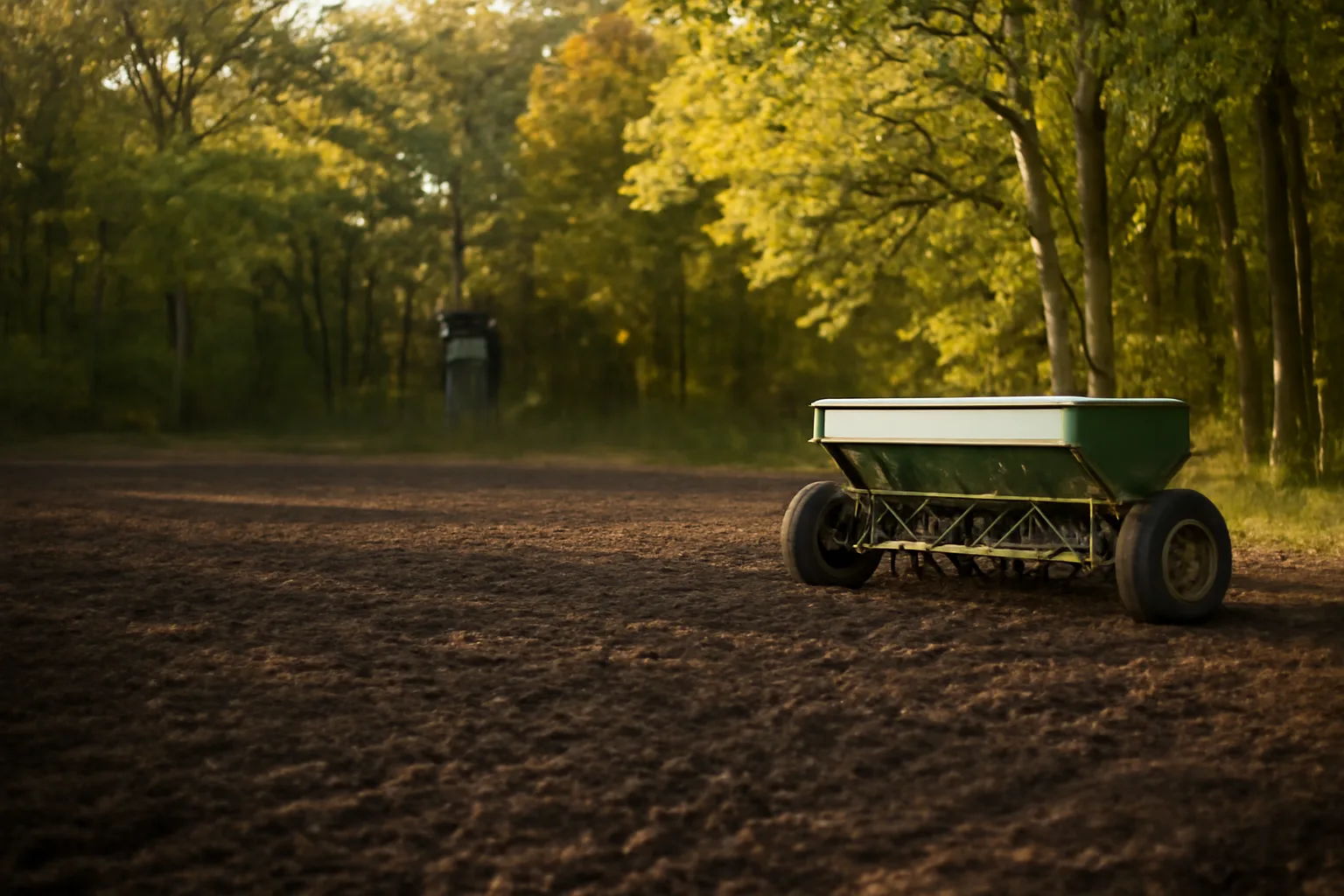
TL;DR
Most food plot planting happens in two windows: spring (April to June) for warm-season plots like clover and soybeans, and late summer to early fall (late July through September) for brassicas, oats, and cereal grains. Exact timing depends on your USDA hardiness zone, first frost date, and species. Soil temperature and moisture matter more than the calendar date.
When should you plant food plots for deer?
There is no single date. Planting timing depends on three things: what you're planting, your USDA plant hardiness zone, and your first fall frost date. Warm-season plots (clover, soybeans, corn) go in during spring after the last frost, usually April through June depending on latitude. Cool-season plots (brassicas, turnips, oats, wheat, rye) go in during late summer, timed so they have 60 to 90 days of growth before a killing frost. The general rule extension agronomists use: count backward from your average first frost date. Brassicas like turnips need 80 to 90 days to bulb properly, so in a zone with an October 1 first frost, you're planting by mid to late July. Oats and cereal grains need less time, often 45 to 60 days, so you have more room to plant into September. Soil temperature matters as much as the calendar. Clover germinates poorly below 50°F soil temp, and brassica seed sits dormant in cold, wet soil instead of germinating evenly. A soil thermometer costs about $10 and tells you more than a planting chart ever will.
When to plant food plots for deer by zone
| 3-4 (northern MN, WI, ME) | Mid-May to early June | Late July to mid-August | Mid-September | |
|---|---|---|---|---|
| 5 (southern MN, IA, PA, NY) | Late April to late May | Early to mid-August | Early October | |
| 6 (KY, VA, MO, KS) | Mid-April to mid-May | Mid-August to early September | Mid to late October | |
| 7 (TN, NC, AR, OK) | Late March to April | Late August to mid-September | Early November | |
| 8-9 (Deep South, TX, FL) | February to March | September to October | Late November to December | These windows are starting points, not guarantees. A late spring frost or a dry August can shift things by two or three weeks. Check your local extension office's frost date tables before you commit seed to the ground [1]. |
Zone-based planning is the fastest way to get a workable window without guessing. USDA hardiness zones (based on average annual minimum temperature) are a decent proxy for frost dates, though your specific county's first and last frost dates from NOAA or your state climate office are more precise [1]. | Zone | Spring plot window | Fall plot window | Typical first frost |
When to plant clover for deer
Plant clover in early spring (as soon as soil is workable, usually April in zones 5-6) or late summer (August to early September) so it establishes before winter dormancy. Spring plantings need consistent moisture to get clover through its slow first month; fall plantings benefit from cooler temps and typically more rain. Clover is a perennial, so timing right matters more than with annuals. A clover stand planted too late in fall may not build enough root reserve to survive winter. Frost seeding, broadcasting clover seed onto frozen ground in late winter so freeze-thaw cycles work it into the soil, is a low-cost option many food plotters use in the upper Midwest and Northeast, typically February to March [2]. Soil pH matters a lot for clover. It performs best at pH 6.0 to 7.0, and most extension guides note that clover struggles badly below pH 6.0 because nitrogen-fixing rhizobia bacteria don't function well in acidic soil [2]. If your soil test came back at 5.2, lime before you plant, not after. Your soil test lab's lime recommendation is the authority here; a plan built on your specific test beats a generic pH target every time.
Do deer like clover?
Yes. Clover is one of the most consistently used food plot forages across whitetail range, and it's a preferred food source spring through fall while actively growing. Extension research and deer nutrition studies rank clover among the top food plot forages for both digestibility and crude protein, often 25 to 30% crude protein in vegetative growth stages [3]. What makes clover valuable isn't just palatability. It regrows after grazing (unlike brassicas or beans, which deer can wipe out in one browsing event), so a good clover stand can feed deer from April through November in a single planting, with proper mowing and fertility maintenance. Ladino and white clover varieties are the most common for food plots because they tolerate heavy grazing pressure better than red clover. The tradeoff: clover takes real management. It needs mowing two to four times a season to stay vegetative and outcompete weeds, and it needs a pH correction most raw ground doesn't have without lime. If you want low-input, brassicas or cereal grains are less fussy.
When to plant oats for deer
Plant oats in late summer, generally 6 to 10 weeks before your first fall frost, so the same window as brassicas: late July in the far north down through September in the Southeast. Oats are a cool-season annual cereal grain and germinate fast, often within 5 to 7 days in warm, moist soil. Oats have a shorter maturity window than turnips, which is why they're forgiving for late planters. A late-August oat planting in zone 6 will still put on solid forage growth by October. Oats also die out with hard freezes in most of the northern half of the country (below about 20°F), so they function as an early-to-mid season fall attractant rather than a winter food source in cold zones. In the Southeast and mid-South, oats can survive milder winters and provide forage into late winter. Many food plot mixes blend oats with wheat or cereal rye specifically because rye is more cold-hardy and extends the plot's usefulness into winter after the oats die back.
When to plant turnips for deer
Plant turnips 80 to 90 days before your first expected fall frost. That's the number that matters most, because turnips need that time to develop the bulb, more than leaf growth. In most of the whitetail's range, that lands somewhere between mid-July (zone 3-4) and early September (zone 7-8). Turnips are a brassica, and deer typically ignore the bulbs early in the season, hammering the leaves first. The bulbs become attractive later, often after a couple of hard frosts convert starches to sugars, which is why turnip plots often see their heaviest use in late fall and early winter rather than at planting. A mistake a lot of first-time planters make: seeding turnips too thick. Extension guidance generally recommends 4 to 6 lbs per acre broadcast, and heavier rates just mean smaller bulbs from crowding, not more tonnage. Turnips also want a fairly fine, firm seedbed since the seed is small; drilling at a quarter inch depth or broadcasting and light-dragging both work.
Do deer eat sorghum?
Yes, deer eat grain sorghum, both the standing seed heads and the plant itself while young, but it's used more as a screening and winter grain crop than a primary attractant plot. Sorghum is planted like corn, in late spring once soil temps hit 60°F or higher, and it's more drought-tolerant than corn, which is why it shows up in food plot mixes for the Plains and southern regions [4]. Sorghum's real value in a deer program is often structural: it grows 5 to 8 feet tall and gives cover and screening around a plot or stand access trail, while also standing through winter as a grain source after other plots have been grazed out. It's not usually the plot deer hit first when clover or beans are also available, but in late winter when soft forage is gone, standing grain matters.
Do deer like honey?
Deer aren't drawn to honey in any meaningful food plot or attractant sense; that idea mostly comes from commercial deer attractant sprays and syrups marketed with "honey" or sweet scents, not from any documented dietary preference. Deer are ruminant herbivores that key on forbs, browse, mast (acorns), and agricultural crops, not sugar sources like a bear would. There's no wildlife agency or extension research establishing honey as a meaningful deer food or attractant, so treat marketing claims to that effect skeptically. What actually gets used in scent-based attractants is typically molasses or sugar-based liquid poured on the ground or on a mock scrape, and results are mixed and undocumented in peer-reviewed research. If you want deer on your property in numbers, a planted food source beats a bottle of syrup every time.
What are deer's favorite foods?
Deer are opportunistic browsers, and their preferences shift by season and what's available, but consistent favorites documented in deer diet studies and extension forage guides include: acorns (especially white oak acorns, which are lower in tannins and more palatable than red oak), soybeans, clover, and agricultural crops like corn and alfalfa where available [5]. Acorns deserve special mention. Multiple deer research studies, including work compiled by university wildlife programs, show acorns can make up 25% or more of a whitetail's fall diet in years with a good mast crop, sometimes drawing deer away from planted plots entirely [5]. That's why plot hunters in oak country pay attention to mast crop conditions each fall; a bumper acorn year can make your plot look like a ghost town in October and November. Among planted forages, soybeans (in vegetative stage) and clover consistently rank at the top of preference studies for crude protein and digestibility, with brassica tops and cereal grains rated as good secondary or late-season options [3].
What is a food plot?
A food plot is a planted area, typically a fraction of an acre up to several acres, seeded with forage crops specifically to attract and feed deer or other wildlife on a property. Food plots are distinct from agricultural fields grown for harvest; they're managed for wildlife nutrition and hunting opportunity, not for sale. Food plots generally fall into two functional categories: annual plots (planted fresh each year, like brassicas, oats, or soybeans) and perennial plots (clover, alfalfa, chicory) that persist for two to five years with maintenance. Most land managers run a mix of both, using perennials for season-long forage and annuals timed to peak during hunting season. State wildlife agencies generally regulate food plots differently from bait piles or supplemental feed; a planted, standing crop is legal in most states even where baiting (piling loose grain or minerals) is restricted or banned. Rules vary a lot by state, so check your state wildlife agency's regulations before assuming a practice is legal, especially around supplemental feeding, mineral use, or planting near property lines [6]. If you're mapping out species and acreage for the first time, a resource like food plot whitetail walks through the basics, and something like the deer food plot seed guide breaks down specific mixes.
How do you decide what to plant and when, on your specific property?
Start with your soil test, not the seed bag. A basic soil test through your state land-grant extension office (often $10 to $20) tells you pH, phosphorus, and potassium levels, and the lab's lime and fertilizer recommendation is specific to your soil, not a generic chart [7]. That result should drive species choice as much as your frost date does; clover on unlimed 5.0 pH ground is a wasted bag of seed. After the soil test, work backward from your hunting season goals. Want peak attraction during archery season in October? Plant brassicas or oats in late July or August so they peak right then. Want season-long forage plus early bow season use? A clover perennial planted in spring, mowed through summer, does that. Equipment matters for timing too. If you're broadcasting into an existing perennial stand, timing is more flexible than drilling into a fresh seedbed, which usually needs a dry enough window to disk or till. A $99 Custom Food Plot Plan (built from your soil test results, region, and acreage) at /plot-plan-builder is one way to get species and timing matched to your specific dirt instead of guessing off a bag label; it's general guidance built from your inputs, not a site visit or a guarantee of deer activity.
What if you miss the ideal planting window?
You still have options, just fewer of them. Miss the brassica window by three or four weeks and you'll likely get leafy growth without real bulb development, still useful forage, just not the late-season bulb crop you wanted. Miss the clover window in fall and you risk a stand that doesn't winterize well; spring becomes your fallback. Oats and cereal rye are the most forgiving late options because they mature fast and rye in particular tolerates a late September or even October planting in many zones, greening up again in spring if it survives winter. If you're planting later than ideal, lean toward cereal grains over brassicas or clover. One thing that doesn't change with timing: seed-to-soil contact and moisture. A perfectly timed planting into a poor seedbed with no rain in the forecast will underperform a slightly late planting done right before a good rain.
Frequently asked questions
When is the best time to plant food plots for deer?
It depends on species. Warm-season plots (clover, beans, corn) go in April through June after last frost. Cool-season plots (brassicas, oats, wheat) go in late July through September, timed 60 to 90 days before your first fall frost, depending on the crop and your zone.
Do deer eat sorghum?
Yes, deer eat both young sorghum plants and mature grain heads, though it's more commonly used as a standing winter grain and screening crop than a primary attractant. It's planted like corn, in late spring once soil hits 60°F.
Do deer like clover?
Yes, clover is one of the most preferred and widely planted food plot forages, often 25-30% crude protein in vegetative growth. It regrows after grazing, unlike beans or brassicas, so it feeds deer spring through fall from one planting if mowed and fertilized properly.
When should you plant oats for deer plots?
Plant oats 6 to 10 weeks before your first fall frost, generally late July in northern zones down to September in the Southeast. Oats germinate fast (5-7 days) and die out below about 20°F in most northern regions, functioning as early-to-mid fall forage.
When should you plant turnips for deer?
Plant turnips 80 to 90 days before your expected first fall frost so bulbs have time to develop, more than leaves. That lands roughly mid-July in the upper Midwest to early September in the mid-South. Deer often ignore bulbs until after a few hard frosts sweeten them.
What exactly is a food plot?
A food plot is a planted area seeded specifically to feed and attract deer or other wildlife, distinct from a commercial crop grown for harvest and sale. Plots are typically annual (brassicas, oats, beans) or perennial (clover, alfalfa) and range from under an acre to several acres.
What are deer's favorite foods overall?
Acorns (especially white oak), soybeans, and clover consistently rank as top preferences in deer diet studies. Acorns can make up 25% or more of the fall diet in good mast years, sometimes pulling deer away from planted plots entirely.
Do deer like honey?
There's no real evidence deer seek out honey specifically; that idea largely comes from marketed deer attractant products, not documented feeding behavior. Deer are ruminant browsers keyed on forbs, browse, and mast, not sugar sources. Molasses-based liquid attractants exist but results are undocumented and mixed.
Can you plant a food plot too early or too late?
Yes, both matter. Planting brassicas too early into hot, dry summer soil can cause poor germination or bolting; planting too late means bulbs or clover roots don't mature before frost or winter dormancy. Working backward from your first frost date is the most reliable method.
How do I know my first frost date for planting timing?
Check your state climate office or NOAA's climate normals data for your specific county; national frost date maps are a rough guide but local data is more accurate. Extension offices in most states publish a frost date table alongside planting guides.
Should I soil test before deciding what and when to plant?
Yes. A soil test (typically $10-$20 through your state land-grant extension lab) tells you pH and nutrient levels, which affects species choice as much as timing does. Clover on unlimed acidic soil underperforms regardless of when you plant it.
Is spring or fall planting better for deer food plots?
Neither is universally better; they serve different purposes. Spring plantings (clover, beans, corn) build season-long forage and summer nutrition. Fall plantings (brassicas, oats, wheat) are timed to peak during hunting season, often October through December.
Sources
- NOAA National Centers for Environmental Information, Climate Normals: County-level first and last frost date data used for planting timing
- University of Missouri Extension, Establishing Food Plots for Deer: Clover performs best at pH 6.0-7.0 and frost seeding in late winter is a low-cost establishment method
- Mississippi State University Extension, Deer Forage Quality: Clover crude protein levels of roughly 25-30% in vegetative stage and forage preference ranking among food plot species
- University of Georgia Extension, Wildlife Food Plots: Grain sorghum is planted in late spring once soil temperatures reach about 60°F and functions as a drought-tolerant screening and winter grain crop
- University of Tennessee Extension / wildlife research on whitetail diet composition: Acorns, particularly white oak, can comprise 25% or more of fall whitetail diet in good mast years
- State wildlife agency baiting and feeding regulations vary; example Michigan DNR baiting law: Baiting and supplemental feeding rules for deer vary by state and are regulated separately from planted food plots
- University of Missouri Extension, Soil Testing for Lime and Fertilizer: Basic soil tests through land-grant extension labs typically cost around $10-$20 and provide pH and lime/fertilizer recommendations