Last updated 2026-07-25
TL;DR
Wheat is a cheap, reliable food plot seed that germinates fast, tolerates poor soil, and pulls deer hard once frost sweetens the leaves. Plant 60-120 lbs per acre, 6-8 weeks before your area's first killing frost, at a soil pH near 6.0-6.5. It works alone or mixed with clover, oats, or brassicas.
what is a food plot and where does wheat fit in
A food plot is a planted patch of forage, usually on private or leased hunting ground, meant to feed deer and other wildlife while giving hunters a predictable place to watch or hunt from. Plots range from quarter-acre kill plots tucked in timber to multi-acre field plantings meant to hold deer all season. Wheat is one of the oldest, cheapest, and most forgiving seeds you can put in a food plot. It's a cereal grain, cold-tolerant, fast to establish, and it does double duty: deer browse the green leaves in fall and again in early spring, and if you let a section go to head, turkeys and other wildlife use the grain. Compared to a lot of boutique food plot blends, straight wheat seed from a farm co-op costs a fraction as much per acre, often $10-20 per 50 lb bag versus $40-80 for branded blends of similar coverage. Wheat isn't flashy. It won't out-draw a good brassica blend in December in most of the whitetail's range, and it's not as high in crude protein as clover through the growing season. But for cost, ease, and reliability across many different soil types, it's hard to beat as a base plot species or a nurse crop for something else. If you're building out a full plot rotation, see food plot whitetail for how wheat fits into a broader plan.
do deer eat sorghum
Yes, deer eat sorghum, particularly the grain heads and the young green growth, but it's usually a secondary or cover-crop species rather than a primary attractant plot. Whitetails will browse sorghum foliage some in summer, and they'll hit the grain heads once they mature and dry down in fall, especially where competing food is scarce. Sorghum shows up more often in food plot mixes as a structure and screening plant. It grows tall (some grain sorghum varieties reach 4-6 feet), which makes it useful for hiding a plot's edges or breaking up sightlines to a stand. Deer don't preferentially select sorghum over clover, wheat, or soybeans when those are available. If you're choosing between wheat and sorghum for a fall plot, wheat wins on palatability and simplicity. Sorghum earns its spot when you need height for cover or you're planting a mix meant to hold grain into winter for multiple species, more than deer.
do deer eat clover, and do deer like clover
Deer eat clover readily, and most wildlife biologists and food plot researchers rank it among the top perennial forages for whitetail nutrition. Clover regrows after grazing, holds crude protein levels commonly cited between 20 and 25 percent in vegetative stages, and it's available spring through fall in a well-maintained stand. Deer do like clover, especially in spring and summer when does need protein for lactation and bucks need it for antler growth. It's less useful in December in northern climates because hard frost knocks growth back and snow can cover it, which is where wheat, brassicas, or standing grain plots take over. A lot of experienced plot managers run clover as their perennial spring/summer plot and wheat, oats, or brassicas as the annual fall plot. Clover needs a decent soil pH, generally 6.0 to 6.5, and takes a season to fully establish, so it's not an instant fix the way wheat is. For species comparisons across a whole planting season, deer food plot seed covers how clover, wheat, and brassicas complement each other.
when to plant food plots for deer
Timing depends entirely on what you're planting and where you live, but the general rule for fall plots is to plant so the forage has time to establish before the ground freezes or growth stops, and to plant spring/summer plots after your last frost date. Wheat, oats, and brassicas are typically planted in late summer to early fall, 60-90 days before your area's average first killing frost. Cooperative extension planting guides break the country into rough zones. In the upper Midwest and Northeast, fall cereal grain and brassica plots often go in from mid-August through early September. In the transition zone and mid-South, growers usually wait until September into early October. In the Deep South, wheat and oats can go in from October into November because the growing season runs later. Spring plots (clover, soybeans, alfalfa) get planted after soil temperatures warm and frost risk passes, generally April through May in northern states and March through April farther south. Always check your local extension office's frost date data rather than a generic calendar, because a five-degree-of-latitude difference can shift planting windows by three or four weeks.
when to plant oats for deer
Oats go in the ground at the same general window as wheat, roughly 60-90 days ahead of your first fall frost, which puts most of the country in a late-August through September planting window, with the Deep South stretching into October. Oats germinate fast, often within 5-7 days in warm, moist soil, and deer tend to hit young oats hard because the leaves are tender and low in fiber compared to more mature cereal grains. Oats are less winter-hardy than wheat. In hard-freeze country, oats will die back once temperatures drop into the teens and stay there, while wheat keeps some green growth and comes back strong in spring. That's why a lot of plot mixes blend the two: oats for a fast, highly attractive early fall food source, wheat for the plot that survives into winter and re-greens in March. If you're only planting one cereal grain and you're north of, say, the Ohio River, wheat is the safer single choice. South of that line, oats hold up fine most winters and give you a slightly more palatable early season draw.
when to plant turnips for deer
Turnips and other brassicas need to go in the ground earlier than most hunters expect, typically 90-100 days before the first hard frost, because they need time to bulb before cold weather triggers the sugar conversion that makes them attractive to deer. That puts most brassica plantings in the same window as early wheat, late July through mid-August in northern and mid-latitude states, a few weeks later in the Deep South. The trick with turnips is that deer often ignore the plants for the first six to eight weeks after emergence, then switch on hard after the first frost converts starches to sugars in the leaves and bulbs. If you plant turnips too late, you get bulbs that never size up and leaves deer won't touch until it's nearly hunting season's end. Many successful fall plots run brassicas (turnips, radishes, rape) mixed with wheat or oats. The cereal grain gives quick cover and early season attraction while the brassicas bulb up underneath, then take over as the preferred food once frost hits.
how do you plant wheat food plot seed step by step
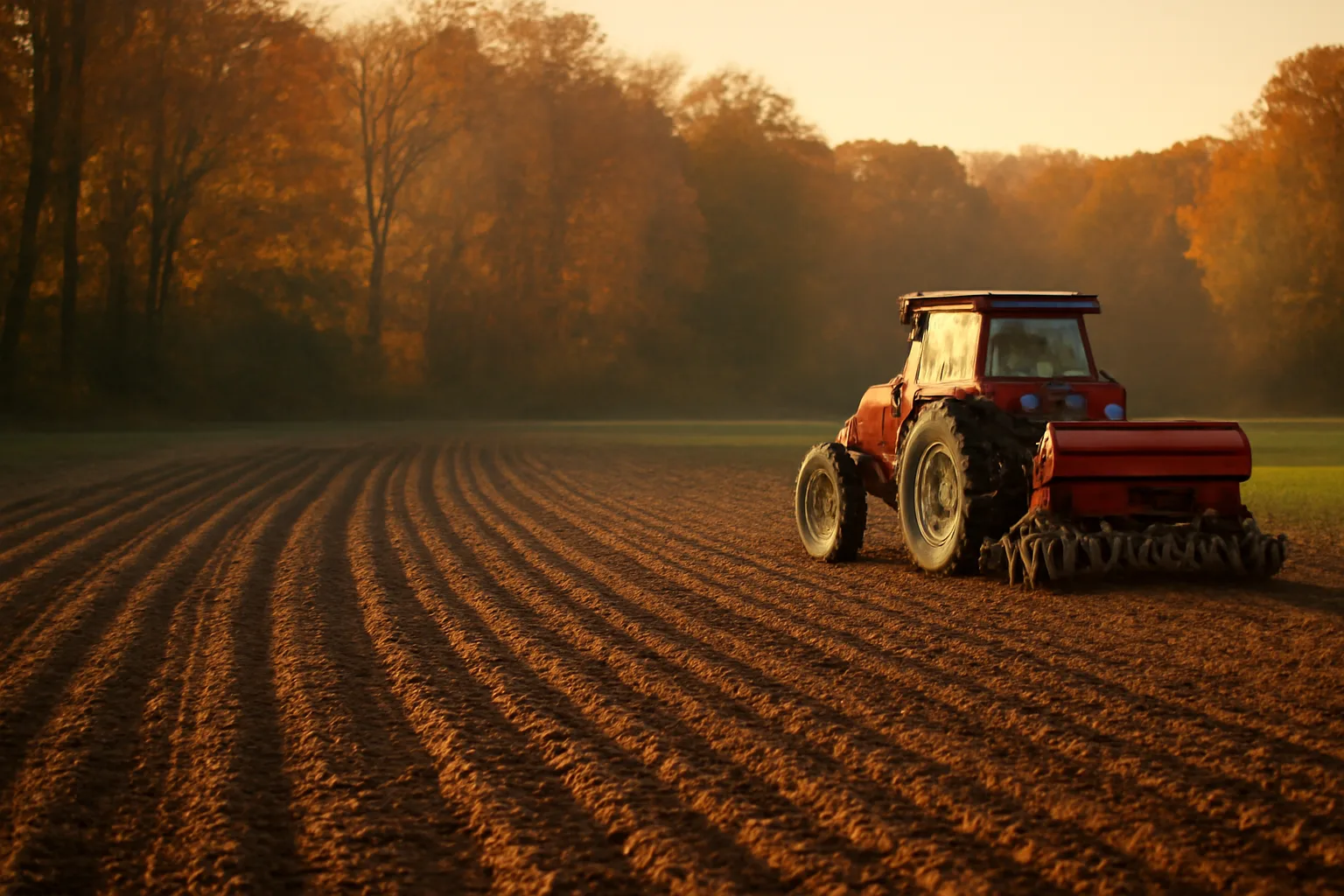
Start with a soil test. Wheat tolerates a wider pH range than clover or alfalfa, generally performing acceptably from pH 5.5 to 7.0, but it still yields better closer to 6.0-6.5, and your soil test report is the actual authority on how much lime and fertilizer your specific dirt needs. A basic soil test through your county extension office usually costs $10-20 and takes one to three weeks to get results back. Prepare a clean seedbed. Wheat germinates fine with minimal tillage, disced into a firm seedbed or even no-till drilled into existing sod or a burned-down cover crop. Broadcast seeding works too, but you want good seed-to-soil contact, so drag or cultipack after broadcasting if you're not using a drill. Planting rate runs 60-120 lbs per acre depending on method. Drilled wheat can go as low as 60-90 lbs/acre because seed placement is more efficient. Broadcast wheat should go heavier, 100-120 lbs/acre, to account for uneven coverage and seed that doesn't make good soil contact. Planting depth is 1-1.5 inches; too shallow and birds or drying conditions get the seed, too deep and it struggles to emerge. Fertilize based on your soil test, but a general starting point for wheat food plots is 100-150 lbs/acre of a balanced starter fertilizer (something like 19-19-19 or similar) at planting, with a nitrogen top-dress of 30-50 lbs of actual N per acre if you want to push more vegetative growth for grazing rather than grain production. Since you're growing this for deer browse, not a wheat harvest, you generally don't need the higher nitrogen rates commercial grain farmers use.
wheat vs oats vs brassicas: which should you plant
| Wheat | 60-90 days before frost | High, regreens in spring | Fall through winter, again in early spring | 60-120 lb/acre | |
|---|---|---|---|---|---|
| Oats | 60-90 days before frost | Low to moderate, often winterkills | Early-mid fall, fades after hard freeze | 80-110 lb/acre | |
| Turnips/brassicas | 90-100 days before frost | High for leaves, bulbs can freeze | Post-frost through winter | 4-6 lb/acre (turnip); mix rates vary | |
| Clover (perennial) | Spring, or late summer in some zones | Moderate, dormant in hard winter | Spring through fall | 6-10 lb/acre (broadcast, varies by species) | A lot of plot managers don't pick one, they blend two or three. A common fall mix is wheat plus oats plus a brassica, seeded together so you get fast early cover from the oats, sustained mid-season grazing from the wheat, and a late-season sugar spike from the brassicas once frost hits. If you want a build-your-own approach based on your specific soil test and region, that's the kind of thing a $99 one-time Custom Food Plot Plan is built to sort out, matching species and rates to your dirt instead of guessing off a bag label. |
None of these is a universal best answer. It depends on your climate, your planting date, and whether you want early season attraction, late season attraction, or both. | Species | Best planting window | Cold tolerance | Deer draw timing | Approx. seeding rate |
what are deer's favorite foods
There's no single official ranking, but wildlife research and extension forage studies consistently point to a short list: acorns (especially white oak family acorns, which are lower in tannins and more palatable than red oak group acorns), soybeans, clover, and other legumes rank at or near the top for both preference and nutritional value. Agricultural crops like corn and soybeans, where available, get hit hard because of their carbohydrate and protein density. Seasonally, preference shifts. In late summer and early fall, soft mast (apples, pears, persimmons where they grow) and acorns pull deer off almost everything else. In winter, when natural browse is scarce, cereal grains like wheat and brassicas that have gone through a frost become far more attractive because of the sugar conversion. In spring, new clover and forb growth is preferred because deer need protein after a hard winter. Regional food habits studies show forage preference varies by what's locally available; a deer herd with heavy agricultural access behaves differently than one in solid timber. That's part of why a generic "best food plot seed" answer doesn't really exist, it depends on what's already on the landscape around your plot. For more on species selection by region, deer food plots breaks down regional forage strategy in more depth.
do deer like honey, and other odd food questions hunters ask
Deer don't eat honey in any meaningful way as a food source; they're herbivores built to digest plant fiber through a four-chambered rumen system, not sugar syrup. The question usually comes up because of "honey hole" terminology (a great hunting spot) or confusion with sweet feed products and molasses-based mineral licks, which deer will absolutely use. Molasses shows up as a binder or attractant in some commercial mineral and protein supplement products, and deer will hit those, but that's a manufactured additive, not deer seeking out honey itself. If you're checking state rules before using any supplemental feed, mineral, or attractant product, check your state wildlife agency's regulations first, because baiting and supplemental feeding rules vary widely and some states restrict mineral sites or feeding outright, especially in areas managing for chronic wasting disease. Wisconsin, for example, restricts baiting and feeding of deer under its administrative code, with county-by-county rules tied to CWD management zones [1]. Same goes for food plots generally in some jurisdictions: a few states classify certain plot practices differently than natural agriculture for baiting law purposes, so it's worth a five-minute check of your state agency's hunting regulations before you plant, just to make sure your plot and any supplements you're using stay legal for the season you're hunting.
how much does a wheat food plot cost per acre
Wheat is one of the cheapest food plot options available. Bulk wheat seed from a farm co-op or seed dealer typically runs $8-15 per 50 lb bag depending on your region and the year's grain markets, and at a seeding rate of 100 lbs/acre broadcast, that puts raw seed cost around $16-30 per acre. Add fertilizer (commonly $30-60 per acre for a balanced starter blend depending on current fertilizer prices) and lime if your soil test calls for it (lime often runs $30-50 per ton delivered and spread, with typical application rates of 1-2 tons/acre on acidic soils), and a realistic all-in cost for a wheat plot lands somewhere between $60 and $150 per acre in most years, not counting equipment time or fuel. Compare that to a bagged "deer blend" product, which often costs $3-5 per pound and gets seeded at lower rates but still runs $60-120 per acre or more for the seed alone, and wheat's cost advantage is obvious. The tradeoff is wheat alone lacks the multi-species diversity and extended attraction window that a good blend offers, which is why so many plot plans use wheat as the backbone and add clover, brassicas, or a legume for the rest of the season.
Frequently asked questions
Do deer eat sorghum in food plots?
Yes, deer browse sorghum's green leaves some in summer and eat the grain heads once they mature in fall, but sorghum is generally a secondary wildlife food, not a top attractant. It's more often planted for height, cover, and screening around a plot's edges than as the primary draw species.
Do deer eat clover, and is it a good food plot choice?
Yes, clover is one of the most preferred deer forages available, with crude protein commonly measured between 20 and 25 percent in vegetative growth. It's strongest spring through fall and less useful in hard winter, which is why many plot plans pair a perennial clover plot with a fall cereal grain or brassica plot.
When should you plant food plots for deer?
Fall cereal grains and brassicas generally go in 60-100 days before your area's first killing frost; that's roughly mid-August to early October across most of the whitetail's range, later in the Deep South. Spring plots like clover and soybeans go in after your last frost date, typically March through May depending on latitude.
When is the best time to plant wheat for deer food plots?
Plant wheat 60-90 days before your area's average first killing frost. That's late August through mid-September across most northern and transition zone states, and it can push into October in the Deep South where the growing season runs later.
When should you plant oats for deer?
Oats go in the same general window as wheat, 60-90 days before first frost, typically late August through September in most regions. Oats germinate fast but winterkill more easily than wheat in hard-freeze climates, so they're best treated as an early-fall food source rather than a plant meant to survive deep winter.
When is the right time to plant turnips for deer?
Turnips need 90-100 days before your first hard frost to bulb up properly, which usually means planting in late July through mid-August in most of the country. Deer often ignore turnip leaves and bulbs until after the first frost converts starches to sugars, so planting too late gives you underdeveloped plants deer won't touch.
What exactly is a food plot?
A food plot is a planted area, usually on hunting land, seeded with forage crops meant to feed deer and other wildlife and to give hunters a predictable place to hunt or observe animals. Plots range from small hidden kill plots to large agricultural-style fields, and species choice depends on soil, climate, and season.
What is a deer's favorite food overall?
There's no single universal favorite; it depends on region and season. Acorns, especially from white oak family trees, along with soybeans and clover, consistently rank among the most preferred foods in wildlife forage research, but preference shifts seasonally based on what's locally available and nutritionally needed.
Do deer like honey or sweet feed?
Deer don't seek out honey as food. The confusion usually comes from molasses-based mineral or protein supplement products, which deer will use, or from the phrase "honey hole" describing a good hunting location. Check your state wildlife agency's baiting and feeding rules before using any supplemental attractant.
How much wheat seed do you need per acre for a food plot?
Drilled wheat is typically seeded at 60-90 lbs per acre, while broadcast seeding needs a heavier rate, 100-120 lbs per acre, to compensate for uneven seed-to-soil contact. Planting depth should run 1 to 1.5 inches deep.
Can you plant wheat and clover together in the same food plot?
Yes, this is a common combination. Wheat gives fast fall cover and early grazing while clover establishes underneath; the wheat can be mowed or grazed down the following spring, leaving a clean clover stand for summer. It's a practical way to get a fall draw and a perennial spring/summer plot from one planting.
What soil pH does wheat need for a food plot?
Wheat tolerates a fairly wide range, generally acceptable from pH 5.5 to 7.0, though yields improve closer to 6.0-6.5. A soil test through your county extension office is the most reliable way to know your exact lime needs; it usually costs $10-20 and takes one to three weeks for results.
Is wheat or a bagged deer blend seed better for a food plot?
Wheat is cheaper, often $16-30 per acre in raw seed cost versus $60-120 or more for many bagged blends, and it's reliable across many different soil types. Bagged blends usually offer multi-species diversity and a longer attraction window, so many plot managers use wheat as a base and add clover or brassicas rather than choosing one exclusively.
Sources
- USDA Natural Resources Conservation Service, Conservation Practice Standard, Code 645, Wildlife Habitat Management: Food plot and wildlife habitat plantings fall under NRCS conservation practice guidance
- Mississippi State University Extension, Publication 2111, "Establishing and Managing Wildlife Food Plots": Sorghum and other grain species are rated as fair to moderate wildlife food plot options compared to legumes and cereal grains
- Auburn University College of Agriculture, ANR-2213, "Food Plots for Deer": Clover forage commonly measures 20-25 percent crude protein in vegetative growth stages, among the highest of common food plot species
- University of Kentucky Cooperative Extension, AGR-1, "Lime and Fertilizer Recommendations": Soil test recommendations for pH and fertilizer are specific to the tested field and should guide lime and fertilizer application rates
- USDA Forest Service Northern Research Station, "Acorns and White-tailed Deer" (General Technical Report NE-1): White oak group acorns are generally lower in tannins and more preferred by deer than red oak group acorns
- Wisconsin Administrative Code, NR 19.60, Wildlife baiting and feeding restrictions: Baiting and supplemental feeding regulations for deer vary by state and are restricted in some areas due to chronic wasting disease management