Last updated 2026-07-25
TL;DR
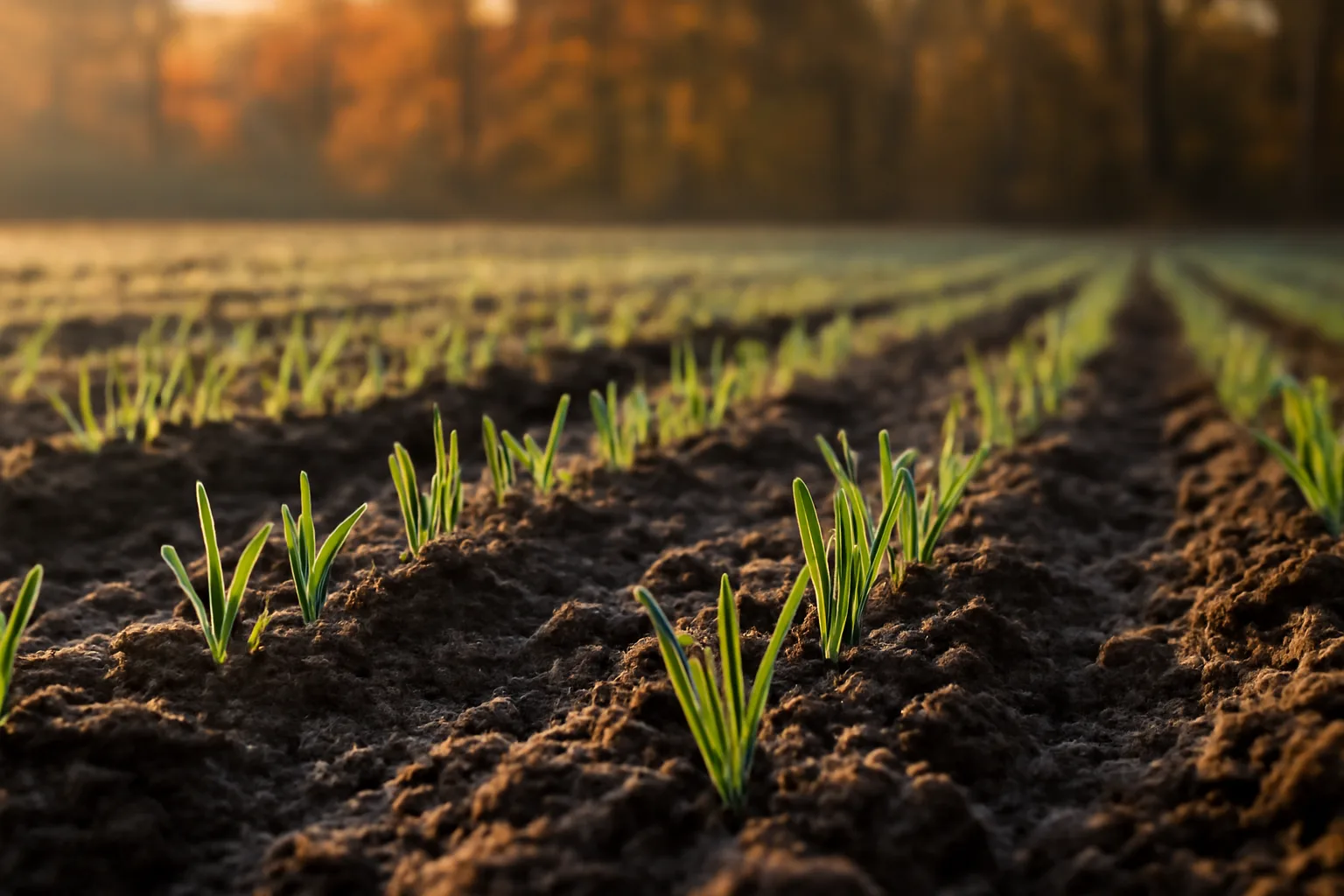
Cereal rye (Secale cereale) is the most cold-tolerant, shade-tolerant, low-input cereal grain for fall deer plots. Drill 60-90 lb/acre or broadcast 90-120 lb/acre, 4-8 weeks before first frost, into pH 5.5-7.0 soil. It germinates in cool soil, tolerates poor fertility, and stays green through deep winter, but whitetails usually prefer oats, wheat, or brassicas when those options are available.
what is a food plot, and where does rye fit in?
A food plot is a planted area, usually a half-acre to several acres, established on hunting land specifically to feed and attract deer or other wildlife. Plots range from small hidden "kill plots" tucked into timber to large destination fields planted in clover, brassicas, or cereal grains. Most state wildlife agencies and university extension programs treat food plots as a habitat management tool, not a baiting method, as long as the planting is a normal agricultural practice and not a pile of grain dumped on the ground. Rules on this vary by state, so check your state wildlife agency's baiting and feeding regulations before you plant near a stand you plan to hunt. Cereal rye (Secale cereale, often called "winter rye" or "grain rye") is one of the oldest, cheapest, and most forgiving food plot seeds on the market. It is a true cereal grain, related to wheat and oats but tougher. Rye germinates in soil temperatures as low as 33-34°F [1] and keeps growing through frosts that would stop other cereals cold. That makes it a fallback crop for late plantings, poor soil, shaded sites, and northern properties where the growing window closes fast. Rye rarely gets planted alone as a destination food source in serious deer management plans. It is more often a nurse crop, a soil builder, a frost-seed companion for clover, or the last-resort seed you throw down in October when everything else has failed. That does not make it a bad seed. It makes it a specific tool for specific problems: thin soil, late planting dates, and brutal cold.
when should you plant food plots for deer?
| Deep South (Zone 8-9) | Late September through mid-October | |
|---|---|---|
| Mid-South / Transition (Zone 7) | Mid-September through early October | |
| Midwest / Mid-Atlantic (Zone 6) | Late August through mid-September | |
| Upper Midwest / Northeast (Zone 4-5) | Mid-August through early September | |
| Canada border states | Early to mid-August | These windows are general guidance, not a guarantee. Local frost dates shift year to year, and your county extension office or state climate office publishes actual average first frost dates you can check against your specific location. Spring plots (soybeans, cowpeas, corn) get planted after your last frost date, typically April through June depending on latitude. Rye stands out here because it is the most forgiving of a late planting date of any common food plot seed. If you miss your window for oats or wheat by two or three weeks, rye can still germinate and establish in soil temperatures other grains won't tolerate [1]. |
Timing depends on whether you are planting a spring/summer plot (warm-season annuals, perennials) or a fall plot (cereal grains, brassicas, clover). For fall cereal grain plots like rye, oats, and wheat, most extension guidance points to planting 6-8 weeks before the average first killing frost in your area [1]. That gives the plant time to establish a root system and put on enough top growth to survive winter and regrow in spring. In practical zone terms, that generally means: | Region | Fall cereal grain planting window |
when is the best time to plant rye specifically?
Plant cereal rye 4 to 8 weeks before your area's first hard frost, which lets it establish 4-8 inches of growth before winter dormancy. Because rye germinates at soil temperatures as low as the mid-30s°F, it has real flexibility on the back end. You can plant it later than wheat or oats and still get a stand. Most extension agronomy guides for cover crop rye recommend a seeding window from early September through November across the central and upper Midwest, with later dates still producing adequate stands compared to other small grains [2]. That is why rye is the standard "cover crop after corn harvest" seed for farmers, and it works the same way for food plotters who are planting after a summer crop comes off, or who simply got a late start. One real tradeoff: planting rye very late (after the ground starts to cool hard) means less fall forage tonnage for deer to eat before winter. You will still get a green plot come spring green-up, which matters if your goal is early-season nutrition for does coming out of winter and bucks growing new antlers, but you sacrifice the November-December grazing window.
do deer eat sorghum?
Yes, deer eat sorghum, both the grain heads and the foliage, though it is more commonly planted as a summer screening and browse crop than as a primary nutrition source. Grain sorghum and forage sorghum (including sorghum-sudangrass hybrids) grow tall, thick stands that double as bedding cover and visual screening along field edges. Deer will browse the leaves through summer and hit the grain heads in fall once they mature and dry down. Sorghum is a warm-season annual, planted after soil temperatures warm into the mid-60s°F, generally May through June depending on region. It is drought tolerant and cheap per acre, which makes it popular on marginal ground where corn would fail. Compared to soybeans or cowpeas, sorghum is lower on the preference list for deer during the growing season, but the standing grain in fall and winter provides real food value when other sources are gone. If your main goal is screening and cover with some incidental browse, sorghum earns its place. If your goal is maximum deer attraction and nutrition, put your acreage into soybeans, brassicas, or clover first and use sorghum as a border planting.
do deer eat clover, and do deer like clover?
Yes, deer eat clover readily, and most wildlife biologists and extension forage specialists rank it among the top perennial food plot choices available. Clover (white clover, red clover, and ladino varieties are the most common food plot types) is high in protein, often 25-30% crude protein in vegetative growth [3], and it regrows after grazing, which means one planting can feed deer for 3-5 years with proper mowing, weed control, and fertility maintenance. Deer strongly prefer clover during spring and summer when it's actively growing and highest in protein. That protein matters most during antler growth (spring/summer) and lactation (does nursing fawns), which is why clover plots are often positioned as spring/summer nutrition plots rather than fall hunting plots, even though deer will still hit clover in fall if it's available. Compared to annual cereal grains like rye, clover costs more upfront (seed plus lime and fertilizer to get pH right, usually 6.0-6.5 for clover) but spreads that cost over multiple seasons instead of replanting every year. For hunters weighing rye against clover, the honest answer is they solve different problems: rye is a cheap, fast, cold-tolerant annual for fall plots and poor soil; clover is a longer-term perennial nutrition source for spring and summer. If you're deciding between the two for a specific field, a food plot seed comparison of annuals versus perennials is worth reading before you commit acreage.
when to plant oats for deer, and how does that compare to rye?
Plant oats 6-8 weeks before the first frost, generally in the same fall window as wheat and rye, though oats are less cold-hardy and typically winterkill in colder zones (Zone 5 and north) once temperatures drop into the low 20s°F or lower for sustained periods [4]. That makes oats a fall-only annual in northern climates, while further south oats can survive winter and provide spring grazing too. Deer generally prefer oats over rye in side-by-side comparisons, largely because oats have a softer leaf texture and slightly higher palatability early in growth. Extension forage trial data and food plot seed company field observations consistently show deer hitting oats first when oats, wheat, and rye are planted in the same field. Rye tends to get browsed harder later in the season, especially once oats are grazed down or winterkilled. The practical takeaway: if your climate allows oats to survive, and your planting date allows it to establish before frost, oats often out-attract rye. Rye earns its keep as the backup plan: the seed that still works when it's planted too late, too cold, or the soil is too rough for oats to thrive.
how do you plant rye for a deer food plot?
Rye establishes well with minimal soil prep, which is exactly why it's the go-to seed for rough ground and last-minute plots. You have three realistic planting methods: drilling, broadcasting with light incorporation, or broadcasting directly onto a firm seedbed. Seeding rates for cereal rye in food plots run 60-90 lb/acre when drilled at a depth of 1-1.5 inches, or 90-120 lb/acre when broadcast on the surface, since broadcast seed has lower germination success than drilled seed [1] [2]. Higher rates compensate for the seed-to-soil contact you lose with broadcasting. Soil pH matters less for rye than for clover or brassicas. Rye tolerates a pH range of roughly 5.0 to 7.0 [1], and it will grow in soils too acidic for most other food plot species. That said, a soil test is still the right first step for any plot, rye included, because your test tells you exactly what your specific field needs rather than relying on a generic range. Cooperative extension offices in nearly every state run soil testing labs for $10-20 per sample, and your results come back with a specific lime and fertilizer recommendation. Basic fertility for rye: extension guidance generally recommends 40-60 lb of nitrogen per acre at planting for forage rye, split with a second application in late winter or early spring if you want maximum spring regrowth [2]. Your soil test lab is the authority on your specific numbers, since nitrogen needs shift based on your soil's organic matter and prior cropping history. A firm, weed-free seedbed matters more than perfect fertility. Rye planted into a mowed, sprayed, or disked field with decent seed-to-soil contact will outperform rye broadcast into thick sod or weeds every time, even with identical fertilizer.
when to plant turnips for deer, and should you mix them with rye?
Plant turnips 60-90 days before your first fall frost, which for most of the whitetail range means late July through early September depending on latitude [1]. Turnips need that full window to bulb properly. Planted too late, you'll get leafy top growth but small or no bulbs, and the bulb is often the part deer hit hardest once cold weather sweetens the starches into sugars. Turnips and rye are not typically planted together at the same time, because their planting windows don't overlap well. Turnips go in during the heat of late summer; rye is more commonly planted 4-8 weeks before frost, which is often several weeks after the turnip window closes. Where the two do combine well is in a blend planted at turnip timing, with rye added as a fall/winter green companion alongside the turnips, brassicas, and sometimes cereal grains together in one bag. Deer preference for turnips follows a predictable pattern: they often ignore the plant almost entirely until the first hard frosts convert starches to sugars, then hammer both the tops and bulbs hard through winter. That delayed-preference pattern is well documented in extension brassica trial writeups and is one reason turnip plots get overlooked or written off too early by first-time planters who check the plot in October and see it untouched.
what are deer's favorite foods, and where does rye rank?
Deer preference shifts by season, region, and what else is available, so there's no single "favorite food" that holds true everywhere. That said, wildlife research and extension forage studies consistently point to a short list of high-preference food plot species: soybeans and cowpeas in summer, clover and alfalfa across spring through fall, and brassicas (turnips, radishes, rape) plus cereal grains like oats and wheat in fall and winter. Rye sits toward the lower-middle of that preference list in head-to-head comparisons. Deer will eat rye, and they'll eat it readily once better options are gone or grazed down, but in side-by-side plantings it's rarely the first thing they hit. That's a documented pattern in extension and industry field trials comparing cereal grains, not a knock on rye's value: it means rye works best as a stress-tolerant backbone crop, not the plot you plant when you want to maximize deer visits to a single field. For a broader look at ranking species by attraction and use case, see deer food plot seed and deer food plots for species-by-species breakdowns.
do deer like honey, or is that just a myth?
There's no research or extension data supporting deer having any particular attraction to honey, and it isn't a practical or legal food plot or attractant strategy in most states. Deer are herbivores with a diet built around browse, forbs, mast, and agricultural crops; they don't seek out honey the way bears do. Any anecdotal claim about deer and honey is not backed by wildlife nutrition research, and most state wildlife agencies classify sweet liquid attractants (including syrups) under baiting regulations that vary widely by state, some banning them outright. If you're trying to boost attraction to a plot, the better-documented approach is picking a high-preference species (clover, soybeans, brassicas) and getting your soil fertility right, rather than chasing attractant products with no research backing. Check your state wildlife agency's baiting rules before using any additive product near a stand.
rye vs. oats vs. wheat vs. clover: quick comparison
| Species | Type | Planting window | Cold tolerance | Deer preference | Best use | |
|---|---|---|---|---|---|---|
| Cereal rye | Annual grain | 4-8 wks before frost | Excellent, germinates near 34°F | Moderate | Late plots, poor soil, cover crop | |
| Oats | Annual grain | 6-8 wks before frost | Poor to fair, winterkills below ~20°F | High early | Fall attraction where climate allows survival | |
| Winter wheat | Annual grain | 6-8 wks before frost | Good | Moderate-high | Fall/winter grain plots, blends well | |
| White/ladino clover | Perennial | Spring or late summer | Good with proper variety selection | Very high | Spring/summer protein, 3-5 year stand | This table reflects general patterns from extension forage guidance and food plot field trials [1] [2], not a guarantee for your specific property. Local soil, rainfall, and deer density all shift real-world results. |
what does a soil test tell you before planting rye?
A soil test tells you your field's current pH, organic matter percentage, and levels of phosphorus, potassium, and other key nutrients, which together determine how much lime and fertilizer your specific field needs. For rye specifically, pH matters less than it does for clover or alfalfa since rye tolerates acidic soils down to roughly pH 5.0 [1], but a test still tells you whether you're wasting money on unnecessary lime or under-fertilizing and leaving yield on the table. Most land-grant university extension offices run soil testing labs for hunters and farmers alike, typically $10-20 per sample with results in 1-2 weeks. Your test report comes back with lime and fertilizer recommendations specific to the crop you tell them you're planting, so specify "food plot / forage rye" or the closest matching crop code when you submit your sample. Your soil test lab is the authority on your exact field's needs. General seeding and fertility ranges in this article (and anywhere else online) are starting points, not a substitute for your actual lab results. If you want help translating a soil test and acreage into an actual planting plan across your whole property, that's the exact gap a $99 Custom Food Plot Plan is built to fill: species selection, seeding rates, and a fertility plan mapped to your specific soil test and zone, not a generic blog range.
what equipment do you need to plant rye successfully?
Rye is one of the most equipment-forgiving food plot seeds available, which is a big part of its appeal for hunters without a tractor and drill. A no-till drill gives the best, most consistent results because it places seed at a controlled depth (1-1.5 inches) with real seed-to-soil contact. Without a drill, you can broadcast rye with a hand-crank spreader or ATV spreader onto a disked or lightly tilled seedbed, then drag a section harrow, chain-link fence section, or even a heavy branch behind an ATV to work seed into the top inch of soil. Cultipacking or rolling after broadcast (a lawn roller works fine on small plots) firms the seedbed and improves germination noticeably over seed left sitting loose on top. Because rye tolerates rough seedbeds better than finer seeds like clover or brassicas, it's a realistic option for hunters working small hand tools and an ATV rather than full-size farm equipment. That's part of why it shows up so often as the "emergency plot" seed: it forgives a rushed, imperfect planting job better than almost anything else in the food plot aisle. For a broader rundown on matching gear to different plot sizes and species, see food plot whitetail and deer for food.
Frequently asked questions
Do deer eat sorghum?
Yes. Deer browse sorghum foliage through summer and eat the grain heads once they mature in fall. It's more commonly planted for screening cover and drought tolerance than as a top attraction crop, since deer generally prefer soybeans, clover, or brassicas when those are available on the same property.
Do deer eat clover, and do deer like clover?
Yes, clover is one of the most preferred food plot species for whitetails, especially during spring and summer growth when protein content runs 25-30%. Deer hit it hard when it's actively growing. It's a perennial, so a single planting can produce forage for 3-5 years with mowing, weed control, and maintained soil fertility.
When to plant food plots for deer?
Fall cereal grain and brassica plots generally go in 6-8 weeks before your area's average first frost date. Spring/summer plots (soybeans, cowpeas) go in after your last frost. Exact dates shift by zone: late August in the Upper Midwest, mid-September in the transition zone, late September to October in the Deep South.
When to plant oats for deer?
Plant oats 6-8 weeks before first frost, the same general window as wheat and rye. Oats are less cold-hardy and typically winterkill in Zone 5 and colder once sustained temperatures drop into the low 20s°F, so they work best as a fall-only annual in northern climates and a fall-through-spring crop further south.
When to plant turnips for deer?
Plant turnips 60-90 days before first frost, generally late July through early September depending on latitude. That window lets bulbs form fully. Deer often ignore turnips until after the first hard frost converts starches to sugars, then eat both tops and bulbs heavily through winter.
What is a food plot?
A food plot is a planted patch of forage, usually annual grains, brassicas, or perennial clover/alfalfa, established on hunting land to feed and attract deer or other wildlife. Sizes range from small hidden kill plots under an acre to multi-acre destination fields. Most states treat proper plantings as legal habitat management, not baiting.
What are deer's favorite foods?
Preference shifts by season and region, but extension research and field trials consistently rank soybeans and cowpeas high in summer, clover and alfalfa high across spring through fall, and brassicas plus oats and wheat high in fall and winter. Rye ranks lower on preference lists but tolerates cold and poor soil better than any of them.
Do deer like honey?
There's no wildlife nutrition research showing deer are attracted to honey. Deer are herbivores that key on browse, forbs, mast, and crops, not sugar sources the way bears do. Sweet liquid attractants also fall under baiting regulations in many states, so check your state wildlife agency's rules before using any attractant product.
How much rye seed do you need per acre for a food plot?
Drill cereal rye at 60-90 lb/acre at a 1-1.5 inch depth, or broadcast at 90-120 lb/acre since surface-broadcast seed has lower germination success than drilled seed. Higher broadcast rates compensate for reduced seed-to-soil contact compared to drilling.
Will rye survive winter better than wheat or oats?
Yes. Cereal rye is the most cold-tolerant of the common food plot cereal grains, germinating in soil temperatures as low as the mid-30s°F and surviving winters that kill oats outright. Wheat falls in between, more cold-hardy than oats but less than rye.
Can you plant rye and clover together?
Yes, rye is commonly used as a nurse crop for fall-seeded clover. The rye establishes fast, protects young clover seedlings from erosion and competition, then naturally thins out as the clover takes over the following spring. This is a standard practice in forage and cover crop planting guidance.
Does rye need lime or fertilizer to grow well?
Rye tolerates acidic soils down to roughly pH 5.0, more than clover or brassicas need, so lime isn't always required. A soil test still tells you your field's actual pH and nutrient levels. General fertility guidance suggests 40-60 lb of nitrogen per acre at planting, split with a second application in late winter for spring regrowth.
Sources
- USDA NRCS Plant Guide, Cereal Rye (Secale cereale L.): Rye germinates at soil temperatures as low as 33-34°F and tolerates soil pH down to roughly 5.0
- Iowa State University Extension and Outreach, Cereal Rye Cover Crop Termination: Recommended seeding rates and nitrogen fertility guidance for cereal rye, and fall planting window flexibility
- Oklahoma State University Extension, Food Plots for Wildlife: Clover crude protein content and ranking among high-preference deer forage species
- University of Georgia Extension, Wildlife Food Plots: Oats winterkill in colder climates while wheat and rye show greater cold tolerance; fall cereal grain planting windows
- University of Georgia Extension: Soil testing recommendations for determining pH and nutrient needs before establishing a wildlife food plot.