Last updated 2026-07-25
TL;DR
Good seed for deer starts with soil, not species. Clover, oats, and brassicas like turnips cover most plots well. Plant cool-season seed 60 to 90 days before your first fall frost, and warm-season seed like sorghum after soil hits 65°F. Test your soil first; fertility drives results more than which bag you buy.
what is a food plot, exactly?
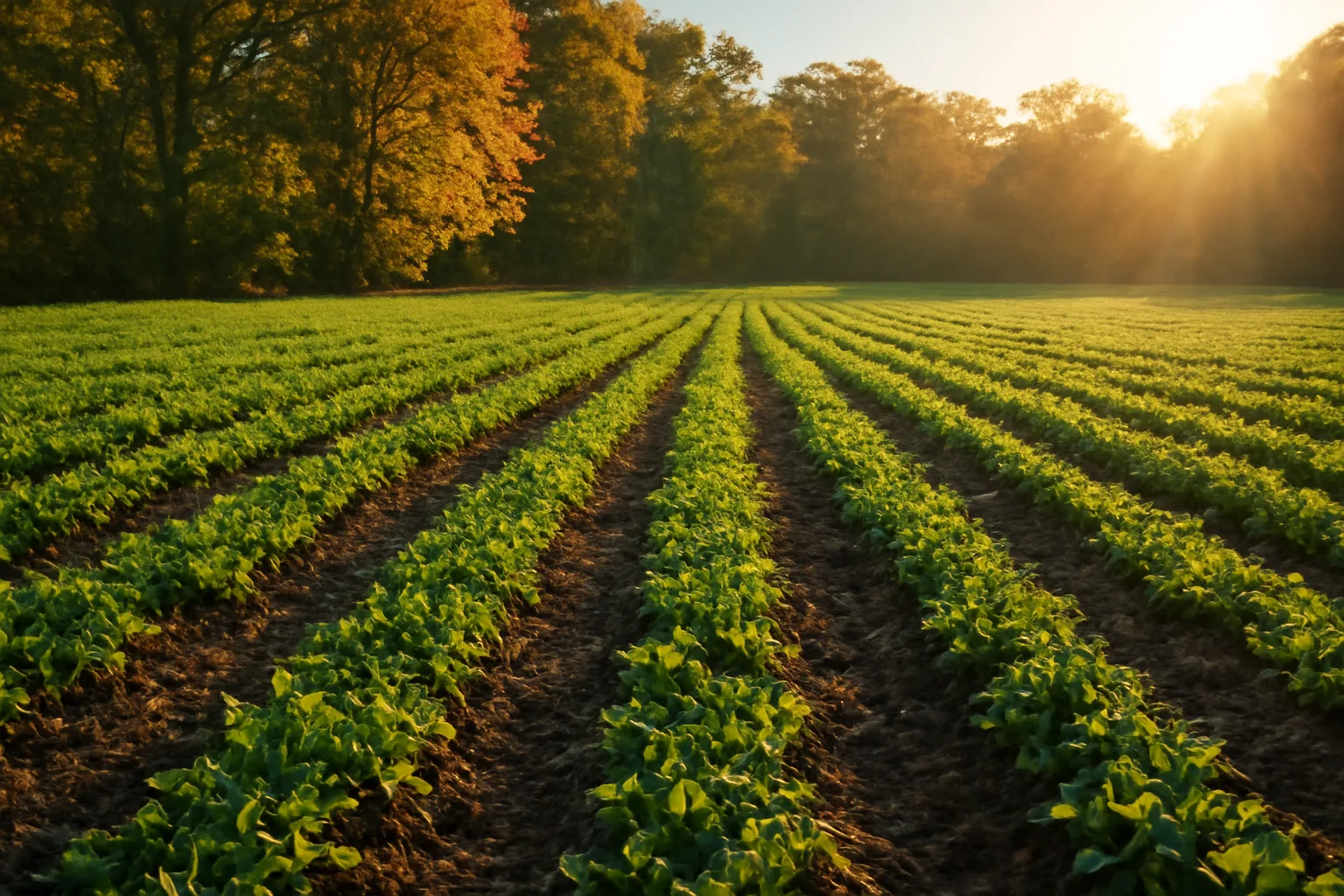
A food plot is a planted patch of ground, usually somewhere between a quarter acre and a few acres, put in specifically to grow forage that deer and other wildlife will eat. It is not the same as a crop field meant for harvest and sale. The goal is standing forage or a fall/winter food source, planted to draw deer in, hold them on your property longer, and in a lot of cases, improve their nutrition through the year. The USDA Natural Resources Conservation Service treats wildlife food plots as a recognized habitat practice under its Wildlife Habitat Planting standard (Conservation Practice Standard 420), and NRCS-administered programs like EQIP can cost-share seed, lime, and fertilizer for landowners who put in food plots as part of an approved habitat plan [1]. That tells you something: this isn't a hobby invented by seed companies, it's recognized wildlife management. Most hunters run two kinds of plots. Annual plots get replanted every year, usually with something like oats, brassicas, or a cereal grain blend. Perennial plots, mostly clover or clover-alfalfa mixes, get planted once and then maintained (mowed, sprayed, sometimes overseeded) for three to five years before they need to be torn up and started over. If you're brand new to this, start smaller than you think you need. A half-acre plot with good soil fertility and the right seed for your calendar window will outperform a two-acre plot planted on hope. For a broader look at plot styles and how to pick one for your ground, see food plot whitetail.
what are deer's favorite foods, actually?
Deer are opportunistic browsers, and what they prefer changes by season, region, and what else is available. That said, some patterns hold up across most of the whitetail's range. In spring and summer, deer lean heavily on forbs (broadleaf weeds and clover), soybeans, and tender browse from shrubs and trees. Clover in particular is a favorite because it's high in protein and stays palatable most of the growing season. In late summer and fall, acorns become a major draw wherever oaks are present. When acorns are dropping heavy, deer will often ignore planted plots in favor of the woods. Come late fall and winter, deer shift toward high-energy foods: standing corn, soybeans, brassicas after a hard frost sweetens them up, and winter wheat or rye. Vegetative soybean forage typically runs 25 to 30 percent crude protein, among the highest of common food plot plantings, based on forage quality work summarized by university deer nutrition programs [2]. Clover usually isn't far behind. If you're trying to pick one thing to plant that most closely matches what deer already want to eat, soybeans and clover are the safest bets in a lot of the country, with brassicas gaining strongly as a late-season draw once temperatures drop. No single seed is a universal favorite everywhere. A plot that gets hammered in Iowa might get ignored in south Texas. Match species to your region and to what your local deer are already used to eating.
do deer like clover, and is it worth planting?
Yes, and it's one of the most reliable food plot plantings available. Clover (white clover, red clover, and various perennial blends) is high in protein, regrows after grazing, and stays green through most of the growing season. White clover varieties like Durana and Ladino are common in food plot mixes because they tolerate grazing pressure well and persist for several years if managed. Red clover grows a bit taller and doesn't handle heavy repeated grazing quite as well, but it establishes fast and adds tonnage in year one. The tradeoff with clover is maintenance. It wants a soil pH close to 6.0 to 6.5 to really produce, and it needs to be mowed periodically to keep weeds down and encourage new growth. Skip the mowing and a clover plot turns into a weed patch by year two. If you want low-maintenance perennial forage and you're willing to lime according to your soil test and mow two or three times a season, clover is hard to beat. For a rundown of species options beyond clover, check deer food plot seed.
do deer eat sorghum?
Yes, deer will eat sorghum, but it's usually a secondary player rather than a primary food plot species. Grain sorghum (milo) produces a seed head deer and turkey both use in fall and winter, and the standing stalks provide cover along with food. Sorghum is a warm-season annual, so it goes in the ground like corn, after soil temperatures warm up in late spring. It's drought-tolerant compared to corn, which makes it a decent choice in parts of the Plains and Southeast where summer moisture is unreliable. The catch: deer generally rank sorghum grain below soybeans, corn, and brassicas in observed use. It works better as a component in a mixed planting (sorghum with soybeans, or sorghum bordering a brassica plot) than as a monoculture you're counting on to be the main draw. If cover is part of your goal, sorghum's height (it can hit 4 to 6 feet) does double duty as screening and bedding structure, which pure grain crops like corn also do at a larger scale.
do deer like honey, and does it belong in a food plot?
Deer will lick and eat sugary substances including honey if they encounter it, and it shows up in some homemade mineral or attractant recipes people mix up themselves. But honey is not a food plot input and it's not something you plant. It's also worth being careful here: many states restrict baiting and supplemental feeding of deer, and pouring out honey, molasses, or sugar-based attractants near a stand can cross into baiting under state law depending on where you hunt. Baiting rules vary a lot by state. Some states allow baiting outright, some ban it entirely, and some allow it outside specific disease management zones tied to chronic wasting disease surveillance. Michigan's baiting and feeding order, issued under its Wildlife Conservation Order authority, restricts feeding and baiting of deer and elk statewide, with the order describing the restriction as tied to disease risk from concentrating animals at a shared feed or bait site [3]. Wisconsin has a similar structure, with baiting and feeding bans in counties where chronic wasting disease has been detected, under its administrative code [4]. The practical takeaway: skip the honey and any other bait pile idea, and check your state wildlife agency's current baiting and feeding regulations before you put anything out that isn't a planted, growing crop. A legitimate food plot, planted seed growing in the ground, is treated very differently under the law than a bait pile, and that distinction matters if you get checked by a conservation officer.
when to plant food plots for deer, overall
| Northern (MN, WI, MI, ME) | Aug 1 to Sep 1 | May 15 to June 15 | |
|---|---|---|---|
| Mid-South (KY, TN, VA, MO) | Aug 15 to Sep 30 | May 1 to June 1 | |
| Deep South (AL, GA, MS, LA) | Sep 15 to Nov 1 | April 15 to May 15 | For a full breakdown by state and frost zone, see deer food plots and cross-check against your county extension calendar. |
Timing splits into two seasons: cool-season plantings (clover, brassicas, cereal grains) and warm-season plantings (soybeans, corn, sorghum). Getting this backwards is the single most common mistake new plotters make. Cool-season plots go in from late summer into early fall, generally 60 to 90 days before your area's average first hard frost, so the plants have time to establish before growth slows. Warm-season plots go in during late spring, after soil has warmed and the risk of frost has passed, similar to timing for corn and soybean row crops. A September 1 planting date works fine in the upper Midwest but is too early in the Deep South, where September heat can still stress cool-season seedlings. Your local extension office almost always publishes a frost-date-based calendar specific to your county, and that's the most reliable single source to check before you buy seed. Here's a general framework, not gospel, just a starting point to check against your local extension office: | Region | Cool-season plot window | Warm-season plot window |
when to plant oats for deer
Oats are a cool-season cereal grain, and they go in the ground at the same general time as your other fall plantings, roughly 60 to 90 days before first frost. In most of the whitetail range that lands somewhere between mid-August and late September, with southern states running later into October. Oats germinate fast, often in 5 to 7 days with adequate moisture, and they're highly palatable to deer while young and tender, which makes them a strong early-fall draw. The tradeoff is winter hardiness. Straight oats will winterkill in a hard freeze in most northern and mid-latitude states, so if you want plot cover into late winter you need to pair oats with a hardier cereal like winter wheat, winter rye, or triticale. A lot of successful fall blends use oats for the early palatability and fast growth, mixed with wheat or rye for the crop that survives into winter after the oats die back. Planting oats too early into hot, dry late-summer soil is a common failure point. Wait until soil temperatures have started to moderate and there's a realistic rain forecast in the next week or two.
when to plant turnips for deer
Turnips, along with other brassicas like radishes and rape, get planted in the same cool-season window as clover and cereal grains, generally 70 to 90 days before your first expected fall frost. Brassicas need more lead time than oats because they're building a bulb or taproot below ground in addition to top growth. Here's the thing about turnips specifically: deer often ignore the tops early in the season and only start hitting the plot hard after the first hard frost converts starches in the plant to sugars, which makes them noticeably sweeter and more attractive. That means a turnip plot planted in August might sit lightly used through October and then get hammered in December, which surprises a lot of first-time planters who assume the plot failed. Extension research on brassica forage quality for deer notes that brassica tubers and foliage provide high energy and moderate protein late in the season when other forage options have died back, which is exactly why they're planted as a late-season food source rather than an early-season draw [5]. If your hunting season runs into December and January, turnips and other brassicas are worth having in the rotation specifically for that window.
how do I pick the right seed for my soil and region?
Start with a soil test, not a seed catalog. Your county extension office or a private ag lab can run a soil test for somewhere in the range of $10 to $20 per sample in most states, and it will tell you your pH and your phosphorus and potassium levels, which determines what will actually grow well before you spend money on seed. Most food plot species, clover especially, want a soil pH between 6.0 and 6.5. If your test comes back at 5.0 or 5.5, which is common on wooded, previously unfarmed ground, you need lime, and lime takes months to fully react with the soil, so it should go down as early as possible, ideally a season ahead of planting if you can swing it. Your soil test report is the actual authority here, not a blog post or a bag label. Follow its lime and fertilizer recommendations over generic seed bag suggestions, since your test reflects your specific dirt. Once you know your pH and fertility, species selection gets a lot simpler. Low pH, sandy, or shaded ground will struggle with clover and do better with cereal grains and brassicas, which tolerate a wider pH range. Good black dirt row-crop-quality ground can support soybeans or corn if you have the acreage and equipment to justify it. If you want a plan built around your specific soil test results and region instead of guessing, PlotSeason's $99 one-time Custom Food Plot Plan turns your test numbers and location into a species and planting-date recommendation, though the soil lab itself remains the authority on your actual lime and fertilizer rates.
annual vs perennial: which seed makes more sense for your plot?
This comes down to how much time and equipment you have, and how long you want to commit to a given plot location. Annual seed (oats, brassicas, soybeans, sorghum, corn) needs to go in the ground every single year, which means tillage or a drill pass, fertilizer, and weed control each season. The upside is flexibility: you can rotate species, chase soil-building benefits, and adjust to what worked or didn't work last year. Perennial seed (clover, clover-chicory blends, alfalfa) gets planted once and then maintained for three to five years with mowing, spot-spraying for weeds, and periodic overseeding rather than a full replant. The upside is far less annual labor and equipment need once it's established. The downside is less flexibility and a real risk of the stand thinning out or getting weedy if you neglect the mowing. A lot of experienced plotters run both: a perennial clover plot as the backbone that gets light annual maintenance, plus one or two annual plots that rotate through brassicas, cereal grains, or beans depending on the year and what part of the season they're targeting. For more on matching seed choice to your setup and goals, see food plot seed and domain food plot seed.
what equipment do I actually need to plant deer seed?
The minimum viable setup is a way to kill existing vegetation, a way to work or open the soil, a way to spread seed, and a way to pack it in. You do not need a tractor to plant a food plot, though it makes bigger plots faster. For small plots (under an acre), a lot of hunters get by with an ATV or UTV, a pull-behind disc or cultipacker, a broadcast spreader, and glyphosate applied with a boom or backpack sprayer two to three weeks ahead of planting to knock back existing growth. For larger plots, a compact tractor with a disc, drag harrow, and a seeder speeds things up considerably and gives more consistent seed depth, which matters a lot for larger-seeded species like beans and corn. Seed-to-soil contact is the detail that kills more plots than bad seed choice does. Broadcasting seed onto bare, unpacked dirt and walking away is a common mistake. Most small seeds (clover, brassicas) need to be pressed into the top quarter inch of soil, not buried, while larger seeds (beans, corn, sorghum) need to actually be covered at 1 to 2 inches deep. A cultipacker or even driving over broadcast seed with an ATV tire will meaningfully improve germination compared to broadcasting and hoping for rain.
how big should my food plot be, and what does it cost?
There's no single right size, but most hunting-property food plots run from a quarter acre up to two or three acres. Bigger isn't automatically better; a well-fertilized half-acre plot with the right seed for the season will outperform a poorly maintained two-acre plot every time. Cost varies a lot by species and whether you're buying premium blended bags or generic ag seed. Straight clover seed generally runs somewhere in the range of $4 to $8 per pound and a pound covers roughly a quarter acre depending on the blend, while cereal grains like oats or wheat are much cheaper per acre, often $15 to $30 per acre in seed cost alone since they're planted at higher bulk rates. Brassica blends and premium food-plot-branded bags cost more per acre than buying straight ag seed from a farm co-op, though the convenience of a pre-mixed blend has real value if you don't want to formulate your own mix. Lime and fertilizer, driven by your soil test, are usually the biggest controllable cost beyond seed itself, and skimping there is the most common way food plot money gets wasted. A $20 soil test that tells you to add two tons of lime per acre is a lot more useful than a $60 bag of premium seed planted into soil at pH 5.2, where nutrient availability is locked up regardless of what you planted.
Frequently asked questions
Do deer eat sorghum?
Yes, deer eat sorghum grain and will use the standing stalks for cover, but it typically ranks below soybeans, corn, and brassicas in deer preference. It works best mixed into a blend with a higher-preference species or planted for its cover value alongside a food plot rather than as the sole food source.
Do deer like clover?
Yes, clover is one of the most consistently preferred food plot forages because of its high protein content, typically 20 to 30 percent, and its ability to regrow after grazing through most of the growing season. It does require a soil pH near 6.0 to 6.5 and periodic mowing to stay productive long term.
When should I plant food plots for deer?
Cool-season plots (clover, oats, brassicas) go in 60 to 90 days before your area's first fall frost, typically August through October depending on latitude. Warm-season plots (soybeans, corn, sorghum) go in late spring after soil warms, typically April through June. Check your county extension office's frost-date calendar for exact local windows.
When do I plant oats for deer?
Plant oats in the same cool-season window as your other fall forages, roughly 60 to 90 days before first frost, which lands between mid-August and late September in most of the whitetail range, later in the Deep South. Oats germinate quickly but generally winterkill, so pair them with wheat or rye if you need late-winter cover.
When do I plant turnips for deer?
Plant turnips 70 to 90 days before your first fall frost, which is a slightly longer lead time than oats since the plant needs to build a bulb below ground. Deer often ignore turnip tops until after the first hard frost sweetens the plant through starch-to-sugar conversion, so don't judge the plot's success until December.
What is a food plot?
A food plot is a planted area, usually a quarter acre to a few acres, seeded specifically to grow forage for deer and other wildlife rather than for harvest. USDA NRCS recognizes wildlife food plantings as a habitat practice and cost-shares them in some conservation programs when part of an approved habitat plan.
What are deer's favorite foods?
Preference shifts by season: forbs and clover in spring and summer, acorns and soybeans in fall when available, and high-energy foods like standing corn, brassicas after a frost, and winter cereal grains in late fall and winter. Soybeans and clover consistently rank among the highest-preference planted forages in most of the whitetail's range.
Do deer like honey?
Deer will eat sugary substances like honey if they find them, but honey isn't a planted food plot input, it's a bait substance. Many states restrict baiting and supplemental feeding, sometimes tied to chronic wasting disease management zones, so check your state wildlife agency's current regulations before using any bait, honey included.
How do I know what seed will grow on my land?
Get a soil test through your county extension office or a private ag lab, usually $10 to $20 per sample. The results give you pH and nutrient levels, which determine what species will actually establish well and how much lime and fertilizer you need before you spend money on seed.
Is clover better than annual seed like oats or brassicas?
Neither is universally better; they serve different purposes. Clover is a perennial that needs less annual labor once established but requires mowing and a good starting pH. Annuals like oats and brassicas need replanting every year but let you target specific hunting windows, especially late season with frost-sweetened brassicas.
How big does a deer food plot need to be?
Most hunting-property plots run a quarter acre to two or three acres. A smaller, well-fertilized plot with the right seed for the season usually outperforms a larger plot that's underfed or planted at the wrong time. Size should match your equipment, sunlight availability, and how much labor you can realistically put in.
Can I plant a food plot without a tractor?
Yes. Small plots under an acre are commonly planted with an ATV or UTV, a pull-behind disc or cultipacker, a broadcast spreader, and a sprayer for burndown herbicide. A tractor speeds up larger plots and gives more consistent seed depth, but it isn't required for a functional plot.
Sources
- USDA NRCS, Conservation Practice Standard 420, Wildlife Habitat Planting: NRCS recognizes wildlife food plantings as a conservation practice and cost-shares them in some state conservation programs
- University of Georgia Extension, Deer Nutrition and Food Plots: soybeans and legumes rank among the highest-preference deer forages, with quality soybean forage protein around 25-30 percent
- Mississippi State University Extension Publication 2337, Establishing and Managing Wildlife Food Plots: brassica tubers and foliage provide high energy for deer late in the season after other forage has died back, and clover is recommended as a foundation perennial species
- Oklahoma State University Extension PSS-2207, Soil pH and Buffer pH: clover requires soil pH near 6.0 to 6.5 for productive establishment
- Michigan DNR Wildlife Conservation Order 2.108, Baiting and Feeding of Deer and Elk: Michigan restricts baiting and feeding of deer statewide under its Wildlife Conservation Order, tied to disease management
- Wisconsin Administrative Code NR 19.60, Baiting and Feeding Ban: Wisconsin bans baiting and feeding in counties affected by chronic wasting disease
- University of Tennessee Extension W 349, Establishing and Managing Wildlife Food Plots: soil testing through extension or private labs typically costs a modest per-sample fee and guides lime and fertilizer needs before planting