Last updated 2026-07-25
TL;DR
A Pennington seed food plot is a planted patch of forage, like clover, brassicas, or a corn/soybean blend, put in to feed and hold deer on your land. Success depends more on soil pH, planting date, and site selection than on which bag you buy. Match species to your region's frost dates and your soil test results first.
What is a food plot, exactly?
A food plot is a planted area, usually somewhere between a quarter acre and several acres, seeded with forage that deer and other wildlife will eat. It's more than scattering seed in the woods. A real food plot involves clearing or tilling ground, testing and amending the soil, choosing a species suited to your climate and goals, and planting on a schedule that lines up with the growing season and hunting season both. Most plots fall into two rough categories: annual plots (planted fresh each year, like brassicas, cereal grains, or soybeans) and perennial plots (clover, chicory, alfalfa) that come back for two to five years with maintenance. Pennington Seed, one of the larger commercial seed companies in the US, sells blends under names like Rackmaster and Deer Fescue Mix aimed at both categories, but the species inside the bag matter far more than the brand name on it. The US Department of Agriculture's Forest Service generally frames food plots and planted openings as one tool within a broader wildlife habitat management approach, not a replacement for natural browse, cover, and water [1]. A plot that ignores soil fertility or planting timing will underperform no matter whose bag the seed came from. If you want a structured starting point for your first plot, a lot of first-time planters benefit from working backward from a food plot whitetail plan that accounts for their specific acreage and region rather than guessing at a bag's suggested rate.
When to plant food plots for deer?
Timing splits into two seasons: spring plots and fall plots, and the right window depends on your USDA Plant Hardiness Zone and your first/last frost dates, not a fixed calendar date. Spring plots (soybeans, corn, some clover establishment) generally go in after your last frost date, when soil temps have warmed enough for germination. In much of the Midwest and mid-South, that's late April through May. In the Deep South, it can be as early as March. Fall plots (brassicas, cereal grains, clover overseeding) get planted so they have 60 to 90 days of growth before a hard frost or the opening of hunting season, whichever you're targeting. In the northern tier (Zone 3-4), that often means late July through August. In the transition zone and mid-South (Zone 6-7), late August through September works. In the Deep South (Zone 8-9), you can push into October. Soil moisture and temperature at planting time matter as much as the calendar, and getting a shot of rain right after planting brassicas or cereal grains often makes more difference to establishment than hitting an exact date [2]. Get a soil test 60 to 90 days before your planned planting date so you have time to lime if needed. Lime takes months to fully adjust soil pH, so testing the week before you plant is too late to fix a low-pH problem. For a full month-by-month breakdown by region, our deer food plots guide covers regional planting calendars in more depth than a single seed bag's instructions ever will.
When to plant turnips for deer?
Turnips are a fall/winter brassica, planted 90 to 120 days before your first hard frost so the bulbs and tops have time to mature before deer start hitting them hard in late fall and winter. In most whitetail range, that means planting turnips between late July and early September. Turnips need consistent moisture to germinate (seed is planted shallow, about a quarter inch deep) and they're frost tolerant once established, in fact a hard frost actually sweetens the bulbs by converting starches to sugars, which is part of why deer often ignore turnip plots in October and hammer them in December and January. Brassicas like turnips are generally best suited to well-drained soils with a pH between 5.8 and 7.0, and they respond strongly to nitrogen fertility, an area where a soil test pays for itself since over- or under-applying nitrogen either wastes money or stunts growth [3]. Turnips also have a shallow taproot habit that can help break up compacted soil, which is a nice secondary benefit if you're rotating a plot out of a hard-used clover stand. One honest caveat: in the first year on a new food plot, deer sometimes barely touch turnip tops and bulbs at all until they learn the plot is there. That's normal, not a seed failure.
When to plant oats for deer?
Oats go in the ground in early fall, generally 6 to 8 weeks before your first expected frost, so they can establish a leafy stand before cold weather slows growth. Oats are one of the most attractive cereal grains to whitetails in the early fall window, often outcompeting wheat and rye for palatability when planted fresh, though rye holds up better to hard cold later in winter. Extension guidance for much of the Southeast recommends planting oats between mid-August and mid-September, at a seeding rate around 2 to 3 bushels per acre when drilled, higher if broadcast [4]. Oats are also commonly mixed with a clover or brassica as a nurse crop, giving deer something to eat within a few weeks of planting while the clover establishes underneath more slowly. That combination is one of the more forgiving blends for a first-time plotter because you get fast green-up and a long-term stand in the same pass. Oats don't tolerate deep cold as well as wheat or triticale, so if you're in the northern half of whitetail range and want grain standing into January, wheat or a wheat/rye mix is usually the safer call.
Do deer eat sorghum?
Yes, deer eat both the grain and the young leafy growth of sorghum, though it's more commonly planted as a screening and standing-grain crop than a primary attractant early in the season. Grain sorghum (milo) matures in the fall and provides standing forage into winter, similar in that respect to corn, and it tends to be more drought tolerant than corn, which matters in areas with sandy or poor-retention soils. USDA plant guidance describes grain sorghum as well suited to dry conditions and shorter growing seasons compared to full-season corn, which is why it shows up as a wildlife planting option on tougher ground [5]. Deer will browse young sorghum shoots in spring and summer, and they'll work standing grain heads through fall and winter once the plant dries down, similar to how they use standing corn. It's not typically a deer's first choice compared to soybeans, clover, or corn when those are available on the same property, but it's a solid option on tough ground where corn struggles, and it doubles as good screening cover along field edges.
Do deer eat clover, and do deer like clover?
Yes, clover is one of the most consistently preferred food plot forages for whitetails, and it's usually the first thing recommended to someone planting their first perennial plot. White clover (ladino types) and red clover are both heavily used, offering crude protein content commonly cited in the 25 to 30 percent range during active growth, which supports antler growth in bucks and lactation in does during spring and summer [6]. That protein level is a big reason clover shows up in nearly every regional food plot recommendation from land-grant universities. Clover's real advantage over annuals is that it comes back year after year with mowing and occasional herbicide spot-treatment for weeds, cutting your planting labor and seed cost over a 3 to 5 year stand life if it's maintained. The tradeoff is that clover needs a soil pH close to neutral (6.0 to 7.0 is the common target range cited by extension programs) and it struggles in shade or poorly drained ground. If your soil test comes back at pH 5.2, don't expect a bag of clover seed to fix that. Lime first, plant second. Our deer food plot seed guide breaks down clover varieties by region if you're trying to pick between ladino, red, and alsike types.
What are deer's favorite foods?
There's no single universal answer here, deer preference shifts by season, region, and what's already available naturally, but soybeans, clover, and acorns consistently rank at or near the top across most studies and extension surveys. During the growing season (spring and summer), deer favor high-protein forage: soybeans, clover, cowpeas, and lablab all get heavy use where planted. In fall, the preference often flips toward high-energy, high-fat foods as deer prepare for winter, which is why acorns (especially white oak acorns, lower in tannin than red oak) are consistently the most sought-after natural fall food across whitetail range according to multiple state wildlife agency deer management reports. Agricultural crops like corn and soybeans left standing are heavily used in fall and winter where available, largely because of the sheer caloric density. Brassicas (turnips, radishes, rape) become preferred later in the season after a frost, once they sweeten up. The honest answer for a landowner is that "favorite food" changes by month, so a plot plan that mixes a spring/summer protein source with a fall energy source (like clover paired with a brassica or cereal grain block) covers more of the calendar than betting on one species alone. That's the core logic behind most rotation plans, including the custom plans PlotSeason builds for $99 at /plot-plan-builder, which map species to your specific frost dates and soil test rather than a one-size list.
Do deer like honey (honeysuckle and other 'honey' named plants)?
If the question is about Japanese honeysuckle, yes, deer readily browse the leaves and vines, and it's actually listed as a preferred native/naturalized browse species in several state wildlife agency deer habitat publications, though it's also an invasive plant in much of the eastern US and not something anyone should intentionally plant. If the question is about actual honey (the bee product), there's no real data suggesting deer seek it out as a food source, and no established food plot practice involves it. Deer are herbivores built around a rumen digestive system suited to browse, forbs, and mast, not sugars in that form. Where "honey" shows up legitimately in food plot conversation is honey locust pods, which deer do eat readily in fall when pods drop, and some products marketed with "honey" in the name that are really referring to sweetness in brassica bulbs after a frost (the same sugar-conversion effect covered in the turnip section above). If a seed bag or forum post is using "honey" loosely, it's almost always describing that frost-sweetening effect on brassicas, not an actual honey-based product.
How do soil tests change what you plant?
A soil test tells you your current pH and nutrient levels (phosphorus, potassium, and often organic matter), and that data should drive species selection and fertilizer rate more than any seed bag's marketing. Most food plot forages perform best in a pH range of 6.0 to 7.0. Clover and alfalfa are especially pH-sensitive and will thin out or fail to establish well below pH 6.0 even with good seed and timing. Brassicas tolerate a slightly wider range (5.8 to 7.0 per the guidance cited above) [3]. If your test comes back at pH 5.0 or lower, most extension programs recommend applying lime months ahead of planting, since agricultural lime reacts slowly and can take up to a year to fully adjust soil chemistry depending on soil type and lime source. Your soil test lab, not a seed company, is the authority on how much lime and fertilizer your specific dirt needs. A basic soil test through a university extension lab typically costs $10 to $20 and takes 1 to 2 weeks for results, cheap insurance against wasting $100+ in seed on ground that can't support it [7]. Once you have pH and nutrient numbers in hand, matching them to species is straightforward. That's the exact starting point behind a Custom Food Plot Plan, which takes your soil test numbers and zip code and builds a planting plan around them rather than a generic bag recommendation.
How much seed and ground do you actually need?
| White clover (ladino) | 6-8 | Late summer or early spring | 6.0-7.0 | |
|---|---|---|---|---|
| Turnips/brassica blend | 4-6 | Late July-early Sept | 5.8-7.0 | |
| Oats | 100-140 (2-3 bu) | Mid-Aug-mid-Sept | 5.5-7.0 | |
| Winter wheat | 90-120 | Sept-Oct | 6.0-7.0 | |
| Soybeans (forage type) | 60-90 | May-June | 6.0-6.8 | |
| Grain sorghum | 8-10 | Late spring | 5.8-7.5 | Rates above are broadcast estimates drawn from typical land-grant extension recommendations for the region; drilled rates are usually 20-30 percent lower since drilling gets better seed-to-soil contact. A firm, prepared seedbed and rolling or cultipacking after broadcasting small seeds like clover matters a lot, since seed-to-soil contact affects germination more than seeding rate alone [8]. |
Seeding rates vary a lot by species and whether you're broadcasting or drilling, and getting this wrong is one of the most common (and expensive) food plot mistakes. Here's a rough comparison of common food plot species, typical broadcast seeding rates, and planting windows for the transition zone (roughly Zone 6-7, mid-South to lower Midwest). Always check your specific bag's rate and adjust for your region's frost dates. | Species | Broadcast rate (lbs/acre) | Typical planting window | Soil pH target |
What equipment do you actually need to plant one?
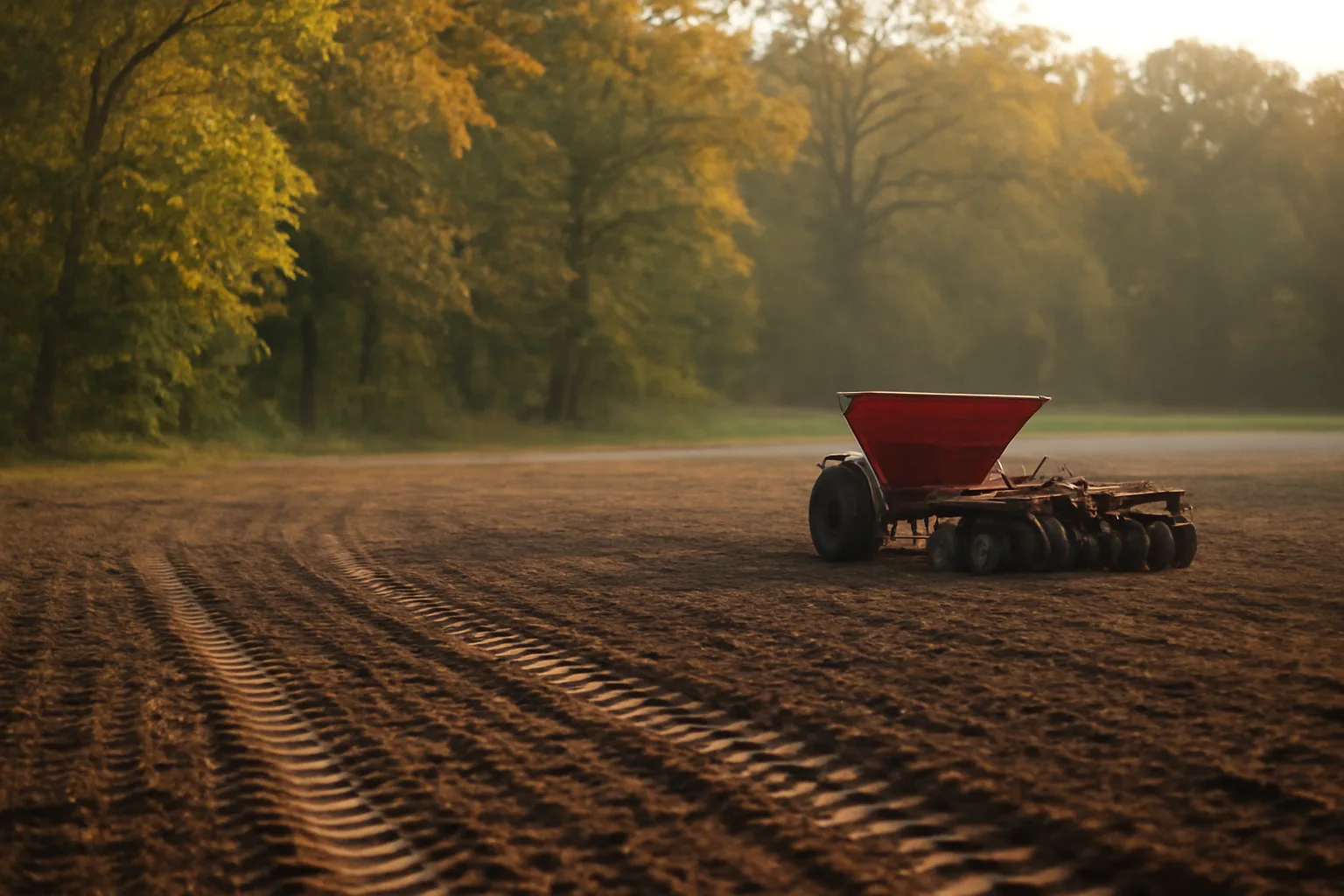
You don't need a full tractor and drill setup to plant a decent food plot, but you do need a way to break ground, get seed in contact with soil, and pack it down. For a small plot (under an acre), a lot of hunters get by with an ATV or UTV, a small disc or tiller attachment, a broadcast spreader, and a drag harrow or homemade chain-link drag to cover seed. That setup runs anywhere from a few hundred dollars to a couple thousand depending on what you already own and whether you buy new or used implements. For larger plots or heavier ground, a compact tractor (25-45 horsepower range) with a disc, cultipacker, and PTO spreader speeds things up considerably and handles rockier or heavier clay soils better than ATV implements. Renting equipment for a weekend from a local rental center is a reasonable option if you're only planting once or twice a year and don't want to own idle equipment most of the year. Whatever you use, the sequence matters more than the horsepower: kill or clear existing vegetation, test and amend soil, work the seedbed, plant at the right depth for your species, and pack the seed in. Skipping the pack-down step on small-seeded species like clover and brassicas is one of the most common reasons broadcast plots fail to establish evenly.
Do state rules affect what and how you plant?
Yes, and this catches new plotters off guard: some states regulate what counts as a food plot versus baiting, and rules differ sharply by state and sometimes by county. A planted, standing food plot is generally treated differently from bait (piled corn, mineral, or feed) under most state wildlife regulations, but the specifics of what counts as a legitimate plot (minimum size, whether you can hunt directly over recently disturbed ground, distance requirements) vary by state wildlife agency. Some states, particularly in the Midwest with chronic wasting disease concerns, also restrict baiting and supplemental feeding in specific counties or CWD management zones even though standing food plots remain legal . Before you plant with hunting season in mind, check your state wildlife agency's current regulations on baiting, feeding, and food plots, since these rules get updated seasonally and CWD zones can expand or shrink year to year. This isn't a one-time check, it's worth confirming again each season before you plant.
Frequently asked questions
Do deer eat sorghum?
Yes, deer eat sorghum, both the young green shoots in spring/summer and the mature grain heads in fall and winter. It's more drought tolerant than corn and works well on poorer or sandier soils, though most deer prefer soybeans, clover, or corn when those are available on the same property.
Do deer eat clover, and do deer like clover?
Yes, clover is one of the most preferred food plot forages for whitetails. White and red clover offer crude protein commonly cited around 25-30% during active growth, supporting antler growth and lactation. It needs a soil pH near 6.0-7.0 and can produce a stand for 3-5 years with mowing and maintenance.
When to plant food plots for deer?
It depends on species and your region's frost dates, not a fixed date. Spring plots (soybeans, corn) go in after your last frost, generally April-June. Fall plots (clover, brassicas, cereal grains) go in 60-120 days before your first hard frost, ranging from late July in the north to October in the Deep South.
When to plant turnips for deer?
Plant turnips 90-120 days before your first hard frost, typically late July through early September across most whitetail range. A hard frost sweetens the bulbs by converting starches to sugars, so deer often ignore turnip plots in early fall and hit them hard in December and January.
When to plant oats for deer?
Plant oats 6-8 weeks before your first expected fall frost, generally mid-August through mid-September in much of the Southeast per land-grant extension guidance. Oats green up fast and are highly palatable early, but don't hold up to deep cold as well as wheat or rye.
What is a food plot?
A food plot is a planted patch of forage, from a quarter acre to several acres, seeded specifically to feed and attract deer or other wildlife. It typically involves soil testing, ground prep, species selection matched to climate and goals, and planting on a schedule tied to the local growing season.
What are deer's favorite foods?
It changes by season. In spring/summer, deer favor high-protein forage like soybeans and clover. In fall, preference shifts toward high-energy foods like acorns (especially white oak) and standing corn or soybeans. Brassicas become preferred later in fall after a frost sweetens the bulbs.
Do deer like honey?
Not honey the bee product; there's no evidence or established practice of deer seeking that out. If the question means honeysuckle, yes, deer readily browse Japanese honeysuckle leaves and vines, though it's invasive and shouldn't be planted intentionally. Honey locust pods are also a real fall deer food.
When to plant food plots for deer in the North vs South?
Northern zones (roughly Zone 3-4) plant fall plots in late July through August to beat early frosts. Transition zone and mid-South (Zone 6-7) plant late August through September. Deep South (Zone 8-9) can wait until October. Always work backward from your area's average first frost date.
How much does a basic soil test cost before planting a food plot?
A standard soil test through a university extension lab typically costs $10 to $20 and takes 1-2 weeks for results. It's inexpensive compared to the cost of seed, lime, and labor wasted on ground with the wrong pH or nutrient levels for your planned species.
Can I plant a food plot without a tractor?
Yes, for plots under an acre, an ATV or UTV with a small disc or tiller attachment, a broadcast spreader, and a drag harrow is usually enough. Larger or heavier ground benefits from a compact tractor (25-45 hp) with a disc, cultipacker, and PTO spreader.
Are food plots legal in every state, or do baiting rules apply?
Standing, planted food plots are generally treated differently from bait piles under most state wildlife regulations, but rules on plot size, hunting over disturbed ground, and feeding restrictions (especially in CWD management zones) vary by state and change over time. Check your state wildlife agency's current rules before planting or hunting a plot.
Sources
- USDA Forest Service, National Agroforestry Center: Working Trees for Wildlife: Food plots are framed as one tool within broader wildlife habitat management, not a standalone solution
- Purdue University Extension, Publication FNR-228-W: Food Plots for Wildlife: Brassicas like turnips perform best in well-drained soils with pH 5.8 to 7.0 and respond strongly to nitrogen fertility
- University of Tennessee Extension, Publication W346: Establishing and Managing Wildlife Food Plots: Oats are recommended for planting mid-August to mid-September in much of the Southeast at 2-3 bushels per acre broadcast
- USDA Natural Resources Conservation Service, Plant Guide: Sorghum bicolor: Grain sorghum is more drought tolerant than corn and suited to shorter growing seasons for wildlife food plots
- USDA Natural Resources Conservation Service, Plant Guide: White Clover (Trifolium repens): White and red clover provide crude protein in the range commonly cited around 25-30 percent during active growth
- University of Missouri Extension, Publication G6954: Soil Testing for Lawns, Gardens, and Wildlife Food Plots: A basic soil test through a university extension lab typically costs a modest fee and takes one to two weeks for results
- Cornell University, Cornell Field Crops: Forage Seeding Guidelines: Seed-to-soil contact from a firm, prepared seedbed and packing after broadcasting affects germination as much as seeding rate
- Michigan Department of Natural Resources, Wildlife Conservation Order 2.108: Baiting and Feeding of Deer: Standing food plots are treated differently from bait or feed piles, and baiting/feeding restrictions vary by CWD management zone