Last updated 2026-07-26
TL;DR
Preparing a food plot means testing soil, clearing existing vegetation, correcting pH with lime, planting the right species for your zone and season, and fertilizing based on that soil test. Most first-year mistakes are skipping the soil test and planting too early or too late for the region.
What is a food plot, exactly?
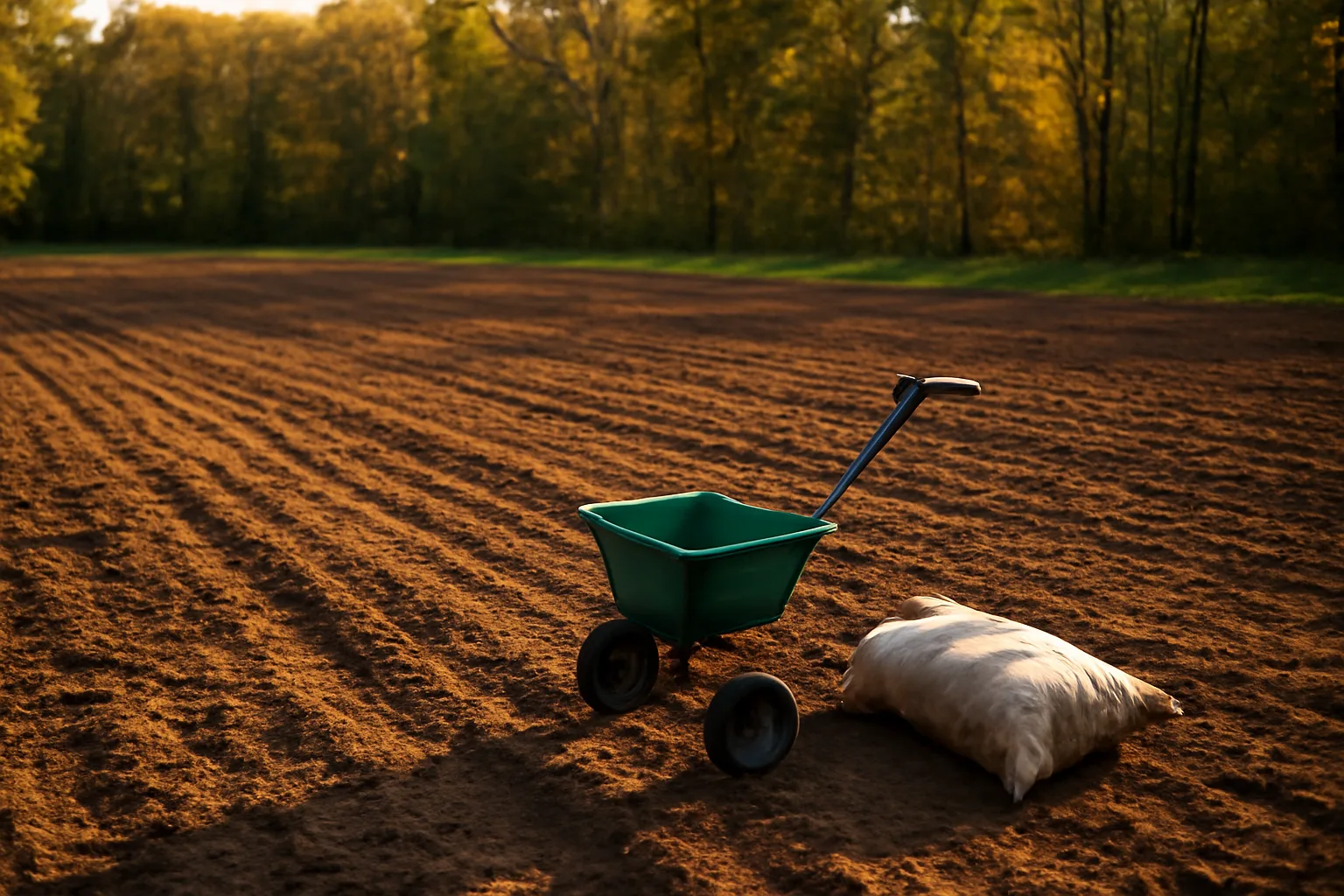
A food plot is a planted patch of forage on hunting land, usually somewhere between a quarter acre and a few acres, meant to feed deer and other wildlife while giving hunters a place to watch or hunt over. It's not the same as a garden and it's not the same as agricultural cropland, though it borrows techniques from both. Most plots fall into two rough categories: annual plots (planted fresh each year with things like brassicas, oats, or soybeans) and perennial plots (clover or alfalfa stands that can produce for three to five years with maintenance). A lot of serious plotters run both, a perennial clover field for spring and summer plus annual grain or brassica plots timed for fall hunting season. The USDA Natural Resources Conservation Service treats food plots as a wildlife habitat practice (Practice Code 645, Upland Wildlife Habitat Management) that can be cost-shared in some states through EQIP, which tells you it's recognized as legitimate habitat work, more than a hunting gimmick [1]. One thing to get straight before you do anything else: check your state's baiting and feeding regulations. A planted, growing food plot is legal to hunt over in essentially every state, but rules on supplemental feed, minerals, and even some plot practices vary a lot by state and sometimes by county. Your state wildlife agency's hunting regulations page is the only source that matters here, not a forum post.
When should you plant food plots for deer?
| Northern (zones 3-5) | Mid-May to mid-June | Late July to mid-August | |
|---|---|---|---|
| Transition (zones 6-7) | Late April to late May | Mid-August to mid-September | |
| Southern (zones 8-9) | March to April | Late September to October | These windows are general. Your local NRCS office or state land-grant extension service can give you a frost-date map specific to your county, and that's a better source than any national chart. |
Timing depends entirely on what you're planting and where you live, but the two windows almost everyone works with are spring (April through June) for perennials and summer annuals, and late summer through early fall (July through September) for brassicas, cereal grains, and fall annual blends. Spring plantings need soil temps consistently above 50-55°F for clover, chicory, and soybeans to germinate well. Cooperative extension services generally recommend waiting until after the last frost date for warm-season annuals like soybeans, sorghum, and cowpeas [2]. Fall plantings are more forgiving on frost but tighter on the calendar, because brassicas and cereal grains need enough growing time before a hard freeze or before deer season opens, whichever comes first. In the Midwest and upper South, that generally means planting brassicas and oats in late July through August. In the Deep South, growers can push into September and even October for cool-season plots because the frost date is so much later. Here's a rough breakdown by region and species type: | Region | Spring/summer annuals | Fall brassicas & grains |
When to plant oats for deer
Oats go in as a fall annual, generally 6 to 10 weeks before your area's first hard frost, so most hunters are planting oats sometime between mid-August and mid-September depending on latitude. Oats germinate fast, often in 5 to 10 days with decent soil moisture, and they're one of the most attractive fall forages for deer because the sugar content in the leaf tissue climbs as temperatures drop. Oats don't survive hard winters the way winter wheat or winter rye do. In colder zones they'll get knocked back or killed by repeated hard freezes, which is fine if your goal is just fall and early winter attraction. If you want green forage into late winter, blend oats with winter wheat or cereal rye so something is still standing after the oats give out. Seeding rate for oats alone typically runs 2 to 3 bushels per acre (roughly 96-144 lbs), broadcast and lightly covered at a quarter to half inch deep. Extension guidance from Penn State and other land-grant programs on cover crop oats lines up closely with these deer-plot rates because the agronomy is the same crop either way.
When to plant turnips for deer
Turnips are a fall brassica, and timing is less flexible than most annuals because turnips need roughly 80 to 90 days to bulb out and reach peak attraction, plus they need cool weather to convert starches to sugars in the leaves and roots. Most guidance from extension programs puts planting 90 to 100 days before your area's average first frost date, which for a lot of the Midwest and upper South lands somewhere in late July to mid-August. Plant too late and you get small, tough roots that deer largely ignore. Plant too early into hot, dry August soil in the South and you risk poor germination or flea beetle damage before the plants establish. Seeding rate for turnips alone is light, around 4 to 6 lbs per acre, because the seed is tiny and easy to overseed into a stand that chokes itself out. Most commercial brassica blends mix turnips with other species specifically to spread out the germination window and hedge against a bad stretch of weather right after planting.
Do deer like clover, and do deer eat sorghum?
Yes to both, though for different reasons and in different seasons. Clover is one of the most consistently preferred forages for whitetail deer across the growing season. Multiple state wildlife agency and extension forage-preference studies rank clover among the top few plantings for both tonnage of use and consistency of use across spring, summer, and fall [3]. It's also a nitrogen-fixing legume, which means it can reduce your fertilizer costs over time compared to grain crops that pull nitrogen out of the soil every year. Sorghum (grain sorghum, or the taller forage/biomass sorghums) gets eaten by deer too, but it's used differently. Deer will browse young sorghum shoots and eat the grain heads once they mature, but sorghum's biggest food-plot value is often as cover and as a nurse crop, tall stalks that screen a plot or shelter a low-growing legume planted alongside it. If your main goal is straight-up deer nutrition and attraction, clover or soybeans generally outperform sorghum. If you want standing cover through winter with some food value mixed in, sorghum earns its place. A good perennial clover stand, once established, needs mowing two to four times a season to keep it from getting stemmy and to knock back competing weeds, according to extension forage management guidance [4]. That's less work than replanting an annual plot every year, which is the tradeoff a lot of hunters don't think about until year two.
What are deer's favorite foods, really?
There's no single "favorite" because deer preference shifts by season, region, and what's locally available, but research and long-term deer-pen preference trials point to a consistent short list: clover, soybeans (especially the leaf forage before pods form), chicory, and natural browse like honeysuckle, greenbrier, and various forbs. Acorns deserve their own mention. In fall, deer will often abandon a planted food plot for a good white oak acorn drop, because acorns are calorie-dense and deer instinctively key in on them. This is well documented in whitetail nutrition literature and it's the single most common reason a good plot suddenly looks "dead" in October, the deer went to the woods, not away from your land. Regional forage-preference trials run by university deer research programs (Mississippi State, Auburn, and others) have tested dozens of plot species side by side using deer exclusion cages to measure actual consumption, and clover, soybeans, and cowpeas consistently rank at or near the top of preferred summer forages, while brassicas and cereal grains rank highest in fall once a frost sweetens them [5].
Do deer like honey, and does it belong in a food plot?
Deer don't eat honey in any meaningful way as part of natural foraging behavior, and there's no research or agency guidance suggesting honey has a place in food plot planning. Deer aren't drawn to honey the way bears are; their digestive system and browsing behavior are built around plant material, not concentrated sugar sources like honey or syrup. Where this question usually comes from is confusion with mineral and attractant products that use molasses or sugar as a carrier for salt and minerals, which deer will use. If your state allows supplemental feeding or mineral sites (many states restrict or ban this entirely, especially where chronic wasting disease is a concern), check your state wildlife agency's regulations before setting one out. This has nothing to do with actual food plot planting.
How do you soil test before planting a food plot?
Pull soil samples from 4 to 8 spots across the plot at a 4 to 6 inch depth, mix them in a clean bucket, and send a combined sample to your state land-grant university's soil testing lab or a private ag lab. Most university labs charge somewhere between $10 and $20 per sample and turn results around in 1 to 2 weeks [6]. The test tells you your current pH, phosphorus, potassium, and organic matter, and gives lime and fertilizer recommendations for whatever crop you tell them you're planting. This is the single most important step in the entire process and it's the one most hunters skip. Guessing at lime and fertilizer rates wastes money in both directions, either you underapply and get a mediocre stand, or you overapply and burn cash on nutrients the soil didn't need. Your soil lab's recommendations are specific to your dirt and should be treated as the final word on lime and fertilizer rates for your plot. A general article like this one can tell you what a soil test measures and why it matters; it can't tell you how many tons of lime your particular field needs. That number only exists after your sample comes back.
How do you clear and prepare the ground itself?
Start by killing or removing whatever is growing there now. For an existing weedy or grassy field, that usually means a glyphosate application 2 to 3 weeks before you plan to till or plant, giving the herbicide time to translocate and kill roots, more than top growth. For a wooded or brushy site, that means clearing trees and brush first, then dealing with stumps and roots before any tillage equipment can run through it. Once vegetation is dead, you've got two paths: till it under with a disc or tiller, or no-till drill straight into the dead residue. Tillage is faster to get a clean seedbed and it's the more forgiving option for a first-time plotter without dialed-in equipment. No-till preserves soil structure and organic matter and cuts erosion risk, but it demands a no-till drill and decent seed-to-soil contact, which is harder to get right without experience. After tillage, apply lime and fertilizer per your soil test results and work them into the top few inches, since lime especially needs contact with soil to change pH and that reaction takes months, not days. Extension soil fertility guidance is consistent on this point: surface-applied lime with no incorporation can take a year or more to move pH where you want it, versus incorporated lime working in a matter of months [7].
What equipment do you actually need?
You don't need a full tractor and implement lineup to grow a good plot, but you do need a way to kill existing vegetation, break or loosen the soil, spread seed and fertilizer, and pack the seed in. A lot of hunters get this done with an ATV or side-by-side pulling a small disc harrow, a broadcast spreader, and a cultipacker or drag, plus a sprayer for herbicide. If you're renting or borrowing equipment, prioritize the disc and sprayer first; those two tools cover clearing and seedbed prep, which matters more than fancy planting gear. A hand-crank or ATV broadcast spreader works fine for most food plot seed sizes, though very small seed like clover or chicory needs a light touch and shallow coverage, often just a drag or cultipacker rather than covering with a disc, since burying tiny seed too deep kills germination. Soil moisture at planting matters more than almost any piece of equipment you own. Extension planting guides consistently point out that seed-to-soil contact and adequate moisture drive germination success more than seeding rate or fertilizer timing. If you're planting into dust because you're rushing a deadline, wait for rain if you possibly can.
How much does a food plot cost to establish?
Costs vary widely by acreage, equipment access, and whether you're building a plot from wooded ground or converting existing ag land, but a rough per-acre range for seed, lime, and fertilizer alone (not counting equipment purchase or rental) commonly runs $150 to $400 per acre depending on species mix and soil test recommendations. Lime is often the single biggest line item if your soil test comes back needing 2 or more tons per acre, since lime commonly runs $30 to $60 per ton delivered and spread, depending on region and hauling distance. Seed cost swings a lot by species. Straight clover seed is relatively cheap per acre; a bag of premium brassica or soybean blend seed costs more per pound but often covers less ground per bag than a cereal grain like oats or wheat. Buying seed separately and mixing your own blend is usually cheaper than buying a bagged proprietary mix, but it takes more homework to get ratios right. If you want a plan built around your actual soil test numbers, acreage, and region instead of guessing at species and rates, that's exactly what a Custom Food Plot Plan from PlotSeason is for. It's a $99 one-time plan, not a subscription, and it's built to work alongside whatever your soil test lab already told you, not replace it.
What species should go in your first plot?
For a first-year plot with limited equipment and no track record on the property, a simple mix beats an ambitious one. A cereal grain and brassica blend (oats or winter wheat mixed with turnips or radishes) is about as forgiving a fall plot as exists: fast germination from the grain, a longer attraction window from the brassica, and reasonable tolerance for a slightly rough seedbed. For a perennial option, a clover and chicory blend gives you spring through fall forage and, once established, two to four years of production with only mowing and an annual fertilizer top-dress based on a fresh soil test. It's more work up front (clover seed is small and needs a clean, firm seedbed) but less work every single year after that compared to replanting annuals. What you should probably skip on a first plot: complicated multi-species blends with 6 or more species, food plot systems that need precise sequential planting across a full season, and anything that needs a specific piece of equipment you don't already own or can't easily rent. Get one good stand established first. You can get fancier once you know your dirt, your deer, and your equipment. For more on picking species that fit your specific goals, see food plot whitetail, deer food plot seed, and deer food plots for broader planning frameworks.
Frequently asked questions
Do deer eat sorghum?
Yes, deer browse young sorghum shoots and eat mature grain heads, but sorghum is used more as cover and a nurse crop for other plantings than as a primary attraction food. If deer nutrition and attraction is the main goal, clover or soybeans generally outperform sorghum for that purpose.
Do deer eat clover?
Yes, clover is one of the most consistently preferred deer forages across spring, summer, and fall, according to university forage-preference trials using deer exclusion cages to measure actual consumption. It's also a nitrogen-fixing legume, which can lower fertilizer costs in later years of an established stand.
When should you plant food plots for deer?
Spring and summer annuals and perennials go in April through June once soil temps are consistently above 50-55°F. Fall brassicas and cereal grains go in July through September, timed 60-100 days before your area's first hard frost depending on species. Exact windows shift by region and latitude.
Do deer like clover more than other plot species?
Clover ranks at or near the top in most university forage-preference studies, especially through spring and summer, but preference shifts seasonally. In fall, brassicas and cereal grains often pull deer away from clover once frost sweetens their sugar content.
When should you plant oats for deer?
Plant oats 6 to 10 weeks before your area's average first hard frost, generally mid-August to mid-September in most of the Midwest and upper South. Oats germinate in 5 to 10 days with good moisture but don't survive hard winter cold, so pair with wheat or rye for late-winter forage.
When should you plant turnips for deer?
Turnips need 80 to 90 days to reach peak size and sweetness, so plant 90 to 100 days before your local first frost date, typically late July to mid-August in much of the whitetail's range. Planting too late leaves small, unattractive roots that deer largely skip.
What is a food plot exactly?
A food plot is a planted patch of forage, usually a quarter acre to a few acres, established on hunting land to feed deer and other wildlife and give hunters a place to watch or hunt over. The USDA NRCS recognizes it as a wildlife habitat practice under Practice Code 645.
What are deer's favorite foods overall?
There's no single favorite; it shifts by season and region. Clover, soybean leaves, chicory, and natural browse rank consistently high in preference trials, and acorns often pull deer away from any planted food plot entirely once they start dropping in fall.
Do deer like honey?
No, deer don't seek out honey as a natural food source. This question usually comes from confusion with molasses-based mineral or attractant products, which deer will use for the salt and minerals, not the sugar. Honey itself has no real place in food plot planning.
How big should a first food plot be?
Most first-time plotters do well starting with a quarter acre to one acre, since that size is manageable with ATV-based equipment and small enough to fully clear, lime, and fertilize correctly without huge cost. You can always expand acreage in year two once you know what worked.
Do you need a soil test before planting a food plot?
Yes. A soil test, typically $10 to $20 through your state land-grant lab, tells you current pH and nutrient levels and gives lime and fertilizer rates specific to your dirt and intended crop. Skipping it means guessing, which either wastes money on unneeded inputs or leaves the plot underfed.
How long does lime take to work after applying it to a food plot?
Incorporated lime (worked into the top few inches of soil) typically shifts pH within a few months. Surface-applied lime with no tillage can take a year or more to move pH meaningfully, since it needs direct soil contact to react, according to university soil fertility guidance.
Sources
- USDA NRCS, Conservation Practice Standard: Upland Wildlife Habitat Management (Code 645): Food plots fall under a recognized NRCS wildlife habitat practice code eligible for cost-share in some states
- University of Tennessee Extension, Establishing Wildlife Food Plots: Warm-season annual planting timing recommendations relative to last frost date
- Mississippi State University Extension, Deer Food Plot Establishment: Clover ranks among top preferred deer forages across the growing season
- University of Kentucky Extension, Establishing and Managing Wildlife Food Plots: Perennial clover stands need mowing 2 to 4 times per season for maintenance
- Auburn University, Alabama Cooperative Extension System, Wildlife Food Plots: University forage-preference trials rank clover, soybeans, and cowpeas high among summer deer forages
- University of Missouri Extension, Soil Testing: Typical soil test cost and turnaround time through a university lab
- Purdue University Extension, Managing Soil pH for Crop Production: Incorporated lime changes soil pH faster than surface-applied lime