Last updated 2026-07-25
TL;DR
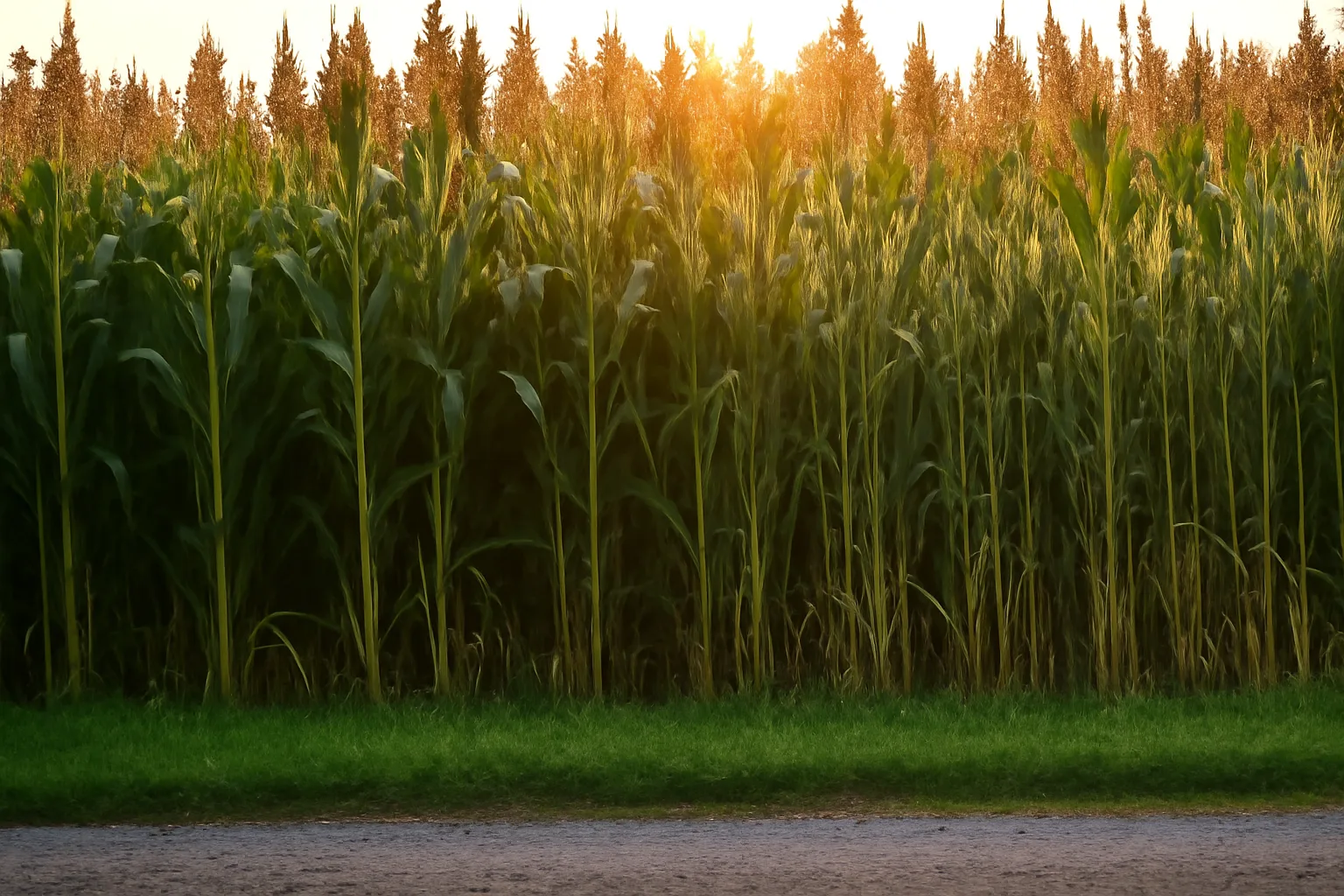
Screening seed is a tall, dense-growing plant (sorghum, sudangrass, Egyptian wheat, sunn hemp) planted to block sight lines into a food plot or trail. It's not primarily a food source, though deer will browse some of it. Plant after soil warms past 60°F, usually late May through June in most whitetail range, alongside your regular plot planning.
What is a food plot screening seed, exactly?
A screening seed is any tall, fast-growing plant you plant specifically to block a sight line, not to feed deer. Think of it as a living privacy fence around your plot, stand access trail, or property line. The most common choices are grain sorghum, forage sorghum, sudangrass, Egyptian wheat, and sunn hemp, all of which can hit 6 to 12 feet in a single growing season under decent conditions [1]. This is different from a regular food plot planting. A clover or brassica plot is there so deer eat it. A screen is there so deer (and other hunters, and road traffic) can't see into your plot or see you walking to your stand. Some screening species do get browsed some, sorghum grain heads in particular draw deer and turkey late in the season, but that's a side benefit, not the point. Most guys use screens along a road frontage, along a property line shared with a neighbor who hunts hard, or along the specific approach trail they walk to reach a stand. A 20 to 30 foot wide strip of Egyptian wheat or sorghum along that edge can be the difference between deer busting you every sit and deer never knowing you're there. If you're new to plotting in general, it helps to understand what a food plot is before you get into specialty plantings like screens. What is a food plot, in plain terms? It's a planted opening, usually a half acre to a few acres, seeded with something deer want to eat (or, in this case, something that hides you) instead of left as unmanaged woods or field. Screens are one small piece of that bigger plan.
When should you plant screening seed?
| Deep South (zones 8-9) | Late April to early June | |
|---|---|---|
| Mid-South / Transition (zones 6-7) | Mid May to mid June | |
| Upper Midwest / Northeast (zones 3-5) | Late May to late June | These windows overlap heavily with when you'd plant summer food plot annuals like soybeans or forage sorghum for tonnage, so a lot of hunters knock out screens and summer plots in the same weekend. If you're building a full-season plan, this is a good moment to think about when to plant food plots for deer as a whole system rather than one planting at a time, since screens, summer annuals, and fall plots all stack on a calendar. |
Plant screening seed after your last frost date and once soil temperatures are consistently above 60°F, which for most of whitetail country lands somewhere between mid-May and late June [2]. Sorghum, sudangrass, and Egyptian wheat are warm-season grasses. They germinate poorly and grow slow in cool soil, so planting too early wastes seed and time. Sunn hemp, a legume sometimes used for screening because of its rapid upright growth, also wants warm soil and does best planted from late May through June in northern climates, a bit earlier (April into May) in the Deep South. A rough regional guide: | Region | Typical planting window |
Do deer eat sorghum?
Yes. Deer readily eat grain sorghum heads, and whitetails browse the leaves and young shoots of forage sorghum and sudangrass too, especially in late summer and fall once the grain matures. That's part of why sorghum works as a dual-purpose planting: it screens you all summer, then the grain heads pull deer in during hunting season as a bonus food source. Sorghum is not as preferred as soybeans, corn, or clover when all are available side by side. It's more of a secondary or opportunistic food. But in areas with heavy deer or turkey pressure, don't be surprised if birds and deer clean up a sorghum head before you get a chance to hunt over it. One practical note: sorghum and sudangrass can develop dangerous levels of prussic acid (cyanide compounds) in young, drought-stressed, or frost-damaged growth, which is a real livestock concern documented by university extension services. This is mostly a cattle and horse grazing issue rather than a deer concern, since deer browse selectively and in small amounts, but it's worth knowing if you also run livestock near your plots.
Egyptian wheat vs. sorghum vs. sunn hemp: which screen should you plant?
| Egyptian wheat | 8-12 ft | High | Low | Moderate in some regions | |
|---|---|---|---|---|---|
| Grain sorghum | 4-7 ft | Moderate | Moderate to high (grain) | Low | |
| Sudangrass | 5-8 ft | Moderate | Low to moderate (browse) | Low | |
| Sunn hemp | 6-9 ft | Low to moderate | Low | Low (frost-killed) | Most hunters plant a mix, Egyptian wheat or sorghum on the border rows for height and wind resistance, with sunn hemp or a shorter forage mixed in behind it. If you're comparing this decision against other plot investments, our food plot seed overview covers how screening fits into a season-long seed budget. |
Egyptian wheat is the most popular dedicated screening plant among food plotters because it grows tall fast (8 to 12 feet), stays upright well in wind, and reseeds itself reasonably well in some climates. It's technically a type of sorghum (Sorghum bicolor), bred and selected specifically for height and screening rather than grain yield. Grain sorghum (milo) grows a bit shorter, typically 4 to 7 feet, but produces a heavier, more useful grain head for deer and turkey. If you want screening and a fall food source in one planting, grain sorghum earns its keep better than Egyptian wheat. Sunn hemp is a legume, not a grass, and it's a newer addition to the screening toolbox. It grows very fast (up to 6 to 9 feet in a season), fixes nitrogen in the soil like other legumes, and some hunters like that it breaks down the following spring rather than leaving a persistent stalk mat. It doesn't have the same wind-resistance as Egyptian wheat, though, and tends to lean or lodge in exposed spots. A quick comparison: | Screen type | Typical height | Wind resistance | Deer food value | Reseeds itself |
Do deer like clover, and how does it compare to screening seed?
Yes, deer like clover a lot. White clover and red clover rank among the most consistently preferred whitetail forages in research and in practical field observation, largely because they're high in protein (often 25 to 30 percent crude protein in vegetative growth) and stay palatable through much of the growing season. Clover is a food plot in the true sense: deer eat it directly and repeatedly. Screening seed and clover aren't competing choices, they're different tools. Clover feeds deer. Sorghum and Egyptian wheat hide you. A well-planned property usually has both: a clover or alfalfa plot deer actually browse, bordered or buffered by a screen that keeps that plot from being visible from a road or a neighbor's stand. If clover is new to you, it helps to know it's a perennial in most varieties (2 to 5 years of productive life depending on variety and maintenance) versus screening annuals that you replant every year . That's one more reason to separate the two in your planning: different lifespans, different jobs. For a deeper look at clover varieties and how they stack up against other perennials, see our deer food plot seed guide.
When to plant oats for deer
Plant oats in late summer to early fall, generally 6 to 10 weeks before your area's first hard frost, so deer can use them through fall and into early winter before cold kills the plant back . In the Midwest and Upper South that's often late August through mid-September. In the Deep South, growers sometimes wait until late September or October since oats don't like heat. Oats aren't a screening plant, they're a fall food plot annual, but they come up in the same planning conversation because a lot of hunters plant summer screens and fall oats on the same field in a two-season rotation: screen goes in during late May or June, gets mowed or knocked down after season, and oats or a brassica blend goes into that same ground the following August or September. Oats are a strong preference food for deer in fall, sometimes outcompeting wheat or rye in taste tests, and they green up fast, often visible within 5 to 7 days of planting in warm soil . They winterkill in the coldest zones (below roughly 0 to 10°F depending on variety) which some hunters like, since it removes the need to terminate the crop before spring planting.
When to plant turnips for deer, and how do they fit a screening plan
Plant turnips 60 to 90 days before your first expected fall frost, which lines up with late July through August across most of the whitetail's range . Turnips need that lead time to bulb out and build sugar content, and they actually get sweeter and more attractive to deer after a hard frost converts starches to sugars. Turnips are a brassica, planted for the fall and winter food plot, not a screen. But the timing overlap matters: if you planted a screen in late May or June, that same field is often ready to knock down and replant to turnips or a brassica blend by late July or August, giving you screening cover all summer and a high-tonnage winter food source in the same acre. It's an efficient way to get two jobs out of one plot without buying extra ground. One honest note on turnips: deer often ignore the bulb early in the season and hammer the leafy tops first, then switch to bulbs once cold weather sweetens them. Don't judge a turnip plot's success in October, give it until December or January in most climates.
What are deer's favorite foods, overall?
There's no single universal answer, deer preference shifts by region, season, and what's locally available, but research and extension data point to a consistent short list: acorns (especially white oak family), soybeans, clover, and other legumes rank as top-tier preferred foods across most of the whitetail's range . Native browse like greenbrier, honeysuckle, and forbs also make up a big share of the diet where mast and ag crops aren't available. Crude protein content is a decent (not perfect) proxy for what deer will select given a choice. Soybeans and clover often run 20 to 30 percent crude protein in the growing stage, while a mature corn plant or standing sorghum runs much lower . That's part of why soybeans and clover get eaten to the dirt in a mixed planting while a corn or sorghum screen right next to it stands mostly untouched until fall grain matures. Regional food availability changes the picture fast. In heavy ag country, deer might barely touch a food plot during a corn or soybean harvest window because they've got unlimited free groceries next door. In big woods with no ag, a small clover plot can get hammered because it's the only high-protein option for miles. This is exactly why a generic seed bag rarely beats a plan built around your specific ground, soil test, and surrounding land use. That's the whole idea behind our $99 Custom Food Plot Plan, it takes your soil test results and property details and builds a species and timing plan instead of a one-size-fits-all bag recommendation.
Do deer like honey, and does it belong in a food plot?
No, honey has no real place in food plot planning, and deer don't have documented strong attraction to it the way they do to salt, sugar-rich forage, or mast. There's no cooperative extension or state wildlife agency guidance recommending honey as a deer attractant, and it's not something serious food plotters use. If you've seen it mentioned in hunting forums or product marketing, treat it as folklore rather than agronomy. What actually works to draw deer to a plot: high-protein forage during the growing season (clover, soybeans, alfalfa), high-carb energy sources in fall and winter (corn, oats, brassicas after a frost sweetens them), and mineral or salt supplementation where legal. Check your state wildlife agency's baiting and feeding regulations before using any mineral or attractant product, since rules vary widely by state and some prohibit supplemental feeding or baiting for deer hunting entirely, particularly in areas managing chronic wasting disease .
How do you plant a screening strip step by step?
Start with a soil test. Screening species aren't as fussy about pH as clover, but sorghum and Egyptian wheat still perform better in the 6.0 to 6.8 range, and your soil test lab's specific lime and fertilizer recommendation is the real authority here, not a generic number pulled off the internet . 1. Kill existing vegetation with glyphosate 2 to 3 weeks ahead, or till it under, depending on your equipment. 2. Broadcast or drill seed after last frost, once soil hits 60°F consistently. Depth matters: most screening grass seed wants 0.5 to 1 inch of coverage, sunn hemp wants roughly 0.5 to 1.5 inches. 3. Fertilize according to your soil test. Sorghum and Egyptian wheat respond well to nitrogen, often 40 to 60 lbs/acre actual N depending on your test results, but again, defer to your specific lab report over a blanket number. 4. Mow a path through the screen if you need to walk to a stand. A 3 foot mowed lane inside a 20 to 30 foot wide screen keeps you hidden on both sides while you walk in. 5. Plan your fall transition. Decide now whether this strip becomes a fall food plot (turnips, oats, brassica blend) or stays standing as sorghum grain and winter cover. A drill gives more consistent depth control than broadcasting, but plenty of hunters broadcast Egyptian wheat and sorghum successfully with a hand spreader or ATV spreader and a light cultipack afterward. For gear specifics and what's actually worth renting versus owning, our equipment and methods content covers drills, spreaders, and sprayers in more depth.
What mistakes do people make with screening seed?
The most common mistake is planting too early. Sorghum, sudangrass, and sunn hemp are warm-season plants. Put them in cold, wet soil in April in the northern half of the country and you'll get spotty germination and a screen full of gaps by July, right when you need it. Second mistake: planting too narrow. A single row or a 5 foot strip doesn't block much once wind flattens part of it or deer bed down in it and knock it over. Plant at least 20 feet of width if you want a screen that holds up through a full season. Third mistake: forgetting the fall transition plan. A screen that's still standing 10 feet tall in November can be great cover, or it can block your shot lanes into the plot you're trying to hunt. Decide in July whether you're mowing a shooting lane through it before season. Fourth: ignoring the soil test. Screening plants aren't as demanding as clover, but they still respond to lime and nitrogen. Skipping fertility because "it's just a screen" gets you a thin, gappy stand instead of the wall of cover you wanted.
Frequently asked questions
Do deer eat sorghum?
Yes, deer eat sorghum grain heads and will browse the leaves and shoots of forage sorghum and sudangrass, especially late summer into fall [4]. It's not their top preference compared to soybeans or clover, but it works as a secondary food source layered on top of its main job as a screening plant.
Do deer like clover?
Yes, clover is one of the most consistently preferred whitetail forages, often running 25 to 30 percent crude protein in vegetative growth [6]. White and red clover get browsed hard through spring, summer, and fall wherever they're available, which is why they're a staple perennial in most food plot systems.
When to plant food plots for deer?
It depends on the plot type. Warm-season screens and summer annuals go in after last frost, generally May through June. Fall plots like brassicas, oats, and cereal grains go in 60 to 90 days before your area's first hard frost, usually late July through September depending on latitude [8][10].
When to plant turnips for deer?
Plant turnips 60 to 90 days before your first expected fall frost, typically late July through August across most whitetail range [10]. Turnips need that lead time to bulb, and cold weather afterward converts starches to sugars, making bulbs more attractive to deer in December and January than they were in October.
When to plant oats for deer?
Plant oats 6 to 10 weeks before your first hard frost, generally late August through mid-September in the Midwest and Upper South, later in warmer climates [8]. Oats green up fast, often within 5 to 7 days in warm soil, and are a strong fall preference food that often winterkills in the coldest zones.
What is a food plot?
A food plot is a planted opening, usually a fraction of an acre to a few acres, seeded specifically to feed or attract deer with forage they prefer over what's naturally available. Screening plots are a specialized variation planted for visual cover rather than food, though some screening species do get browsed.
What are deer's favorite foods overall?
Preference varies by region and season, but acorns (especially white oak), soybeans, and clover consistently rank as top whitetail foods across research and field observation [11]. High-protein legumes and mast crops tend to beat grasses and grains when deer have a choice among all of them.
Do deer like honey?
No, there's no credible evidence or extension guidance showing deer are meaningfully attracted to honey, and it has no real role in food plot or attractant planning. Stick to proven attractants like mineral (where legal), clover, soybeans, and frost-sweetened brassicas instead.
What's the best screening seed for a food plot?
Egyptian wheat is the most popular dedicated screen because it grows 8 to 12 feet tall and resists wind well. Grain sorghum grows a bit shorter but adds real food value from its grain head. Many hunters plant both together, or add sunn hemp for a faster, self-terminating option.
How tall does screening seed get, and how fast?
Egyptian wheat and tall sorghum varieties can reach 8 to 12 feet in a single growing season, usually visible height by 60 to 90 days after planting in good conditions [1]. Sunn hemp grows nearly as fast, often 6 to 9 feet, but with less wind resistance than sorghum types.
Can you plant screening seed and a food plot in the same spot?
Yes, and it's common practice. Plant a warm-season screen like sorghum or Egyptian wheat in late May or June, then terminate and replant that same ground to fall brassicas, oats, or a cereal grain blend in late July through September for a two-season rotation on one field.
Is it legal to plant food plots or use attractants everywhere?
No. Baiting and supplemental feeding rules for deer vary significantly by state, and some states restrict or ban it entirely, especially where chronic wasting disease management is a concern. Always check your state wildlife agency's current regulations before using minerals, feed, or attractant products [13].
Sources
- USDA NRCS, Plant Guide: Sorghum: Sorghum species are warm-season plants requiring soil temperatures above roughly 60°F to germinate well
- USDA NRCS, Plant Guide: Sunn Hemp: Sunn hemp is a fast-growing warm-season legume planted from late spring into summer
- USDA NRCS Plant Guide: Oats (Avena sativa) growth habits and cool-season planting requirements relevant to when to plant oats for deer
- USDA NRCS Plant Fact Sheet: Turnip (Brassica rapa) growth characteristics and cold tolerance relevant to when to plant turnips for deer
- USDA NRCS Plant Guide: Crimson clover growth habit and forage quality used to compare clover to screening seed
- USDA NRCS Plant Guide: Sunn hemp (Crotalaria juncea) growth habit and suitability as a tall screening cover crop