Last updated 2026-07-25
TL;DR
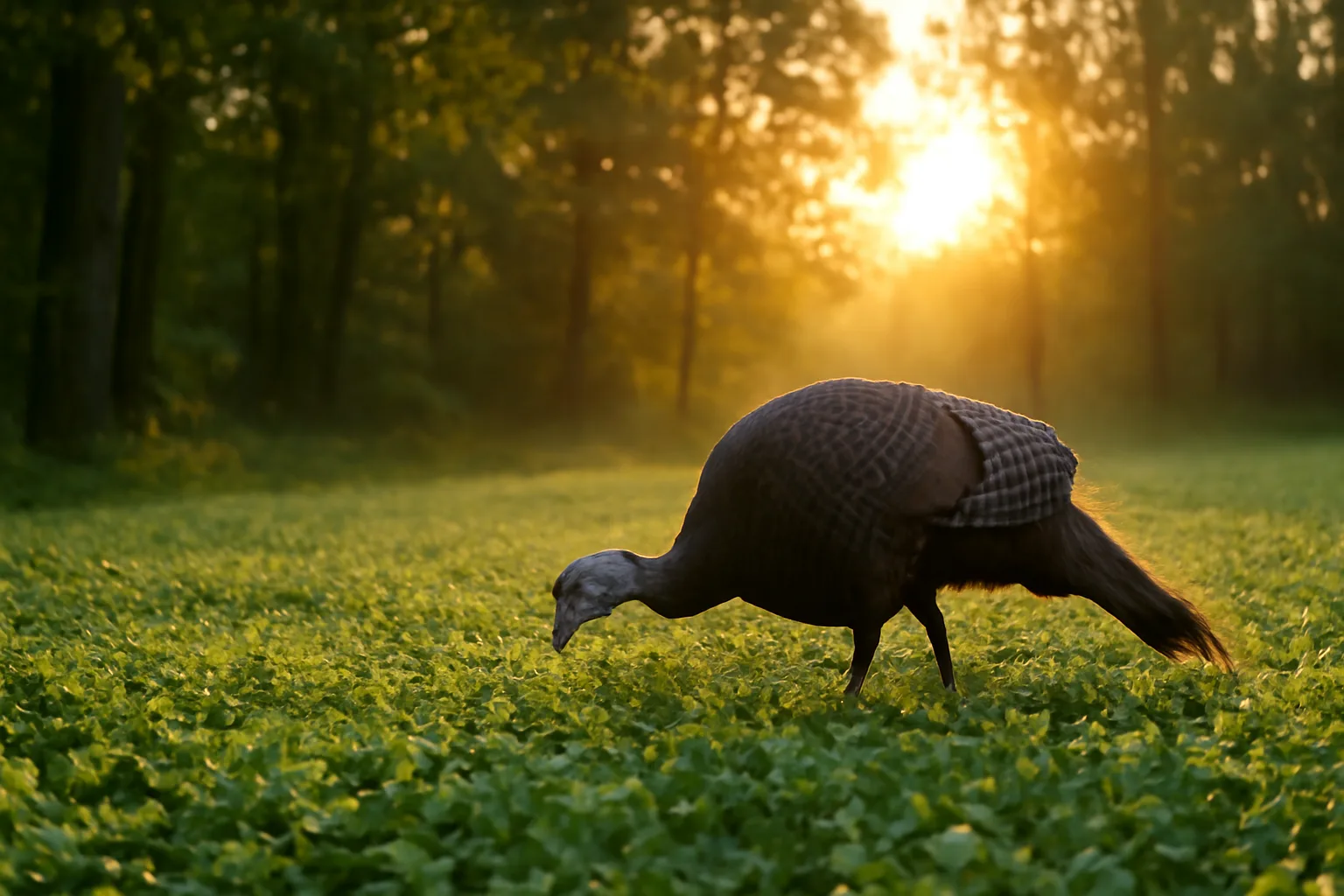
There's no single best turkey food plot, but clover, chufa, and cereal grains (oats, wheat) form the strongest base. Clover feeds turkeys spring through fall and draws bugs poults need. Chufa tubers are a fall/winter draw few other plots offer. Plant clover and chufa in spring, cereal grains in late summer to early fall.
What is a food plot, exactly?
A food plot is a planted patch of forage or grain, usually somewhere between a quarter acre and a few acres, put in specifically to feed and hold wildlife rather than to sell as a crop. For turkey hunters, that means planting something that draws birds in for feeding, strutting, or just loafing where you can watch or hunt them. Food plots aren't the same as baiting. Baiting means putting out loose grain, corn piles, or feeders to concentrate animals right before or during a hunt. A planted, standing crop is generally treated differently under state law, but the rules vary a lot and some states regulate turkey hunting over food plots more strictly than deer hunting over the same ground. Federal baiting rules for migratory bird hunting draw a clear distinction between bait placed or scattered to lure game and a standing crop planted and left in the field under normal agricultural practice, under 50 CFR 20.21(i), and most state agencies apply a similar logic to turkey and deer seasons even though turkeys aren't migratory birds [1]. You need to check your own state agency's regulations before you plant with hunting in mind, because a plot that's legal for deer season might not be legal for spring turkey season in the same state. Most turkey-focused plots blend a legume (clover, usually) with something that produces seed or grain, plus sometimes a tuber crop like chufa. The goal is bugs and greens in spring, seed heads in summer and fall, and something left standing in winter.
What do turkeys actually eat, and what's their favorite food?
Turkeys are opportunists, not picky eaters. Their diet shifts hard by season: insects and greens in spring and early summer, then seeds, grains, and mast (acorns, beechnuts) from late summer through winter. Poults in particular need protein early, which means bugs, not seeds. Research on wild turkey brood ecology published in the Journal of Wildlife Management found that invertebrates make up the large majority of a poult's diet in the first few weeks after hatching, since young poults can't process fibrous plant material well and need the protein for fast early growth [2]. That's a big reason clover plots matter for turkeys as much as deer: clover doesn't just get eaten directly, it hosts grasshoppers, crickets, and other insects that poults need to survive and grow. If you're asking what turkeys' single favorite food is, the honest answer is it depends on the season and what's available. Acorns get eaten hard in fall when they drop. Waste corn and soybeans get hammered after harvest. In spring, new clover growth and the bugs living in it are probably the closest thing to a universal turkey magnet. There's no one food that beats everything else year-round. Any hunter who tells you otherwise is guessing.
Do deer eat clover, and do deer like clover the same way turkeys do?
Yes. Clover is one of the most reliable forages for whitetail deer, and it's also excellent turkey ground, which is why it shows up in almost every mixed food plot recommendation. Deer eat clover heavily spring through fall, and it stays a preferred forage as long as it's not overgrazed or shaded out. University extension research backs this up directly. The University of Georgia's food plot guidance lists clover among the highest-protein forages commonly planted for deer, with crude protein in vegetative growth often in the 25 to 30 percent range, and notes it's a staple for both deer nutrition programs and food plot mixes aimed at antler and body growth [3]. The same qualities that make it good deer forage make it good turkey habitat: low, dense growth that holds insects, plus tender greens turkeys peck at directly. One thing to know: deer and turkeys will compete for the same clover plot, and heavy deer pressure can knock clover down fast in small plots. If you've got a serious deer herd and you want the plot to hold turkeys too, plan on a bigger plot than you'd need for turkeys alone, or fence off part of it during establishment.
Do deer eat sorghum, and does it belong in a turkey plot?
Yes, deer eat sorghum, particularly the grain heads once they mature, and so do turkeys. Grain sorghum (milo) is a warm-season annual that produces seed heads turkeys and deer both hit hard in fall and winter, and it holds up better than corn in dry, marginal soils. Sorghum isn't usually the main draw in a turkey-specific plot, but it's a solid secondary component in a fall blend because the standing seed heads persist into winter after softer plants have died back or been grazed out. It also gives turkeys cover to feed in without being totally exposed, which matters more to them than it does to deer. If chufa or cereal grains aren't practical for your ground, grain sorghum is a reasonable stand-in for a fall/winter turkey food source, especially in the southern half of the whitetail's range where it handles heat and drought better than corn.
Do deer like honey, and does that matter for a turkey plot?
This one needs untangling. Deer don't eat honey in any meaningful wildlife-management sense; they're not raiding beehives. But "honey" shows up in food plot conversations two ways: as a nickname for certain sweet-forage brassica blends, and because clover (the backbone of most turkey/deer plots) is the primary source of clover honey and depends on the same pollinators turkeys' insect food chain depends on. So the honest answer is: deer don't eat honey, but a clover-heavy turkey plot supports the bees and other pollinators that make honey, and that same insect activity is exactly what makes clover good turkey brood-rearing habitat. If you see this question elsewhere aimed at whitetail nutrition, the answer is the same: it's not a real food source for deer, it's a byproduct of good clover ground.
When should you plant food plots for deer and turkey together?
Timing depends on your growing zone and whether you're planting a cool-season or warm-season blend. Most food plot species fall into one of those two buckets, and each has a distinct window. Cool-season plots (clover, oats, wheat, brassicas like turnips) go in from late summer into early fall in most of the whitetail's range, typically August through October depending on latitude. Warm-season plots (chufa, soybeans, sorghum, sunflowers) go in spring after your last frost date, typically April through June. USDA plant hardiness zone maps are the standard reference for figuring out your frost windows, since "early fall" in Alabama and "early fall" in Minnesota are six to eight weeks apart. Your state land-grant extension office almost always publishes a specific planting calendar for your county, and that's a better source than any national blog post, including this one, for your exact dates. For a turkey-focused plot specifically, spring planting matters more than it does for deer-only plots, because you want tender clover growth and bugs available by the time poults hatch, which is late spring in most states.
When should you plant oats for deer, and do turkeys use them too?
Oats go in during late summer to early fall, generally 6 to 8 weeks before your average first frost, so the plants establish before cold weather slows growth. In much of the Midwest and mid-South that lands in the August to September window; in the Deep South it can push into October. Oats are a cool-season cereal grain that deer hit hard as soon as they germinate, and turkeys will scratch through the same plots for both the tender shoots and the insects living in the thatch. Oats alone don't carry a plot through winter in cold climates because hard frosts knock them back, but in the Southeast they can stay green much of the winter. Many hunters mix oats with clover or wheat specifically because oats germinate fast and give quick cover and food while the slower-establishing clover gets going underneath. That combination works for turkeys too: fast green-up plus a perennial base that holds insects into next spring.
When should you plant turnips for deer, and are they any good for turkeys?
Turnips and other brassicas go in from late July through early September in most of the whitetail range, planted early enough to bulb up before a hard freeze but late enough that they don't bolt in summer heat. They need roughly 80 to 90 days to reach a good bulb size, so backward-plan from your first expected frost. Turnips are a deer plot first. Deer often ignore the leafy tops until after a couple of frosts sweeten the plant through starch conversion, then hit the bulbs hard through winter. Turkeys don't eat turnip bulbs and don't get much direct food value from the plant itself. Where brassicas help turkeys indirectly is structure and insects during establishment; young brassica plots draw the same bugs any tilled, fertilized plot does. But if you're planning ground specifically for turkeys, turnips shouldn't be your main species. Put them in a separate plot or a different part of a mixed plot aimed mostly at deer, and lean on clover, chufa, and cereal grains for the turkey side.
What's the single best turkey food plot mix?
| Clover | Late summer or early spring | Greens + insects | High, spring-fall | |
|---|---|---|---|---|
| Chufa | Late spring after frost | Tubers, fall/winter | Low | |
| Oats/wheat | Late summer, early fall | Grain, quick cover | High | |
| Grain sorghum | Late spring | Seed heads, fall/winter | High | |
| Turnips/brassicas | Late summer | Bulbs, post-frost | High, low for turkey | If you're short on acreage, clover plus a cereal grain covers the most ground for the least complexity. If you've got room for a dedicated warm-season plot, add chufa. It's genuinely one of the best turkey-specific plantings available and most deer won't touch it, so it holds up better than clover under heavy browse pressure. |
There isn't one perfect answer, but if you want a short list that covers spring through winter, it's clover as the perennial base, chufa for a fall/winter tuber draw, and a cereal grain (oats or wheat) for quick cover and seed. That three-part combination covers insects, greens, grain, and tubers across the whole year. Chufa deserves special mention because it's somewhat turkey-specific. It's a sedge that produces underground tubers turkeys dig up through fall and winter, and it's one of the few food plot plants that isn't primarily grown for deer. It needs sandy, well-drained soil and a full growing season, planted after last frost like other warm-season crops. | Species | Season planted | Main draw | Deer value |
How big should a turkey food plot be?
Turkeys don't need the acreage deer plots often get. A quarter acre to a half acre of clover or chufa is plenty to draw and hold birds, especially if it's tucked near roosting timber and open enough for turkeys to feel safe scanning for predators while they feed. Turkeys prefer some visibility while feeding, unlike deer, which often want tight cover nearby. A long, narrow plot along a field edge or logging road works better for turkeys than a small, boxed-in clearing surrounded by thick brush, because they want to see approaching threats. If you're planning a property with both deer and turkey in mind, a common approach is one larger mixed plot (an acre or more) for deer, plus one or two smaller, more open clover or chufa patches specifically placed for turkey visibility and morning sun.
How does soil testing change what you plant for turkey?
Soil testing matters just as much for a turkey plot as a deer plot, because clover and chufa both have real pH and fertility requirements, and guessing wastes a season. Clover in particular struggles below a soil pH of about 6.0, and most land-grant extension guides recommend liming to get clover ground into the 6.0 to 7.0 range before planting [3]. Your soil test results and the lab's specific lime and fertilizer recommendations are the real authority here, more than any general planting guide, because soil chemistry varies field to field even on the same property. A university extension soil test typically costs $10 to $20 and takes a couple of weeks to come back, and it'll tell you exactly how much lime and what N-P-K blend your specific plot needs. If you've already got a soil test in hand and want the whole plan turned into an actual planting schedule for your zone, species mix, and acreage, that's exactly what a Custom Food Plot Plan from PlotSeason does for $99, one time, no subscription. It's general planning guidance built around your test results and your goals, not a replacement for your lab's specific lime and fertilizer numbers.
What mistakes wreck turkey food plots the most?
Planting too late is the number one mistake. Chufa needs a full warm season to produce tubers, so planting it in June instead of April can leave you with a thin stand and no real fall draw. Clover planted too late in fall won't establish enough root system before winter and gets wiped out by frost heave. Skipping the soil test is the second big one. Clover especially struggles in acidic soil, and no amount of seed quality fixes a pH problem. A $15 soil test avoids planting into ground that was never going to grow a decent stand. Third, treating a turkey plot exactly like a deer plot. Turkeys want more open sightlines and don't need turnips or standing corn the way deer do. If you're planning multiple plots on a property, it's worth deciding which ones are turkey-focused, which are deer-focused, and which need to do both, before you buy seed. For more on matching species to your specific goals, see food plot whitetail and deer food plot seed for deer-side planning, or deer food plots for a broader look at plot types.
Frequently asked questions
Do deer eat sorghum?
Yes, deer eat grain sorghum, especially the mature seed heads in fall and winter. It's a common secondary component in fall food plot blends and holds up well in dry, marginal soils where corn struggles, and turkeys will feed on the same standing seed heads.
Do deer eat clover?
Yes, clover is one of the most reliable deer forages available, eaten heavily from spring through fall. It's high in crude protein (often 25 to 30 percent in vegetative growth) and stays a preferred food as long as it isn't overgrazed or shaded out.
When should I plant food plots for deer?
It depends on the species. Cool-season plots (clover, oats, wheat, brassicas) go in late summer to early fall, roughly August through October depending on latitude. Warm-season plots (soybeans, chufa, sorghum) go in spring after your last frost date. Check your state land-grant extension calendar for exact local dates.
Do deer like clover?
Yes. Clover is a top-preference forage for whitetail deer through most of the growing season, and it's also a strong turkey plant because it hosts the insects poults need. It's a common base species in mixed food plots for exactly that reason.
When should I plant oats for deer?
Plant oats 6 to 8 weeks before your area's average first frost date, generally August to September in the Midwest and mid-South, later into October in the Deep South. Oats germinate quickly and give fast cover and forage while slower species like clover establish.
When are turnips planted for deer food plots?
Turnips go in from late July through early September in most whitetail range, timed so bulbs mature before a hard freeze. They need about 80 to 90 days to bulb up, and deer often prefer them more after a frost sweetens the plant.
What is a food plot?
A food plot is a planted area, usually a fraction of an acre up to several acres, put in specifically to provide forage or grain for wildlife rather than for commercial harvest. It's distinct from baiting, which involves loose grain or feed piles rather than a standing crop, though the legal distinction varies by state.
What are deer's favorite foods?
There's no single favorite; it shifts by season. Deer prefer clover and soybeans in growing season, acorns and other hard mast in fall, and standing grain or brassica bulbs in winter. Regional food availability and local soil quality also change what deer favor most.
Do deer like honey?
No, deer don't eat honey in any real sense; they aren't raiding hives. The idea gets confused with clover, which is both a top deer forage and the primary source of clover honey, since clover fields support the pollinators that make it.
What's the best food plot specifically for turkeys?
Clover as a perennial base, plus chufa for a fall/winter tuber draw, plus a cereal grain like oats or wheat for quick cover and seed, covers turkey needs across the year better than any single species. Chufa in particular is a turkey-specific planting most deer won't touch heavily.
How big does a turkey food plot need to be?
A quarter acre to half acre is plenty. Turkeys prefer some open sightline while feeding, so a long, narrow plot along a field edge or logging road works better than a small clearing boxed in by thick cover.
Is it legal to hunt turkeys over a food plot?
Generally yes, since a standing planted crop is treated differently than bait piles under most state laws and under the federal migratory bird baiting definition at 50 CFR 20.21(i), but rules vary and some states are stricter for spring turkey season than for deer season. Always check your state wildlife agency's current baiting and hunting-over-crops regulations before the season.
Sources
- Code of Federal Regulations, 50 CFR 20.21(i), definition of baiting for migratory game bird hunting: A standing, unharvested crop planted under normal agricultural practice is treated differently from scattered or placed bait under federal baiting rules
- Hubbard, M.W. et al., Journal of Wildlife Management, wild turkey poult diet and invertebrate use: Invertebrates make up the large majority of a wild turkey poult's diet in the first weeks after hatching
- University of Georgia Extension, Circular 1039, Forages for Wildlife Food Plots: Clover is among the highest-protein forages planted for deer, often 25 to 30 percent crude protein in vegetative growth, and requires soil pH near 6.0 to 7.0
- Mississippi State University Extension, Publication 2617, Establishing and Managing Wildlife Food Plots for Deer and Turkey: Cool-season species like oats and brassicas are planted roughly 6 to 8 weeks before first frost, timed to mature before hard freezes
- National Wild Turkey Federation, Technical Bulletin on food plots and habitat management for wild turkey: Turkey habitat management recommends open, low-growing plots near roost sites to give birds visibility while feeding