Last updated 2026-07-25
TL;DR
The best food plot plants depend on your zone and goals, but clover, brassicas (turnips/radish), cereal grains (oats/wheat), and soybeans cover most needs. Clover and grains work almost everywhere; brassicas shine in fall/winter cold; soybeans need warm soil and acreage. Match species to your planting window and soil test, more than a bag's marketing.
what is a food plot, exactly?
A food plot is a planted patch of forage, usually a half-acre to a few acres, established on hunting land specifically to feed and attract deer or hold them through a season. It is not a lawn and it is not a farm field, though it borrows techniques from both. Most plots fall into two buckets: annual plots (planted every year, like brassicas or cereal grains) and perennial plots (clover or alfalfa that can produce for 3 to 5 years off one planting). Some hunters run both, a perennial plot for spring and summer protein and an annual plot for a fall food source timed to hunting season. The USDA Natural Resources Conservation Service treats food plots as part of broader wildlife habitat planning, and NRCS conservation practice standards emphasize that supplemental plantings work alongside, not instead of, management of native plant communities [1]. That's a fair way to think about it. A plot is a supplement to the woods and fields around it, not a replacement for good habitat. If you're building your first plot or your tenth, the species list matters less than getting the basics right. A real soil test, correct planting date for your zone, and a seedbed that isn't full of weeds and stumps beat any seed bag on the shelf. For a broader primer on plot design, see food plot whitetail.
what do deer actually prefer to eat?
Deer are browsers first, grazers second. Their diet shifts constantly with season and what's available, and any "favorite food" list is really a snapshot of what's palatable and abundant at that moment. Research out of whitetail deer nutrition studies consistently ranks a short list near the top: soft mast (acorns, apples, persimmons), legumes (clover, soybeans, cowpeas), and forbs. Acorns in particular are a fall favorite because of their fat and carbohydrate content, and deer will often bypass a plot entirely during a heavy mast year. That's not a plot failure, that's just deer being efficient foragers. Among planted forages, clover and soybeans consistently test as high preference in university browse studies because of high crude protein (often 20 to 30 percent in young clover) and palatability [2]. Brassicas rank lower in summer palatability but climb sharply after a hard frost, when starches convert to sugars and deer suddenly hit them hard. So "favorite food" really has two answers: natural mast wins when it's on the ground, and among plantings, legumes generally beat brassicas and grains for raw preference, though brassicas often win the late-season nutrition argument when little else is green.
do deer like clover, and is it worth planting?
Yes. Clover is one of the most consistently preferred food plot plantings across whitetail range, and it's the closest thing to a default answer for a first food plot. White clovers (ladino types) and red clover both get heavy use, with ladino generally preferred for its softer, higher-protein leaf. Clover's real strength is duration. A well-maintained perennial clover stand can produce quality forage for 3 to 5 years before it needs to be reseeded, a lifespan consistent with land-grant extension forage guidance on ladino and white clover persistence [3]. That's a big cost advantage over replanting an annual every single year. Clover does have limits. It needs decent drainage, a pH close to neutral (most extension guides target 6.0 to 6.5 for clover establishment), and it goes dormant or gets grazed to nothing under heavy pressure without rotational rest. In the deep South, clover struggles through the hottest, driest weeks of summer and often needs a warm-season companion. For a plot builder wanting one "always right" perennial, clover is it. Pair it with a fall annual like oats or brassicas for a one-two combo that covers spring green-up and late-season energy. See deer food plot seed for blend ideas.
when to plant food plots for deer (by zone)
| Zone 3-4 (Upper Midwest, Northern Plains) | Mid-May to early June | Late July to mid-August | |
|---|---|---|---|
| Zone 5-6 (Mid-Atlantic, Ohio Valley, Central Plains) | Late April to late May | Mid-August to mid-September | |
| Zone 7-8 (Southeast, Mid-South) | Early April to mid-May | Early September to early October | |
| Zone 9 (Deep South, Gulf Coast) | March to April | Late September to November | These ranges track the USDA Plant Hardiness Zone Map, the standard reference land-grant extension services use to build regional planting calendars, adjusted for typical first-frost dates. Your local extension office almost always publishes a more exact frost-date table for your specific county, and that's worth five minutes of searching before you buy seed. The rule of thumb for fall brassica and grain plots: count backward from your average first frost date and plant 60 to 90 days ahead, depending on species. Brassicas generally want the full 90 days; oats and wheat can go in closer to frost, 45 to 60 days out. |
Timing is the single most common mistake in food plot planning, more damaging than a bad soil pH or the wrong seed bag. Plant too early and heat or drought kills a cool-season crop. Plant too late and a frost kills it before it establishes. The general framework used by most land-grant extension offices splits the year into two windows: spring planting for warm-season annuals and perennials (clover, soybeans, cowpeas), and late summer to early fall planting for cool-season annuals (brassicas, cereal grains, winter peas). | Zone (USDA Hardiness) | Spring plot window | Fall plot window |
when to plant oats for deer
Oats are best planted in late summer to early fall for a late-season and hunting-season plot, roughly 60 to 90 days before your first expected hard frost. In the Midwest that's usually mid-August into early September; in the Mid-South, oats can go in through late September or even early October. Oats germinate fast, often in 5 to 7 days with adequate soil moisture, and produce highly palatable, tender forage that deer hit hard as soon as it's a few inches tall. That quick germination is a real advantage: oats give you visible plot activity faster than almost anything else you can plant. The tradeoff is winter-kill. Oats aren't as cold-hardy as winter wheat or cereal rye, and a hard freeze (typically in the mid-teens F or colder for a sustained period) will usually finish them off, though the dead residue still gets browsed some. If you want forage that survives into late winter, blend oats with winter wheat or cereal rye so you get fast fall growth from the oats and cold tolerance from the small grain that carries the plot into January or February. A spring oat planting is possible too, mainly as a quick cover or nurse crop for a new clover stand, but it's not the primary use case most hunters want oats for.
when to plant turnips for deer, and do they need frost?
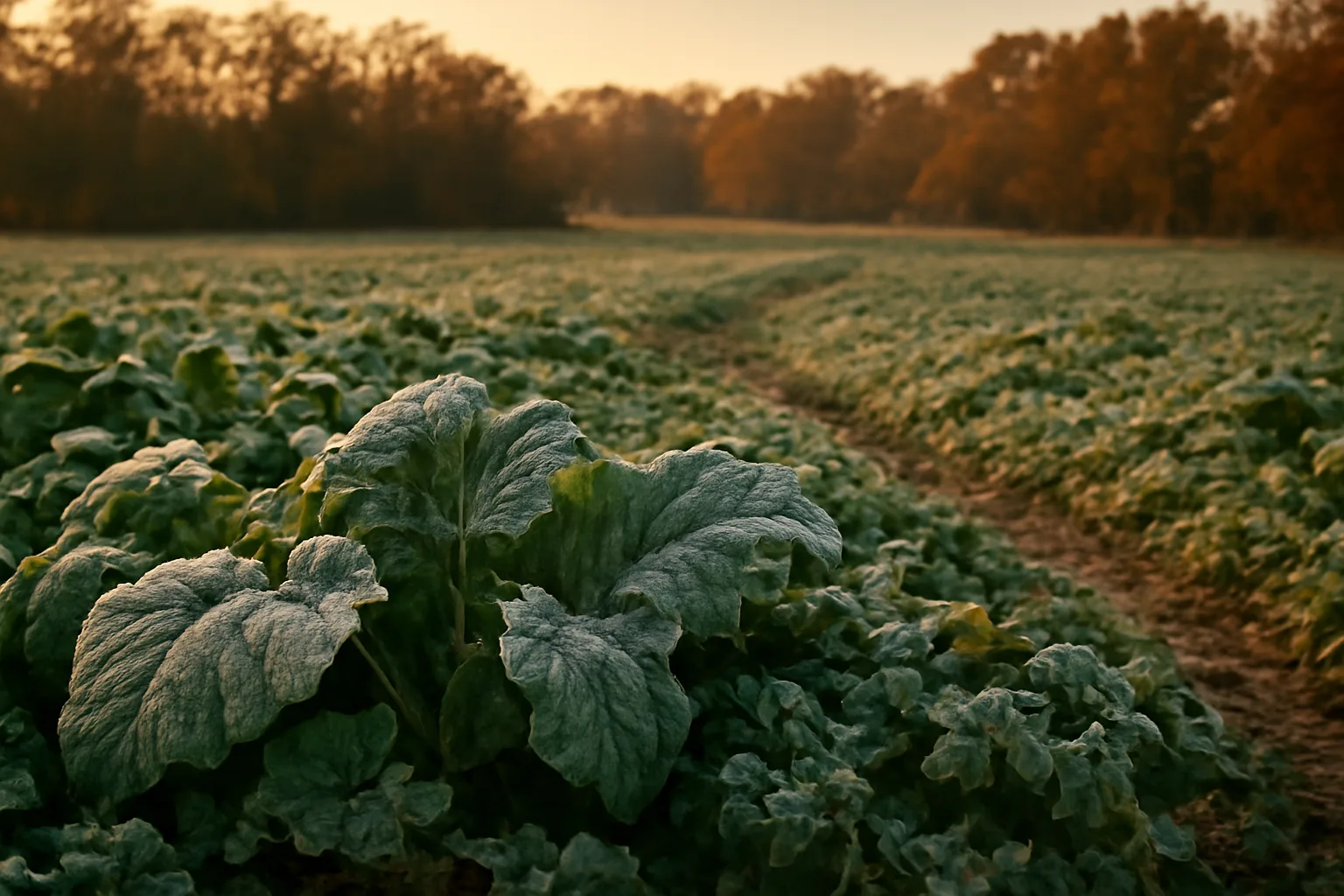
Turnips and other brassicas (like radish and rape) should go in 80 to 100 days before your area's first hard frost, which puts most of the country in a late July to early September window depending on zone. Plant too late and the plants never bulb up before the ground freezes. Here's the part that trips people up: turnips look ignored all fall, then get hammered after the first hard frost. That's not random. Frost triggers the plant to convert stored starches to sugars as a cold-tolerance response, and that sugar spike is what makes the bulbs and foliage suddenly palatable to deer, a pattern documented in university wildlife forage research on brassica cold response. Before frost, turnip leaves have a strong, almost peppery bitterness from glucosinolates that deer generally avoid unless they're already conditioned to the plot. This means a turnip-heavy plot is a late-season tool, not an early-fall tool. If your hunting season opens in September or early October, don't expect deer on the turnips yet. Expect it after your first 25 to 28 degree F night, which is usually late October into December depending on latitude. Most brassica blends mix turnip with radish and sometimes kale, because bulb size, leaf mass, and frost response vary slightly by species, and a blend spreads out the food value across more of the plant.
do deer eat sorghum?
Yes, but with a big asterisk: deer eat the grain heads and will browse young sorghum shoots, but grain sorghum (milo) is more valuable as a standing grain source and screening cover than as a primary attractant forage like clover or brassicas. Grain sorghum produces a seed head that matures in fall and holds through winter if left standing, giving deer, turkey, and other wildlife a high-energy carbohydrate source when little else is available. It's commonly planted less for deer preference and more as a drought-tolerant grain option in dry regions or sandy soils where corn struggles, and as cover that breaks up sightlines on a plot edge. One real caution: sorghum and related species (including Sudan grass and Johnsongrass) can produce cyanogenic compounds under stress, particularly in young, drought-stressed, or frost-damaged regrowth, a documented livestock poisoning risk covered in University of Missouri Extension guidance on prussic acid poisoning [4]. It's mainly a cattle and horse grazing concern rather than a deer food plot concern in practice, but it's worth knowing if you graze livestock on the same ground or plant sorghum-sudangrass as a summer cover crop. For most food plot budgets, sorghum is a supporting player, not the headline species. Use it for screening, winter grain, or a soil-building cover crop rotation, not as your main deer attractant.
what about soybeans, cowpeas, and other warm-season legumes?
Soybeans are arguably the single highest-preference forage you can plant, and large agricultural soybean fields function as massive, unintentional deer food plots across the Midwest. The catch is acreage and protection: soybeans need real space (most experienced planters say 3 to 5 acres minimum) because deer will mow down a small plot in the seedling stage before it ever gets a chance to mature. Cowpeas (including iron and clay varieties) and forage soybeans are the small-plot-friendly cousins, generally more browse-tolerant than grain soybeans and still delivering strong protein, often in the 20 to 25 percent crude protein range for young growth. Both are warm-season plantings, going in after soil temperatures are reliably above 65 degrees F, which usually lines up with your regional corn planting window. These warm-season legumes are the summer answer, filling the gap between spring clover green-up and fall brassica planting. If your plot rotation only has cool-season plants, you likely have a July forage gap right when lactating does and antler-growing bucks need protein most. See deer food plots for more on combining warm and cool season plantings in a rotation.
do deer like honey, or is that a myth?
No. Deer don't eat honey, and it's not a real food plot or attractant ingredient in any meaningful sense. This question usually comes from confusion with "honeysuckle," which deer genuinely browse heavily, or from marketing language on some mineral and attractant products that use "honey" or sugary scent claims to imply extra palatability. Deer are drawn to sugar and carbohydrate-dense foods, which is the real mechanism behind post-frost brassica preference and why corn and sugar beets pull deer hard in late fall. But honey itself, as a liquid or as an additive, isn't something deer seek out or a documented component of whitetail diet studies. If you see a product marketed around honey as a deer attractant, treat it the same as any commercial mineral or attractant claim: check for actual data behind it, and don't expect it to substitute for real forage. A food plot with the right species planted at the right time will out-produce any attractant additive every time.
how do I match species to my soil test?
Your soil test result, not a seed bag's marketing copy, should decide your species mix. Most cool-season legumes (clover, alfalfa) want a soil pH between 6.0 and 6.8 and struggle badly below 5.5, while brassicas and cereal grains tolerate a slightly wider range, often down to pH 5.5 to 6.0 [5]. A state land-grant extension soil test, run through your county extension office, will tell you your current pH, phosphorus, potassium, and often organic matter, plus a lime and fertilizer recommendation calibrated to the crop you tell them you're planting. That last part matters. The same field can get two very different lime recommendations depending on whether you tell the lab you're planting clover versus corn, because target pH and nutrient needs differ by species. Your soil test lab is the authority here, not a blog post and not us. If your test comes back at pH 5.2 and calls for 2 tons of lime per acre, that's the number to follow, understanding lime takes months to fully react into the soil, so fall applications benefit next spring's planting more than this year's. If you've got a soil test in hand and want a species and layout plan built around your actual numbers, zone, and acreage, PlotSeason's $99 Custom Food Plot Plan turns that test into a specific planting plan rather than a generic species list. It's general planning guidance built from your data, not site-specific agronomy advice in place of your lab's recommendations.
should I plant a single species or a blend?
Blends beat monocultures for most food plot goals, and it's not close. A single-species clover plot is fine, but a blend spreads risk across weather, deer pressure, and soil variability within the same field. A classic fall blend of oats, winter wheat, and a brassica gives you fast germination (oats), cold tolerance and late-winter persistence (wheat), and a post-frost sugar spike (brassica), all from one bag mix planted once. A spring/summer blend of clover, chicory, and a forage legume like red clover gives similar redundancy through a hot, dry stretch. The downside of blends is planting depth conflicts. Small brassica seed wants to be barely covered, a quarter inch or less, while cereal grains want closer to an inch. Drilling a blend at one depth is always a compromise, and broadcasting followed by a light cultipack is usually the more forgiving method for mixed small seed. For more on equipment tradeoffs, see food plot seed and domain food plot seed.
check state rules before you plant near a stand
Food plots themselves are legal everywhere and are not considered baiting in most states, since they're a planted, standing crop rather than piled feed. But the line between a food plot and illegal baiting or supplemental feeding gets state-specific fast, especially around minimum distances from a stand, whether you can hunt over recently cut or mowed plots, and outright feeding bans tied to Chronic Wasting Disease management zones. Several states, including parts of Michigan, Wisconsin, and Pennsylvania, have restricted supplemental feeding and baiting specifically in CWD surveillance and management zones, going beyond general baiting law. Wisconsin state law prohibits placing feed for wild deer in counties under the state's baiting and feeding ban, a restriction detailed in Wisconsin Administrative Code NR 19.40, which the Wisconsin DNR ties directly to disease transmission risk at concentrated feed sites [6]. These rules change year to year as CWD zones expand. Before you plant, mow, or hunt a plot this season, check your state wildlife agency's current hunting regulations digest. It's a five-minute read that can save you a citation and a forfeited buck.
Frequently asked questions
Do deer eat sorghum?
Yes. Deer browse young sorghum shoots and eat the mature grain heads, especially in fall and winter when the seed head is standing. It's more valuable as a winter grain source and screening cover than as a primary attractant crop like clover or brassicas, and it's used less for preference than for drought tolerance and standing food value.
Do deer like clover?
Yes, clover is one of the most consistently preferred food plot plantings, especially young ladino white clover with its high crude protein content, often 20 to 30 percent. It's a strong first-plot choice because a well-maintained stand can produce for 3 to 5 years before needing reseeding, per land-grant extension forage guidance.
When should I plant oats for deer?
Plant oats 60 to 90 days before your area's first hard frost, which is roughly mid-August to early September in the Midwest and into late September in the Mid-South. Oats germinate fast, often within 5 to 7 days, but aren't very cold-hardy, so blend with winter wheat or cereal rye if you want forage lasting into winter.
When is the best time to plant food plots for deer overall?
It depends on the species: warm-season plants like clover, soybeans, and cowpeas go in spring after your last frost, while cool-season brassicas and cereal grains go in late summer to early fall, 60 to 100 days ahead of your first frost. Check your USDA hardiness zone and local extension frost-date tables for exact windows.
When should I plant turnips for deer?
Plant turnips 80 to 100 days before your area's first hard frost, generally late July through early September depending on zone. Deer usually ignore turnips until after the first hard frost, which converts plant starches to sugar and makes the bulbs and leaves suddenly palatable.
What exactly is a food plot?
A food plot is a planted area, usually a fraction of an acre up to a few acres, established on hunting land to supplement natural deer food and concentrate deer activity for observation or hunting. It's meant to supplement, not replace, natural habitat and native forage, consistent with USDA NRCS wildlife habitat planning principles.
What are deer's favorite foods?
Natural mast like acorns and soft fruit generally wins over any planted crop when it's available. Among plantings, high-protein legumes like clover and soybeans typically rank highest in preference studies, while brassicas rank lower until after a hard frost triggers a sugar conversion that makes them suddenly attractive.
Do deer like honey?
No, honey isn't a real deer food or documented attractant. The confusion usually comes from honeysuckle, which deer do browse heavily, or from marketing on sweet-smelling attractant products. Deer respond to sugar and carbohydrate content in real forage, not honey itself.
What's the difference between a perennial and annual food plot plant?
Perennial plants like clover or alfalfa regrow from the same root system for multiple years, often 3 to 5 years for clover, cutting replanting costs. Annuals like brassicas, oats, and soybeans need to be replanted every planting cycle but often produce more tonnage per acre in a single season.
Can I plant a food plot without a soil test?
You can, but you're guessing on lime and fertilizer rates, which often costs more in wasted inputs and poor establishment than the test itself. A land-grant extension soil test typically costs 10 to 20 dollars and gives you a pH and nutrient reading calibrated to the exact crop you plan to plant.
Is planting a food plot near my stand considered baiting?
Generally no, a standing planted crop isn't legally the same as piled bait in most states, but rules vary and some states restrict hunting over plots that have been recently mowed or manipulated. CWD management zones in states like Michigan and Wisconsin add extra feeding and baiting restrictions, so always check current state wildlife agency regulations before hunting a plot.
What's a good beginner food plot plant?
Clover is the most forgiving beginner choice because it tolerates a range of soil conditions once pH is corrected, needs only annual mowing and occasional overseeding, and reliably draws deer in spring and summer. Pair it with a fall brassica or oat planting for a simple two-plot rotation.
Sources
- USDA NRCS, Conservation Practice Standard: Wildlife Habitat Planting (Code 420): Food plots supplement wildlife food but should not replace native vegetation management
- Oklahoma State University Extension, Food Plots for White-Tailed Deer (NREM-9008): Clover and legume forages rank high in crude protein and deer preference
- University of Georgia Extension, Clover for Wildlife Food Plots (Circular 913): Well-maintained clover stands can persist 3 to 5 years before reseeding
- University of Missouri Extension, Prussic Acid Poisoning in Livestock (G4585): Sorghum species can produce cyanogenic compounds under drought or frost stress
- Clemson Cooperative Extension, Soil Testing for Wildlife Food Plots (HGIC 1256): Clover requires pH 6.0 to 6.8 while brassicas and grains tolerate lower pH
- Wisconsin Administrative Code NR 19.40, Baiting and Feeding of Deer: CWD management zones impose feeding and baiting restrictions beyond general state baiting law