Last updated 2026-07-24
TL;DR
There's no single best fall food plot. Brassicas (turnips, radish) and cereal grains (oats, wheat) draw deer hardest after frost sweetens the leaves and tubers, while clover holds steady through fall in the South. Most successful hunters plant a mix, timed 45-90 days before their first frost date, based on a soil test.
What is a food plot, exactly?
A food plot is a planted patch, usually somewhere between a quarter acre and several acres, on land managed for deer hunting or wildlife habitat. It's not a garden and it's not lawn seed. It's a targeted planting, usually annual or perennial forage, meant to feed deer, hold them on your property longer, and in a lot of cases, give you a clean shooting lane at dusk. The USDA Farm Service Agency's Conservation Reserve Program (CRP) and NRCS's Environmental Quality Incentives Program (EQIP) both fund wildlife habitat plantings, and food plots for wildlife qualify as an approved practice under certain state EQIP conservation practice standards, including the wildlife habitat planting practice (CPS 420) [1]. That's a formal way of saying the same thing hunters have known for decades: a well-placed plot changes how deer use your ground. Most plots fall into two buckets. Annuals get replanted every year, brassicas, cereal grains, soybeans, and give you a big tonnage burst in a short window. Perennials like clover and chicory get planted once and, with mowing and some fertility upkeep, can produce for three to five years. For fall specifically, you're usually leaning on annuals or an established clover stand, not something you're seeding in October and hoping to eat by November. If you want a broader rundown of plot categories before picking a fall mix, the food plot whitetail overview is a good starting point.
When to plant food plots for deer (by region)
| Deep South (zone 8-9) | Late Sept - mid Oct | Nov 1-15 | |
|---|---|---|---|
| Mid-South / Transition (zone 7) | Mid Sept - early Oct | Oct 15-Nov 1 | |
| Midwest / Mid-Atlantic (zone 6) | Late Aug - mid Sept | Oct 1-15 | |
| Upper Midwest / Northeast (zone 4-5) | Mid Aug - early Sept | Sept 15-Oct 1 | These windows come from cooperative extension planting guides in states like Mississippi and Missouri, which generally recommend late summer to early fall seeding for brassicas and cereal grains tied to each state's frost dates [2][3]. Your county extension office has your specific average frost date, and it's worth five minutes on the phone to get it right rather than guess. A hard frost, which most extension guides define as around 28°F or lower for a period long enough to convert starches to sugars, is actually what triggers deer to hit brassicas hard. Before that frost, deer often ignore turnip and radish tops almost entirely. That's normal. Don't panic and rip the plot up in September. |
Timing matters more than species selection. Plant too early in hot, dry August soil and brassicas bolt or burn up before frost. Plant too late and you miss the growth window entirely. The general rule taught by most state extension services is to plant fall annuals 60 to 90 days before your area's average first frost date. That gives brassicas time to bulb up and cereal grains time to tiller before growth slows. | Region | Typical planting window | First frost reference |
What's the best food plot for deer in fall, really?
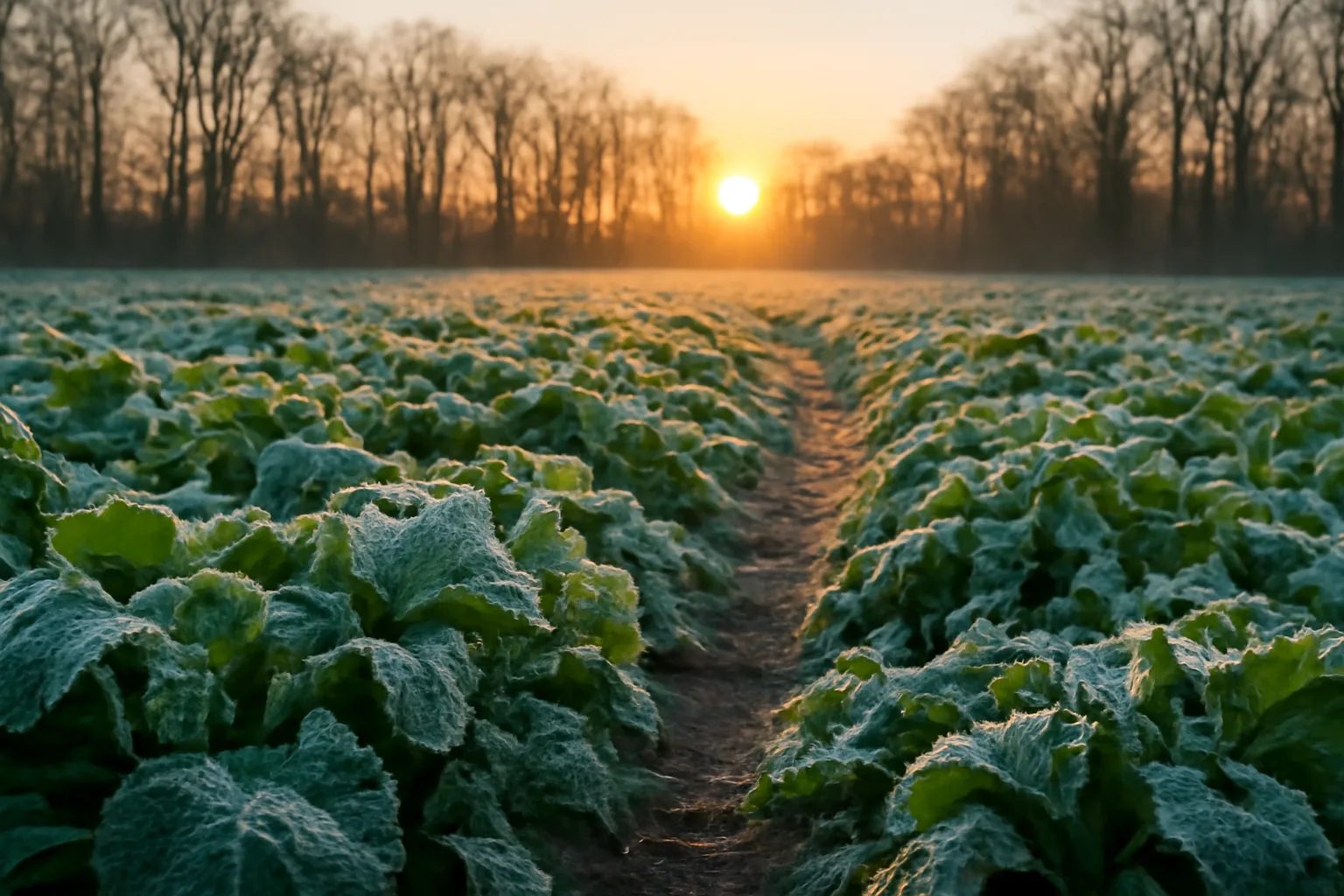
There isn't one crop that wins everywhere, and anyone selling you on a single miracle blend is selling you something. What actually works is matching crop choice to your frost timing, soil, and hunting goals. Brassicas (turnips, forage radish, kale) are the most attractive food plot draw after the first hard frost converts starches to sugar, making the greens and bulbs noticeably sweeter [4]. Deer often walk past unfrosted brassicas all fall and then hammer the same plot within days of a freeze. That's the single most common reason hunters think their brassica plot "failed." It didn't fail, it just wasn't cold enough yet. Cereal grains (oats, winter wheat, winter rye) green up fast, tolerate cold, and stay attractive through most of fall and into winter in the South. Oats in particular are one of the most consistent early-fall draws because they establish quickly and deer hit them at the vegetative stage, well before frost is even a factor. Clover, if it's an established perennial stand, doesn't need fall planting at all. It just keeps producing through fall, slowing down as day length shortens but still pulling deer, especially in the Southeast and mid-South where winters stay mild. Soybeans are a summer plot that carries into early fall as pods mature, but they're mostly done as a draw once leaves drop and pods get eaten down. Don't count on beans in November. For a lot of properties, the real answer is a mix. An oat/wheat/brassica blend gives you fast green-up plus a frost-triggered second wave, which covers more of the season than any single species. If you want species-specific detail before you buy seed, the deer food plot seed guide breaks down blends by region.
Do deer eat sorghum?
Yes, deer eat grain sorghum, but it's a secondary player in most fall plots, not a headliner. Sorghum (milo) produces a seed head deer will feed on, and it's more commonly used as a summer/fall standing crop, a browse buffer, or a cover component mixed with taller plants like corn. Sorghum's real value in a lot of plot designs is structure, not preference. Deer will eat the grain, especially later in fall and into winter once other food sources thin out, but if you're choosing one crop to draw deer during archery season, sorghum isn't usually the first pick over brassicas or cereal grains. Where it shines is as a nurse crop or edge planting that adds cover around a more attractive food source.
Do deer eat clover, and do deer like clover?
Yes. Clover is one of the most consistently preferred forages in whitetail diet studies, and it's a staple of food plot programs across the country. White clover and red clover both show up repeatedly in state wildlife agency plot recommendations because deer graze them heavily through spring, summer, and fall when the stand is healthy [5]. Do deer like clover specifically, as in prefer it over other options? In a lot of head-to-head plot observations, yes, especially in spring and early summer when protein demand is high for antler growth and lactation. In fall, clover's draw depends heavily on how much natural browse is available and how cold it's gotten. A well-maintained clover plot in October in Georgia is still pulling deer hard. The same plot in Minnesota in October might be getting ignored in favor of standing corn or acorns. Clover's downside is maintenance. It needs mowing, needs a soil pH generally in the 6.0 to 6.5 range according to most extension fertility guides, and needs occasional overseeding to stay thick. If you already have an established clover plot, fall is often about maintenance (a light mow, maybe a fall nitrogen or potash application per your soil test) rather than replanting from scratch. For a broader comparison of clover against brassicas and cereal grains for fall specifically, deer food plots covers the tradeoffs in more depth.
When to plant oats for deer
Plant oats for deer 45 to 75 days before your area's first hard frost, so the plant has time to establish 4 to 8 inches of growth before cold weather slows it down. In most of the Midwest and mid-South, that lands somewhere between late August and mid-September. In the Deep South, oats can go in as late as early October. Oats are one of the fastest-germinating fall food plot options, often showing green shoots within 5 to 7 days of a good rain. That speed is a big reason hunters lean on oats for early-season plots meant to be attractive by opening weekend of archery season. Oats also tend to be more winter-hardy in the South than in the far North, where a straight oat plot can get killed off by a hard freeze and needs a wheat or rye component to carry through winter. A simple, well-tested combination a lot of state extension plot guides recommend is oats mixed with a brassica like forage radish or turnip. Oats give you fast early cover and grazing, the brassica gives you the frost-triggered second wave [2].
When to plant turnips for deer
Plant turnips for deer 60 to 90 days before your first expected frost date, which usually means late July through early September depending on your zone. Turnips need that lead time to build a bulb, and they need a hard frost afterward to become genuinely attractive. This is the single most misunderstood timing question in fall food plots. Plant turnips too late, say, late September in a zone 6 climate, and you get leafy green tops but small or nonexistent bulbs, and worse, you might not get a killing frost before deer season winds down. Plant them on schedule and you get a plot that looks unloved in September and gets hammered in late November. Seeding rate matters too. Most extension guides put pure turnip stands at 4 to 6 lbs per acre broadcast, and turnip-radish blends slightly lower per component since radish seed is larger and germinates at a different rate [3]. Broadcasting into a firm, prepared seedbed and lightly cultipacking (or dragging a chain harrow) gives better seed-to-soil contact than just throwing seed on bare dirt and hoping.
What do deer actually prefer to eat in fall?
Deer diet studies consistently show acorns, when available, as one of the most preferred fall foods, often outcompeting planted food plots entirely in a heavy mast year. That's not a knock on food plots, it's just biology. A white oak or red oak acorn drop delivers high fat content that deer key in on hard, and in years with a strong mast crop, even a great brassica plot can sit quiet until the acorns run out. Beyond acorns, deer preference in fall generally ranks something like this: soft mast (persimmons, apples where available), standing soybeans and corn, brassicas post-frost, clover, and then browse (woody stems, forbs) as a fallback. This isn't a rigid hierarchy. It shifts by region, by mast year, and by what's actually planted nearby. The practical takeaway: don't plant a food plot and expect it to out-compete a good acorn year. Plot success in a mast year is measured less by "deer are here every day" and more by "deer used this plot consistently once natural food thinned out in December."
Do deer like honey?
There's no meaningful field data or wildlife agency guidance suggesting honey is a relevant deer attractant or food source. Deer aren't drawn to honey the way bears are. If you've heard of "honey holes" for food plots, that's hunting slang for a productive spot, not a reference to bees or sugar. What deer do respond to, and what does relate loosely to the "sweetness" idea behind the honey question, is the sugar conversion that happens in brassicas after a hard frost. That's a real, documented process, starches converting to simple sugars in the plant tissue, and it's the actual mechanism, not honey, behind why frosted turnip plots suddenly get hot [4]. If you're trying to sweeten a plot's draw, a frost does that work for free. Bait, mineral, and supplemental feed are a different conversation, and it's worth checking your state wildlife agency's baiting and feeding regulations before adding anything beyond a planted crop, since rules vary widely and some states restrict or ban baiting for deer hunting entirely.
How do you build a fall plot plan that actually fits your ground?
Species selection is only half the job. Soil pH, existing fertility, plot size, sunlight, and your specific frost date all change what "best" means on your property. A brassica blend that crushes it on a neutral-pH, full-sun plot in Iowa can flop on an acidic, shaded three-quarter acre in the Appalachians without lime and a different seed mix. Start with a soil test. It's the cheapest, highest-leverage thing you can do before buying seed, and your soil test lab is the real authority on how much lime or fertilizer your specific plot needs, not a seed bag label. Land-grant extension soil labs, like the University of Georgia's Agricultural and Environmental Services Laboratories, typically charge in the range of 8 to 15 dollars per routine soil sample and turn results around in one to two weeks [6]. If you want a starting point that turns your soil test and location into a straightforward planting plan without guessing at rates and dates yourself, PlotSeason's $99 one-time Custom Food Plot Plan builds a species and timing recommendation around your zone and soil results. It's general planning guidance built from regional agronomy data, not a site visit or a substitute for what your soil lab tells you about lime and fertilizer. For seed sourcing once you've settled on a mix, food plot seed and domain food plot seed cover blend options by region.
Fall food plot species at a glance
| Crop | Best planting window | Frost dependent? | Typical seeding rate | |
|---|---|---|---|---|
| Oats | 45-75 days before frost | No, but cold-tolerant | 100-120 lbs/acre | |
| Winter wheat | 45-75 days before frost | No | 90-120 lbs/acre | |
| Forage turnip | 60-90 days before frost | Yes, sweetens post-frost | 4-6 lbs/acre | |
| Forage radish | 60-90 days before frost | Yes | 6-8 lbs/acre | |
| White/red clover (perennial) | Late summer or spring establishment | No | 6-10 lbs/acre | |
| Grain sorghum | Summer planting, fall standing crop | No | 6-10 lbs/acre | Rates above are broad ranges pulled from common land-grant extension seeding tables and vary by drill vs. broadcast method, so always check the specific product label and your state extension's plot guide before finalizing rates [2][3]. |
Frequently asked questions
Do deer eat sorghum?
Yes, deer eat grain sorghum (milo), especially the seed heads later in fall and winter. It's usually a secondary component in plot mixes rather than the main draw, valued more for cover and standing structure than as the top attractant compared to brassicas or cereal grains.
Do deer eat clover?
Yes, clover is one of the most consistently preferred whitetail forages across spring, summer, and fall, and it's a common recommendation in state wildlife agency food plot guides. Deer graze it heavily when the stand is healthy and pH is maintained in the 6.0 to 6.5 range.
When should I plant deer food plots?
Plant fall annuals 60 to 90 days before your area's average first frost date, generally late August in the Upper Midwest, September in the Midwest and mid-South, and late September into October in the Deep South. Check your county extension office for your exact local frost date.
Do deer like clover more than other food plot crops?
Often yes, especially in spring and early summer when protein demand is high, but fall preference shifts based on mast availability and temperature. In mild Southern falls, clover stays strong; in colder regions, deer may favor frosted brassicas or standing grain over clover once temperatures drop.
When should I plant oats for deer?
Plant oats 45 to 75 days before your first hard frost, which lands in late August to mid-September for most of the Midwest and mid-South, and as late as early October in the Deep South. Oats germinate fast, often within 5 to 7 days of a good rain.
When do I plant food plots for fall hunting season?
Most fall food plots go in during late summer to early fall, timed 60 to 90 days ahead of your local first frost so brassicas can bulb and cereal grains can establish before cold weather slows growth. Planting too late is the most common fall food plot mistake.
When should I plant turnips for deer?
Plant turnips 60 to 90 days before your expected first frost, typically late July through early September depending on your zone. Turnips need that lead time to build a bulb and need a hard frost afterward to convert starches to sugar and become genuinely attractive to deer.
What is a food plot?
A food plot is a planted area, usually a quarter acre to several acres, seeded with forage crops to feed deer or other wildlife and to concentrate animal activity for hunting or habitat management. Food plots qualify as an approved wildlife habitat practice under some USDA conservation program standards.
What are deer's favorite foods in fall?
Acorns generally top the list when mast is available, followed by soft mast like persimmons and apples, standing soybeans and corn, frosted brassicas, and clover. In a heavy acorn year, deer often ignore food plots almost entirely until natural mast runs out in early winter.
Do deer like honey?
No meaningful evidence supports honey as a deer attractant or food source; that behavior is associated with bears, not deer. The "sweetness" hunters associate with fall deer feeding actually comes from frost converting starches to sugars in brassica crops like turnips and radishes, not from honey or sugar baits.
Is it legal to use bait or supplemental feed alongside a food plot?
It depends entirely on your state. Baiting and feeding regulations for deer vary widely, some states allow it with restrictions, others ban it outright, and rules can differ between public and private land. Check your state wildlife agency's current regulations before adding anything beyond a planted food plot.
How big should a fall food plot be?
There's no fixed rule, but many wildlife agency and extension guides suggest a range from a quarter acre for tight, hunting-focused kill plots up to several acres for larger destination plots meant to hold deer and support herd nutrition. Shape, sunlight, and access matter as much as raw acreage.
Should I plant a single crop or a blend for fall?
A blend, in most cases. Pairing a fast-establishing cereal grain like oats or wheat with a frost-triggered brassica like turnip or radish covers more of the season than any single species, giving you early-season grazing and a strong late-season draw after the first hard frost.
Sources
- USDA Natural Resources Conservation Service, Conservation Practice Standard 420, Wildlife Habitat Planting: Food plots are recognized as a wildlife habitat conservation practice supported through USDA programs
- Mississippi State University Extension, Establishing and Managing Wildlife Food Plots (Publication 2111): Recommended fall planting windows and seeding rates for oats, wheat, and brassica blends
- University of Missouri Extension, Food Plots for Deer (Publication G9421): Turnip and radish seeding rates and fall planting timing relative to first frost
- North Carolina Wildlife Resources Commission, Growing and Managing Successful Food Plots for Wildlife: Clover as a preferred, consistently recommended forage for deer in food plot programs
- University of Georgia Extension, Soil Testing for Lawns, Gardens and Wildlife Food Plots (Circular 896): Typical cost range and turnaround time for land-grant extension soil test labs
- USDA Farm Service Agency, Conservation Reserve Program Fact Sheet: CRP as a federal program supporting wildlife habitat plantings on private land
- National Deer Association, Deer Diet and Nutrition Overview: Acorns and mast as high-preference, high-fat fall forage that competes with planted food plots