Last updated 2026-07-26
TL;DR
There's no single best Ohio food plot, but a clover base paired with a fall brassica/cereal grain blend covers spring through late season across the state's zone 5b-6b climate. Plant clover April-May or August, brassicas and oats late July through August, and always start from a soil test, since most Ohio ground needs lime before fertilizer does anything useful.
what is a food plot, exactly
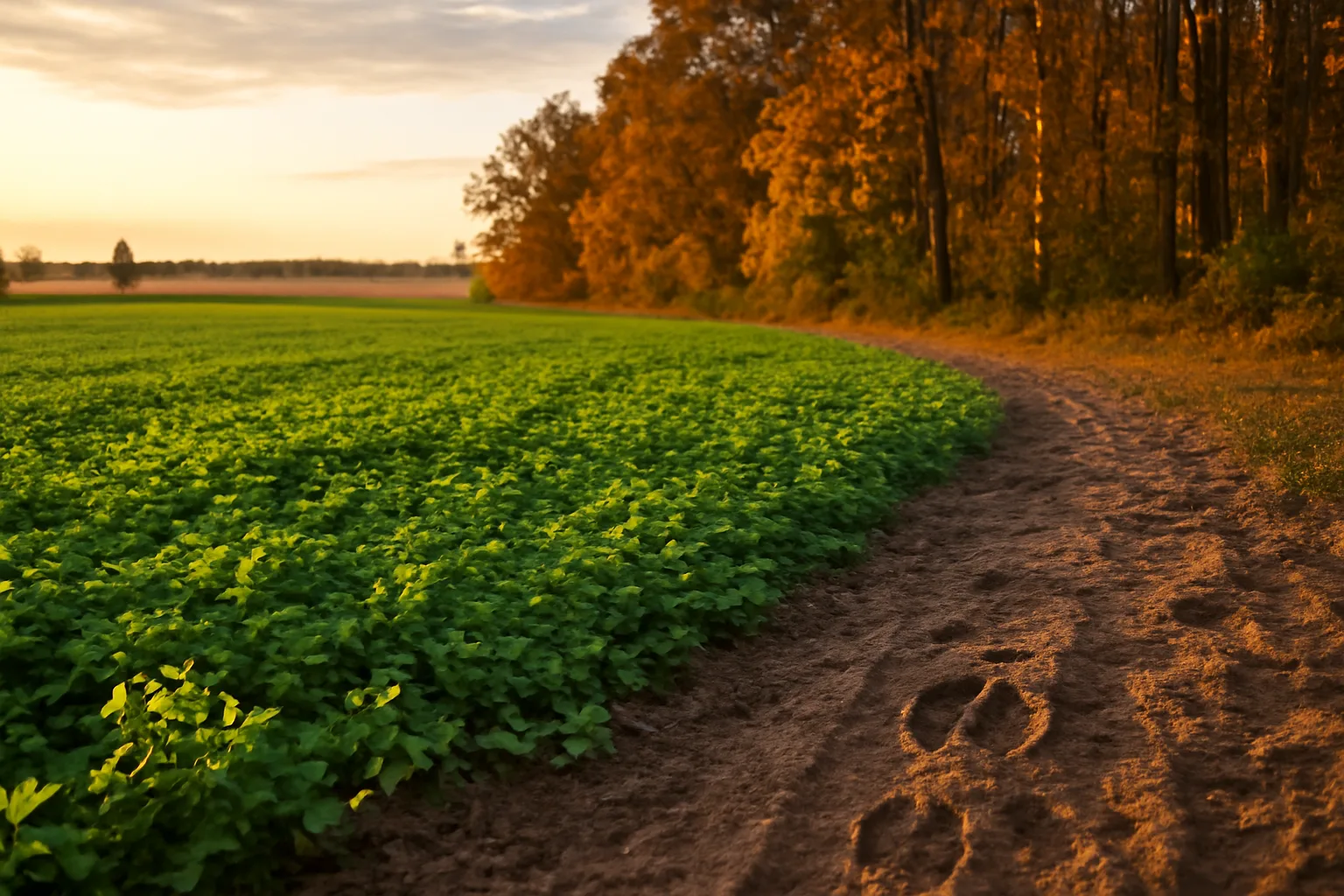
A food plot is a planted patch of ground, usually somewhere between a quarter acre and a few acres, put in specifically to feed and hold deer (and often turkey, rabbits, and other wildlife) on land you own or lease. It's not the same as a crop field, even though the equipment overlaps. Farmers plant for yield and profit. Hunters plant for tonnage of attractive forage during specific hunting windows, plus cover and travel patterns that support a hunting strategy. Most food plots fall into two rough camps: annuals you replant every year (clover isn't one of these, more on that below) and perennials that persist for two to five seasons with maintenance. The best Ohio plots usually blend both, a perennial clover field for spring-through-fall protein and a rotating annual plot for late season energy. Ohio State University Extension frames food plots as one tool in a broader habitat management plan, not a standalone fix: soil fertility, plot size, and surrounding cover all matter as much as species choice [1]. If you want a rundown of forage categories before picking specific seed, the food plot whitetail guide covers the broader plot-type landscape.
when to plant food plots for deer in Ohio
Ohio splits into USDA Hardiness Zones 5b through 7a depending on region, with most whitetail ground falling in 6a or 6b. That means two real planting windows each year: a spring window (mid-April through May) for perennial clover and summer annuals, and a late-summer window (late July through early September) for fall brassicas, cereal grains, and clover overseeding. Soil temperature matters more than the calendar date. Clover and brassicas both want soil temps consistently above 45-50°F before germination takes off, and brassicas especially need 60-90 days of growing time before a hard frost to bulb out properly. Frost dates vary a lot across the state: southern Ohio (Cincinnati area) sees average first frost around mid-to-late October, while northern Ohio (near Lake Erie) can see it as early as late September to early October [2]. Work backward from your local first frost date. If you're in northern Ohio with a September 25 average first frost, brassicas need to go in by late July to early August. Southern Ohio counties get another two to three weeks of buffer, meaning brassica planting can push into mid-August. A simple rule that holds up across the state: cereal grains and brassicas go in during the dog days of late summer, clover goes in during the cool, wet stretches of spring or late summer. Nobody plants a fall blend in June and expects good results, the soil's too hot and dry for reliable germination.
do deer like clover, and is it worth planting
Yes. Clover is consistently one of the highest-preference forages for whitetail deer across the Midwest, and it's arguably the single best perennial plot base in Ohio. Deer graze it from spring green-up through fall, and it stays palatable even after a light frost, unlike a lot of warm-season annuals that die back completely. White clover (including Ladino types) and red clover both perform well in Ohio soils, with white clover generally holding up better to close, repeated grazing pressure. Clover also fixes nitrogen in the soil, which is a real agronomic benefit if you're rotating other crops through the same ground later [3]. The catch: clover is slow to establish and picky about pH. Ohio State University Extension soil testing guidance notes that legumes like clover need a soil pH in the 6.0 to 6.5 range for good nodulation and nitrogen fixation, and most unlimed Ohio pasture and plot ground runs more acidic than that, often in the 5.5 to 6.0 range depending on region and land-use history [4]. Skip the lime and you can dump fertilizer on a clover plot for two years running and still get a thin, yellowing stand. Clover is a perennial, not something you replant every spring. A well-maintained white clover plot can produce for three to five years with mowing, spot-spraying grass competition, and a maintenance lime/fertilizer application based on a fresh soil test every year or two. For seed selection specific to your plot size and soil type, the deer food plot seed breakdown is a good next stop.
do deer eat sorghum, and where does it fit
Deer will eat sorghum, particularly the grain heads in late fall and winter, but it's not a top-tier attractant compared to brassicas or clover. Sorghum's real value in Ohio food plots is structural: it grows tall (often 5-8 feet), providing standing cover and a windbreak for a plot, and the grain heads persist into winter as a food source when a lot of other forage has died back or been grazed out. Grain sorghum is planted in late spring once soil temps hit 60-65°F, generally late May through mid-June in Ohio, similar timing to corn. It's drought-tolerant, which makes it a reasonable choice on thinner, sandier ground where corn struggles. If your goal is pure deer attraction during hunting season, sorghum is a supporting player, not a headliner. Plenty of hunters use it as a screen strip along a clover or brassica field edge rather than a standalone destination plot.
when to plant turnips for deer in Ohio
Plant turnips in Ohio between late July and mid-August, giving them 80-90 days before a hard frost to bulb and reach peak palatability. Turnips are a classic late-season Ohio plot because frost sweetens the bulbs and tops by converting starches to sugars, which is exactly when deer start hammering them, usually late October through December depending on your local weather. A common mistake is planting turnips too early. Go in during a hot, dry patch in early July and you'll get leggy plants that bolt or get grazed down to nothing before the bulbs ever form. Wait too long, past late August in northern counties, and you risk not hitting that 80-90 day window before frost shuts growth down. Turnips do best in well-drained soil with a pH around 6.0-6.5, similar to clover and most other brassicas [3]. They're commonly blended with other brassicas (rape, radish) and sometimes a cereal grain like winter wheat or oats to extend the plot's food value and add some early-season green growth before the tubers bulb. A note on legality: turnips and other brassicas are a planted, standing crop, which is legal to hunt over in nearly every state including Ohio. Just don't confuse a planted food plot with baiting. Ohio Division of Wildlife regulations distinguish between food plots (legal) and placing or scattering feed, grain, or other consumable materials to attract deer (restricted in many circumstances). Check the current Ohio hunting regulations before combining any supplemental feed with a plot, since bait/feed rules can change year to year and vary by disease-management zone [5].
when to plant oats for deer in Ohio
Oats go in twice a year in Ohio depending on your goal. Spring oats are planted in March through April as a fast-growing early forage or nurse crop for clover. Fall oats, which are far more common in dedicated deer plots, go in late August through mid-September, roughly 6-8 weeks before your average first frost. Oats are one of the fastest-germinating cereal grains, often showing green growth in 5-7 days under good soil moisture, and deer hit young oat shoots hard. The plant is also relatively cold-tolerant for a cereal grain, staying green and palatable well into November in a lot of Ohio winters, though it will eventually winterkill in a hard freeze (oats are less cold-hardy than winter wheat or rye). A lot of Ohio hunters blend oats with brassicas (turnips, radish) in the same fall planting. The oats give quick, early cover and food while the brassica bulbs are still developing underground, then the brassicas take over as the primary draw once frost hits and the oats start to fade.
what are deer's favorite foods in Ohio
Whitetail diet studies consistently show deer are opportunistic browsers whose preferences shift with season and availability, but a few patterns hold up across Ohio and the broader Midwest. Acorns (especially white oak) are often the single most preferred natural food in fall, when available, sometimes pulling deer off planted plots entirely during a heavy mast year. Among planted forages, clover ranks at or near the top for season-long preference, agricultural soybeans and standing corn are heavily used where available (especially late summer through harvest), and brassicas (turnips, radishes, rape) become highly preferred after the first hard frosts sweeten them. Cereal grains like oats and winter wheat are solid secondary choices, especially for early fall and late winter green forage. The honest answer is that "favorite food" changes by month. A plot that's ignored in September because deer are hammering a nearby acorn drop can become the most-hit field on the property by December once the mast is gone and the brassicas have gone through a few frosts. This is exactly why the better Ohio plot plans combine a spring/summer perennial (clover) with a fall annual blend (brassica plus cereal grain), so there's always something in season regardless of what the woods are doing. For a wider look at how forage choice maps to hunting strategy, see species and strategy style guidance on deer food plots generally.
do deer like honey, and does it belong in a food plot
No, and this one comes up more than you'd think. Deer don't eat honey in any meaningful, planned way, and there's no legitimate food plot use for it. Deer are herbivores built to digest plant fiber through a four-chamber rumen system; honey is a concentrated sugar syrup with none of the fiber or protein structure their digestive system is adapted to process in volume [6]. What probably drives the question is confusion with mineral or sugar-based attractant products, some of which use molasses (not honey) as a binder or flavor carrier in mineral licks or trail mixes. Those products aren't food plots and, depending on the state, may fall under bait or supplemental feeding restrictions rather than food plot rules. If you're trying to sweeten a plot's attraction, put the effort into brassicas and clover instead. That's real deer nutrition, and it's legal everywhere food plots are legal.
how do you choose the best plot mix for your specific ground
The honest answer is: it depends on your soil test, your plot size, sun exposure, and what you're actually hunting for (early season versus late season, does versus mature bucks passing through). There's no universal "best" seed blend, and any article that tells you otherwise is selling something. Start with a soil test. Ohio State University Extension runs soil testing through county Extension offices, and results typically come back with a specific lime recommendation in tons per acre along with N-P-K guidance [4]. Your soil test lab is the authority on your specific lime and fertilizer numbers; nobody writing a general article online knows your field's exact pH or phosphorus level. Once you know your pH and nutrient levels, species selection gets a lot simpler. Acidic ground under pH 6.0 needs lime before clover or brassicas will perform, full stop; you can skip that step and still grow something, but you're leaving yield on the table. Shaded or small plots (under half an acre) generally do better with shade-tolerant clover than with sun-hungry brassicas or corn. Larger, sunnier plots (one acre-plus) can support a fall brassica/cereal blend as a standalone destination field. This is the exact gap PlotSeason's $99 one-time Custom Food Plot Plan is built to fill: you plug in your soil test numbers, plot size, and region, and get a specific species and timing plan back rather than a generic blend recommendation. It's general guidance built from real agronomic data, not a substitute for your soil lab's specific lime and fertilizer call, but it saves the guesswork on species and timing that trips up a lot of first-time and even experienced plotters. Check it out at /plot-plan-builder.
equipment and prep: what you actually need
You don't need a full tractor and drill to plant a good Ohio food plot, but you do need a way to kill existing vegetation, break up the seed bed enough for good seed-to-soil contact, and get the seed in at the right depth. A lot of small-plot hunters get by with an ATV/UTV, a small disc or cultipacker, and a broadcast spreader. For clover and brassica seed, both of which are tiny, seed-to-soil contact matters more than planting depth. Broadcasting onto a firm, weed-free seedbed and then dragging or cultipacking to press seed in works well; burying tiny seed too deep (over a quarter inch) is a common failure point. Cereal grains like oats and wheat want to go about an inch deep, which usually means a drill or a disc pass followed by broadcasting and a light harrow drag. Herbicide burndown (glyphosate on a warm day, 7-10 days before planting) handles existing sod and weeds far better than tillage alone on most Ohio ground, especially fescue-heavy fields common in reclaimed pasture. If you're planting into a fresh till job instead, let it settle with a rain event or two before seeding so you're not planting into loose, air-pocketed dirt. For a deeper comparison of specific seed products and blends by plot type and goal, the food plot seed and domain food plot seed guides break down options by brand and forage category.
putting together a full-season Ohio plot calendar
| Mid-March to April | Spring oats, frost-seed clover | Oats, red/white clover | |
|---|---|---|---|
| Mid-April to May | Establish new perennial clover | White clover, Ladino clover | |
| Late May to mid-June | Warm-season annuals if used | Sorghum, soybeans, corn | |
| Late July to mid-August | Fall brassica planting | Turnips, radish, rape | |
| Late August to mid-September | Fall cereal grains, clover overseed | Oats, winter wheat, clover | |
| October through winter | Harvest/hunt over mature plots | Brassicas post-frost, standing grain | This isn't a rigid formula, it's a starting framework. Your actual dates should shift based on your county's frost data and whatever your soil test tells you about lime timing, since lime needs months to fully react with soil and change pH, so it should go down well ahead of a spring or summer planting whenever possible [4]. |
Here's how the pieces fit together across a typical Ohio season, using average dates; adjust two to three weeks earlier for northern counties and two to three weeks later for southern ones. | Timing | Task | Species |
Frequently asked questions
What is the best all-around food plot for Ohio hunters?
There's no single best plot, but a perennial white clover base combined with a fall brassica and cereal grain blend (turnips, radish, oats or winter wheat) covers the most ground across Ohio's hunting season, giving spring-through-fall grazing plus a late-season, frost-sweetened food source.
When should I plant food plots in Ohio?
Plant perennial clover in mid-April through May or overseed in late summer. Plant fall brassicas and cereal grains between late July and mid-September, timed 60-90 days before your local average first frost, which ranges from late September in northern Ohio to mid-to-late October in the south.
Do deer eat sorghum?
Yes, deer eat sorghum grain, especially in late fall and winter, but it's a secondary food source compared to clover or brassicas. Sorghum's bigger value in Ohio plots is as tall structural cover and a windbreak along field edges, not as a primary attractant.
Do deer like clover, and how long does a clover plot last?
Deer strongly prefer clover, and it's one of the most reliable perennial plot bases in Ohio. A well-maintained white or Ladino clover plot, mowed and limed/fertilized based on annual soil tests, typically produces for three to five years before needing to be renovated or replanted.
When should I plant oats for deer in Ohio?
Plant oats in fall between late August and mid-September for deer plots, roughly 6-8 weeks before your first frost, so they establish before cold shuts growth down. Spring oats (March-April) work as a fast nurse crop for new clover stands but aren't the main fall attractant.
When should I plant turnips for deer in Ohio?
Plant turnips between late July and mid-August, giving them 80-90 days before a hard frost to bulb properly. Frost converts starches in the bulbs and tops to sugar, which is when deer start heavily browsing turnip plots, typically late October through winter.
What is a food plot?
A food plot is a planted area, usually a quarter acre to several acres, seeded specifically to provide deer (and often other wildlife) a reliable, attractive food source and to support hunting strategy on owned or leased land. It differs from a farm crop field in its goal: attraction and season-long forage, not yield for sale.
What are deer's favorite foods?
Deer preference shifts by season. White oak acorns often top the list when mast is available in fall. Among planted forages, clover, soybeans, standing corn, and frost-sweetened brassicas (turnips, radishes) rank highest, with cereal grains like oats and wheat as solid secondary choices.
Do deer like honey?
No. Deer are herbivores with digestive systems built around fiber-heavy plant material, not concentrated sugar syrup. Honey has no real role in food plots or deer attraction; confusion usually stems from molasses-based mineral or supplement products, which are a different category and may fall under state bait restrictions.
Is it legal to hunt over a food plot in Ohio?
Yes, planted food plots are legal to hunt over in Ohio and are treated differently from baiting or scattered feed. Rules around supplemental feeding and baiting do vary and can change, especially in disease-management zones, so check current Ohio Division of Wildlife regulations before combining any feed products with a plot.
How much lime does an Ohio food plot usually need?
It depends entirely on your soil test results; there's no universal number. Many unlimed Ohio plot sites test in the 5.5 to 6.0 pH range and need one to two tons of lime per acre to reach the 6.0-6.5 range clover and brassicas prefer, but your specific soil test lab result is the only reliable source for your field.
Should I plant a spring plot or a fall plot first if I can only do one?
For most Ohio hunters focused on fall hunting season, a fall brassica and cereal grain blend planted in late July through August delivers the most direct return, since it peaks in attraction right when hunting season opens. Perennial clover is the better long-term investment if you can manage both.
Sources
- Ohio State University Extension, Wildlife Food Plots publication: food plots work as one tool within a broader habitat management plan, alongside soil fertility and cover
- NOAA National Centers for Environmental Information, Ohio climate normals: average first frost dates vary from late September in northern Ohio to mid-to-late October in southern Ohio
- Ohio State University Extension, Establishing Forage Legumes: clover fixes nitrogen and legumes need soil pH in the 6.0-6.5 range for proper nodulation
- Ohio State University Extension, Soil Fertility and pH Management: most unlimed Ohio soils run more acidic than the 6.0-6.5 range needed for clover and brassicas, and lime needs time to react with soil
- Ohio Department of Natural Resources, Division of Wildlife, Ohio Hunting Regulations: Ohio regulations distinguish food plots from baiting/feeding restrictions that vary by area and disease-management zone
- USDA Forest Service, White-tailed Deer Species Account: whitetail deer are herbivorous ruminants whose digestive systems are adapted to fibrous plant material