Last updated 2026-07-25
TL;DR
A 6 way food plot mix typically combines clovers, brassicas (turnips, radish), a cereal grain (oats or wheat), and sometimes chicory or peas into one bag. It spreads risk across species so something thrives regardless of rain, soil, or browse pressure. Plant late summer for fall mixes, spring for warm-season blends, following your region's frost dates.
what is a food plot, and what makes a mix a '6 way'?
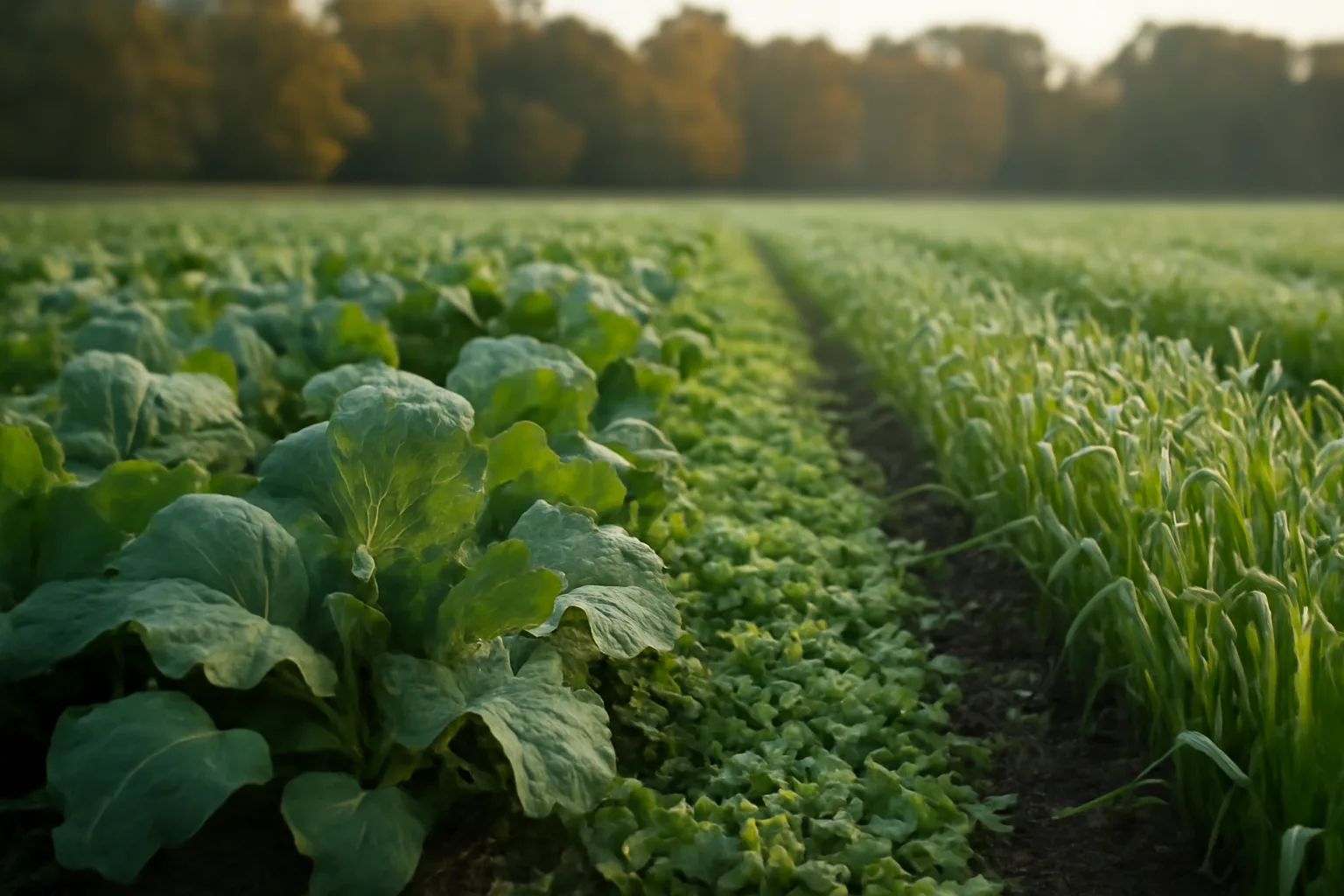
A food plot is a planted area on hunting land, usually somewhere between a quarter acre and a few acres, seeded with forage that deer and other wildlife eat. It's not the same as agriculture for market. The goal is nutrition and attraction, not yield per bushel, though the two overlap more than people think. A "6 way" mix just means six different plant species blended into one bag of seed. Most combine two or three brassicas (turnip, radish, rape or kale), one or two clovers (red and white are common), a cereal grain (oats or winter wheat), and sometimes chicory or a forage pea. There's no official standard defining a 6 way blend. It's a marketing term used across the industry (Whitetail Institute, Mossy Oak Biologic, Antler King, and plenty of co-op store brands all sell versions), so read the tag on the bag, more than the name. The logic behind blending species is straightforward: soil, moisture, and browse pressure vary across a season and across a field. If you plant only turnips and get a dry September, you might get nothing. If turnips, oats, and clover are all in the ground together, at least one of them usually pulls through. Land-grant extension programs that study multi-species cover crops report similar resilience benefits in agricultural settings, though most of that research is aimed at soil health and livestock forage, not deer attraction specifically [1]. If you want seed picked for your exact soil test and region instead of a generic bag blend, that's the kind of thing a custom food plot plan is built to sort out for about the cost of two bags of seed.
what's actually in a 6 way food plot mix?
| Brassica 1 | Purple top or forage turnip | Fast growth, big leafy tops deer hit early, bulbs sweeten after frost | |
|---|---|---|---|
| Brassica 2 | Daikon or tillage radish | Deep taproot breaks up compacted soil, bulb is a late-season draw | |
| Brassica 3 (sometimes) | Kale or rape | Cold-hardy leaf forage, holds up into winter | |
| Clover | Red and/or white clover (often ladino) | Perennial or biennial, comes back spring after fall planting, high protein | |
| Cereal grain | Oats or winter wheat | Fast germination, cover for slower species, early-season attraction | |
| Legume/extra | Forage pea, chicory, or crimson clover | Rounds out protein and adds another germination window | Oats germinate in 5 to 10 days under good moisture and warm soil, which is one reason they're in almost every blend: they're the first green thing up, and deer find it fast. Brassicas take longer to bulb out and actually get sweeter after a hard frost converts starches to sugar, which is why brassica-heavy plots often don't get hammered until October or November even though they were planted in August [2]. Clover is the one perennial in most of these mixes. If it survives the winter and the summer after, it can keep producing for two to four years before you need to reseed, which is a real cost advantage over reseeding annuals every year [3]. |
Ingredient lists vary by brand, but here's a realistic breakdown of what you'll find in most fall-oriented 6 way blends sold for whitetail plots. | Component | Common species | Role in the mix |
do deer eat sorghum?
Yes, deer eat grain sorghum, but it's more of a fall and winter standing-grain food source than a green forage plot species, and it's not usually part of a 6 way blend built around brassicas and clover. Sorghum (milo) produces a seed head deer and other wildlife feed on once it matures and dries down, similar to how they use corn. Whitetail deer are opportunistic browsers, and sorghum shows up in diet studies as a minor but real component where it's available, especially in agricultural regions of the Midwest and South [4]. It's more commonly planted as a standalone grain plot or worked into dove and quail food plot mixes than into whitetail brassica/clover blends, mostly because it needs a longer warm season to mature and doesn't tolerate the frost timing that makes brassicas work so well for fall hunting plots. If you're set on sorghum, plant it as its own block in late spring after soil temperatures hit 65 degrees, similar timing to corn, rather than expecting it in a fall 6 way bag.
do deer like clover, and why is it in almost every mix?
Deer like clover a lot, and it shows up in nearly every food plot mix, 6 way or otherwise, because it's high in protein (often 25 to 30 percent crude protein in vegetative growth stages), it's perennial, and it regrows after grazing instead of getting wiped out in one visit [3]. That regrowth trait matters more than people give it credit for. A brassica plant gets eaten down and it's done. A healthy clover stand gets bitten off and pushes new leaves within days under good growing conditions. White clover (including ladino types) and red clover are the two most common in blends. White clover tends to be lower-growing and more grazing-tolerant; red clover grows taller and can handle drier, less fertile ground a bit better. Both need a soil pH close to 6.0 to 6.5 to really perform, and clover is one of the pickiest plants in a typical mix about lime. If your soil test comes back at 5.2, don't expect much from the clover component regardless of what else is in the bag [5]. Clover plots, once established, can produce forage for multiple growing seasons if you mow them once or twice a year to knock back weed competition and keep the plant from going reproductive. That's a real cost saver compared to reseeding annual brassicas and grains every single year. For species-specific comparisons and planting depth guidance, see food plot seed and deer food plot seed.
when to plant food plots for deer, in general terms?
Timing depends almost entirely on whether you're planting a cool-season (fall/winter) or warm-season (spring/summer) plot, and both depend on your local frost dates, which vary widely by state and region. Cool-season plots, the kind that include brassicas, clover, and cereal grains, generally go in the ground 60 to 90 days before your area's average first fall frost. That window lets brassicas bulb up and clover establish a root system before winter dormancy. In much of the upper Midwest and Northeast, that lands in late July through August. In the mid-South and southern Appalachians, growers often wait until late August into September. In the Deep South, September into early October is common because summer heat lingers longer [6]. Warm-season plots (soybeans, cowpeas, sorghum, some clover establishments) go in after your last spring frost date, once soil temperatures are reliably above 60 degrees, similar timing to garden corn and beans. That's typically April through May in northern states and March through April farther south. Your state land-grant extension office publishes frost date tables and planting windows specific to your county, and that's a better source than a national chart, since a "fall planting starts in August" rule can be off by three or four weeks depending on where you actually hunt [7]. For a broader planting calendar across plot types, see deer food plots.
when to plant oats for deer?
Oats for a fall deer plot go in the ground 6 to 10 weeks before your area's first expected frost, which lets the plant establish, tiller out, and hit peak attraction before hard cold sets in. In most of the Midwest that's late August to mid-September. Oats germinate fast, often within a week under decent soil moisture, so they're frequently the first thing deer hit in a mixed plot, sometimes within 10 to 14 days of planting. Oats are frost-tolerant to a point (they'll take a light frost and keep growing) but a hard freeze in the mid-20s or below will usually kill the plant outright, unlike winter wheat or rye which can go dormant and green back up in spring. That's the tradeoff: oats are a great early- to mid-season attractant but they're not usually there in February the way cereal rye is. If you want oats to still be green after your first hunting season frosts, plant on the early side of your window, not the late side.
when to plant turnips for deer?
Turnips need roughly 80 to 90 days from planting to full maturity, and most guides recommend backing that up from your area's first fall frost date so the bulbs are sizing up and sweetening right as hunting season opens. In practice that means late July to mid-August for northern states, and August into early September for the mid-South. The frost-sweetening effect is real and well documented in cool-season brassica agronomy: cold temperatures trigger the plant to convert starches into sugars as a natural antifreeze response, which is why deer often ignore turnip plots in September and then hammer them in November and December once several frosts have hit [2]. If you plant too late and a hard freeze kills the plant before it bulbs, you lose most of the value. If you plant too early, the plant may bolt or get overtaken by weeds before frost even arrives. Turnip seed is tiny and needs to go in shallow, no more than a quarter to half inch deep, and light, firm soil contact matters more than depth precision.
do deer like turnips and brassicas, or is that a myth?
Deer genuinely like turnips and other brassicas, but usage is seasonal and sometimes delayed, which leads some hunters to wrongly conclude their plot "failed." Early in the season, deer often browse turnip leaves lightly while ignoring the bulb entirely. After a few hard frosts convert the plant's starches to sugar, both the leaves and the bulb itself become a preferred, high-energy food source, and a good turnip plot can get eaten down to bare dirt in December and January when little else is green [2]. This is also why brassica-only plots sometimes look like a disappointment through October and then get destroyed by Christmas. It's not a failed plot. It's a plot working exactly on the timeline the plant is built for. That's part of the reasoning behind putting brassicas in a 6 way mix alongside oats and clover: something is palatable in September even if the turnips aren't peaking yet.
what are deer's favorite foods, and does a 6 way mix cover them?
There's no single scientifically ranked "favorite food" for whitetail deer, because preference shifts by season, region, and what's available, but research on deer diets consistently shows a few patterns: deer strongly prefer highly digestible, high-protein forbs and legumes when available, they shift heavily to acorns and other mast in fall when it's on the ground, and they rely on woody browse and crop residue in winter when nothing else is green [4]. Agricultural crops like soybeans and corn rank extremely high in preference studies and diet analyses where deer have access to them, which is part of why soybean plots draw such heavy pressure in ag-heavy states. Clover, alfalfa, and other legumes are consistently near the top of forage preference lists too, largely because of their protein content and digestibility [3]. A well-built 6 way mix touches most of these preference categories at once: clover for the legume/protein draw, brassicas for the late-season sugar spike, and cereal grain for early-season green-up. It won't beat a mature soybean field in July or a dropping white oak in October, but it's built to have something attractive across a longer window than any single species manages alone.
do deer like honey, and does that matter for food plots?
No, honey isn't part of deer diet or food plot planning in any meaningful agronomic sense. Deer are herbivores that browse plants, forbs, mast, and crops; they don't seek out honey the way a bear would raid a hive. The question shows up in search mostly from confusion with commercial deer attractant products, some of which use molasses, sugar, or "honey" scented additives as a mineral lick or spray-on attractant rather than an actual food plot ingredient. If you see "honey" mentioned near food plots, it's almost always referring to a liquid or granular attractant sprayed on existing plants to boost scent and sweetness appeal, not a standalone food source, and not something in a 6 way seed blend. Worth noting: baiting and the use of scent-based or feed attractants are regulated differently in every state. Some states ban supplemental feeding and baiting outright, others restrict it seasonally or by distance from a stand. Check your state wildlife agency's current regulations before using any additive product, since rules change and enforcement varies.
how do you plant a 6 way mix step by step?
The basic process is the same regardless of which brand or blend you buy, and it starts with a soil test, not a bag of seed. 1. Pull a soil sample 4 to 6 weeks before planting and send it to a lab (your state land-grant extension office runs these for most states, usually for under $20). Lime takes time to change pH, so testing early matters more than almost anything else on this list [5]. 2. Apply lime per the test recommendation if pH is below 6.0. Clover especially will underperform in acidic soil no matter how good the seed is. 3. Kill existing vegetation with glyphosate 2 to 3 weeks ahead of planting, or till it under, depending on your equipment and whether you're doing no-till or conventional. 4. Broadcast or drill seed at the rate on the bag tag, which is usually 10 to 20 pounds per acre for a mixed blend (small brassica and clover seed weighs a lot less per acre than a straight grain planting). 5. Cultipack or lightly drag to firm seed-to-soil contact, especially for the tiny brassica and clover seed that shouldn't be buried deep. 6. Fertilize per your soil test, generally after emergence for a mixed blend so you're not wasting nitrogen on bare dirt. For equipment options across broadcast, drill, and no-till approaches, see food plot whitetail and deer for food.
is a 6 way mix worth it, or should you plant species separately?
A 6 way mix is a reasonable choice for a hunter who wants one bag, one planting pass, and a decent shot at something growing regardless of weather. It's not the most efficient choice if you're trying to optimize for a specific goal, like maximum tonnage of late-season brassica or a pure clover perennial stand that lasts three years without reseeding. The tradeoff is real. When you blend six species in one bag, none of them get planted at their truly ideal seeding rate or depth, because the mix has to compromise across tiny clover seed, medium brassica seed, and larger oat seed all going through the same drill or broadcast spreader. A dedicated turnip plot planted at the right rate and depth will usually out-produce the turnip component of a 6 way bag. Same goes for a dedicated clover establishment. What you're buying with a mix is insurance and simplicity, not peak yield on any one species. For a lot of hunters planting a half-acre or one-acre plot with one pass of a tractor on a weekend, that tradeoff is worth it. For someone managing 20 or 40 acres of plots across a property, separating species into blocks (a clover field here, a brassica field there, a cereal grain strip somewhere else) usually produces more total forage and lets you time frost-sweetening and green-up independently. A lot of hunters land somewhere in between: a mix for the smaller or harder-to-access plots, and dedicated species blocks on the plots they can get equipment into easily. If you're not sure which approach fits your soil, acreage, and region, a Custom Food Plot Plan runs $99 one time and gives you a species list and planting calendar built around your actual soil test and location instead of a generic bag blend.
Frequently asked questions
Do deer eat sorghum?
Yes. Deer eat grain sorghum (milo) once the seed head matures, similar to how they use standing corn. It's less common in whitetail food plot blends than in dove and quail mixes because it needs a long warm season and doesn't fit the frost-driven timing of brassica and clover plots.
Do deer eat clover?
Yes, clover is one of the most consistently preferred whitetail forages, often tested at 25 to 30 percent crude protein in vegetative growth, and it's a near-universal ingredient in food plot mixes because it regrows after grazing instead of being wiped out in one visit.
When should you plant food plots for deer?
Cool-season plots (clover, brassica, oats) go in 60 to 90 days before your area's first fall frost, typically late July through September depending on region. Warm-season plots (soybeans, cowpeas) go in after your last spring frost, usually April or May. Check your state land-grant extension's local frost date tables for exact windows.
Do deer like clover?
Yes, strongly. Clover ranks among the top preferred forages in deer diet studies because of its high protein content and digestibility. It's also one of the few perennial food plot options, meaning a well-limed, well-maintained clover stand can produce forage for two to four years before reseeding.
When should you plant oats for deer?
Plant oats 6 to 10 weeks before your area's first expected fall frost, generally late August to mid-September in the Midwest. Oats germinate within about a week under good moisture, making them the first green attraction in most mixed plots, but a hard freeze in the mid-20s will usually kill the plant outright.
When should you plant food plots in general?
It depends on whether it's a fall or spring plot. Fall/cool-season blends (brassica, clover, oats) go in roughly two to three months before first frost. Spring/warm-season blends (soybeans, sorghum) go in after the last spring frost once soil hits about 60 degrees. Local extension frost date charts are the best source for exact timing.
When should you plant turnips for deer?
Plant turnips 80 to 90 days before your area's first fall frost, usually late July to mid-August in northern states and August into early September farther south. Turnip bulbs sweeten after several hard frosts convert starches to sugar, so deer often ignore them early and hit them hard in November and December.
What is a food plot?
A food plot is a planted patch of forage, usually a quarter acre to several acres, seeded specifically to feed and attract deer or other wildlife on hunting land. It differs from commercial agriculture in that the goal is nutrition and hunting opportunity, not maximum crop yield for sale.
What are deer's favorite foods?
There's no single ranked favorite, but diet studies consistently show deer prefer acorns and mast when available, agricultural crops like soybeans and corn, and legumes such as clover and alfalfa for their protein content. Preference shifts heavily by season, region, and what's locally available.
Do deer like honey?
No, honey isn't a natural deer food. Deer are herbivorous browsers and don't seek out honey the way bears do. The confusion usually comes from commercial "honey" or molasses-scented attractant products, which are sprays or licks, not food plot seed, and are subject to state baiting regulations that vary widely.
What is a 6 way food plot mix exactly?
It's a seed blend combining six plant species in one bag, typically two or three brassicas (turnip, radish, kale), one or two clovers, a cereal grain (oats or wheat), and sometimes chicory or peas. There's no industry standard defining the term; contents vary by brand, so check the seed tag.
Is a 6 way mix better than planting single species separately?
Not necessarily better, but simpler and lower-risk for small plots. A mix spreads germination and frost tolerance across species so something usually grows, but no single species gets its ideal seeding rate or depth. Dedicated single-species blocks generally out-produce the mix's individual components on larger acreage.
How deep should you plant seed in a 6 way mix?
Small seed like clover and brassica should go no deeper than a quarter to half inch, essentially just pressed into firm soil. Larger grain seed like oats or wheat can go three-quarters of an inch to an inch and a half. Because a mix combines seed sizes, a light cultipacking pass after broadcasting works better than deep drilling.
Sources
- USDA Natural Resources Conservation Service, Cover Crop Species Selection: multi-species cover crop blends spread resilience across varying soil and moisture conditions
- University of Tennessee Extension, Brassicas for Deer: frost converts starches to sugars in brassicas, increasing palatability after cold weather
- Mississippi State University Extension, Clover for Wildlife Food Plots: clover stands can persist multiple growing seasons with proper maintenance
- USDA Forest Service, Southern Research Station, White-tailed Deer Habitat and Food Habits: deer diets include agricultural grains such as sorghum where available
- Purdue University Extension, Soil Testing for Food Plots: soil pH near 6.0 to 6.5 is needed for clover to perform well, and testing should occur weeks before planting
- NOAA National Centers for Environmental Information, First and Last Freeze Dates: average first fall frost dates vary widely by region and determine cool-season planting windows
- Auburn University Extension, Fall Food Plot Establishment: regional planting windows for fall food plots vary by several weeks across the Southeast