Last updated 2026-07-26
TL;DR
For sandy soil, cereal rye, oats, buckwheat, cowpeas, and forage soybeans establish fastest and tolerate drought and low fertility best. Clover and brassicas work too, but only with lime and split fertilizer applications, since sandy ground leaches nutrients fast and holds almost no water reserve between rains.
Why is sandy soil so hard to grow a food plot on
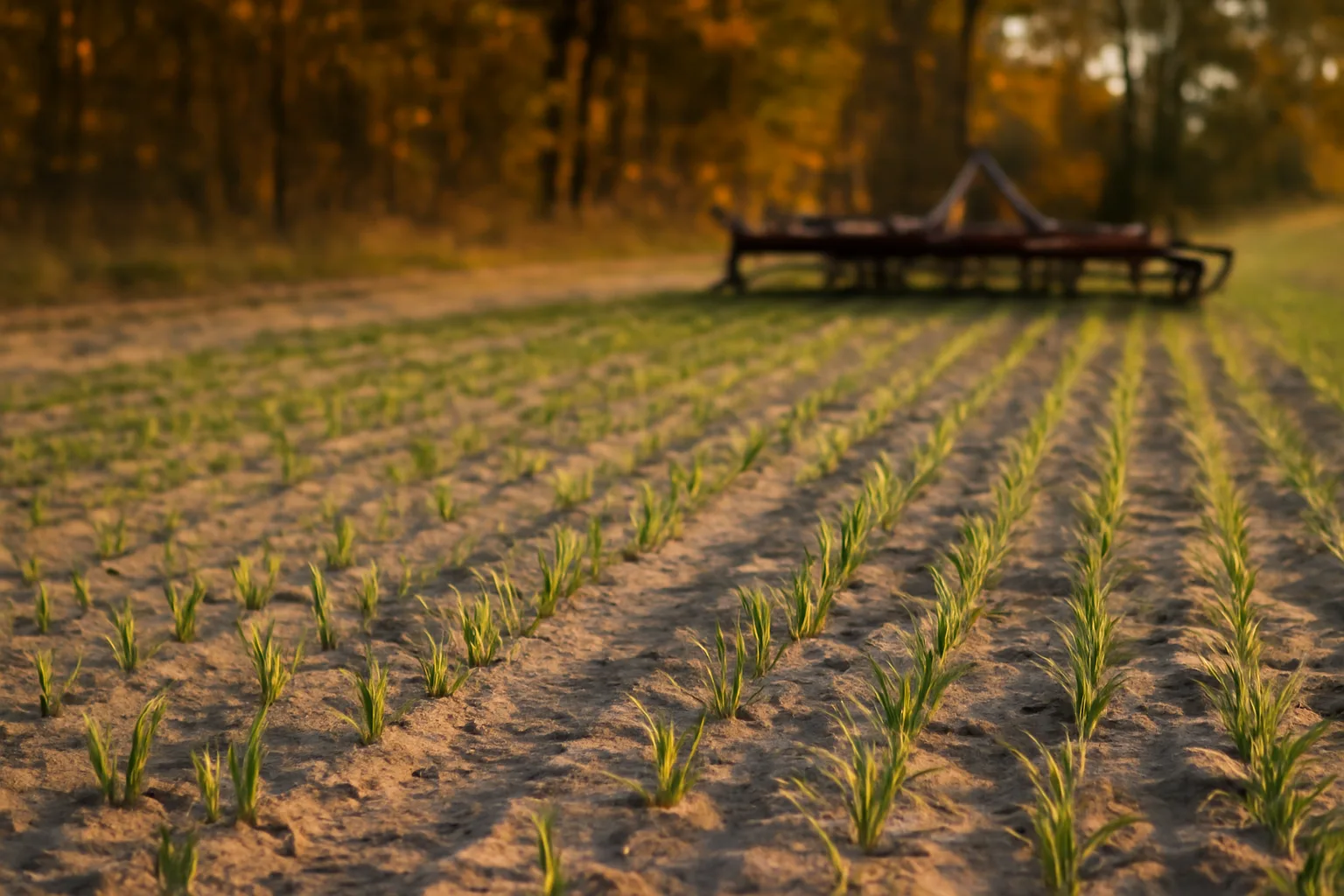
Sandy soil drains fast, holds little water, and leaches nitrogen and potassium right past the root zone after a hard rain. The USDA Natural Resources Conservation Service classifies soil texture by percent sand, silt, and clay, and soils with 85% or more sand and less than 10% clay fall into the "sand" and "loamy sand" classes on the official soil texture triangle [1]. Those soils have low cation exchange capacity, meaning they can't hold onto nutrient ions the way a loam or clay soil can, so fertilizer moves through quickly instead of sticking around for the plants. That's the core problem for a food plot. You're more than picking seed, you're picking seed that can germinate on a soil with almost no water-holding buffer and that can use nutrients before they wash out. A cooperative extension soil test will tell you your actual CEC number and organic matter percentage, and both matter more on sand than on any other soil type, because organic matter is the only thing in a sandy profile that holds water and nutrients between rain events. The fix isn't really about finding a magic seed. It's about matching species to the constraint (drought tolerance, low fertility tolerance, fast establishment) and then managing fertility in smaller, more frequent doses instead of one big spring application that leaches away by June.
What is a food plot, exactly
A food plot is a planted area, usually somewhere between a quarter acre and several acres, seeded with forage or grain specifically to feed and hold deer or other wildlife on a property. It's not a garden and it's not a crop field grown for sale. Most state wildlife agencies and university extension programs describe food plots as a wildlife habitat management tool, not a farming operation, and the goal is nutrition and attraction, not yield per acre [2]. On sandy ground, the food plot concept doesn't change, but the execution has to. You're working against drainage and nutrient leaching the whole season, so plot size, species choice, and fertilizer timing all get adjusted around that one limiting factor. A 2-acre plot on sand behaves more like 1.5 acres of usable forage once you account for the thin, weedy edges where the soil is worst.
What food plot seed works best in sandy soil
| Cereal rye | Excellent | Down to ~5.0 | Fall/winter | Low | |
|---|---|---|---|---|---|
| Oats | Good | 5.5-7.0 | Fall (winterkills) | Moderate | |
| Buckwheat | Very good | 5.0-7.0 | Summer | Low | |
| Iron-clay cowpeas | Very good | 5.5-7.0 | Summer | Low (fixes N) | |
| Forage soybeans | Good | 6.0-7.0 | Summer | Moderate | |
| Clover (white/red) | Fair, needs irrigation help | 6.0-7.0 | Spring/summer/fall | High, split applications | |
| Brassicas (turnips, radish) | Fair | 6.0-7.5 | Late summer/fall | High, especially N | If you want a full rundown on species selection outside of sandy-specific constraints, food plot seed covers the broader picture, and deer food plot seed breaks down blends by region. |
For pure sand or loamy sand, the species that handle drought and low fertility with the least fuss are cereal rye, oats, buckwheat, cowpeas, and forage soybeans. These aren't a random list, they share traits: fast germination, deep or fibrous root systems, and tolerance for lower soil pH and lower nutrient availability than clover or brassicas need to thrive. Cereal rye (not annual ryegrass, a different plant) is probably the single most forgiving sandy-soil seed. It germinates in cool soil, tolerates pH down near 5.0, and its root system helps hold sandy soil together over winter, which matters if your plot sits on a slope. Oats germinate faster than rye in warm early-fall soil and put on quicker green growth, but they winterkill in most of the whitetail range once temperatures drop into the teens, so they're a fall-attraction play, not a season-long stand. Buckwheat is underused and it's excellent on sand. It germinates in 3 to 5 days, grows fast enough to outcompete weeds, and actually improves phosphorus availability in poor soils. It's a summer annual though, so it's a warm-season plot, not a fall option. Cowpeas and forage soybeans (iron-clay cowpeas especially) fix their own nitrogen through rhizobia bacteria, which matters a lot on sand where nitrogen leaches out fast. They also tolerate drought better than most legumes. The tradeoff is deer pressure: on high-density properties, soybeans and cowpeas can get grazed to nothing before they mature, so plot size and deer density both factor into whether these work for you. Clover can work on sandy soil, but it needs more help than the species above. See the section below on whether deer like clover, because the answer is yes, the problem is keeping it alive on sand through August. | Species | Drought tolerance on sand | Soil pH tolerance | Season | Fertility need |
Do deer eat sorghum
Yes, deer eat sorghum, particularly grain sorghum heads once they mature, and it's a common fall and winter food source in the whitetail's range, especially in the South and Midwest where it's grown as an ag crop bordering timber. Whitetail deer diet studies consistently list grain sorghum among the crop foods deer use heavily where it's available, alongside corn and soybeans [3]. As a food plot seed on sandy soil specifically, sorghum has real upside: grain sorghum and forage sorghum-sudangrass hybrids handle drought better than corn does, thanks to a deeper root system and a waxy leaf coating that reduces water loss. That makes it a legitimate corn substitute on sand, where corn often struggles without irrigation. The catch is sorghum needs a full growing season (roughly 100 to 120 days to grain maturity) and warm soil to germinate, so it's a spring-planted, warm-season option, not a fall quick fix. Deer will also browse young sorghum-sudangrass forage before it heads out, though it's not their first choice compared to a legume. If you're set up for a warm-season grain plot on sand, sorghum belongs on the shortlist alongside cowpeas and soybeans.
Do deer eat clover, and do deer like clover
Yes, deer eat clover readily, and most wildlife biologists rank it among the top preferred forages available to deer through spring, summer, and early fall. It's high in crude protein (often 20 to 25% in well-managed stands) and highly digestible, which is exactly what a lactating doe or an antler-growing buck needs in June and July [4]. Deer like clover enough that it's often the first thing eaten down in a mixed plot, sometimes to the point that it can't keep up with browse pressure on a small property. That's a real problem on sandy ground: clover's shallow root system already struggles with drought stress, and heavy grazing on top of that can wipe out a stand by late summer if the plot is too small relative to deer density. On sand specifically, white clover (Ladino types) tends to outlast red clover because it spreads by stolons and can recover from grazing pressure faster, but both need supplemental lime and a starter fertilizer with adequate potassium, since sandy soil rarely has enough native potassium to support clover long-term. A soil test is the only way to know your actual potassium and pH numbers before planting; your lab's recommendation is the final word on how much lime and fertilizer to apply, since local soil chemistry varies more than any general guide can account for.
When to plant food plots for deer
Food plot timing splits into two windows: spring/summer plantings for warm-season annuals and perennials, and late summer/fall plantings for cool-season annuals like brassicas, cereal grains, and clover. The right window depends on your species choice and your USDA Plant Hardiness Zone, which affects your first and last frost dates. Spring plots (soybeans, cowpeas, sorghum, corn) generally go in after your last frost date and once soil temperatures hit 60 to 65 degrees F, which for most of the whitetail range falls somewhere between late April and early June depending on latitude. Fall plots (brassicas, cereal rye, oats, clover) are typically planted 60 to 90 days before your first fall frost, which lands anywhere from late July in the northern tier to mid-September in the mid-South. On sandy soil, timing shifts a little tighter than the general rule. Sand warms up and dries out faster in spring, so you can often plant warm-season species a week or two earlier than a heavy-clay neighbor could, but you also lose soil moisture faster, so getting seed in right before a rain event matters more than on other soil types. In fall, sandy plots benefit from planting on the earlier end of the window since slower fall growth on marginal fertility means you need every extra week of daylight and warmth you can get. For a full breakdown by USDA zone, food plot whitetail has a planting calendar you can cross-reference against your zip code's frost dates.
When to plant oats for deer
Plant oats for deer in late summer to early fall, generally 6 to 10 weeks before your area's first hard frost, so the plants have time to establish and produce leafy growth before winter slows them down. In most of the whitetail range that's a window from mid-August in the upper Midwest and Northeast down to late September or early October in the mid-South. Oats germinate fast, often within 5 to 7 days in warm, moist soil, and they put on more tonnage of green forage faster than almost any other cool-season cereal, which is why they're a go-to for early-fall attraction plots. The tradeoff is winter survival: oats typically die once temperatures drop into the low-to-mid teens Fahrenheit for a sustained period, so in northern zones they function as a fall-only plot, not a plot that carries into hunting season's late stages. On sandy soil, oats do fine with moderate fertility but benefit from a modest nitrogen application at planting, since sand can't hold residual nitrogen from a prior crop the way heavier soils can. Pairing oats with a legume like crimson clover or cowpeas in the same fall mix is a common way to extend the plot's usefulness after the oats die back.
When to plant turnips for deer, and do deer eat turnips well on sand
Plant turnips for deer in late July through August in northern zones, and August into early September in the mid-South, aiming for 80 to 90 days before your first killing frost, since turnips need that full window to bulb out and reach peak tonnage. Extension guidance on brassica forage crops consistently points to this 80-to-90-day rule as the safe planting window [5]. Turnips are a fall favorite once a couple of frosts convert starches to sugars in the leaves and bulbs, which is why deer often ignore a turnip plot in October and hammer it in December. That timing lag surprises a lot of first-time planters who expect immediate attraction. On sandy soil, turnips need more nitrogen than clover or cereal grains to bulb properly, and because sand leaches nitrogen fast, a split application (some at planting, a second dose 3 to 4 weeks later) works better than one large dose up front. Skimping on nitrogen on sandy ground is the single most common reason turnip plots turn into skinny, small-bulb disappointments. A soil test through your state land-grant extension office will tell you the exact nitrogen rate your specific field needs; generic bag recommendations assume average soil, and sand is not average soil.
What are deer's favorite foods overall
Deer preference shifts by season, but across most whitetail research, the consistently top-ranked foods are acorns (especially white oak group), soybeans, clover, and other legumes, with browse (leaves and woody stems) filling in heavily in fall and winter when ag foods aren't available. A widely cited whitetail food habits study from the Mississippi State University Extension and similar university deer research groups ranks acorns and soft mast among the highest-preference foods when available, with agricultural crops like soybeans and corn close behind [3]. Protein and energy needs drive most of this. In spring and summer, does need protein for lactation and bucks need it for antler growth, so clover, soybeans, and other high-protein legumes get hit hard. In fall, energy density matters more as deer prepare for winter and the rut, so acorns, corn, and standing grain crops climb the preference list. On a sandy-soil property, this preference hierarchy doesn't change, but your ability to grow the top-tier legume options is more limited without fertility inputs, which is part of why cereal grains and brassicas often end up doing more of the practical work on sand than clover does, even though clover would be the first choice on better ground.
Do deer like honey, and does honey or sugar-based attractant matter for a food plot
There's no solid research showing deer specifically seek out honey as a food source in the wild; whitetail deer are herbivores whose natural diet is forbs, browse, mast, and agricultural forage, not sweeteners. Some commercial deer attractant products include sugar or molasses-based scents marketed with claims about deer preference for sweetness, but these are attractant products, not food plot inputs, and they're a different category entirely from planting a forage crop. More relevant: several states regulate or ban baiting and supplemental feeding for deer, and rules vary widely by state and sometimes by county within a state. Before using any mineral, feed, or attractant product near a plot, check your state wildlife agency's current baiting and feeding regulations, since a legal food plot planting is treated very differently under most state law than scattering feed, minerals, or scent attractants on the ground [6]. What's legal in one state can be a citable offense one county over, so don't assume; look it up on your state agency's site every season since rules do change.
How do you fix sandy soil fertility for a food plot instead of just picking the right seed
Seed selection only gets you halfway on sandy ground. The bigger lever is managing organic matter, pH, and fertilizer timing so whatever you plant actually has something to grow in. Start with lime. Sandy soils are frequently acidic and lime moves through them slower than you'd think because low CEC means the soil buffers pH changes poorly, so it can take a full season or more for a lime application to shift pH meaningfully. Extension soil test recommendations for CEC and lime requirements are the standard method for calculating how much lime a specific field needs, and that number varies field to field even within the same farm. Split your fertilizer instead of front-loading it. On sand, a single large nitrogen application in spring is largely wasted, since a big rain event can leach a meaningful chunk of unused nitrate below the root zone within days. Two or three smaller applications spread across the growing season keep more nutrient available to the plant when it's actually using it. Add organic matter over time. Cover crops, crop residue left in place, and even just not tilling more than necessary all build organic matter, which is the only real long-term fix for sand's poor water and nutrient holding capacity. This isn't a one-season fix; it's a multi-year improvement that makes every following year's plot easier. If you want a plan built around your specific soil test numbers, zone, and acreage rather than general guidance, that's exactly the kind of site-specific work a Custom Food Plot Plan is built for, a $99 one-time plan that takes your test results and turns them into an actual seed and fertilizer schedule instead of a generic bag rate. Your soil lab's lime and fertilizer recommendation is still the final authority on rates for your dirt; a plan works with those numbers, it doesn't override them. For more on matching species to your dirt beyond sand specifically, deer food plots and domain food plot seed both cover broader soil-type strategy.
What equipment helps most when planting on sandy soil
Sandy soil's biggest planting challenge is seed-to-soil contact and moisture retention, so equipment choices that address those two things matter more than horsepower. A cultipacker or drag harrow after broadcasting seed is close to non-negotiable on sand, since loose sandy soil doesn't hold small seed at the right depth without being pressed down, and wind or a light rain can otherwise wash seed to low spots before it germinates. A no-till drill is worth the rental or the trip to a co-op if you're planting more than an acre or two, because it places seed at a consistent, shallow depth (usually a quarter to half inch for small seeds like clover and brassicas) without excessive tillage that would dry out an already-dry sandy seedbed further. Tilling sand exposes more surface area to sun and wind, which speeds up moisture loss right when your seed needs it most. Timing equipment use around rain forecasts matters more on sand than on any other soil type. Planting into dry sand and hoping for rain later is a gamble; planting right before a forecasted half-inch or better rain event is close to the ideal scenario, since sand won't hold surface moisture from irrigation or light rain the way clay will.
Frequently asked questions
Do deer eat sorghum?
Yes. Grain sorghum is a documented fall and winter deer food, especially in the South and Midwest where it's grown as row crop. On sandy soil it's a drought-tolerant corn alternative, but it needs a full 100 to 120 day warm season to reach grain maturity, so it's spring-planted, not a quick fall fix.
Do deer eat clover, and do deer like clover?
Yes, deer eat clover readily and most biologists rank it among their top preferred forages, especially spring through early fall when protein needs are high. On sandy soil, clover needs lime and split fertilizer applications to survive drought stress and heavy grazing pressure; white clover generally outlasts red clover on sand.
When should I plant food plots for deer?
Warm-season plots (soybeans, cowpeas, sorghum) go in after last frost once soil hits 60-65°F, typically late April to early June. Cool-season plots (brassicas, cereal rye, clover) go in 60-90 days before first fall frost, roughly late July in the north to mid-September in the mid-South, depending on USDA zone.
When do you plant oats for deer?
Plant oats 6 to 10 weeks before your area's first hard frost, generally mid-August in the upper Midwest and Northeast down to late September in the mid-South. Oats germinate in 5-7 days but winterkill in the low-to-mid teens Fahrenheit, so they function as a fall-only attraction plot in most of the whitetail range.
When should I plant turnips for deer?
Plant turnips 80 to 90 days before your first killing frost, roughly late July through August in northern zones and August to early September in the mid-South. Deer often ignore turnips until after a frost or two converts starches to sugar, so don't expect heavy use in early fall even on a well-grown plot.
What is a food plot?
A food plot is a planted patch, typically a quarter acre to several acres, seeded with forage or grain crops specifically to feed and hold deer or other wildlife on a property. Most state wildlife agencies treat it as a habitat management tool rather than a commercial farming operation.
What are deer's favorite foods?
Preference shifts by season, but acorns (especially white oak group), soybeans, clover, and other legumes consistently rank highest across whitetail food habit research, with woody browse filling in during fall and winter. Protein-rich foods dominate spring and summer preference; energy-dense foods like acorns and grain climb the list in fall.
Do deer like honey?
There's no solid research showing deer seek out honey specifically; their natural diet is forbs, browse, mast, and ag forage, not sweeteners. Some commercial attractant products use sugar or molasses scents, but that's a different category from food plot planting, and baiting/feeding rules vary by state, so check before using any attractant.
What is the best food plot seed for sandy soil specifically?
Cereal rye, oats, buckwheat, iron-clay cowpeas, and forage soybeans handle sandy soil's drought and low fertility best, thanks to fast germination and either deep roots or nitrogen-fixing ability. Clover and brassicas can work too, but they need more lime, more fertilizer, and closer soil test management to succeed on sand.
Does clover grow well in sandy soil?
Clover can grow in sandy soil, but it struggles more there than in loam or clay because sand drains fast and holds little nitrogen or potassium. White clover generally outperforms red clover on sand due to its stolon-based recovery from grazing, but both need lime and split fertilizer applications based on a current soil test.
How often should you fertilize a food plot on sandy soil?
Split fertilizer into two or three smaller applications across the growing season instead of one large spring dose, since sandy soil leaches nitrogen and potassium fast after rain. A soil test from your local extension office will give the exact rate and timing your specific field needs; generic bag rates assume average soil texture.
Can you no-till plant a food plot in sandy soil?
Yes, and it's often preferable, since tilling sand exposes more surface area to sun and wind, accelerating moisture loss in an already dry soil type. A no-till drill placing seed at a consistent quarter to half-inch depth, followed by a light cultipacking pass, generally outperforms broadcast-and-till on sandy ground.
How much lime does sandy soil need for a food plot?
It varies by field; there's no single number. Sandy soil's low cation exchange capacity means it buffers pH poorly and can need repeated lime applications over more than one season to shift meaningfully. Get a soil test through your state land-grant extension office and follow its specific lime recommendation for your field's CEC and current pH.
Sources
- USDA Natural Resources Conservation Service, Soil Texture Calculator and Textural Triangle: Soil texture classes including sand and loamy sand are defined by percent sand, silt, and clay on the official USDA textural triangle
- Mississippi State University Extension, Establishing Wildlife Food Plots: Food plots are described as a wildlife habitat management tool distinct from commercial crop production
- Mississippi State University Extension, White-tailed Deer Food Habits: Grain sorghum and other agricultural crops are documented heavily-used whitetail deer foods where available
- University of Georgia Extension, Clover for Wildlife Food Plots: Clover is a high-preference, high-protein forage for deer, commonly 20-25% crude protein in well-managed stands
- University of Tennessee Extension, Brassicas for Deer Food Plots: Turnips and other brassica forage crops need an 80 to 90 day window before first killing frost to bulb properly
- Example state wildlife agency baiting regulation reference: State wildlife agencies regulate baiting and supplemental feeding for deer, with rules varying by state