Last updated 2026-07-24
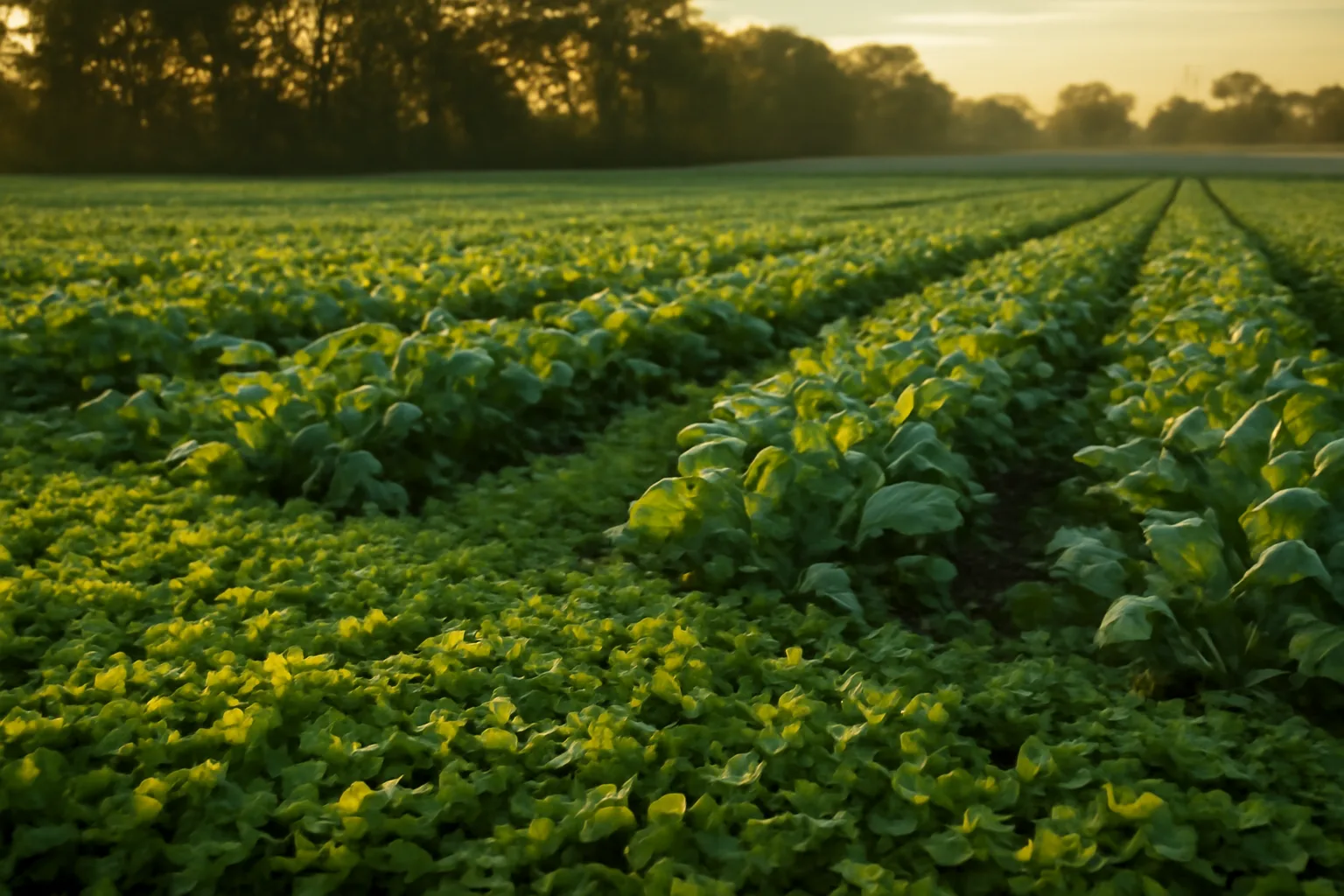
TL;DR
The best deer food plot depends on your goal and your calendar. Clover wins for season-long protein and low upkeep. Oats and brassicas win for fall attraction. Beans and sorghum win for tonnage and late-season energy. Match species to soil test results and your region's planting window, not to whatever looked good on a bag.
What is a food plot, exactly?
A food plot is a planted area, usually somewhere between a quarter acre and several acres, seeded specifically to feed and attract deer (and often turkey, rabbits, and other wildlife along the way). It's not a farm field in the commercial sense. Most hunters plant plots on land they own or lease specifically to improve deer nutrition, hold deer on the property longer, and create a predictable spot to hunt over. State wildlife agencies generally treat food plots differently from bait piles. Planted, standing crops are legal in nearly every state even where baiting (piling loose corn, minerals, or feed) is restricted or banned. But the line varies by state and even by county, so always check your state agency's current baiting and feeding regulations before you plant or hunt over anything, because rules change year to year. The two broad categories are annuals (planted fresh each year, like oats, brassicas, or soybeans) and perennials (planted once and maintained for 3 to 5 years, like clover or chicory). Most serious plot programs run both: a perennial clover field for spring and summer protein, and rotating annual plots for fall hunting season.
When to plant food plots for deer?
Timing splits into two windows almost everywhere in the whitetail's range: a spring/early-summer window for warm-season annuals and perennials, and a late-summer window for fall annuals. The exact dates shift by 3 to 6 weeks depending on your latitude and elevation, so your local frost dates matter more than any national calendar. For spring plots (clover, chicory, soybeans, cowpeas), most extension guidance points to planting after your last frost date, once soil temps hit the mid-50s or warmer. In the Upper Midwest and Northeast that's typically early May to early June. In the Southeast it can be March or April. For fall plots (brassicas, oats, wheat, rye, cereal grain blends), the target is roughly 60 to 90 days before your first hard frost, so the plants have time to establish before growth slows. In much of the whitetail's core range that lands between late July and early September. Wait too long and brassicas won't bulb up; plant too early in hot, dry weather and germination suffers. A simple rule that holds up across most of the country: perennials and warm-season annuals go in after the last spring frost, fall annuals go in 6 to 12 weeks before the first fall frost. Your county extension office publishes exact frost date averages, and that's a better source than a bag label printed for the whole country. For a full breakdown by region, see the food plot whitetail planting guide.
Do deer like clover, and is it worth planting?
Yes, and it's one of the highest-value plantings you can put in the ground. Clover (white clover and red clover are the two workhorses) is a perennial legume that regrows after grazing, fixes its own nitrogen, and provides a protein source deer hit hard from spring green-up through fall. Crude protein in quality clover stands commonly runs 25 to 30 percent, which is well above most native browse. Clover's real advantage is duration. A well-maintained white clover stand (like Ladino types) can produce for 3 to 5 years off one seeding, with just annual mowing and a fertilizer touch-up based on your soil test. That makes it the lowest-labor, highest-return plot species for most properties. The catch: clover needs decent drainage and a soil pH close to neutral (roughly 6.0 to 7.0) to really perform. On acidic ground, lime is not optional. It's the difference between a thin stand and a thick one. Deer preference research backs this up. USDA Forest Service browse studies list legumes like white clover among preferred forages where they're available, competitive with native legumes deer already seek out [1]. If you're planning your first plot ever, clover is usually the safest first planting because it forgives some management mistakes that would kill a brassica stand outright.
Do deer eat sorghum, and how should you use it?
Deer will eat sorghum, both the grain heads and the young leaves, but it's rarely anyone's first choice as a standalone deer plot species. Grain sorghum (milo) is more commonly planted as a dove field crop or a cover/screening plant than a primary deer attractant, because deer preference for sorghum grain runs behind corn, soybeans, and standing brassicas in most comparative studies. Where sorghum earns its place is as a secondary or blended component. It's drought-tolerant, tolerates poorer soils better than corn, and the standing stalks provide screening cover and some late-season browse once the heads mature. Some plotters use it in a mix with soybeans or cowpeas specifically for structure and visual cover around a plot, not as the main food source. If tonnage and deer draw is your priority, put your acreage into soybeans, corn, or a brassica blend first. Use sorghum where you want a cover strip or a drought-insurance crop on marginal soil that won't reliably grow much else.
When to plant oats for deer, and how well do deer like them?
Oats are one of the most reliably attractive fall annuals, and deer often hit a fresh oat plot within days of it emerging. Oats germinate fast, tolerate cooler soil than corn or beans, and put out tender, high-sugar leaves that deer strongly prefer over more mature grasses. Plant oats in late summer to early fall, generally 6 to 8 weeks before your area's average first frost, so seedlings establish before growth slows. In the Midwest that's typically mid-August through early September; in the Deep South it can push into October. Oats are frost-tolerant to a point but a hard freeze eventually kills the top growth, so they work best as a fall-through-early-winter plot rather than a season-long one, unless you're in a mild-winter zone. A common and effective move is blending oats with winter wheat, winter rye, or a brassica like forage rape. The oats provide fast, early attraction while the wheat or rye holds through winter after the oats die back. Cereal grains generally test well above native browse for crude protein in young growth stages, which is part of why deer key in on them so fast after planting [2].
When to plant turnips for deer, and will they actually eat them?
Turnips are a fall brassica, and deer usage follows a predictable pattern: light early browsing of the leaves, then heavy use of both leaves and bulbs once a hard frost sweetens the plant by converting starches to sugars. Plant turnips 80 to 90 days before your first expected hard frost, which in most of the whitetail's range lands in late July through mid-August. The frost-sweetening effect is real agronomy, not folklore. Cold temperatures trigger starch-to-sugar conversion (a cold-hardiness response that increases soluble sugars in leaf and root tissue), a mechanism documented in plant cold acclimation research [3]. That's why turnip plots often get ignored in October and hammered in December and January, making turnips one of the better late-season plot choices for hunters targeting the post-rut period, when deer need calories and standing food is scarce. Turnips do best in loamy soils with a pH around 6.0 to 6.5 and decent fertility; they're moderate nitrogen users, so a soil test matters before you guess at fertilizer rates. Broadcasting into a firm, well-prepared seedbed at roughly 4 to 6 pounds per acre (check your specific seed tag; rates vary by blend) works better than drilling too deep, since brassica seed is small and needs shallow placement.
What are deer's favorite foods overall?
There's no single universal favorite; deer preference shifts by season, region, and what's locally available, but research and decades of plot data point to a consistent short list. Soybeans and clover top most forage preference discussions for warm-season protein. Acorns (especially white oak acorns, which are lower in tannins than red oak) are often the single most preferred natural food where they're available in fall. Brassicas and cereal grains dominate late-season preference once frost sweetens them and other green food disappears. Research on white oak versus red oak acorn tannin content and deer preference finds deer favor low-tannin white oak acorns when both are available in the same fall [4]. Native browse like greenbrier, honeysuckle, and forbs fills the gap where plots and mast aren't present, but generally runs lower in digestible protein than a well-fertilized plot crop. The honest answer for a landowner: plant a mix. One species almost never covers spring nutrition, fall attraction, and winter stress food. That's why most serious programs run clover for the growing season, a brassica or cereal grain blend for fall, and beans or corn where acreage allows for tonnage and late-season energy. See deer food plots for a fuller breakdown of how to combine species by acreage and goal.
Do deer like honey, or is that just a marketing claim?
No, deer don't eat honey, and there's no wildlife research supporting it as a deer attractant. This question usually comes from confusion with commercial deer attractant products that use the word 'honey' in branding, or from mineral/molasses-based attractants that have a sweet smell people associate with honey. What deer are drawn to is sugar and salt, not honey specifically. That's why molasses-based mineral licks and sugar beet plots draw deer well; it's the sucrose and mineral content, not anything unique to honey as a substance. If you see a product marketed around honey as the active attractant, read the ingredient list. It's almost always a mineral, salt, or molasses base doing the actual work. One more practical note: many states restrict or ban mineral and scent-based attractants during hunting season as a form of baiting, separate from their food plot rules. Check your state wildlife agency's regulations before using any attractant product, honey-branded or otherwise.
How do you pick the best food plot species for your property?
| White/Ladino clover | Perennial, spring-fall | 6.0-7.0 | Season-long protein, low upkeep | |
|---|---|---|---|---|
| Oats | Fall annual | 6.0-6.8 | Fast fall attraction | |
| Turnips/brassicas | Fall/winter annual | 6.0-6.5 | Late-season energy after frost | |
| Soybeans | Warm-season annual | 6.0-6.8 | High tonnage, summer/fall protein | |
| Winter wheat/rye | Fall-winter annual | 5.5-7.0 | Cold tolerance, holds through winter | |
| Grain sorghum | Warm-season annual | 5.8-7.0 | Drought tolerance, cover, secondary food | Acreage and equipment matter too. A half-acre plot reached only by hand tools points toward clover or a broadcast brassica mix. A few acres of tillable ground with a tractor and disc opens up beans, corn, and larger cereal grain plantings. If you're weighing which category fits your land best, deer for food and food plot seed both dig into selection by acreage and soil type. |
Start with your soil test, not the seed bag. A $10 to $20 soil test from your county extension office or a private ag lab tells you your current pH and nutrient levels, and that data should drive lime and fertilizer decisions more than any generic recommendation, including the guidance in this article. Your soil test lab is the authority on your specific ground; treat published planting guides as a starting point, not a replacement. Next, match species to your goal and season. Here's a rough comparison across the most common plot species: | Species | Season | Soil pH target | Typical use |
What soil prep actually moves the needle?
Lime is usually the single biggest lever, and it's the one most new plotters skip. If your soil test comes back at a pH of 5.0 to 5.5, which is common on wooded, previously unfarmed ground, you can dump fertilizer on it all day and the plants still won't access most of those nutrients efficiently. University of Georgia Extension guidance on soil testing for wildlife plantings recommends getting acidic plot soils up toward 6.0 to 6.5 for most food plot species before fertilizer response really pays off [5]. Lime takes time to react in the soil, often 3 to 6 months for a meaningful pH shift, so apply it as far ahead of planting as your schedule allows; fall lime for a following spring or fall planting is common practice. Fertilizer, by contrast, acts fast and should be based on your specific soil test numbers for phosphorus, potassium, and nitrogen rather than a flat rate off a bag. Seedbed prep matters almost as much as chemistry. Small-seeded species like clover and brassicas need a firm, shallow seedbed; burying that seed an inch deep with a drill set wrong is a common way to get a thin, patchy stand. Larger seeds like beans and corn need deeper placement and more aggressive tillage or no-till drilling. Match your equipment and technique to seed size, more than species.
How do you build a plot plan that actually fits your land?
Generic planting calendars get you close, but your specific soil test results, plot size, sun exposure, and regional frost dates all shift the right answer. That's the gap a service like PlotSeason's $99 one-time Custom Food Plot Plan is built to close: you get species and timing guidance built around your actual soil test and property details, not a one-size-fits-all bag label. It's general planning guidance, not site-specific agronomy from an agronomist walking your field, and your soil test lab still has final say on lime and fertilizer rates. If you're doing it yourself, work through it in this order: soil test first, lime and fertilize based on the results, pick species based on season and goal (spring protein vs. fall attraction vs. late-season energy), then match your seedbed prep and planting depth to whatever seed you land on. Skipping the soil test is the most common expensive mistake. Skipping fertilizer entirely on ground that's never grown a food plot is the second.
What mistakes ruin most first-time food plots?
Planting on bare, unprepared ground without addressing pH is the number one killer of first-year plots. A soil test costs less than a bag of seed and tells you whether you're wasting your planting on ground that needs lime first. Wrong timing is second. Planting brassicas too late for them to bulb up before frost, or planting clover in the heat of summer without irrigation, sets a stand up to fail before it even competes with weeds. Match your planting window to your actual first and last frost dates, not a calendar date that worked for someone three states away. Overseeding a shaded plot is third. Most food plot species, including clover, brassicas, and beans, need 4 to 6 hours of direct sun minimum to really perform. A pretty half-acre clearing in mature timber often just doesn't have the light for a productive plot, no matter what you plant there. Last, plenty of hunters plant one species and expect it to do everything: attract deer in October, hold them through January, and rebuild body condition after the rut. No single plot species does all three well. A mixed program across a property, even a small one, consistently outperforms a single monoculture plot in both attraction and nutrition.
Frequently asked questions
Do deer eat sorghum?
Yes, deer eat sorghum grain and young leaves, but it typically ranks behind soybeans, corn, and brassicas in preference studies. It's more commonly planted as a drought-tolerant secondary crop or cover strip than as a standalone deer attractant plot.
Do deer eat clover?
Yes, and clover is one of the most preferred food plot forages available. White and red clover often test at 25 to 30 percent crude protein, and deer browse it from spring green-up through fall, making it a strong perennial base for most plot programs.
When should you plant food plots for deer?
Perennials and warm-season annuals go in after your last spring frost, once soil temps warm. Fall annuals like oats, brassicas, and cereal grains go in 6 to 12 weeks before your first fall frost. Exact dates shift by region, so use your county's average frost dates, not a national calendar.
Do deer like clover more than other plot species?
Clover consistently ranks near the top of forage preference research and is a favorite among experienced plotters because it regrows after grazing and lasts 3 to 5 years per planting. Deer still show strong preference for soybeans and fresh brassicas in the right season, so 'best' depends on the time of year.
When should you plant oats for deer?
Plant oats 6 to 8 weeks before your area's average first fall frost, typically mid-August through early September in the Midwest and later in the Deep South. Oats germinate fast and deer often hit a fresh stand within days, but a hard freeze eventually kills top growth.
When should you plant turnips for deer?
Plant turnips 80 to 90 days before your expected first hard frost, generally late July through mid-August across most of the whitetail's range. Deer usage often stays light until frost converts starches to sugars in the leaves and bulbs, which is why turnip plots get hammered in December and January.
What exactly is a food plot?
A food plot is a planted patch of forage, ranging from a quarter acre to several acres, seeded specifically to feed and attract deer and other wildlife. It differs from bait piles legally in most states, since standing planted crops are treated as land management rather than baiting.
What are deer's favorite foods in general?
It varies by season and region, but soybeans, clover, and white oak acorns consistently rank as top preferences. Brassicas and cereal grains take over as favorites once frost sweetens them in late fall, when other green food has died back.
Do deer like honey?
No. There's no research supporting honey itself as a deer attractant. Confusion usually comes from honey-branded commercial attractant products that are actually built around molasses, sugar, or mineral bases, which do draw deer through sugar and salt content, not anything unique to honey.
What's the single best food plot species to plant?
There isn't one. Clover wins for season-long, low-maintenance protein. Oats and brassicas win for fall attraction and post-frost sweetness. Soybeans win for tonnage and summer-through-fall nutrition. Most effective plot programs combine at least two of these rather than betting everything on one species.
How big does a deer food plot need to be to work?
There's no fixed minimum, but quarter-acre to one-acre plots work well for hunting-access plots tucked in timber, while multi-acre plots suit properties focused on herd nutrition. Sun exposure and shape matter more than raw size; a plot needs 4 to 6 hours of direct sun to perform well regardless of acreage.
Do I need to lime my food plot before planting?
If your soil test shows pH below 6.0, yes, lime first. Most food plot species perform best between pH 6.0 and 7.0, and lime can take 3 to 6 months to meaningfully shift soil chemistry, so apply it well ahead of your planting date whenever possible.
Sources
- Michigan Compiled Laws, Section 324.40111a, Baiting and feeding of deer or elk: Michigan restricts baiting and feeding of deer under state statute while treating planted food plots as a standard land management practice
- USDA Forest Service, Fire Effects Information System, Trifolium repens (white clover) species review: Clover ranks among preferred forages in deer browse preference research
- Mississippi State University Extension Publication 2111, Establishing Wildlife Food Plots: Quality clover stands commonly test at 25 to 30 percent crude protein
- Oklahoma State University Extension, PSS-2588, Forage Quality Interpretations: Cereal grains like oats test well above native browse for crude protein in young growth stages
- Thomashow, M.F., 'Plant Cold Acclimation: Freezing Tolerance Genes and Mechanisms,' Annual Review of Plant Physiology and Plant Molecular Biology, 1999, PMID 15012214: Cold temperatures trigger starch-to-sugar conversion in plant tissue as part of cold acclimation, the basis for frost sweetening in brassicas
- USDA Forest Service Southern Research Station, General Technical Report SRS-104, mast and wildlife food relationships: Deer favor low-tannin white oak acorns over higher-tannin red oak acorns when both are available
- University of Georgia Extension Circular C1029, Soil Testing for Home Lawns, Gardens and Wildlife Food Plots: Extension guidance recommends raising acidic plot soils to roughly pH 6.0 to 6.5 before fertilizer becomes fully effective