Last updated 2026-07-26
TL;DR
Most fall food plots go in 60 to 90 days before your area's average first frost, which lets brassicas and grains reach grazing size before hard freeze. Cool-season plots (clover, oats, brassicas, cereal grains) are the fall standard. Check your local frost date and soil test first; those two numbers drive almost every planting decision.
What is a food plot, exactly?
A food plot is a planted patch of forage, on a field, a logging cut, or a cleared corner of woods, meant to feed and hold deer on your ground rather than just attract them for a day. It's not bait. Bait is a pile of corn or minerals dumped to draw animals in. A food plot is a planted crop that deer graze naturally over weeks or months, the same way livestock graze a pasture. State agencies draw a real legal line here. Baiting and feeding rules vary a lot: some states ban feeding year-round, some allow it outside hunting season, some allow small "food plot" acreages but cap bait pile size or distance from a stand. Check your state wildlife agency's current regulations before you plant or feed anything, because this is one of the few food-plot topics that can actually get you a ticket. Practically, plots range from quarter-acre kill plots tucked in timber to five-plus acre field plots meant to hold a herd through winter. The size and shape you pick change what species make sense, which is a separate conversation from the planting calendar this article covers. For species selection specifics, see food plot whitetail and deer food plot seed.
When to plant food plots for deer
| Upper Midwest / Northern tier | Late July to mid-August | Mid-September to early October | |
|---|---|---|---|
| Mid-South / Transition zone | Late August to mid-September | Mid-October to early November | |
| Deep South | Mid-September to mid-October | Mid-November to December | Your soil test result should arrive before you commit to a date, because lime takes months to adjust pH. If your soil is badly acidic, delaying planting to get lime down first is usually the smarter move than planting on schedule into soil that won't support the crop. Your soil test lab's recommendation is the actual authority on lime and fertilizer rates for your dirt, not any generic article, including this one. |
Fall food plots go in the ground roughly 60 to 90 days before your area's average first fall frost, and spring/summer plots go in after your last spring frost once soil hits about 50 to 55°F. Those two windows cover almost every popular food plot species, but the exact date shifts by 4 to 6 weeks depending on your state. The reason for the 60-90 day fall window is simple: brassicas like turnips and radishes need real time to bulk up roots and leaves before a hard freeze sweetens them and triggers heavy deer browsing. Cereal grains and clover need less lead time but still want several weeks of growth before cold shuts things down. A rough national breakdown, all dates approximate and needing local adjustment against your county extension office or state frost-date tables: | Region | Fall planting window | Typical first frost |
When to plant oats for deer
Plant oats for deer 60 to 75 days before your first killing frost, which lets the plant establish and put on the leafy growth deer prefer before winter dormancy. In most of the whitetail range that lands somewhere between mid-August and mid-September. Oats are a fast, cheap, forgiving cool-season grain. They germinate in as little as 7 to 10 days in warm late-summer soil and green up fast, which is why so many hunters use them as a nurse crop mixed with clover or brassicas. The catch: oats aren't very winter-hardy. In much of the northern half of the country a hard freeze kills the plant outright, though deer will still hammer it hard right up until then. Winter rye and winter wheat, by contrast, can survive freezing and green back up in spring, so in colder zones a lot of planters swap in rye for the late-season tonnage oats can't provide. Seeding rate for oats alone typically runs 2 to 3 bushels (roughly 64 to 96 lbs) per acre broadcast, per common land-grant extension forage guidance, though rates vary with drilling versus broadcasting and blend ratios.
Do deer like clover, and do deer eat clover?
Yes. Clover is one of the most consistently preferred food plot forages for whitetail deer, and it's arguably the closest thing to a default answer when someone asks what to plant. Deer graze it spring through fall and it regrows after grazing, which is the whole appeal. Clover is a perennial, usually lasting 3 to 5 years per stand before needing renovation, so it's planted once and then maintained rather than replanted every season. That makes late summer to early fall (roughly August through early September in most of the whitetail range) or early spring the two standard planting windows, not the same tight fall-only window brassicas need. Clover needs a pH around 6.0 to 6.5 to really produce, and it's nitrogen-fixing once established, meaning it needs far less nitrogen fertilizer than a grain plot, just phosphorus and potassium per your soil test. If your soil test comes back at pH 5.5 or lower, lime before you plant clover. It will limp along in acidic soil and you'll wonder why deer ignore it. For more on species mixing clover with other forages, see deer food plots.
When to plant turnips for deer
Plant turnips for deer 80 to 100 days before your first hard frost, which is a longer runway than oats or clover need because turnips have to build a bulb, more than leaf growth. In most of the whitetail range that means late July through late August. Turnips are a brassica, and brassicas go through an odd but well-documented pattern: deer often ignore the leaves early on, then hit the plant hard after the first frost or two converts starches to sugars, making it sweeter. That's exactly why the planting date math matters so much here. Plant too late and you get small bulbs and thin leaf mass right when deer start keying in on the plot. Plant on time and a frost or two around 6 to 8 weeks after planting turns the whole plot into a magnet. Seeding rate for turnips alone runs about 4 to 6 lbs per acre broadcast; most hunters blend them with radish, rape, or a cereal grain rather than planting a monoculture, both for tonnage and to hedge against one component failing.
Do deer eat sorghum?
Yes, deer eat grain sorghum, both the standing plant's leaves early on and the seed heads once they mature, and sorghum is also planted as cover and a late-season energy source rather than purely as forage. It's more of a warm-season, summer-planted crop than a fall-planted one, though standing sorghum plots left through fall and winter provide grain deer return to after other plots have been grazed down. Sorghum's real value in a plot rotation is drought tolerance and structure. It grows tall, holds up through wind and light snow, and gives deer both food and screening cover in open fields, which is why you'll see it in a lot of Midwest food plot mixes planted alongside or ahead of fall brassica or clover plantings. It's not typically the centerpiece of a fall-planting article the way clover, oats, and brassicas are, because you plant it in late spring to early summer (after soil hits about 65°F) and let it stand into fall and winter as a secondary food source, not something you drill in September.
What are deer's favorite foods?
There's no single universal favorite. Deer preference shifts by season, region, and what's locally available, but a few categories show up again and again in forage studies and hunter experience: acorns and other hard mast, soybeans, clover, and brassicas after frost. Acorns are consistently ranked as a top natural food where oaks are present, because of their fat and carbohydrate density going into winter. Deer will often bypass planted forage for a good acorn drop in a given year. That's a real limitation of food plots worth being honest about: in a heavy mast year, your plot may see less pressure, and that's not a plot failure, it's just deer doing what deer do. Among planted crops, soybeans (during the growing season) and clover (nearly year-round where climate allows) tend to top most preference rankings, with brassicas moving way up the list after the first frost. Corn is heavily used late season for its calories but isn't a strong preference food early on relative to beans and clover. If you're planning a full rotation rather than a single fall plot, food plot seed and deer for food cover species selection in more depth.
Do deer like honey (or anything sweet)?
Deer aren't drawn to honey itself in any meaningful food-plot sense. There's no research or established practice of using honey as deer attractant, and it's not something wildlife agencies or extension services discuss as a deer food source. What actually drives the "deer like sweet things" idea is real, though: it's the sugar conversion in frosted brassicas and the natural sugars in fruit (apples, persimmons, pears) and mast that deer key in on. That frost-sweetening effect in turnips, radish, and kale is well documented and is the actual mechanism behind late-season brassica plots working so well, not some vague sweet tooth. Cold temperatures convert stored starches to soluble sugars in the plant tissue, which is measurable and is exactly why brassica plots "turn on" after that first freeze rather than being consistently grazed all fall. If you're picturing pouring honey or sugar water on a plot, save your money. There's no data supporting it, and most state baiting regulations would classify a sugar-based attractant as a feeding violation anyway.
How much lead time does your soil test actually buy you?
A soil test result changes your planting date more than almost any other input, because lime needs time to react with soil and raise pH, and pH governs whether the seed you're about to plant will even take up nutrients. Lime reactions in soil generally take weeks to a few months to significantly shift pH, with full reaction sometimes taking a full season depending on lime particle size, soil moisture, and how well it's incorporated, per land-grant agronomy guidance on liming practice from Oklahoma State University Extension. A fall plot planted into freshly limed but not-yet-reacted soil won't get the full pH benefit until the following season. That's a real tradeoff hunters face every August: plant on the calendar-ideal date into imperfect pH, or push planting back a couple weeks to get lime down first. There's no universal right answer; it depends how far off your pH is. If your test comes back at 6.0 or better for clover and brassicas, don't sweat the timing, just fertilize per the test and plant on schedule. If you're at 5.0 or lower, get lime down as soon as you get results back, even if it means planting a week or two later than ideal, because acidic soil will bottleneck yield far more than a slightly late planting date will. Your soil test lab's specific lime and fertilizer recommendation is the real authority here, tailored to your dirt, not a generic number in an article.
How do you pick between clover, brassicas, and grain for a fall plot?
| Plot that lasts 3-5 years with less replanting | Clover | Perennial, regrows after grazing, needs less nitrogen once established | |
|---|---|---|---|
| Late-season (post-frost) draw | Turnips, radish, other brassicas | Frost converts starch to sugar, sharply increasing palatability | |
| Fast establishment, low cost, early season attraction | Oats or winter rye | Germinates in 7-10 days, cheap per acre, rye is more freeze-hardy than oats | |
| Standing cover plus late-winter grain | Grain sorghum (planted earlier in the season) | Drought tolerant, provides structure and screening plus seed heads | Most experienced planters don't pick just one. A common fall blend is oats or winter rye (fast cover and early grazing) plus a brassica (turnips or radish for tonnage and post-frost draw) plus clover seeded into the mix or a separate perennial plot nearby for year-round coverage. That blend approach spreads your risk across a bad mast year, an early hard freeze, or a dry stretch that hurts one species more than another. |
Pick based on how long you have before frost, how much equipment you're running, and whether you want a plot that lasts one season or several years. Clover is the multi-year, lower-maintenance choice; brassicas are the frost-triggered, high-tonnage late-season choice; cereal grains are the fast, cheap, forgiving choice that works almost anywhere. A simple decision table for a fall planting: | Goal | Best fit | Why |
What equipment do you actually need for a fall planting?
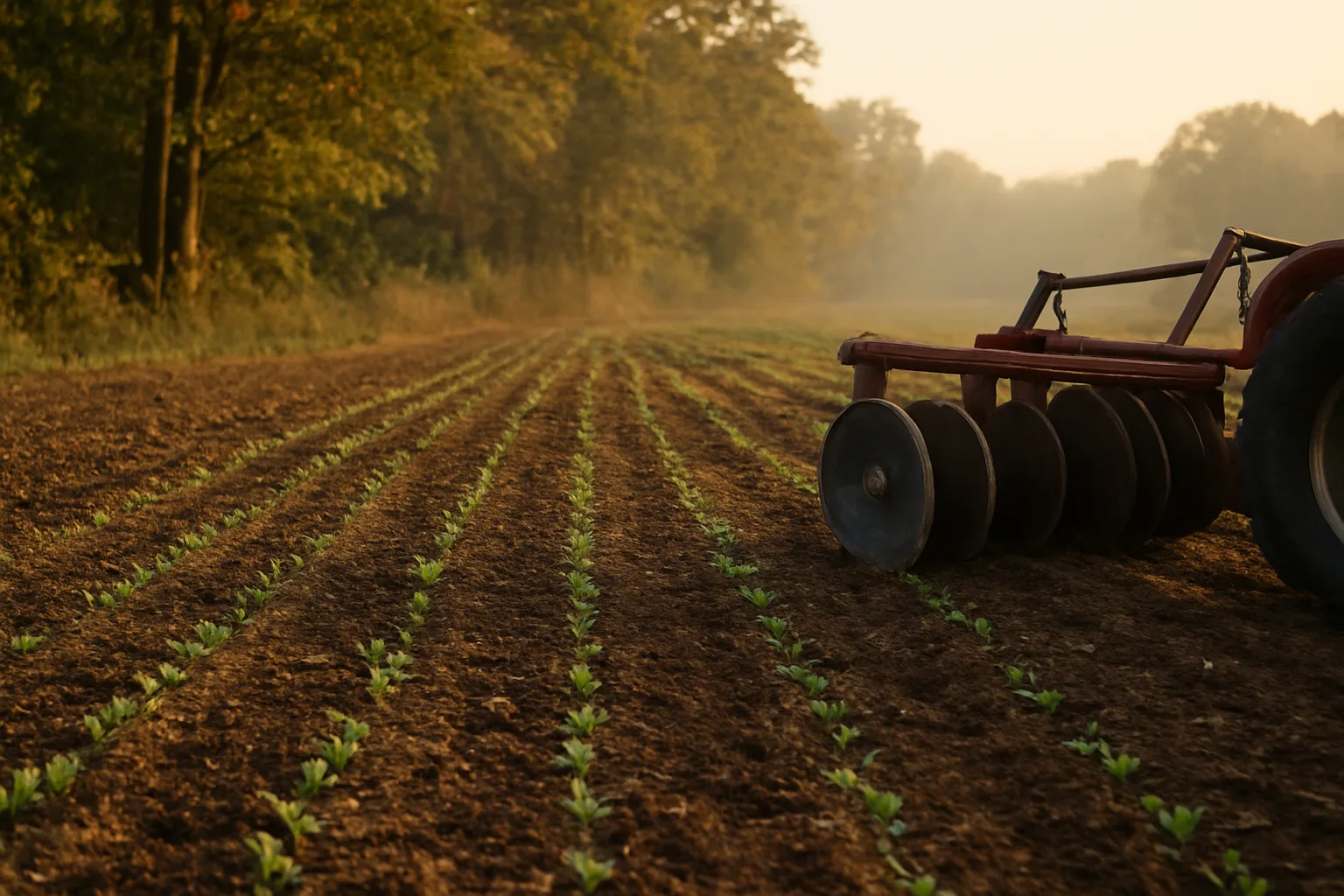
At minimum you need a way to kill or clear existing vegetation, a way to work or scratch the seedbed, a way to spread seed, and a way to firm the soil afterward. That's four steps, and most food plot failures trace back to skipping one of them, usually seed-to-soil contact. For small plots (under an acre), an ATV or UTV with a small disc or cultipacker, a broadcast spreader, and a sprayer for burndown herbicide covers it. For larger plots, a tractor with a disc harrow, a drag or cultipacker, and a drill or broadcast spreader with a cultipacker attachment speeds things up and improves germination rates considerably, since a drill or packer gets seed-to-soil contact that broadcasting alone often misses, especially for small-seeded clover. Brassica and clover seed is small and needs to be planted shallow, roughly 1/4 to 1/2 inch deep. Burying it too deep with an aggressive disc pass is a common mistake. Oats and cereal grains can go deeper, around 1 to 1.5 inches. Whatever you're running, a soil test and a clear species plan before you touch the equipment saves you from fertilizing or liming a plot for the wrong crop.
Frequently asked questions
Do deer eat sorghum?
Yes, deer eat both the leaves of growing sorghum plants and the mature grain heads. Sorghum is usually planted in late spring to early summer as a warm-season crop, then left standing through fall and winter as a secondary food and cover source, rather than planted fresh in the fall like clover or brassicas.
Do deer eat clover, and do deer like clover?
Yes, clover is one of the most consistently preferred food plot forages for whitetail deer, grazed heavily spring through fall. It's a perennial, so one planting can produce forage for 3 to 5 years with proper mowing and fertilization, per common land-grant extension perennial forage management guidance.
When to plant deer food plots?
Fall plots generally go in 60 to 90 days before your area's average first frost date; spring/summer plots go in after your last spring frost once soil warms to about 50-55°F. Exact dates shift 4 to 6 weeks by latitude, so check your state or county extension's frost-date tables before committing.
When to plant oats for deer?
Plant oats 60 to 75 days before your first expected killing frost, typically mid-August to mid-September across most of the whitetail range. Oats germinate fast (7-10 days) but aren't very winter-hardy; in colder climates winter rye or wheat holds up better through hard freezes.
When to plant turnips for deer?
Plant turnips 80 to 100 days before your first hard frost, generally late July through late August depending on latitude. Turnips need that longer window to build bulb and leaf mass before frost sweetens the plant and triggers heavier deer browsing.
What is a food plot?
A food plot is a planted area of forage crops meant to feed and hold deer over weeks or months, distinct from bait piles which are illegal in many states or restricted by season. Plots range from quarter-acre hidden kill plots to multi-acre field plantings, using species like clover, brassicas, and cereal grains.
What are deer's favorite foods?
Preference shifts by season and region, but acorns and other hard mast rank consistently high in fall wherever oak trees are present in numbers. Among planted crops, soybeans and clover tend to top preference during the growing season, with frost-treated brassicas becoming a strong draw in late fall and winter.
Do deer like honey?
No meaningful research or established practice supports honey as a deer attractant. The real phenomenon people are noticing is frost-sweetened brassicas: cold temperatures convert starches to sugars in turnip and radish leaves, making them far more palatable after the first freeze, which is a documented plant chemistry effect, not a general sweet tooth.
Is it better to plant clover or brassicas for a fall food plot?
It depends on your goal. Clover is a perennial that produces forage for years with lower maintenance; brassicas are annuals that need replanting but deliver a strong late-season, post-frost draw. Many hunters plant both in separate plots or blend brassicas into a clover field's edge for season-long coverage.
How late is too late to plant a fall food plot?
If you're inside 6 to 8 weeks of your area's average first hard frost, brassicas won't have time to bulb properly and clover establishment gets risky. Fast cereal grains like oats or winter rye are the better bet that late, since they can still produce usable green growth in 3 to 5 weeks.
Do I need a soil test before planting a fall food plot?
Yes. Lime can take weeks to months to meaningfully adjust soil pH, so a soil test needs to happen well before planting, not the same week. If your test shows low pH, get lime down as early as possible even if it delays your planting date slightly; acidic soil limits yield more than a week or two of late planting does.
Are food plots legal, or does baiting deer count as illegal feeding?
Rules vary sharply by state; some allow food plots but ban bait piles, some restrict feeding in chronic-wasting-disease zones, and some regulate plot size or hunting distance from planted areas. Check your state wildlife agency's current regulations before planting or feeding, since enforcement and definitions differ by state.
Sources
- Michigan Department of Natural Resources, Wildlife Conservation Order, Chronic Wasting Disease baiting and feeding restrictions: Michigan restricts feeding and baiting deer in areas affected by chronic wasting disease
- USDA Natural Resources Conservation Service, Plant Guide: Forage Turnip (Brassica rapa): Brassica forage species require several weeks to months of growth to develop bulb and leaf mass before first frost
- USDA Natural Resources Conservation Service, Plant Guide: White Clover (Trifolium repens): White clover is a nitrogen-fixing perennial legume that tolerates repeated grazing and reduces nitrogen fertilizer needs once established
- USDA Forest Service, Fire Effects Information System: White-tailed deer (Odocoileus virginianus): Acorns and other hard mast are a preferred, high-energy fall food source for white-tailed deer where available
- Oklahoma State University Extension, Soil Acidity and Liming, PSS-2229: Agricultural lime reactions in soil occur gradually over weeks to months depending on particle size, moisture, and incorporation