Last updated 2026-07-26
TL;DR
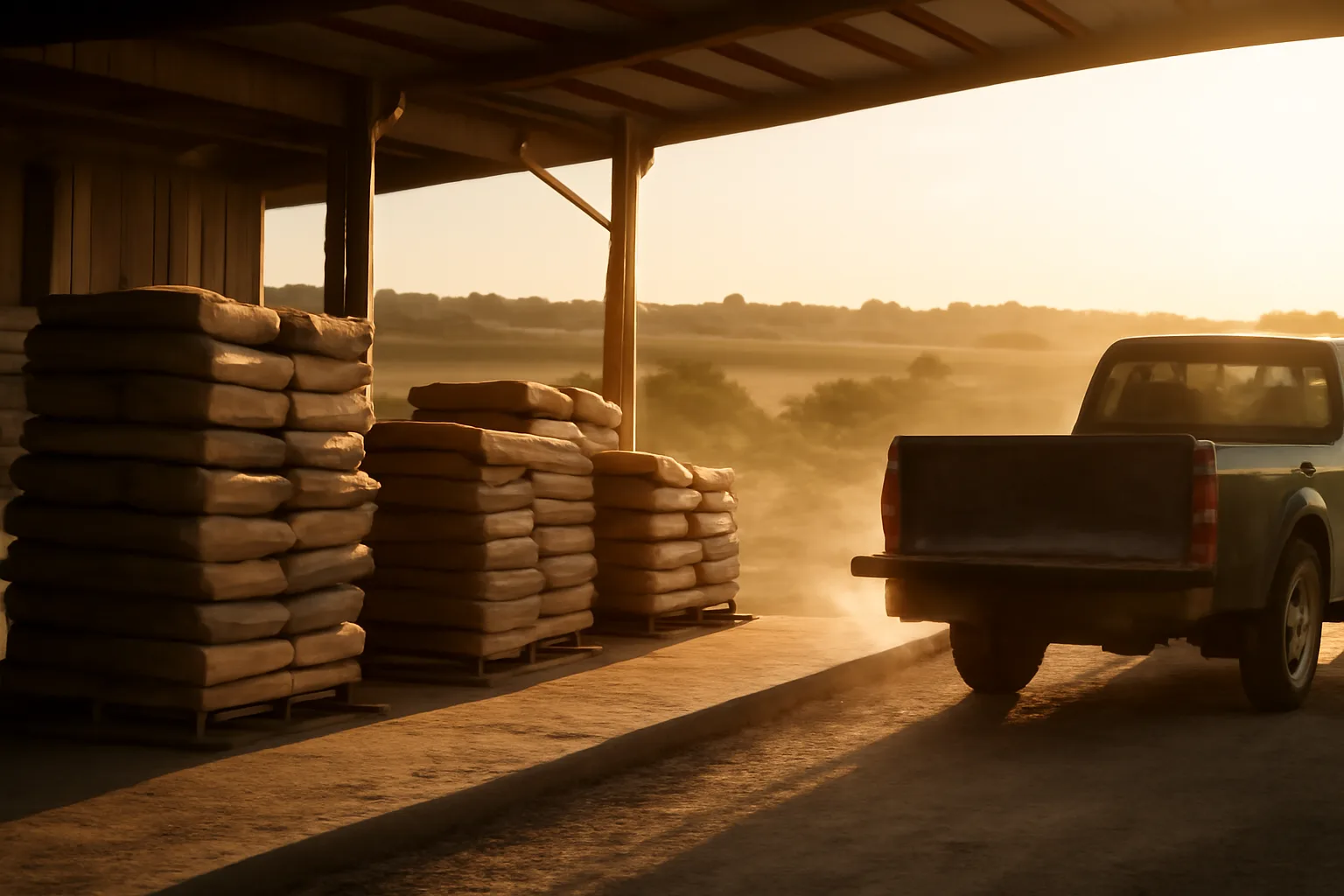
Buy food plot seed from farm co-ops (Southern States, Tractor Supply, GreenPoint Ag), local seed and feed stores, or online mills like Welter Seed. Check the tag for a germination date and purity percent, more than the brand name. Farm co-ops usually beat big box stores on price per acre for straight species like oats, clover, and brassicas.
where should i actually buy food plot seed
Three real options exist, and each fits a different situation. Local farm co-ops (Southern States, GreenPoint Ag, MFA, Tractor Supply in rural stores) carry straight agricultural seed by the pound, in bulk bins or 50-lb bags. This is almost always the cheapest way to buy oats, winter wheat, cereal rye, clover, and brassica seed, because you're paying for seed, not marketing. A co-op employee who deals with farmers all day can also tell you what's actually growing well in your county that season. Big box hunting brands (Whitetail Institute, BioLogic, Antler King) sell blended bags with proprietary mixes, sometimes coated seed, and glossy bags with deer on them. You pay a premium, often 2 to 4 times the per-acre cost of straight co-op seed, for convenience and a pre-built blend. That's not a scam, it's just packaging and R&D cost. For a small plot where you want zero guesswork, it can be worth it. Online seed mills (Welter Seed and Honey Co., La Crosse Seed, Green Cover Seed, Adaptive Seeds, and university-affiliated seed sales) let you buy exact varieties and custom mixes in bulk, often cheaper per acre than either co-op or box brands once you're planting more than 2 or 3 acres. Shipping cost on 50-lb bags is the tradeoff, so this makes the most sense for guys planting several plots. Before you buy anywhere, know your acreage and your soil test results. A food plot seed buy without a soil test is a guess dressed up as a plan.
what is a food plot, exactly
A food plot is a planted area of forage, usually somewhere between a quarter acre and several acres, established specifically to feed and attract deer or other wildlife on a piece of hunting ground. It's not a garden and it's not a crop field meant for harvest and sale, though it uses the same equipment and agronomy. Most food plots fall into two categories: annual plots reseeded every year (oats, brassicas, soybeans, corn) and perennial plots that persist for 3 to 5 years with maintenance (clover, chicory, alfalfa). Cooperative extension programs, including Penn State Extension, describe food plots as a wildlife management tool that supplements native browse, especially valuable in late winter and early spring when natural forage quality drops. A food plot is not a bait pile. Most states regulate baiting and feeding of deer separately from food plots, and the legal line matters. Standing crops planted and left in the ground are generally treated as normal agricultural activity, not baiting, but rules vary by state and by whether you're hunting over a harvested or disturbed pile of grain. Check your state wildlife agency's regulations before you assume a practice is legal; Michigan, for instance, defines baiting explicitly and treats food plots differently under its regulations [1]. If you hunt in more than one state, don't assume the rules travel with you.
when to plant food plots for deer
| Oats | Late Aug to mid-Sept (fall) | 30-45 days to grazeable | |
|---|---|---|---|
| Brassicas (turnips, radish) | Late July to early Sept | 60-90 days to bulb/leaf | |
| Clover (establish) | Spring (Mar-May) or late summer | 60-90 days to first graze | |
| Winter wheat/rye | Sept through Oct | Grazeable in 3-4 weeks, persists through winter | |
| Soybeans | Late May through June | Grazed green all summer | For a plan built around your actual zip code and frost dates rather than a national average, a food plot whitetail planting calendar or a custom plan is the shortcut. |
Timing splits into two windows almost everywhere in whitetail range: a spring/summer planting for warm-season annuals and summer perennials, and a late summer planting for fall annuals. Spring plots (soybeans, corn, warm-season clover establishment) generally go in after your last frost date, which ranges from early April in the Deep South to late May or early June in the northern tier and Canada border states. Check your local NOAA/NWS climate normals or your extension office's frost date table for your specific county. Fall plots (brassicas, oats, winter wheat, cereal rye) get planted 60 to 90 days before your first hard frost, timed so the plants mature into that sweet, high-sugar stage right as hunting season opens. In much of the Midwest and mid-South that's late July through early September. In the Deep South it can push into October. The University of Tennessee Extension and similar land-grant programs publish region-specific planting calendars that are worth pulling up for your exact county. Here's a rough national planting window by species. Treat this as a starting frame, not gospel, since local frost dates shift it by 2 to 4 weeks in either direction. | Species | Typical planting window | Days to maturity/attraction |
when to plant oats for deer
Plant oats for a fall food plot 60 to 90 days before your area's average first hard frost, which for most of the Midwest and mid-South lands in that late August to mid-September window. Oats germinate fast, usually within a week in warm soil, and become grazeable in 30 to 45 days. Oats aren't cold-hardy the way winter wheat or rye is. A hard freeze in the teens will kill oat plants back, though they often stay attractive to deer even as they yellow and die, since deer will eat frosted, sweetened oat forage readily. If you want a plot that holds green forage into December and January, mix oats with winter wheat or cereal rye so you get fast fall growth from the oats and winter persistence from the small grains. Some hunters in the Deep South plant a second, smaller oat planting in early spring, but that's a minority strategy since spring oats compete with warm-season natives that are already greening up.
when to plant turnips for deer
Plant turnips 60 to 90 days before your first expected frost, timed so bulb formation and leaf growth peak right around opening day of gun season in most Midwest and Northern states. That typically means late July through late August in the northern half of whitetail range, and into early September further south. Turnips need that stretch of cooler fall weather and at least one hard frost to convert starches to sugars, which is why deer often ignore turnip plots in October and hammer them in December. If you plant too late, the bulbs won't size up before ground freeze; too early, and the plants can bolt or get overwhelmed by weed pressure in the heat. Soil test first. Turnips and other brassicas want a pH close to 6.0 to 6.5 and respond hard to nitrogen, more than clover does. Your soil test lab's recommendation is the actual authority here, not a bag tag's generic rate, since your baseline nutrient levels and CEC change how much N, P, and K you actually need per acre.
do deer eat sorghum
Yes, deer eat sorghum, both the grain heads and the leaves, though it's used more as a screening and standing-crop food source than a primary attractant plot. Sorghum (grain sorghum or forage sorghum types) grows tall, tolerates heat and drought better than corn, and stands through winter, which makes it useful in the Southern Plains and mid-South where corn struggles without irrigation. Deer will browse sorghum leaves during the growing season and hit the grain heads hard in fall and winter once the plant dries down. It's not usually a first-choice deer food compared to soybeans, clover, or standing corn, but as a low-input, drought-tolerant option or as a screen/cover crop that also feeds, it earns a spot on a lot of Southern property plans.
do deer eat clover, and do deer like clover
Yes, deer eat clover readily, and most food plot research and extension guidance ranks clover among the top perennial food plot forages for whitetail deer, both for total tonnage produced per acre and for protein content. Clover forage commonly tests in the 20 to 30 percent crude protein range during active growth, which is why it's a staple for antler and lactation nutrition in spring and summer, more than a fall draw. Deer prefer clover most in spring and early summer when it's tender and high in protein, and again in fall once other browse senesces. It gets less attractive during the hottest, driest weeks of summer when growth stalls, and in heavy drought clover can go dormant and stop producing much forage at all. White clover blends (ladino, Durana, etc.) tolerate grazing pressure and mowing better than red clover, which is why most perennial deer plot mixes lean white clover as the base, often blended with chicory. A well-maintained clover stand can run 3 to 5 years before you need to reseed, provided you keep pH near 6.0 to 6.5 and don't let grass and weeds choke it out. That's a big reason clover shows up in almost every deer food plot seed mix sold at co-ops and online.
what are deer's favorite foods
There's no single universal answer, since deer preference shifts by season, region, and what's locally available, but research and extension forage studies consistently rank a handful of species at the top: soybeans, clover, and standing corn during the growing season and early fall; acorns and other hard mast once they drop; and brassicas, winter wheat, and cereal rye late in the season after a frost sweetens them. Native browse and mast matter more than most food plot marketing admits. In good acorn years, deer will walk past a food plot to hit a white oak flat, and multiple state wildlife agency deer studies note that acorn availability directly affects deer movement and food plot use in fall. The Georgia Department of Natural Resources and similar state agencies publish deer forage guidance noting that mast crops are often preferred over planted forages when both are available. So the honest answer is: acorns when they're falling, soybeans and clover during the growing season, and brassicas/small grains once frost hits. A food plot's real job is filling the gaps between those natural pulses, especially late winter into early spring when native browse quality is lowest.
do deer like honey, and does it belong in a food plot plan
No, honey isn't a food plot input and it's not something deer seek out in the wild in any meaningful way that relates to plot planning. Deer are herbivores built around browsing forbs, browse, mast, and agricultural forage; there's no wildlife research or extension guidance suggesting honey or other sweet liquid attractants function as a food source in the way a planted forage does. Where this question usually comes from is confusion with commercial mineral and attractant products, some of which use molasses or sugar-based liquids as a carrier or additive to mineral licks, not as a standalone food. Those products fall under mineral/supplemental feeding rules in most states, and several states restrict or ban mineral and supplemental feeding of deer entirely, separate from food plot rules. Check your state wildlife agency's regulations on supplemental feeding and baiting before using any liquid attractant, since the legal line between a mineral station and illegal baiting varies by state and can carry real penalties.
how do i pick between co-op, big box, and online seed once i know what to plant
Once you know your species (from your soil test and your region's calendar), the buying decision comes down to acreage and how much hand-holding you want. Under half an acre, or if this is your first plot ever: a bagged blend from a hunting brand at Tractor Supply or a local outdoor store removes a lot of guesswork. You'll pay more per pound, often $8 to $15 per pound for coated brassica or clover blends versus $2 to $4 per pound for straight co-op seed, but the bag tells you a rate per acre and you just follow it. Half acre to 3 acres, established plotter: a local farm co-op almost always wins on price for straight species like oats, wheat, rye, and raw clover seed, and the staff know what varieties are performing locally this year. Bring your soil test results in; a good counter clerk will help you cross-reference lime and fertilizer needs against what they stock. 3+ acres, multiple plots: online seed mills and regional seed dealers get competitive once you're buying by the 50-lb bag or in bulk, and you can source specific varieties (a particular soybean maturity group, a specific brassica blend ratio) that a local store might not carry. Factor shipping into your per-acre math before you commit. Whichever route you go, read the tag. Every state requires seed sold commercially to carry a label disclosing germination percentage, purity percentage, weed seed content, and a test date, under state seed laws that mirror the federal Federal Seed Act framework enforced by USDA [2]. A germination rate below 85 percent on a grass or grain, or a test date more than a year old, is a red flag regardless of which store it came from. This is also where a plan pays for itself before you buy anything. PlotSeason's $99 one-time Custom Food Plot Plan takes your soil test, acreage, and region and hands back species picks and seeding rates, so you're buying exactly what your dirt and your calendar call for instead of whatever bag has the biggest buck on it.
what should i check on the seed tag before i buy
Look at four numbers on every bag: germination percent, purity percent, other crop content, and weed seed content, plus the test date. Federal seed law and most state seed statutes require this label on any seed sold in commerce [2] [3]. Germination percent tells you what fraction of seeds are expected to sprout under lab conditions. Most quality oat, wheat, and brassica seed tests at 85 percent or higher; anything meaningfully lower means you should bump your seeding rate or find fresher stock. Purity percent tells you how much of the bag weight is the labeled species versus other crop seed, inert matter, or weed seed. A bag showing 98 percent purity and 0.1 percent weed seed is clean; a bag with several percent weed seed content is importing a weed problem into your plot along with your forage. Test date matters because germination drops over time in storage, especially with clover and brassica seed held in warm, humid conditions. A tag tested last year in a different growing season is not automatically bad, but if it's been sitting on a shelf two summers, ask the store about newer stock or discount accordingly on your seeding rate.
Frequently asked questions
Where is the cheapest place to buy food plot seed?
Local farm co-ops (Southern States, GreenPoint Ag, regional feed stores) are almost always cheapest per acre for straight species like oats, clover, and brassicas, since you're not paying for blend branding. Online bulk seed mills can beat co-op pricing once you're buying multiple 50-lb bags, but shipping eats into the savings on small orders.
Is bagged deer plot seed from Tractor Supply worth the extra cost?
Sometimes. Branded blends cost 2 to 4 times more per pound than straight co-op seed, but they include a pre-mixed ratio and a seeding rate on the bag, which removes guesswork for a first-time or small plotter. For 3+ acres or repeat plots, straight species from a co-op usually saves real money.
Do deer eat sorghum?
Yes. Deer browse sorghum leaves during the growing season and eat the grain heads in fall and winter as the plant dries. It's more common as a drought-tolerant standing crop or screen in the mid-South and Southern Plains than as a primary attractant forage.
Do deer like clover, and is it a good food plot choice?
Yes, clover is one of the most consistently preferred food plot forages, testing 20 to 30 percent crude protein during active growth. Deer favor it most in spring and early summer, and again in fall. A well-maintained white clover stand can last 3 to 5 years before needing reseeding.
When should I plant food plots for deer in general?
Spring/summer annuals (soybeans, corn) go in after your last frost date. Fall annuals (oats, brassicas, wheat, rye) go in 60 to 90 days before your first hard frost, so they mature right as hunting season opens. Exact dates shift by region, so check your local extension office's frost date data.
When should I plant oats for a deer food plot?
Plant oats 60 to 90 days before your area's first hard frost, generally late August to mid-September across most of the Midwest and mid-South. Oats germinate within about a week and reach grazeable size in 30 to 45 days, though a hard freeze will eventually kill the plants back.
When is the right time to plant turnips for deer?
Plant turnips 60 to 90 days before your first frost, typically late July through late August in northern whitetail range and into early September further south. Turnips need a frost to sweeten up through starch-to-sugar conversion, so deer often ignore them until December.
What exactly is a food plot?
A food plot is a planted patch of forage, from a quarter acre up to several acres, established on hunting ground specifically to feed deer or other wildlife. It's an agricultural planting used as a wildlife management tool, not a bait pile, though state rules on standing crops versus bait vary.
What are deer's favorite foods overall?
It shifts by season: acorns and hard mast when they're falling, soybeans and clover during the growing season, and brassicas or winter grains after a hard frost sweetens them. Native mast often gets preferred over planted forage when both are available in a given fall.
Do deer like honey or sweet liquid attractants?
No, honey isn't a natural or meaningful deer food, and it has no real place in food plot planning. Confusion usually stems from molasses-based mineral products, which fall under supplemental feeding rules that many states restrict separately from food plot regulations.
Can I just plant a food plot and hunt over it without checking state law?
No. States regulate baiting and supplemental feeding separately from standing food plots, and the legal distinctions (harvested versus standing crop, mineral stations, feeder piles) vary by state. Check your state wildlife agency's current regulations before assuming a practice you saw online is legal where you hunt.
How much food plot seed do I need per acre?
It depends entirely on species: clover typically seeds at 6 to 10 lbs per acre, oats at 60 to 100 lbs per acre, brassicas at 4 to 6 lbs per acre. Always follow the rate on your specific seed tag or your soil-test-based plan rather than a generic online number, since blends and purity vary.
Sources
- Michigan DNR, Baiting and Feeding Regulations: States define and regulate baiting/feeding of deer separately from standing food plots
- USDA Agricultural Marketing Service, Federal Seed Act: Seed sold in commerce must carry a label disclosing germination percentage, purity, and test date under federal seed law
- USDA AMS, Federal Seed Act Regulations: Labeling requirements for germination and purity testing on agricultural seed sold across state lines
- University of Tennessee Extension, Establishing Wildlife Food Plots: Regional planting windows for fall food plot species like brassicas, oats, and small grains
- NOAA National Weather Service, Climate Normals: First and last frost dates vary widely by region and should be checked locally before setting planting dates