Last updated 2026-07-26
TL;DR
In Georgia, plant fall food plots (clover, oats, brassicas) from mid-August to mid-October depending on region, with mountain areas planting earliest and coastal plain areas latest. Spring/summer plots (soybeans, sorghum, cowpeas) go in after last frost, roughly late April through June. Always time seed to your local first/last frost dates, not a calendar page.
When should you plant deer food plots in Georgia?
Georgia has three rough planting windows because the state stretches from the mountains to the coast, and that's about 300 miles of climate difference. Fall plot season runs mid-August through mid-October, with north Georgia mountain counties planting first (mid-August to mid-September) and south Georgia coastal plain counties planting last (late September into October) [1]. Spring and summer plots for warm-season annuals like soybeans, cowpeas, and sorghum go in after your last frost date, which is roughly mid-April in south Georgia and early May in the mountains [2]. NOAA's climate data centers publish county-level and station-level frost date records for Georgia, and that's the real anchor point, not a fixed date on a calendar. Here's the practical rule I use: fall perennials and cool-season annuals need 60 to 90 days of decent growing weather before your first hard frost so they can establish a root system and canopy before deer pressure and cold weather hit. Work backward from your area's average first frost date. Then plant 6 to 10 weeks ahead of it. If you're not sure which zone you're in, your local UGA Extension county office can tell you your average frost dates in about one phone call.
What is a food plot, exactly?
A food plot is a planted patch of forage, usually somewhere between a quarter-acre and several acres, put in specifically to attract and feed deer (and often turkey) on a piece of hunting ground. It's not the same as a farm field, though it uses the same tools: a disk, a drill or spreader, lime, fertilizer, and seed suited to the site. Most hunters run two kinds. Annual plots get replanted every year, things like brassicas, oats, wheat, or soybeans. Perennial plots, mainly clover and chicory blends, can last 3 to 5 years with proper mowing and fertility maintenance before you need to till and restart them. The goal is twofold: give deer a reliable, higher-quality food source than what's naturally available, and create a spot where you can predictably see and hunt deer. A poorly placed or poorly timed plot does neither. Soil test, correct pH and fertility, and match seed to season. That's the whole game in one sentence. For a broader rundown on species options, see food plot whitetail and deer food plot seed.
When to plant oats for deer in Georgia
Plant oats in Georgia from mid-September through mid-October in most of the state, and as early as late August in the mountains [1]. Oats are a cool-season annual grain, cheap, fast to establish, and deer hit them hard in the first 30 to 45 days after germination, which is exactly why so many hunters use them as an early-season fall draw. Oats don't love deep cold. In north Georgia, a hard winter can burn oats back to nothing by January, so a lot of hunters there mix oats with wheat (more cold-hardy) to stretch the plot's usable life into late winter. In south Georgia, oats can stay green most of the winter since hard freezes are less frequent. Seeding rate for oats alone runs 100 to 130 lbs per acre broadcast, or lower if drilled, per standard cereal grain forage guidance from land-grant extension programs [3]. Plant at a depth of about 1 to 1.5 inches. Broadcast into a prepared seedbed and cultipack or drag to get seed-to-soil contact; oats broadcast onto bare untilled ground and left uncovered will germinate poorly and feed the birds instead of the deer.
When to plant turnips for deer in Georgia
Plant turnips in Georgia between late July and early September, aiming for 60 to 90 days before your first expected frost since turnips need that runway to bulb out and get sweet [1]. In north Georgia that means planting by mid-August. In south Georgia you have more room, into early September. Turnips are a brassica, and brassicas go through a starch-to-sugar conversion after the first frost that makes the greens and bulbs taste sweeter to deer. That's why turnip plots often get ignored in October and then hammered in December. If you plant too late, the plants never bulb before growth stops, and you're left with thin, unappealing tops. Seeding rate is light, just 4 to 6 lbs per acre for pure turnips, because the seed is tiny and easy to overseed. Broadcast onto a firm, weed-free seedbed and cultipack; don't bury turnip seed deep, a quarter inch is plenty. Many Georgia food plotters blend turnips with oats or cereal rye to hedge, giving deer both an early grazing option and a late-season sugar hit. See deer food plots for more on brassica blends and mixing ratios.
Do deer eat sorghum?
Yes, deer eat sorghum, mainly the grain heads once they mature, and they'll also browse young sorghum leaves earlier in the season. Grain sorghum is more commonly planted as a summer food plot or as a standing grain crop that carries into fall and winter, similar to how hunters use corn. In Georgia, sorghum goes in after soil temperatures warm, generally late April through June, and it needs roughly 90 to 120 frost-free days to mature grain depending on variety [4]. It's a decent drought-tolerant option for south Georgia's sandier soils where corn struggles without irrigation. Deer won't hit sorghum the way they hit soybeans or clover early on; the real draw comes once seed heads form and dry down in late summer and fall, and it becomes a strong late-season food source alongside standing corn. It's not a top-tier attractant on its own, but as part of a mixed summer plot with cowpeas or soybeans, it adds diversity and late-season tonnage.
Do deer eat clover, and do deer like it?
Yes, deer eat clover, and it's consistently one of the most preferred food plot forages available, ranking among the highest in crude protein of common plot species, often 25 to 30% crude protein in vegetative growth stages [5]. Clover is a perennial, so once established it can produce for 3 to 5 years with mowing, fertilizing, and occasional herbicide for grass control. Plant clover in Georgia in one of two windows: early fall (September 1 to October 15) or early spring (March to April) depending on region [1]. Fall planting is generally preferred in Georgia because it avoids competing with summer weed pressure and lets the clover establish through the cooler, wetter months. White clovers (ladino and intermediate types) are the standard choice and tolerate Georgia's clay soils reasonably well if drainage isn't a problem. Clover needs a soil pH of 6.0 to 6.5 for good nodulation and nitrogen fixation. A current soil test really matters here, more than with almost any other plot species, because clover performance drops fast in acidic soil. For species comparisons, check deer food plot seed and food plot seed.
What are deer's favorite foods overall?
There's no single universal answer because deer preference shifts by season, region, and what's locally available, but research and field observation point to a consistent short list: acorns (especially white oak family acorns), soybeans, clover, and other legumes rank at the top almost everywhere in the whitetail's range [6]. Acorns are often the single most preferred natural food when they're falling, and deer will bypass planted plots entirely during a heavy acorn drop. That's a real frustration for food plotters in oak-heavy Georgia woods; your clover plot can look ignored for three weeks in October simply because the white oaks dropped hard that year. Among planted forages, soybeans and cowpeas top most preference studies during summer, and clover, wheat, and brassicas top the list in fall and winter [6]. Corn is a strong late-season energy source once other options are gone or under snow (less relevant in most of Georgia, but still true in the mountains during hard winters). The honest takeaway: plant a mix, not one species, because you can't predict what the acorn crop or the weather is going to do to deer behavior in a given year.
Do deer like honey?
This isn't a standard food plot question and there's no real data on deer specifically seeking out honey in the wild; it's not part of their natural diet or foraging behavior. Deer are herbivores built around browsing plants, grasses, forbs, and mast, and honey isn't something they encounter or key on naturally. Where this idea usually comes from is homemade mineral or attractant recipes that include honey or molasses as a binder or scent additive, similar to how some DIY mineral licks use molasses to make the mix palatable and to help it stick together. There's no extension research or wildlife agency guidance recommending honey as a deer attractant, and it's not a meaningful part of any real food plot strategy. Worth noting: Georgia's baiting and feeding rules for hunting restrict what you can put out during hunting season in many circumstances, so before adding any supplemental attractant, check current Georgia hunting regulations directly rather than assuming any additive is legal to use over a stand.
When to plant food plots for deer, region by region in Georgia
| North GA / mountains | Aug 15 - Sept 15 | May 1 - June 15 | |
|---|---|---|---|
| Piedmont / middle GA | Sept 1 - Oct 1 | Apr 20 - June 1 | |
| Coastal plain / south GA | Sept 15 - Oct 15 | Apr 10 - May 20 | These ranges come from UGA Extension's regional forage planting guidance and typical frost date data for the state [1] [2]. If you're right on a zone border, err toward planting a little earlier for perennials like clover so they have maximum root development time before cold weather, and a little later for brassicas so they don't bulb out too soon and get eaten down before the season peaks. One more practical note: soil temperature matters as much as calendar date for summer annuals. Soybeans and cowpeas want soil temps consistently above 60°F before germination is reliable, which is part of why the coastal plain window opens earlier than the mountains [2]. |
Georgia breaks into three practical planting zones for food plot purposes: mountains/north Georgia, the Piedmont (middle Georgia), and the coastal plain (south Georgia). Each has a different frost calendar, and that's what actually drives your planting window, not the county name. | Region | Fall plot window | Spring/summer plot window |
How do you decide what to plant and when, on your own ground?
Start with a soil test, always. Your local UGA Extension county office can arrange soil testing for a modest per-sample fee (typically well under $20, though exact pricing is set locally and can change), and it tells you your actual pH and nutrient levels rather than a guess. Lime takes months to fully adjust pH, so testing in early summer for a fall plot, or even the prior fall for a spring plot, gives lime time to work. Your soil test lab and county extension recommendation is the real authority here on how much lime and fertilizer your specific field needs; a generic guide (including this one) can only give you the regional ballpark. Two fields ten miles apart can need completely different amendment rates. After soil chemistry, match species to your goal: early-season browse plots (soybeans, cowpeas) for summer and bow season, cool-season perennials (clover) for a long-term stand location, and brassicas or cereal grains for a late-season draw when other food is scarce. Most successful plotters run 2 to 3 plot types on their property rather than betting everything on one species. If you want a starting point without building the plan from scratch, PlotSeason's $99 one-time Custom Food Plot Plan takes your location, soil test results, and goals and builds a planting calendar and species mix for your specific ground. It's general guidance built from your inputs, not a replacement for your soil lab's specific lime and fertilizer recommendation.
What equipment do you actually need for these planting windows?
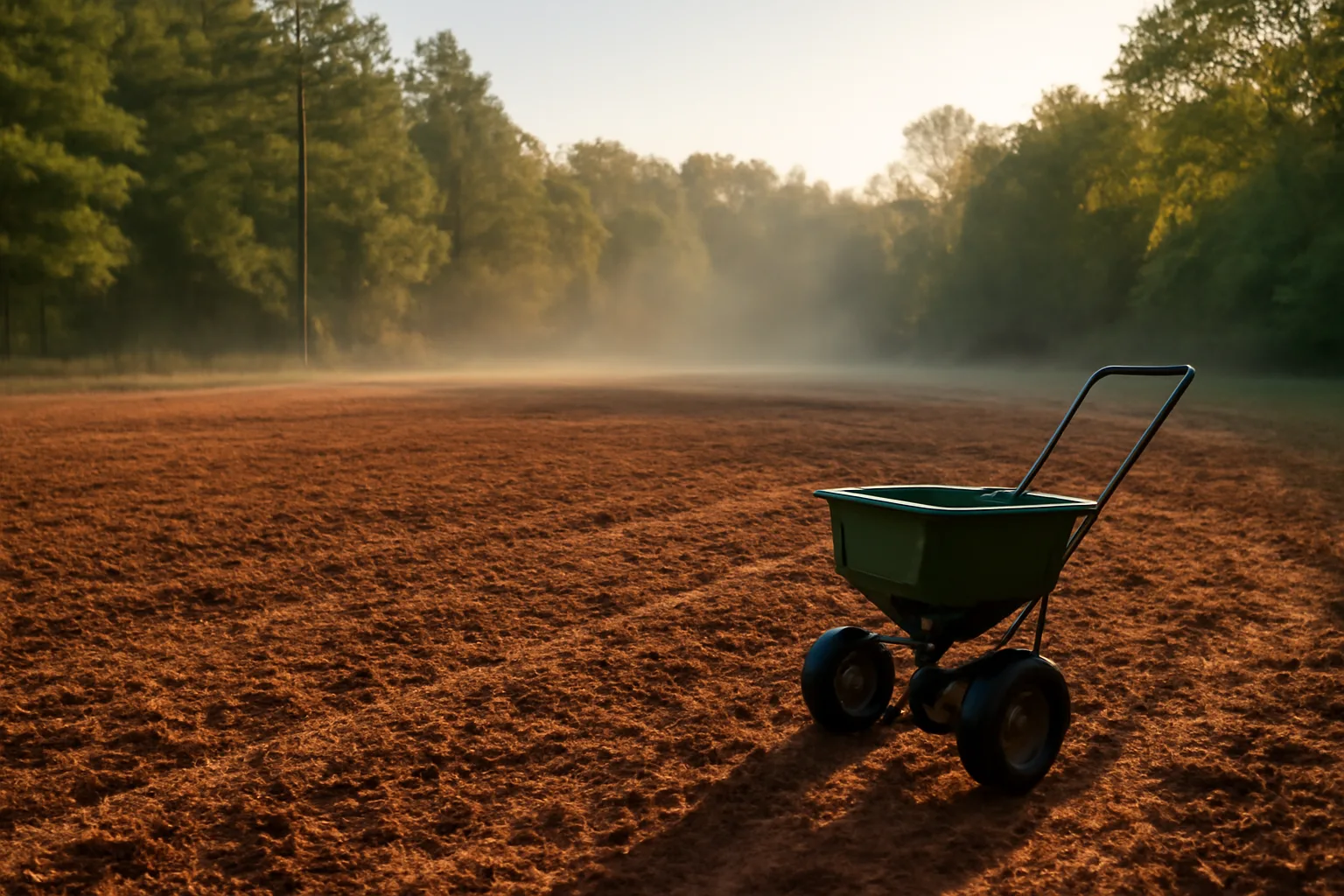
For most Georgia food plots under 5 acres, you need a way to kill existing vegetation (herbicide or disking), a way to work the seedbed (disk harrow or tiller), a way to spread seed and fertilizer (broadcast spreader, handheld for small plots or ATV/tractor-mounted for larger ones), and a way to firm the seedbed (cultipacker or drag). Small brassica and clover seed needs shallow planting, a quarter inch or less, and good seed-to-soil contact, so a cultipacker after broadcasting matters more than people think. Oats, wheat, and soybeans can be broadcast and lightly disked in, or drilled with a no-till drill if you have access to one, which saves a pass and improves germination consistency. Timing your equipment pass matters as much as timing your seed. Trying to disk wet Georgia clay in early September after a tropical system rolls through is a good way to create clods that never break down right. Watch the forecast. Plant into a seedbed with workable moisture, not mud and not bone dry.
Frequently asked questions
When is the best time to plant food plots in Georgia?
Fall plots go in mid-August through mid-October depending on region, mountains first, coastal plain last. Spring/summer plots go in after last frost, roughly mid-April through June. Match your window to your county's frost dates via UGA Extension rather than a fixed calendar date.
Do deer eat sorghum?
Yes. Deer browse young sorghum leaves and eat mature grain heads, with the strongest draw coming once seed heads dry down in late summer and fall. It's a solid late-season energy source similar to standing corn, planted late April through June in Georgia.
Do deer like clover?
Yes, clover is one of deer's most preferred forages, often testing at 25 to 30% crude protein during active growth. It's a perennial that can produce for 3 to 5 years with maintenance, planted in early fall or early spring depending on Georgia region.
When should I plant oats for deer in Georgia?
Plant oats mid-September through mid-October across most of Georgia, or as early as late August in the mountains. Seed 100 to 130 lbs per acre broadcast, about 1 to 1.5 inches deep, into a prepared and cultipacked seedbed for reliable germination.
When should I plant turnips for deer in Georgia?
Plant turnips late July through early September, aiming for 60 to 90 days before your area's first frost so bulbs mature and sweeten. North Georgia plots should go in by mid-August; south Georgia has until early September.
What exactly is a food plot?
A food plot is a planted area, usually a quarter-acre to several acres, seeded with forage like clover, brassicas, or beans specifically to feed and attract deer on hunting property. It uses farming tools and techniques but is managed for wildlife draw rather than harvest yield.
What is a deer's favorite food?
Acorns, especially white oak family acorns, typically top the list when available, followed by soybeans, clover, and other legumes among planted forages. Preference shifts by season: beans and cowpeas lead in summer, clover and brassicas lead in fall and winter.
Do deer like honey?
There's no evidence or extension research showing deer seek out honey naturally; it isn't part of their normal browsing diet. Some homemade mineral mixes use honey or molasses as a binder, but it's not a recognized food plot attractant on its own.
When is the last frost date in Georgia for spring planting?
Last frost runs roughly mid-April in south Georgia's coastal plain, late April in the Piedmont, and early May in north Georgia's mountains. UGA Extension county offices can give you the specific average for your location.
Can I plant a food plot in south Georgia later than north Georgia?
Yes. South Georgia's coastal plain has a later average first frost, so fall plots can go in as late as October 15, roughly a month later than mountain counties, which need planting by mid-September for full establishment.
How much does a soil test cost in Georgia before planting a food plot?
A standard soil test through your local UGA Extension office typically runs a modest per-sample fee, usually well under $20, though exact pricing is set at the county or lab level. It's still some of the best money you'll spend before planting since it tells you your actual pH and nutrient levels rather than relying on a regional guess.
Should I plant clover in spring or fall in Georgia?
Fall planting, September 1 to October 15 depending on region, is generally preferred in Georgia because it avoids summer weed competition and lets clover establish through cooler, wetter months. Spring planting (March-April) works but faces tougher weed pressure.
Are there rules about baiting or feeding deer in Georgia I should know before planting?
Yes, Georgia has specific baiting and feeding rules for hunting that vary by context and can affect what's legal near a stand during season. Check the current Georgia hunting regulations directly before adding any supplemental feed or attractant.
Sources
- UGA Extension, Warnell School of Forestry and Natural Resources, wildlife food plot planting guidance: Fall food plot planting windows vary by Georgia region, mid-August to mid-October
- NOAA National Centers for Environmental Information, climate normals and freeze/frost date data: Spring/summer planting dates follow regional last frost dates, mid-April to early May
- Oklahoma State University Extension, small grains forage seeding guide (PSS-2160): Oat seeding rate of 100-130 lbs per acre broadcast
- UGA Extension, grain sorghum production guide (Circular B1256): Sorghum needs roughly 90-120 frost-free days and is planted late April through June
- USDA NRCS, Plant Guide: White Clover (Trifolium repens): White clover crude protein content in vegetative growth, 25-30%
- USDA Forest Service, Fire Effects Information System, white-tailed deer species review: Acorns and legumes rank among top preferred whitetail deer foods by season