Last updated 2026-07-25
TL;DR
Most food plots go in during two windows: spring (late March to May) for warm-season forages like clover and sorghum, and late summer to early fall (mid-August to mid-October) for brassicas, oats, and cereal grains. Exact timing depends on your USDA hardiness zone, first frost date, and soil moisture, not the calendar date alone.
What is a food plot, exactly?
A food plot is a planted patch of forage on land you own or lease, seeded specifically to feed deer and other wildlife and to concentrate animal activity in a spot you can hunt or observe. It's not a lawn and it's not a crop field meant for harvest. The goal is nutrition and attraction, sized anywhere from a quarter-acre kill plot tucked in timber to a five-acre destination field. Most plots fall into two functional categories. Annual plots get replanted every year (brassicas, cereal grains, sorghum, clover as an annual in some regions) and they respond fast, sometimes producing browse in 30 to 45 days. Perennial plots (clover, chicory, alfalfa) take longer to establish but can produce for 3 to 5 years with the right mowing and fertility maintenance. The USDA's National Agroforestry Center and land-grant extension programs treat food plots as a wildlife habitat management practice, not agriculture in the commercial sense, which matters because soil fertility targets and mowing schedules differ from a hay field or row crop. If you're new to the whole concept, our guide on food plot whitetail basics covers the plot-sizing and species tradeoffs in more depth. The short version: a food plot is a tool. Timing it right is the difference between a green field deer hit hard in October and a mat of weeds you mowed twice and gave up on.
When to plant food plots for deer (the short answer)
| Zone 3-4 (northern MN, ME, upper WI) | May 15 - June 10 | Aug 1 - Aug 20 | |
|---|---|---|---|
| Zone 5 (southern WI, IA, PA) | May 1 - June 1 | Aug 10 - Sept 5 | |
| Zone 6 (KY, VA, MO) | Apr 20 - May 20 | Aug 20 - Sept 20 | |
| Zone 7 (NC, TN, AR) | Apr 10 - May 10 | Sept 1 - Oct 5 | |
| Zone 8 (GA, LA, coastal SC) | Mar 20 - Apr 20 | Sept 15 - Oct 20 | These are starting points, not gospel. Local soil temperature and rainfall patterns shift things by two or three weeks most years, so cross-check with your state land-grant extension office before you buy seed. |
Plant warm-season plots (clover, soybeans, sorghum, cowpeas) from late March through May once soil temps hit the mid-50s and your last frost has passed. Plant cool-season plots (brassicas, oats, wheat, rye, winter peas) from mid-August through mid-October, timed so you get 60 to 90 days of growth before a hard frost locks things down. That's the rule of thumb nationally, but zone matters enormously. A hunter in Zone 8 (parts of the Gulf Coast) can plant brassicas as late as mid-October and still get a full grow-out before frost. A hunter in Zone 3 (northern Minnesota, parts of Maine) needs seed in the ground by early August or the plants won't size up before growth stops. The single most useful number to know for your property is your average first fall frost date, published by NOAA's National Centers for Environmental Information and referenced by most state extension frost-date tools [1]. Work backward from that date, not forward from a generic "plant in September" recommendation you saw online. Here's a zone-by-zone starting point, built around USDA Plant Hardiness Zones: | USDA Zone | Spring plot window | Fall plot window |
When to plant clover for deer
Plant perennial clover (white clover, red clover) in early spring (March to May depending on zone) or late summer (mid-August to mid-September) when soil moisture is reliable and frost risk is low. Spring plantings need soil temps around 50 to 55 degrees F for germination; late-summer plantings need 6 to 8 weeks of growth before a killing frost so roots establish before winter dormancy. Clover is a legume, meaning it fixes nitrogen through root nodules and needs less nitrogen fertilizer than grasses, but it's picky about soil pH. Most university extension guidance puts optimal clover pH between 6.0 and 7.0, and yields drop hard below 5.5. If your soil test comes back at 5.2, get lime down months before planting, since lime takes time to react with soil and shift pH, often 6 months to a year for full effect depending on how finely it's ground and how deep you incorporate it. A late-summer clover planting has one real advantage: less weed pressure than spring seeding, because most annual weed seeds germinate on the spring flush. A spring planting has the advantage of a longer growing season before your first hunting season use. Either window works. What doesn't work is planting clover into 60-degree soil in October and expecting a stand by November. It'll germinate, maybe, and then die over winter with no root reserves built up.
Do deer like clover, and is it actually their favorite food?
Yes, deer readily eat clover, and it ranks among the most consistently preferred food plot forages across whitetail range. Clover is high in crude protein, typically 25 to 30 percent in a well-fertilized, vegetative stand, which matters most in spring and summer when does are lactating and bucks are growing antlers [2]. There's no single scientifically ranked "favorite food" list for deer, because preference shifts by region, season, and what else is available. That said, wildlife research consistently places clover, soybeans, and native forbs near the top of preferred forages during the growing season, while acorns and other hard mast often override any planted forage once they start dropping in fall [3]. A deer will walk past a beautiful clover plot to eat white oak acorns most years. That's not a plot failure, it's just deer being deer. Don't plant clover and only clover if you can help it. A mix of clover for spring/summer and a brassica or cereal grain plot for fall gives you coverage across the calendar instead of one plot that's hot for four months and ignored the rest of the year. Our breakdown on deer food plots walks through building that kind of multi-plot rotation.
When to plant oats for deer
Plant oats in late summer to early fall, generally 60 to 90 days before your first killing frost, so roughly mid-August in Zone 4 through early October in Zone 7. Oats are a cool-season annual cereal grain and one of the fastest-growing food plot options, often showing green growth in 7 to 10 days and grazeable forage within 3 to 4 weeks. Oats aren't reliably frost-hardy the way winter wheat or cereal rye is. A hard freeze in the low 20s F will usually kill oats outright, which is fine if your goal is early-fall attraction during archery season, but a problem if you wanted late-season standing forage in January. If you want food standing after the ground freezes, mix oats with wheat, rye, or a brassica so something in the blend survives. Oats also work as a spring planting in northern zones, planted as soon as soil can be worked (often late March to April), mainly as a nurse crop for a clover or alfalfa seeding rather than as a standalone fall attractant. Cornell Cooperative Extension and other land-grant programs list oats among the cheapest, fastest cover crop and forage options for quick fall establishment, which is exactly why they're a staple in blended food plot mixes.
When to plant turnips for deer
Plant turnips 60 to 90 days before your average first frost date, which lands most of the Midwest and mid-South in the August 1 to September 1 window. Turnips need that lead time to bulb up; plant too late and you get leafy top growth with no bulb, which still feeds deer but skips the part deer often prefer most, the root. Here's the interesting part about turnips: deer often ignore the leaves early in fall and hammer them after the first hard frosts. Cold converts starches in the plant to sugars, and that sweetened, frost-hit turnip top (and eventually the bulb, once deer learn to dig or once frost heaves it up) becomes far more palatable in November and December than it was in September. That's why turnip plots often look untouched in early bow season and then get vacuumed down to dirt by late season. Brassicas including turnips need a pH close to neutral, ideally 6.0 to 7.5, and they're heavy nitrogen feeders, so a soil test matters more here than with clover. Extension programs generally recommend 40 to 60 pounds of nitrogen per acre at planting for a straight brassica plot, though your soil test and local extension recommendation should be the final word, not a generic number off the internet [4]. Don't plant turnips alone in a small plot deer can clean out in two weeks. Blend with oats, cereal rye, or radish so you've got standing volume through the whole late season.
Do deer eat sorghum, and when do you plant it?
Yes, deer eat sorghum, both the foliage while it's growing and the grain heads once they mature, and wild turkey and other birds hit the standing grain hard too. Grain sorghum is a warm-season annual, planted the same general window as corn and soybeans, once soil temps are consistently above 60 degrees F and frost danger has passed, typically May through early June across most of the whitetail range. Sorghum's real value in a food plot program isn't spring or summer browse, it's standing cover and a late-season food source. Left standing through fall and winter, sorghum heads provide a grain source after most annual forage plots have been grazed down or frozen out, and the stalks double as screening cover for a plot or a stand approach. Sorghum is drought-tolerant compared to corn, which makes it a reasonable substitute in drier regions or on sandy soil that won't hold moisture well enough for a corn plot. It's cheaper seed too, generally, though exact pricing swings with commodity markets and region. One caution: some states regulate standing grain crops differently than a mowed or tilled-in forage plot under baiting and feeding rules, especially where the crop is planted at unusually high density purely to attract deer near a stand. Check your state wildlife agency's baiting and feeding regulations before you plant a dense sorghum plot specifically to hunt over standing grain [5].
Does soil temperature matter more than the calendar date?
Yes, soil temperature and moisture matter more than any calendar date, and using a soil thermometer will save you from a failed planting more often than following a generic "plant by September 15" chart. Seed germinates based on soil temperature thresholds, not the date on a bag or a regional planting calendar. Most cool-season forages (oats, wheat, rye, brassicas, clover) germinate reliably once soil temps hit 45 to 55 degrees F and hold there. Warm-season forages (soybeans, sorghum, cowpeas, corn) need soil consistently above 60 degrees F, often 65, and a late cold snap after planting can rot seed in the ground before it ever sprouts. A $10 soil thermometer pushed 2 to 3 inches into the plot, checked over a few mornings, tells you more than any zone chart. If you planted based on a calendar date and got a poor stand, the soil temperature (or a lack of rain right after planting) is usually the actual culprit, not the seed or the equipment. Rainfall timing matters just as much. Extension guidance across the Midwest and Southeast generally recommends planting cool-season plots ahead of a forecasted rain event within 7 to 10 days, since dry seed sitting in dry dirt is vulnerable to rodents, birds, and simple desiccation before it ever germinates [6].
How does your soil test change your planting timeline?
A soil test doesn't change when you plant so much as it changes whether the planting is worth doing at all. If your test comes back at pH 5.0 and you're planting clover in three weeks, you've got a problem lime can't fix that fast. Pelletized lime reacts faster than ag lime, but even fast-acting products generally need 60 to 90 days of soil contact and moisture to meaningfully shift pH, and full correction of a badly acidic soil can take a full season or more. That means your soil test should ideally happen 6 to 12 months before you plant a picky perennial like clover or alfalfa, not two weeks before. If you're behind, that's fine, plant a forgiving annual (oats, brassica, cereal rye) this season while lime works into the soil, then plant your perennial clover stand next year once pH has moved. Your local soil test lab or extension office is the authority on exact lime and fertilizer rates for your specific field, not a generic online chart, since recommendations shift based on your soil type, buffer pH, and crop. A $99 Custom Food Plot Plan can help you translate a soil test result and your zone into a specific species list and planting window, but the lab's lime and fertilizer numbers are the ones to follow to the pound. Check your state's cooperative extension soil testing program page for submission instructions and turnaround time, generally 1 to 3 weeks depending on season, since spring and fall are backed up with agricultural samples too [7].
What do deer actually prefer to eat, and does honey matter?
Deer are ruminants with a preference hierarchy that shifts constantly with season and availability, but native browse, acorns and other hard mast, agricultural crops (soybeans, corn), and high-protein legumes like clover and alfalfa consistently rank as top preferences in wildlife research [8]. Preference isn't fixed. A food plot that gets hit hard in August can sit untouched in October once acorns start falling, and that's normal, not a sign the plot failed. No, deer don't eat honey in any meaningful dietary sense, and it has no established role in food plot planning or attraction. Deer are herbivores built to digest cellulose and plant sugars through a four-chambered rumen; honey isn't part of their natural diet or foraging behavior, and there's no wildlife research supporting it as an attractant. If you've seen this claim floating around hunting forums, it's not backed by any extension or wildlife agency source, and it's worth ignoring. What actually drives preference: protein content, digestibility, and sugar/starch levels that shift with frost (as covered above with brassicas), plus simple availability. A deer in a corn-heavy agricultural landscape has different plot preferences than a deer in solid timber with little else around. That's part of why a generic species list off the internet is less useful than one built around what's already growing on and near your specific property, which is the whole premise behind a tailored deer food plot seed selection instead of grabbing whatever bag is on the shelf.
Spring vs. fall food plots: which should you prioritize?
If you can only plant one plot rotation this year, plant for fall, since that's when most hunters are actually in the woods and when late-season standing forage carries deer through the hardest nutritional stretch of the year. Fall plots (brassicas, cereal grains, clover established in late summer) line up with archery and gun seasons and with the post-rut recovery period when bucks are drawing down fat reserves hard. Spring plots matter more for herd health than for hunting access. Spring and summer forage (clover, soybeans, alfalfa) supports lactating does and antler growth during the exact window deer need protein most, roughly May through August depending on latitude [3]. If your goal is bigger antlers and healthier fawns rather than a stand location, spring plots do more of that work. Most serious plot managers run both: a perennial clover field for spring/summer nutrition and a rotating annual plot (brassica/oat/cereal mix) for fall hunting. That's more seed cost and more equipment time, but it covers the calendar instead of leaving six months of the year with nothing planted. If budget or time forces a choice, fall planting generally gives more direct return for a hunting-focused plot program, since that's the forage in the ground during the months you're actually sitting a stand.
What equipment and prep timeline do you need before planting?
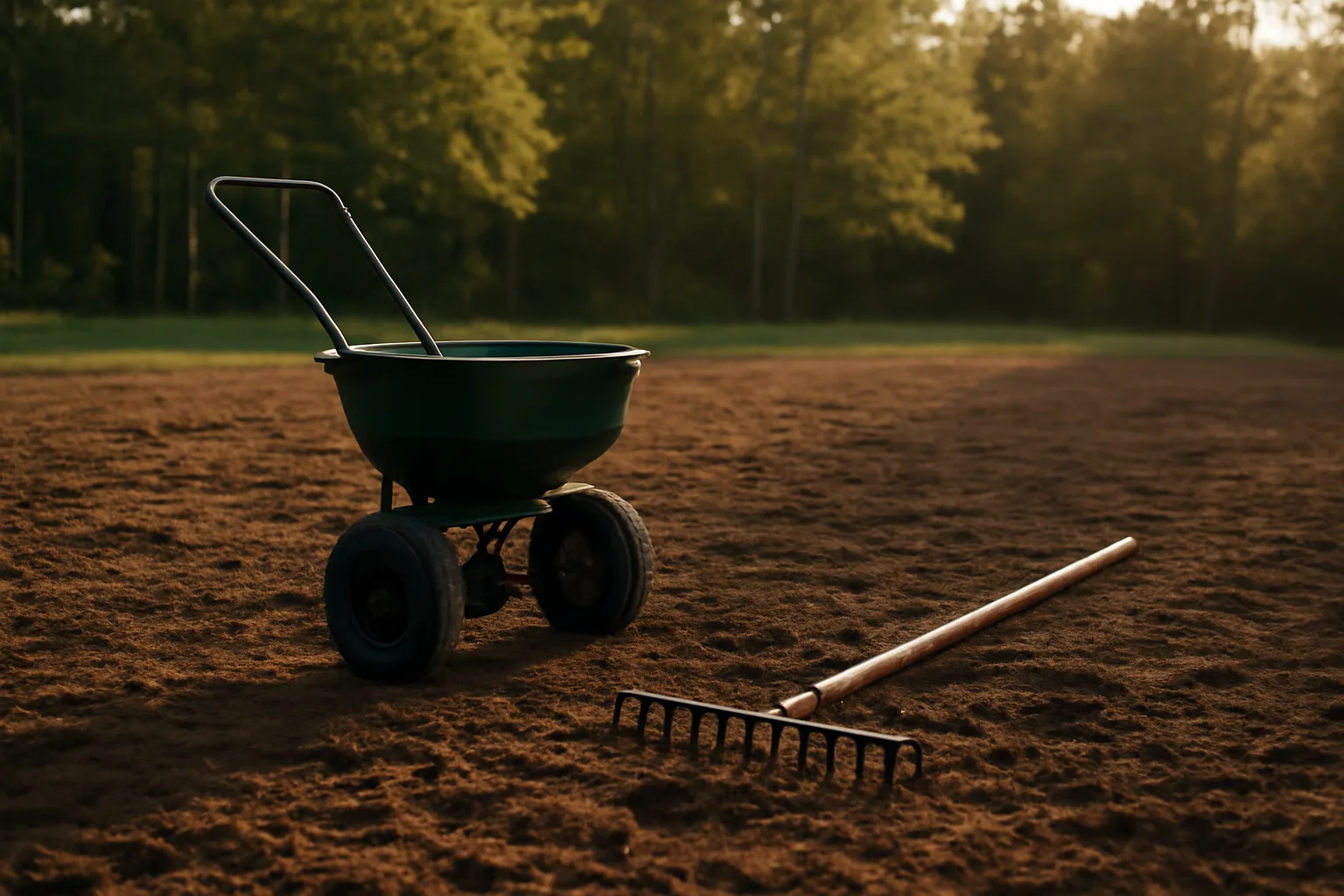
Start prep 4 to 6 weeks before your target planting date, not the weekend before. That gives herbicide (if you're using it) time to work, gives tilled or disked ground time to settle, and gives you a buffer if weather pushes your window. A basic prep timeline for a fall brassica or clover plot: spray existing vegetation with glyphosate 3 to 4 weeks out, till or disk 1 to 2 weeks out once the vegetation is dead, broadcast lime and fertilizer per your soil test right before or right after planting, then drill or broadcast seed and cultipack for seed-to-soil contact. Skipping the cultipacking step is one of the most common reasons a good seed mix fails, since broadcast seed sitting on top of loose dirt dries out and never germinates. Equipment scales with plot size and budget. A quarter-acre kill plot can be done with a hand seeder, a rake, and a lot of sweat. A multi-acre field realistically needs a tractor or ATV/UTV with an implement, a disk or tiller, a broadcast spreader, and ideally a cultipacker or drag. Our equipment guidance breaks down what's worth renting versus owning if you're only running one or two plots a year.
Frequently asked questions
Do deer eat sorghum?
Yes. Deer eat sorghum foliage while it's growing and the grain heads once mature. It's planted as a warm-season annual alongside corn and soybeans, generally May through early June, and its main food plot value is standing late-season grain and cover after frost has killed off other annual forages.
Do deer eat clover?
Yes, clover is one of the most consistently preferred food plot forages nationwide. It's a legume that's high in protein, typically 25 to 30 percent crude protein in a well-managed stand, which makes it especially valuable during spring and summer lactation and antler growth periods.
When should I plant deer food plots?
Warm-season plots (clover, soybeans, sorghum) go in late March through May once soil hits the mid-50s to 60s F. Cool-season plots (brassicas, oats, cereal grains) go in mid-August through mid-October, timed 60 to 90 days ahead of your area's first killing frost. Exact dates shift by USDA hardiness zone.
Do deer like clover more than other forages?
Deer readily prefer clover, and it ranks near the top of studied food plot forages during the growing season, but preference isn't fixed. Once acorns or other hard mast drop in fall, deer often shift away from clover toward mast, which is normal seasonal behavior, not a sign the clover plot failed.
When should I plant oats for deer?
Plant oats 60 to 90 days before your first fall frost, generally mid-August in northern zones through early October in the mid-South. Oats germinate fast, often within 7 to 10 days, but they're not frost-hardy, so mix with wheat, rye, or brassica if you want forage standing after hard freezes.
When is the best time to plant food plots for deer overall?
There's no single best date; it depends on species and zone. As a rule, plant warm-season forages in spring after your last frost and cool-season forages in late summer to early fall, timed backward from your area's average first frost date rather than a generic calendar date.
When should I plant turnips for deer?
Plant turnips 60 to 90 days before your first expected frost, generally August 1 to September 1 across most of the Midwest and mid-South. Turnips need that lead time to bulb properly, and deer often prefer them most after a hard frost converts starches to sugars, typically November onward.
What exactly is a food plot?
A food plot is a planted area, from a quarter-acre to several acres, seeded specifically to feed deer and other wildlife and to concentrate their activity for hunting or observation. It differs from a commercial crop field in that its goal is nutrition and attraction, not harvest yield.
What are deer's favorite foods?
There's no fixed universal ranking, but native browse, acorns and other hard mast, soybeans, corn, and legumes like clover and alfalfa consistently rank as top preferences in wildlife forage studies. Preference shifts by season, region, and what else is available on the landscape at the time.
Do deer like honey?
No. Deer are herbivores with a rumen built for digesting plant fiber, not sweeteners, and honey has no established role in their diet or in any wildlife agency or extension attractant research. If you've seen it recommended online, there's no credible source behind that claim.
How far in advance of planting should I get a soil test?
Ideally 6 to 12 months before planting a perennial like clover, since lime needs 60 days to a full season of soil contact to meaningfully shift pH. If you're planting sooner than that, plant a forgiving annual this year while lime works in, then plant the perennial next season.
Can I plant a food plot in the same week I till it?
You can, but results are usually weaker. Ideal prep starts 4 to 6 weeks out: herbicide 3 to 4 weeks ahead, tillage 1 to 2 weeks ahead to let ground settle, then planting and cultipacking. Same-week till-and-plant skips settling time and often leaves seed poorly covered.
Does frost ruin a food plot?
It depends on the species. A hard frost kills oats and most warm-season forages outright. It doesn't hurt brassicas like turnips and radishes; in fact it improves their palatability by converting starches to sugars. Cereal rye and winter wheat tolerate frost and often keep growing through it.
Sources
- NOAA National Centers for Environmental Information, Climate Normals: Average first and last frost dates by location, used to time fall and spring plantings
- University of Tennessee Extension, Wildlife Food Plots: Clover crude protein content typically in the 25 to 30 percent range in well-managed stands
- Mississippi State University Extension, Deer Food Plots: Preferred whitetail forages including clover, soybeans, and native forbs, and the override effect of hard mast in fall
- University of Kentucky Cooperative Extension, Wildlife Food Plots: Nitrogen fertilization recommendations of roughly 40 to 60 pounds per acre for brassica food plots
- Example state wildlife agency baiting and feeding regulation reference: State wildlife agencies regulate baiting and feeding, and standing grain plots can fall under these rules depending on the state
- University of Missouri Extension, Food Plot Establishment: Recommendation to time planting ahead of forecasted rainfall for reliable germination
- University of Missouri Extension, Soil Testing: Soil test turnaround time generally runs 1 to 3 weeks depending on seasonal lab volume
- Mississippi State University Extension, White-tailed Deer Nutrition: Native browse, mast, and agricultural crops rank among top preferred whitetail deer foods, with preference shifting by season