Last updated 2026-07-26
TL;DR
The best dove food plots mix sunflowers, browntop millet, and grain sorghum, planted 60 to 90 days before opening day so seed heads mature and shatter naturally on the ground. Dove feed on exposed seed on bare dirt, not standing grain, so mowing or disking part of the field before season matters as much as species choice.
What is a food plot, and how is a dove plot different from a deer plot?
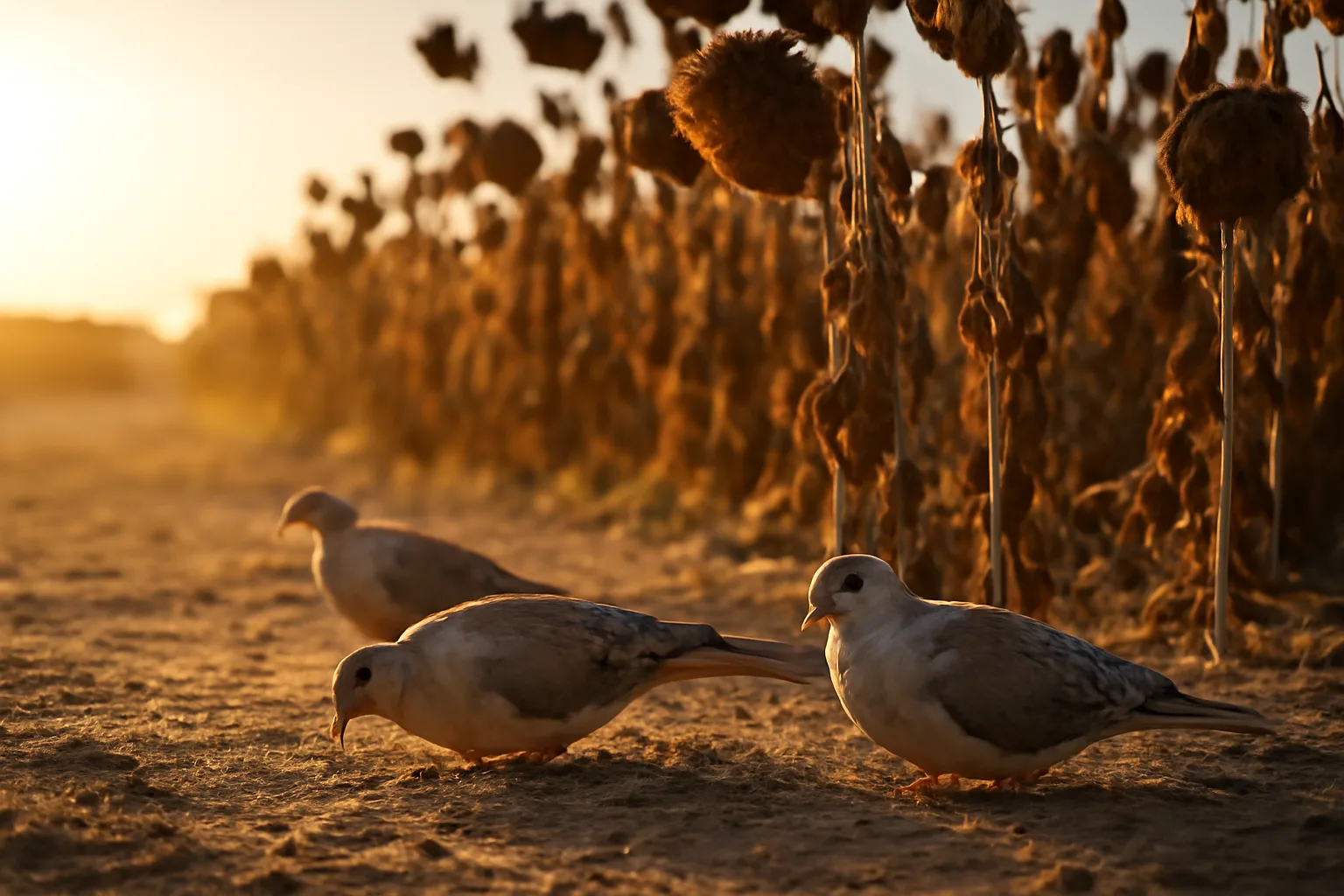
A food plot is any planted field managed to attract and hold game by giving it something to eat. That part is the same whether you're growing for deer or doves. The difference is how the animal eats the food. Deer browse standing plants directly out of the field, so a clover or brassica plot stays productive while it's still growing. Doves are ground feeders with small beaks built for picking up loose seed, not stripping it off a stalk. A dove plot only starts working once the seed has matured, dried, and either shattered on its own or been knocked to bare dirt by disking, mowing, or rolling. That single fact drives almost every decision in this article: species, planting date, and field prep all exist to get seed on the ground, dry, exposed, and abundant right around opening day. A field of perfect, standing sunflowers with a full canopy of green leaves underneath is nearly worthless to doves. A scruffy, half-disked field with seed heads knocked over and shattered seed scattered on dirt is exactly what they want. For comparison, if you're planning food for deer on the same property, that's a completely different playbook of species and timing. See food plot whitetail for that side of the operation.
What should I plant for a dove food plot?
| Browntop millet | 60-70 days | 25-30 lb/acre | fastest option, good for late plantings | |
|---|---|---|---|---|
| Grain sorghum (milo) | 90-100 days | 8-10 lb/acre drilled | durable, also draws deer and turkey | |
| Sunflowers | 80-100 days | 6-8 lb/acre | classic dove draw, needs full sun | |
| Corn | 100-120 days | 28-32,000 seeds/acre | costly, mainly useful if already grown for deer | Mississippi State University Extension notes that a mix of sunflower, browntop millet, and grain sorghum planted in strips, rather than one solid block, gives fields that mature at different rates and extends the number of good hunting days you can get out of one field [1]. |
The three workhorses are sunflowers, browntop millet, and grain sorghum (milo). Most successful dove fields use two or three of these together rather than a single monocrop, because it staggers maturity and gives you flexibility on when to disk. Sunflowers (black oil or a confectionery/oilseed blend) are the classic dove magnet. They're planted at roughly 6 to 8 pounds per acre and mature in 80 to 100 days depending on variety. Doves love the small, oily seed and will work a disked sunflower field hard. Browntop millet is the fastest option, maturing in as little as 60 to 70 days, which makes it useful for late plantings or as insurance if you got a late start. It's typically drilled or broadcast at 25 to 30 pounds per acre. Grain sorghum (milo) matures in roughly 90 to 100 days and holds up well to weather, making it a good anchor crop for a field you plan to manage over several weeks of hunting. Do deer eat sorghum too? Yes, deer and turkey will both feed on grain sorghum, so a milo strip can pull double duty on properties managed for more than one species. Some managers also plant wheat, corn, or Egyptian wheat (a sorghum relative) as a fourth component. Corn is expensive and slow, so it's rarely worth it purely for dove unless you're already growing it for deer or turkey nearby. | Species | Days to maturity | Seeding rate | Notes |
Do deer eat sorghum, and will it pull double duty?
Yes. Deer readily eat grain sorghum, both the leaves early in the season and the mature grain heads later. Turkey and a long list of other birds work sorghum fields too, so a milo planting isn't a wasted bet if your dove season doesn't pan out. That said, sorghum shouldn't be your only species if dove is the real target. It matures a bit slower than millet and the seed head sits higher and denser than browntop, so it usually needs mowing or disking to expose grain to ground-feeding doves rather than relying on natural shatter alone. If you're running a property for both deer and dove, sorghum strips bordering a sunflower block is a reasonable way to get value out of one planting for two seasons. Just know the field's dove utility depends entirely on disking timing, covered below, not on sorghum's dual-species appeal.
Do deer eat clover, and do deer like clover?
Yes, deer eat clover heavily, and yes, it's one of their most consistently preferred forages. Clover isn't a dove plant, but the question comes up often enough on multi-species properties that it's worth a straight answer here. White clover and red clover are staples of perennial deer food plots because they're high in protein (often 20 to 30 percent crude protein in vegetative growth) and stay palatable through most of the growing season. Clover doesn't set the kind of hard seed doves want to eat off the ground, so it has no real role in a dedicated dove field. If clover is part of your plan for deer ground on the same property, that's a separate planting and a separate calendar from your dove plot. Check out deer food plots for how clover fits into a year-round deer program.
When should I plant a dove food plot?
Plant 60 to 90 days before your state's dove season opener, working backward from the specific species' maturity window. Most Southern and Midwestern dove seasons open in the first week of September, which usually means a planting window from late May through late June depending on species and latitude. Browntop millet, at 60 to 70 days to maturity, gives you the most planting flexibility and can go in as late as early July for a September 1 opener. Sunflowers and grain sorghum need the full 90 to 100 days, so they generally need to go in the ground by early June in most of the South and Midwest. Check your specific state's season dates before finalizing a planting calendar, since dove seasons and split-season structures vary by state and are set annually by each state wildlife agency working within federal frameworks set by the U.S. Fish and Wildlife Service [2]. The Alabama Department of Conservation and Natural Resources, for example, notes that dove fields intended for the September opener should be planted no later than early-to-mid June for sunflowers and grain sorghum, and gives millet more room into July [3]. Don't plant so early that everything matures and shatters weeks before opening day. A field that's bare dirt with no seed left by the time you can legally hunt it did you no favors.
When should I plant deer food plots, and does it overlap with dove planting?
Deer food plot timing runs on a completely different calendar than dove plots, built around fall hunting season and forage regrowth rather than seed maturity for ground feeders. Warm-season deer plots (soybeans, cowpeas, sorghum-sudan for summer forage) go in spring through early summer, similar to dove timing. Cool-season deer plots (brassicas, cereal grains, clover) go in late summer through early fall, months after dove plots are already planted. That means on a property managing for both species, you're often planting your dove field in late May or June and your deer brassica or cereal grain plots in August or September, a full planting cycle apart. It's entirely possible to run both programs on the same acreage in different fields, or even the same field in successive years if you rotate. For a full breakdown of deer-specific timing by region, see deer food plots and the seed options covered in deer food plot seed.
When should I plant turnips for deer, and do they belong in a dove field?
Turnips for deer are planted in late summer, typically late July through early September depending on latitude, so the tops and bulbs mature and become most palatable after a few frosts sweeten the plant's sugars. That's a cool-season brassica program, planted two to three months later than a dove field and with a completely different goal: standing forage for deer to browse directly, not shattered seed for birds to pick up. Turnips have no place in a dove plot. Doves don't eat turnip greens or roots, and the plant doesn't produce the kind of small hard seed dove feed on. If you're growing turnips, that's a fall deer plot decision, separate from anything you're doing for September dove season.
How do I prepare and manage the field for dove hunting?
Getting seed in the ground is only half the job. The other half is exposing mature seed on bare dirt before opening day, and that means mowing, disking, or rolling parts of the field on a schedule, not planting and walking away. A common approach: disk or mow about a third of the field two to three weeks before opening day, another third the week of the opener, and leave the last third standing as a reserve to disk mid-season. This staggers seed availability so the field keeps drawing birds across multiple hunts instead of getting picked clean and abandoned after the first weekend. Soil fertility matters here too, same as any other planting. A basic soil test (through your county extension office or a private ag lab) tells you your pH and whether you need lime, plus nitrogen, phosphorus, and potassium recommendations for whichever species you're growing. Sorghum and sunflowers both respond well to nitrogen; the University of Georgia Extension recommends soil testing at least 60 days before planting to allow time for lime to adjust pH if needed [4]. Your soil test lab's specific lime and fertilizer recommendation is the authority here, not a generic rate off the internet, since local soil chemistry varies a lot even within the same county. If you want help turning a soil test into an actual field plan across species and acreage, that's exactly what a $99 Custom Food Plot Plan is built to do: it's general planning guidance based on your inputs, not a substitute for your lab's specific lime and fertilizer numbers, but it saves the guesswork on rates, timing, and species mix.
What do doves actually eat, and what are deer's favorite foods by comparison?
Doves are seed specialists. Their preferred wild and cultivated foods include sunflower, browntop and other millets, grain sorghum, wheat, corn, and native seed sources like croton (doveweed) and ragweed. They feed almost exclusively on the ground and need bare dirt or short cover to find seed, which is why disking matters so much more than variety selection past a certain point. Deer are browsers with a much broader diet. Their preferred foods, according to state wildlife agency and extension research, typically include soybeans, clover, and acorns among the highest-preference items, along with brassicas like turnips and radishes in fall and winter. The Mississippi State University Deer Lab lists soybeans and cowpeas among the top warm-season forage choices for whitetail food plots due to their combination of tonnage and protein content. The short version: dove want small, hard seed on open dirt. Deer want tender, high-protein standing forage or mast. Almost nothing on a dove-optimized field overlaps with what makes a great deer plot, which is why most serious managers run them as separate fields.
Do deer like honey, and does that matter for food plots?
Deer don't eat honey in any meaningful way relevant to food plot management. There's no research or extension guidance recommending honey, honeysuckle nectar, or any sugar-based attractant as part of a food plot program, and it has zero connection to dove plots specifically. What gets confused here sometimes is honeysuckle, a woody vine that deer do browse heavily where it's available, and which some managers actually consider a nuisance because it out-competes planted forage in field edges. If you're seeing "honey" searched alongside deer nutrition questions, honeysuckle browse is almost certainly the real topic, not honey itself. Either way, it's not a food plot planting decision for dove or deer.
Do I need to worry about baiting laws for a dove field?
Yes, and this is the most important legal check before you hunt a planted dove field. Federal migratory bird regulations, enforced by the U.S. Fish and Wildlife Service, prohibit hunting over bait, defined as grain or other feed placed or scattered to lure birds where it wouldn't normally occur through a normal agricultural planting and harvest. The key legal distinction is "normal agricultural practice." Planting a field and letting it mature, then mowing, disking, burning, or flooding it as part of a normal harvest or field management practice, is legal in most cases. Hauling in loose grain and scattering it on the ground, or leaving a field standing and then dumping extra seed on top of what grew there, is not. The U.S. Fish and Wildlife Service's federal baiting regulation states that a baited area means "any area on which shelled, shucked, or unshucked corn, wheat or other grain, salt, or other feed whatsoever capable of luring, attracting, or enticing such birds is directly or indirectly placed, exposed, deposited, distributed, or scattered" and clarifies that normal agricultural planting, harvesting, or post-harvest manipulation of a crop grown where planted is exempted [5]. Rules on exactly what counts as normal manipulation (disking timing, whether you can add fertilizer mid-season, whether flooding a field counts) get specific and vary somewhat by state enforcement practice, so check with your state wildlife agency before disking or mowing your field close to season. A quick call to your state's wildlife law enforcement division or a look at their dove hunting regulations page is worth ten minutes before opening day, since a baiting violation is a real federal offense, more than a warning ticket.
How big should a dove field be, and does field size change what I plant?
Most successful dove fields run somewhere between 5 and 20 acres, though smaller fields of 2 to 3 acres can work fine if they're positioned well near water, roost trees, and travel corridors. Field size doesn't change species selection much, but it does change how you divide the field for staggered disking. On a smaller field, split it into halves rather than thirds so each disked section is still large enough to draw and hold birds. On larger fields, running two or three species in separate strips (sunflower along one edge, sorghum in the middle, millet filling the rest) gives you more control over the disking schedule and spreads your maturity dates out further. Field shape and openness matter more than raw acreage. Doves prefer open sightlines and short or bare ground, so a field surrounded by tall trees on all sides won't perform as well as a similarly sized field with open approaches and nearby roost cover.
What's a realistic seed and planting budget for a dove field?
Costs vary a lot by region and current seed prices, but a rough planning number for a mixed sunflower, millet, and sorghum planting runs somewhere in the range of $40 to $120 per acre in seed alone, before fuel, fertilizer, and lime. Sunflower seed tends to be the priciest component per acre; browntop millet is usually the cheapest. Fertilizer and lime costs depend entirely on your soil test results, which is exactly why skipping the test to save money almost always costs more in the long run through poor stands and wasted seed. If your county extension office offers subsidized or free soil testing, that's the first stop before buying seed, not after. For a broader look at seed options and blends across plot types, deer food plot seed and food plot seed cover pricing and blend comparisons in more depth, mostly from the deer side but with overlap on species like sorghum and sunflower.
Frequently asked questions
Do deer eat sorghum?
Yes. Deer eat grain sorghum's leaves early in the growing season and the mature grain heads later, and it's also a strong draw for turkey and dove. It's a reasonable dual-purpose planting if you're managing ground for more than one species, though it's not the fastest-maturing dove option.
Do deer eat clover, and do deer like clover?
Yes, deer eat clover heavily and it's one of their most preferred forages, often running 20 to 30 percent crude protein in vegetative growth. Clover has no role in a dove field, though, since doves feed on hard seed exposed on bare ground, not clover leaves.
When should I plant deer food plots?
Warm-season deer plots (soybeans, cowpeas) go in spring through early summer. Cool-season plots (brassicas, cereal grains, clover) go in late summer through early fall, typically 60 to 90 days before your area's first hard frost. Exact timing depends heavily on your latitude and local frost dates.
When should I plant oats for deer?
Oats are a cool-season cereal grain, typically planted late summer through early fall, roughly 4 to 8 weeks before your area's first expected frost. That window is usually August through mid-September in northern states and can push into October in the Deep South.
When should I plant turnips for deer?
Turnips are planted in late summer, generally late July through early September depending on latitude, so bulbs and tops mature and sweeten after a few fall frosts. That's a fall deer forage planting, unrelated to a spring or early-summer dove field planting schedule.
What is a food plot?
A food plot is a planted field managed specifically to attract and feed wildlife, most commonly deer, turkey, or dove. For dove, that means grain and seed crops planted to mature and shatter on bare ground; for deer, it usually means standing forage plants they browse directly out of the field.
What are deer's favorite foods?
Research and extension guidance consistently rank soybeans, clover, and acorns among whitetail deer's top-preference foods, with brassicas like turnips and radishes also highly favored in fall and winter. Mississippi State University's Deer Lab lists soybeans and cowpeas among the top warm-season food plot forages for tonnage and protein.
Do deer like honey?
No, honey isn't a meaningful deer food and has no place in food plot planning. People sometimes mean honeysuckle, a vine deer do browse heavily, but honey itself, the substance bees produce, plays no role in deer nutrition or food plot species selection.
What should I plant for a dove field if I only have a few weeks before season?
Browntop millet is your best bet, since it can mature in as little as 60 to 70 days. Sunflowers and grain sorghum both need closer to 90 to 100 days, so they're risky choices if you're planting less than three months before your opener.
How soon before dove season should I disk the field?
Stagger it. A common plan disks about a third of the field two to three weeks before the opener, another third right at the opener, and leaves the last third standing to disk mid-season, which keeps fresh exposed seed available across multiple hunts instead of one weekend.
Is it legal to disk a dove field right before hunting it?
Generally yes, as long as it's a normal agricultural practice on a crop you actually grew there. Federal migratory bird regulations exempt normal planting, harvesting, and post-harvest field manipulation from baiting rules, but specifics on timing can vary by state enforcement, so confirm with your state wildlife agency.
Can I mix sunflowers, millet, and sorghum in the same field?
Yes, and it's actually the more common approach among experienced managers. Planting in strips rather than one solid block staggers maturity dates, which extends how many good hunting days you get from a single field instead of everything ripening and getting picked clean at once.
Does soil testing matter for a dove field the same way it does for deer plots?
Yes. Sunflowers and grain sorghum both respond strongly to proper pH and nitrogen levels, and a soil test tells you exactly what lime and fertilizer your specific field needs. Your soil test lab's recommendation is the real authority here, not a generic rate pulled off a seed bag.
Sources
- Mississippi State University Extension, Dove Field Management: mixing sunflower, browntop millet, and grain sorghum in strips extends the productive hunting life of a dove field
- U.S. Fish and Wildlife Service, Migratory Bird Hunting Frameworks: dove season dates and structure are set annually by individual states within federal frameworks
- Alabama Department of Conservation and Natural Resources, Dove Field Preparation: sunflower and grain sorghum fields for a September opener should be planted by early-to-mid June, with more flexibility for millet into July
- University of Georgia Extension, Soil Testing for Wildlife Food Plots: soil testing at least 60 days before planting allows time for lime to adjust soil pH before seeding
- U.S. Fish and Wildlife Service, 50 CFR 20.21 Baiting Regulation: federal definition of a baited area and the exemption for normal agricultural planting, harvesting, and post-harvest manipulation