Last updated 2026-07-25
TL;DR
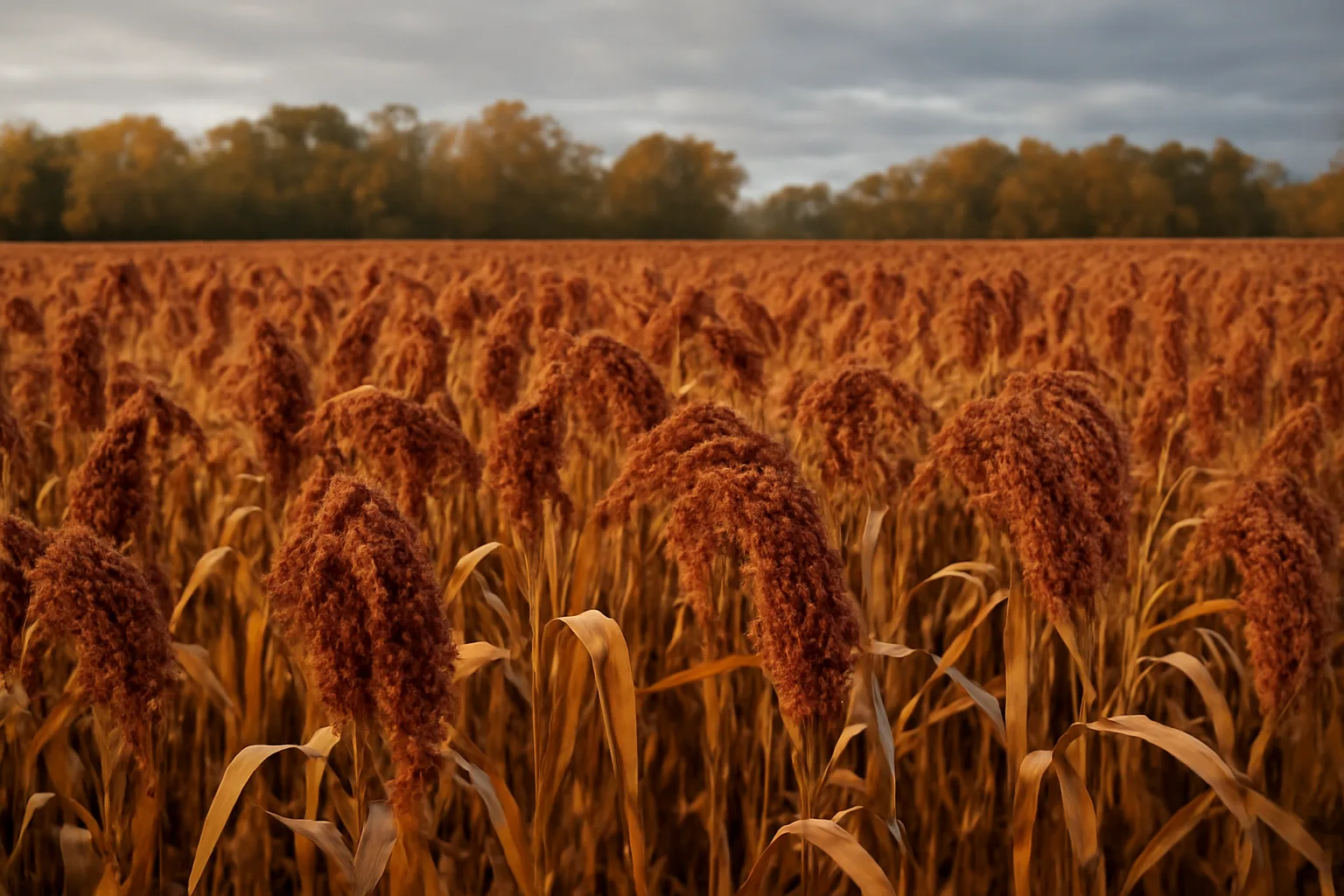
Yes, deer eat sorghum, especially the grain heads in fall and winter, and it works as a corn substitute in food plots on drier, sandier ground. Plant it after soil hits 65°F, usually late May through June depending on zone, at 6-10 lbs/acre drilled or 8-12 broadcast.
do deer eat sorghum?
Yes. Deer eat both the grain heads and the young leaves of sorghum, and turkey, quail, doves, and songbirds hit the seed heads hard once they dry down in fall. Grain sorghum (milo) is planted as a whitetail food plot crop mostly because it tolerates drought and poor soil better than corn, and it holds standing grain into winter for a late-season food source. The University of Georgia Extension publication on wildlife food plots lists grain sorghum among the warm-season options for deer and turkey plantings, noting its usefulness on droughty sites where corn struggles [1]. It's not usually a deer's first choice when clover, soybeans, or standing corn is available nearby, but once those green options die back or get grazed out, deer switch to sorghum heads readily. Think of it as a fall-into-winter energy crop, similar in role to corn but cheaper to grow and more forgiving of a bad rain year. One real tradeoff: sorghum draws blackbirds and other seed-eating birds hard, and in some fields birds can strip a meaningful chunk of the grain before deer season even opens. That's a known complaint among extension agronomists who work with grain sorghum for wildlife plantings, more than a food-plot forum rumor. Mississippi State Extension's grain sorghum production guide notes that sorghum is often grown specifically as a wildlife food source because it handles heat and moisture stress better than corn on marginal ground. That's the whole reason it shows up on so many plot seed lists in the first place.
do deer like clover, and how does it compare to sorghum?
Deer like clover a lot, arguably more than almost anything else you can plant, because it's high in protein (often 25-30% crude protein on a good stand) and stays palatable through spring, summer, and fall if you mow and manage it. Clover is a perennial forage play. Sorghum is an annual grain play. They solve different problems. Use clover when you want season-long browse that also helps antler growth and lactation in does. Use sorghum (or corn) when you want a concentrated fall/winter energy source, something with calories to get deer through cold snaps and the rut. Penn State Extension's forage legume guidance describes clover species as some of the highest-quality, most consistently grazed forages available for wildlife plantings, particularly white clover and red clover in mixed stands [2]. A lot of the best plot setups run both: a perennial clover field for spring through fall protein, and a grain plot (corn, sorghum, or a blend) for late-season energy. If you're deciding between species for a given field, check out food plot whitetail for a broader species comparison, or deer food plot seed for seed-specific guidance.
when to plant food plots for deer (by season and zone)?
| Deep South (zone 8-9) | mid-April to mid-May | September to mid-October | |
|---|---|---|---|
| Transition zone (zone 6-7) | early May to early June | late August to late September | |
| Upper Midwest/North (zone 3-5) | late May to mid-June | late July to late August | These windows are general starting points, not guarantees, since local frost dates and rainfall patterns shift the calendar every year. Your county extension office frost-date tables are the most reliable local check. |
Timing splits into two windows: spring/summer plantings for warm-season annuals and perennials, and late summer/fall plantings for cool-season annuals and brassicas. Sorghum falls in the first window. General rule from most land-grant extensions: plant warm-season grain crops (corn, sorghum, soybeans) after the last frost date and once soil temperature is reliably above 60-65°F, because germination is slow and uneven in cold soil. That's typically late April in the Deep South, mid-to-late May in the transition zone, and late May into June in the northern tier and upper Midwest. Cool-season annuals (brassicas, cereal grains, clover, wheat, oats) get planted in late summer to early fall, roughly 6-10 weeks before your first hard frost, so plants establish before growth slows. That puts most of the country in a late July to mid-September planting window for fall plots, with northern states planting earlier (late July/August) and southern states later (September into early October). Here's a rough seasonal framework: | region | spring/summer annuals (sorghum, corn, soybeans) | fall annuals (brassicas, cereal grains, clover) |
when to plant oats for deer?
Oats are a fall cool-season planting almost everywhere in whitetail country. Plant them 6-8 weeks before your average first frost date so they get several inches of top growth before cold slows things down; that lands most of the Midwest and Northeast in the August to early September window, and the South in September through early October. Oats are a favorite fall attractant because they green up fast (often visible growth in 5-7 days in warm, moist soil) and stay palatable and sweet after a light frost, which converts starches to sugars. Extension wildlife programs across the Southeast commonly recommend blending oats with a brassica or cereal rye for fall plots, since oats winterkill in colder zones while rye or wheat carries the plot through into late winter. If you're in a hard-freeze zone (zone 4 or colder), plan on oats dying back completely after a hard freeze; they're a fall attraction crop there, not a winter one. Farther south, oats can persist and regrow through a mild winter.
when to plant turnips for deer?
Turnips are planted in late summer, generally 80-100 days before your first killing frost, because they need that runway to bulb out and reach peak tonnage and palatability. For most of the whitetail range that means late July through August, with the Deep South stretching into early September. Turnips (and other brassicas like radish and rape) go through a well-documented palatability shift after frost: cold temperatures convert starches in the leaves and bulbs to sugars, which is why deer often ignore a turnip plot in October and then hammer it in December. One mistake a lot of first-time planters make: seeding turnips too late, thinking of them like a quick cover crop. If you seed them in September in a zone-5 climate, they won't bulb up before the ground freezes. Check your average first frost date first, then count backward.
what is a food plot?
A food plot is a planted area, usually somewhere between a quarter-acre and several acres, seeded specifically to attract and feed deer or other wildlife rather than to produce a harvestable crop for sale. Food plots sit on private or leased hunting land and typically mix annual grains, brassicas, legumes, and sometimes perennial clover or alfalfa stands. The basic goals are nutrition (helping deer through stress periods like late gestation, lactation, and winter) and hunting access (drawing deer to a specific, huntable location at a predictable time of day). Most state wildlife agencies treat food plots differently from agricultural fields for regulatory purposes, particularly around baiting and supplemental feeding rules, so it's worth checking your state agency's definitions before planting close to a stand or blind. A plot isn't just "throw seed and see." A soil test, a realistic seeding rate, and a planting date tied to your frost dates matter more than the specific seed blend you choose. If you want a plan built around your specific soil test results and property, deer food plots covers the basics of building one from scratch.
how do you plant sorghum for a deer plot, step by step?
Start with a soil test. Grain sorghum tolerates a wider pH range than most food plot crops, generally growing acceptably from pH 5.5 to 7.5, but yields drop hard below 5.5 and your soil test lab's lime recommendation is the actual authority here, not a rule of thumb from a forum post. Seed sorghum after soil temperature is consistently above 65°F, which is later than corn in most zones (corn tolerates cooler soil, down around 50-55°F). Drill at 6-10 lbs per acre at a depth of 1 to 1.5 inches, or broadcast at 8-12 lbs per acre and cultipack or drag to get seed-to-soil contact. Row spacing of 20-30 inches works if you're drilling; broadcast plots do fine without rows. Fertility needs run moderate. Sorghum responds well to nitrogen, and Kansas State Extension's grain sorghum production guidance puts typical total nitrogen need for a grain sorghum crop in the range of 1.0 to 1.2 lbs of N per bushel of expected yield, which works out to roughly 60-100 lbs/acre for most food-plot-scale yield goals, though your soil test result should set the actual N-P-K numbers since a lot of food plot ground runs short on phosphorus or has a pH problem that fertilizer alone won't fix [3]. Weed control matters early. Sorghum seedlings compete poorly with grasses and broadleaf weeds in the first 3-4 weeks, so a clean seedbed (tillage or a burndown herbicide application before planting) makes a bigger difference than almost anything else in the establishment phase.
is sorghum better than corn for a deer plot?
Sorghum and corn solve a similar problem (standing grain for fall and winter) but sorghum wins on cost and drought tolerance, while corn usually wins on total tonnage and deer preference where soil and rainfall support it. Sorghum needs less water and less fertility to make a crop, which matters if you're planting on sandy or shallow soil, or in a region with unreliable summer rainfall. It's also cheaper seed per acre in most years. Corn, on the other hand, produces more grain per acre under good growing conditions and deer generally prefer it once it's available, likely because of higher digestible energy content. Bird pressure is the wildcard. Sorghum heads draw blackbirds, doves, and other seed-eaters aggressively, and on some fields birds take a real bite out of the standing crop before deer season opens. Corn draws fewer seed-eating birds in comparison, though raccoons and other opportunists hit both. A practical way to think about it: if your ground is thin, dry, or you've had corn plots fail from drought stress in past years, sorghum is the more forgiving bet. If you've got decent soil, water, and fertility to spare, corn usually gives you more standing grain per dollar of input by harvest time.
what is a deer's favorite food?
There's no single universal answer, because preference shifts by season, region, and what's locally available, but acorns, soybeans, and clover consistently rank at the top across studies and extension surveys. Native forages like acorns, especially from white oak species, are extremely high-preference foods when they're on the ground, often pulling deer off planted plots entirely during a big mast year. Among planted crops, soybeans in their vegetative and pod stages, and clover through the growing season, are the most consistently preferred food plot options in most of the whitetail range. A long-running Auburn University deer nutrition research summary reports that browse (woody twigs and leaves) can make up over half of a whitetail's diet in many regions outside of major crop or mast availability windows . So "favorite food" really means "favorite food available right now." A soybean field is a magnet in August. The same field, picked clean and dropping leaves in October, gets ignored in favor of a fresh acorn drop 200 yards away. Good food plot planning accounts for that shift rather than assuming one crop works year-round.
do deer like honey?
There's no real evidence deer seek out honey in the wild, and it isn't used in any legitimate food plot or attractant guidance from extension programs or wildlife agencies. Deer are occasionally documented investigating beehives or comb, likely drawn by the wax and larvae rather than the honey itself, similar to bears. Commercial deer attractant products sometimes include sugar, molasses, or other sweeteners (not honey specifically) as scent or taste additives, but these fall under supplemental feed or bait rules in a lot of states, not food plot planting. If you're using any manufactured attractant, check your state wildlife agency's baiting and feeding regulations first, since rules vary a lot state to state and some prohibit any supplemental feeding, including scent or mineral products, within a set distance of a stand or during certain seasons. Bottom line: skip the honey question when planning an actual plot. It's not a real food plot ingredient, and it has nothing to do with what draws deer to sorghum, clover, or brassica plantings.
what seeding rate and equipment does sorghum actually need?
Grain sorghum is drilled at 6-10 lbs per acre or broadcast at 8-12 lbs per acre, seeded 1 to 1.5 inches deep. That's a lighter seeding rate than most people expect, since sorghum seed is small and a stand that's too thick competes against itself for water and nutrients, especially on drier ground where you're planting it in the first place. A cultipacker or drag after broadcasting matters more for sorghum than for a lot of other food plot crops, because seed-to-soil contact drives germination rate hard in a crop that's already working with marginal soil moisture. If you're running a drill, a standard grain drill with small-seed metering handles sorghum fine; no specialty equipment needed. One thing worth building into your plan: a $99 Custom Food Plot Plan from PlotSeason takes your soil test and zone and gives you a specific seeding rate, fertilizer target, and planting window rather than a generic range like the one above. It's general planning guidance built from your numbers, not a substitute for your soil test lab's site-specific lime and fertilizer recommendation, but it saves the trial-and-error most people go through their first few seasons.
how does sorghum fit into a full-season food plot rotation?
Sorghum works best as the summer/fall grain component of a plot system that also includes a spring-to-fall perennial (clover) and a fall cool-season annual (brassicas or cereal grains) planted in a different field or a different section of the same field. Running all three gives deer season-long forage plus a standing grain source into winter. A simple two-field rotation: field A stays in perennial clover for 3-4 years, mowed periodically, providing protein April through October. Field B rotates annually between a spring grain crop (sorghum, corn, or soybeans) planted in late spring and, in the same calendar year after the grain is harvested or grazed down, a fall brassica or cereal grain planted in August or September. If you're working with limited acreage, sorghum's drought tolerance makes it a reasonable single-field choice for landowners on sandy or rocky ground who can't justify irrigating or heavily fertilizing a corn plot. For a broader look at picking the right seed mix for your soil and zone, see deer for food and food plot seed.
Frequently asked questions
do deer eat sorghum?
Yes, deer eat both the leaves and grain heads of sorghum, especially once the heads dry down in fall and winter. It's commonly planted as a corn substitute in food plots on drier or lower-fertility soil, though it also draws heavy pressure from blackbirds and other seed-eating birds.
do deer like clover?
Deer like clover strongly and graze it consistently through spring, summer, and fall when it's mowed and maintained. It runs 25-30% crude protein on a healthy stand, which is why it's a standard perennial choice for season-long browse rather than a fall-only attractant.
when should you plant food plots for deer?
Warm-season plots (corn, soybeans, sorghum) go in after your last frost, once soil hits 60-65°F, typically April in the South and late May to June up north. Cool-season plots (brassicas, oats, clover, wheat) go in 6-10 weeks before your first fall frost, usually late July through September depending on region.
when do you plant oats for deer?
Plant oats 6-8 weeks before your average first frost date, which lands most of the Midwest and Northeast in August through early September and the South in September through early October. Oats green up fast and sweeten after a light frost, but they winterkill completely in hard-freeze zones.
when do you plant turnips for deer?
Turnips need 80-100 days before your first killing frost to bulb properly, which puts most plantings in late July through August, stretching into early September in the Deep South. Planting too late means the bulbs never mature before the ground freezes.
what is a food plot?
A food plot is a planted patch, typically a quarter-acre to several acres, seeded specifically to feed and attract deer or other wildlife on private or leased hunting ground rather than for commercial harvest. Plots mix annual grains, brassicas, and perennial forages depending on the season and goal.
what do deer like to eat most?
There's no single answer since preference shifts by season and availability, but acorns (especially white oak), soybeans, and clover consistently rank as top preferred foods across extension surveys and deer diet research. Browse (woody twigs and leaves) fills a large share of the diet outside crop availability windows.
do deer like honey?
There's no real evidence deer seek out honey specifically; occasional reports of deer at beehives likely involve the wax or larvae, not the honey. Honey isn't part of any legitimate food plot or extension attractant guidance, so it's not a factor in actual plot planning.
is sorghum or corn better for a deer food plot?
Sorghum needs less water and fertility and costs less per acre, making it the better call on dry, sandy, or thin soil. Corn usually produces more grain per acre under good conditions and deer tend to prefer it once it's available, so it wins where soil and rainfall support it.
what seeding rate should you use for grain sorghum in a food plot?
Drill grain sorghum at 6-10 lbs per acre or broadcast at 8-12 lbs per acre, seeded 1 to 1.5 inches deep. Broadcast plantings need a cultipacker or drag pass afterward to get seed-to-soil contact, which drives germination more than almost any other factor in a sorghum plot.
does sorghum attract birds away from deer?
Yes, grain sorghum draws blackbirds, doves, and other seed-eating birds hard once heads dry down, and bird pressure can noticeably reduce standing grain before hunting season opens. This is a known tradeoff in extension guidance on wildlife grain plantings, more than anecdotal field reports.
what pH does sorghum need for a food plot?
Grain sorghum tolerates a fairly wide pH range, generally acceptable from about 5.5 to 7.5, though yields drop noticeably below 5.5. Your soil test lab's specific lime recommendation is the real authority for your field, since local soil chemistry varies more than a general range can capture.
Sources
- University of Georgia Extension, Circular 1252: Food Plots for Wildlife: Grain sorghum is listed among warm-season food plot options useful on droughty sites where corn struggles
- Mississippi State University Extension, Grain Sorghum Production: Sorghum handles heat and moisture stress better than corn on marginal ground, making it a common wildlife planting choice
- Kansas State University Extension, Grain Sorghum Production Handbook (C-687): Nitrogen need for grain sorghum runs roughly 1.0 to 1.2 lbs N per bushel of expected yield
- Auburn University, School of Forestry and Wildlife Sciences, White-tailed Deer Nutrition and Food Habits: Browse can make up over half of a whitetail's diet outside of major crop or mast availability windows
- UGA Extension: Planting dates and species recommendations for wildlife food plots by region
- Purdue Extension: Recommendations on cool-season food plot species including oats and turnips
- University of Missouri Extension: Grain sorghum production practices applicable to food plot planting