Last updated 2026-07-26
TL;DR
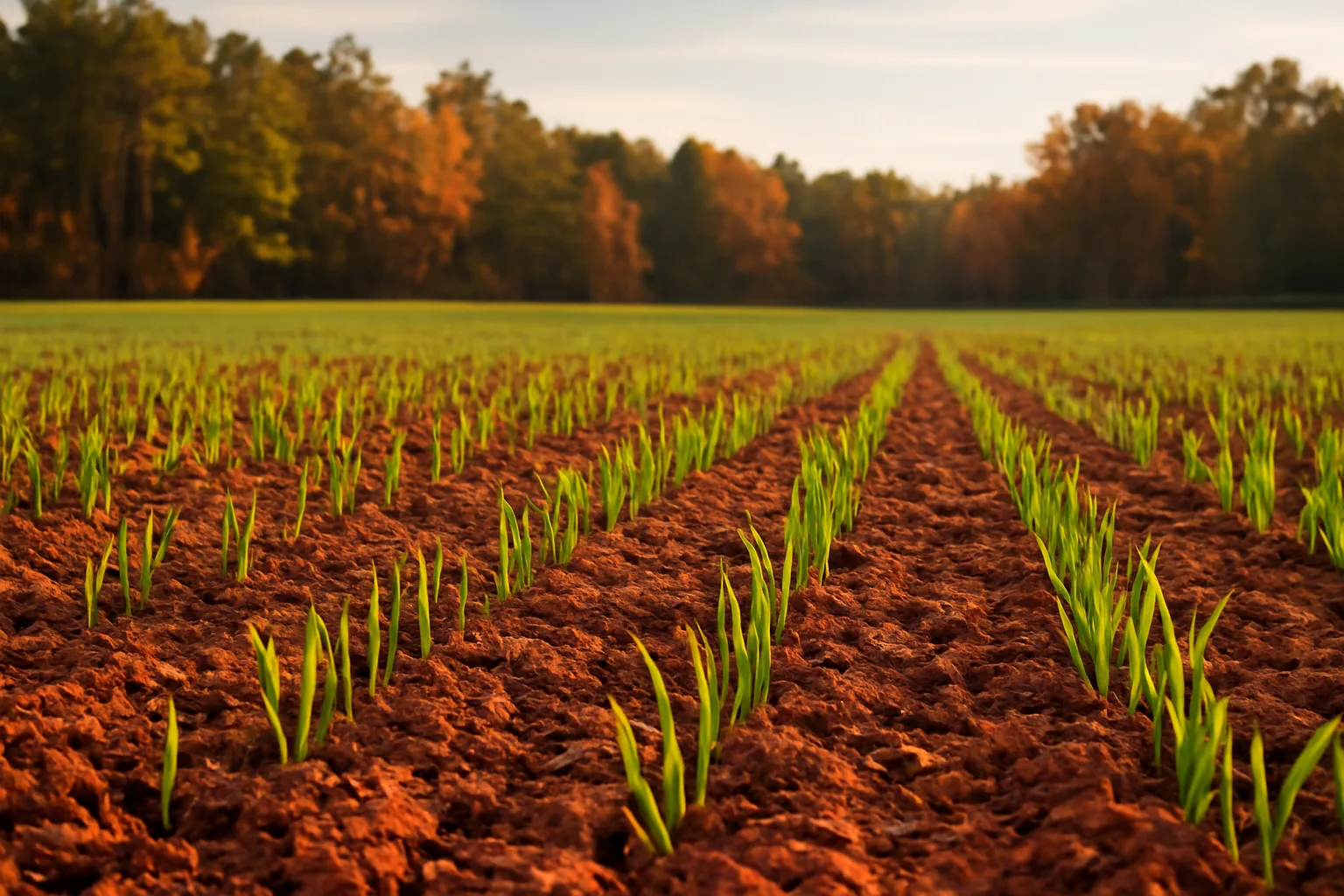
The best fall food plot for most of Georgia is a mix of cereal grain (oats or wheat) with clover or brassicas, planted mid-September through October depending on your zone. Cereal grains give fast fall attraction, clover holds through winter and into spring, and brassicas like turnips peak after the first frost. Match your pick to soil test results and planting date.
What is a food plot, exactly?
A food plot is a planted patch of forage, usually somewhere between a quarter acre and several acres, put in specifically to feed and hold deer on a property. It's not the same as a wildlife opening left to native grass, and it's not agriculture in the commercial sense either, though the tools overlap a lot. Most hunters plant two kinds: annual plots (replanted every year, things like oats, clover mixes with brassicas, or forage soybeans) and perennial plots (clover, chicory, alfalfa) that come back for two to five years with maintenance. In Georgia, fall plots usually mean either a cereal grain planted fresh for the season or a perennial clover stand you're topping off with fertilizer and maybe overseeding. The University of Georgia Extension frames food plots as one tool in a broader habitat plan, not a replacement for good cover and natural browse. That's worth remembering before you spend money on seed. A plot on bad soil, planted at the wrong time, does less for deer than leaving that same acre in native vegetation. If you want a general starting point before running your own numbers, food plot whitetail covers plot types and layout basics that apply anywhere, Georgia included.
When should you plant food plots for deer in Georgia?
| North Georgia (mountains) | Sept 1 to Sept 30 | Aug 15 to Sept 30 | |
|---|---|---|---|
| Piedmont (middle GA) | Sept 15 to Oct 15 | Sept 1 to Oct 15 | |
| Coastal Plain (south GA) | Oct 1 to Nov 1 | Sept 15 to Oct 31 | These ranges come from planting guidance in UGA Extension forage variety publications and align with typical first-frost dates by region [1]. |
Timing depends on what you're planting and where in the state you are. Georgia spans three rough zones for planting purposes: north Georgia mountains, the Piedmont (middle third of the state), and the coastal plain / south Georgia. For fall annuals like oats, wheat, and brassicas, the general window is early September in north Georgia down through mid-to-late October in south Georgia. Clover for a new perennial stand usually goes in a few weeks earlier than brassicas, so the plants can establish some root mass before cold weather slows growth. A simple way to remember it: plant north Georgia first, south Georgia last, and always plant ahead of a rain if you can get one in the forecast. Waiting for "perfect" soil moisture in Georgia in September is a losing game some years. The coastal plain especially can run dry into October. Georgia's deer season structure also matters for planning. Archery season opens in mid-September across most of the state, and firearms season runs from mid-October through early January depending on zone. That means your fall plot needs to be up and green, or at least established, by the time bow season starts if you want it drawing deer early. | Region | Cereal grain (oats/wheat) planting window | Clover/perennial planting window |
Do deer like clover, and is it worth planting in fall?
Yes, deer eat clover heavily, and it's one of the most consistent perennial choices across Georgia. Clover is a legume, which means it fixes nitrogen and typically runs 25 to 32 percent crude protein in good growing conditions, according to forage quality data summarized by university extension programs [2]. That protein content matters most in spring and summer for antler growth and lactation, but a clover stand also stays green through a mild Georgia winter and gives deer something to eat when acorns run out. For fall specifically, clover shines less as a knockout attractant (deer often prefer something sweeter or more novel, like brassicas after frost) and more as a reliable base that's already there. If you've got an established clover field, fall is the time to mow it low, soil test it, and topdress with potassium and phosphorus per your results, not the time to till it under. Frost-seeding new clover in fall doesn't work well in Georgia's climate. It needs that late summer to early fall window to root before winter. White clover (Ladino types) generally lasts longer as a stand, three to five years with good management, than red clover, which typically holds two to three years. That comparison shows up consistently in Southeastern extension forage guidance [3]. For variety selection and seeding rates, deer food plot seed breaks down clover types in more depth.
When should you plant oats for deer in Georgia, and do deer eat sorghum?
Plant oats in Georgia between mid-September and mid-October depending on your zone, aiming for six to eight weeks before your first hard frost so plants get real growth before going semi-dormant. Oats are probably the single most popular fall cereal grain plot in the state because they germinate fast, usually in five to ten days with adequate moisture, and deer hit them hard as soon as they emerge. Oats also tolerate a wider soil pH range than clover, though they still perform best between 5.8 and 7.0, and they respond fast to nitrogen. A common Georgia mix is oats plus a small amount of winter wheat or triticale, since wheat holds up slightly better to heavy grazing pressure if oats get hammered early and struggle to regrow. On sorghum: yes, deer eat grain sorghum (milo), and it's used both as a food plot component and, more often, as a hunting cover crop or bird food staple. It's not typically the first choice for a dedicated fall deer plot in Georgia because whitetails generally prefer softer forages like oats, wheat, and brassicas when both are available, and sorghum takes a full growing season (planted in late spring, not fall) to mature grain heads. If you already have standing sorghum from a summer planting, deer will use it into fall and winter, especially once the heads dry down, but it's not something you plant in September expecting a fall attractant.
When should you plant turnips (and other brassicas) for deer in Georgia?
Plant turnips and other brassicas in Georgia from late August through mid-September in north Georgia, and into early October in the southern half of the state, giving them 80 to 90 days before you expect peak deer use. Brassicas need more lead time than oats because the tubers and bulbs need to size up, and the leaves need to survive a few frost cycles for the plant to convert starches to sugars, which is what makes them so attractive to deer in December and January. That frost-triggered sweetness is well documented in agronomy and extension literature on brassica forage quality, where cold temperatures cause starch-to-sugar conversion in the leaf tissue [2]. In practice, that means a turnip plot in Georgia often looks ignored in October and gets hammered in late December, which throws off first-time planters who expect immediate results. Good brassica options for Georgia include Purple Top turnips, Dwarf Essex rape, and forage radish, often blended together and sometimes mixed with a cereal grain for a two-stage plot: the grain gets eaten first, brassica leaves and bulbs come on later. Brassicas want a pH close to 6.0 to 6.5 and are heavy nitrogen feeders, generally needing 80 to 100 pounds of actual nitrogen per acre split across planting and a topdress. One caution specific to brassicas: don't plant them as more than 25 to 40 percent of a mix in a plot deer haven't seen brassicas on before. Deer sometimes take a season or two to start using an unfamiliar brassica plot heavily, so blending with a grain they already recognize hedges that risk.
What is the single best fall food plot mix for Georgia, if you have to pick one?
If you can only plant one thing this fall in Georgia, go with a mix of cereal grain and clover, roughly 60/40 by weight, on a spot with decent drainage and full to partial sun. This gives you fast fall attraction from the oats or wheat and a perennial base of clover that carries into spring without replanting. Here's the reasoning: a pure clover plot planted in September takes weeks to get thick enough to hold deer attention, and it offers nothing extra in the first month. A pure oats plot gives you a great four to eight week window but then peters out once deer graze it down or it gets cold enough to slow regrowth in north Georgia. Blending the two means the oats carry the plot early while the clover fills in underneath, and by the time the oats fade, the clover is established enough to take over. Add a brassica component (20 percent of the seed mix by weight) if you have 90 days of lead time before your first hard frost and you're willing to wait for that late-December payoff. If you're planting later than that window, skip brassicas this year and stick with the grain/clover combo, since half-grown turnips with no bulb development don't do much for anyone. A soil test and a written plan can dial this in for your specific acreage, sun exposure, and soil type. That's the whole idea behind PlotSeason's $99 one-time Custom Food Plot Plan: you get a plan built around your dirt and your region instead of a generic bag mix. Check deer food plots for more plot-building basics if you're working this out yourself first.
What do deer actually prefer to eat in the fall, and does soil quality change that?
Deer's actual dietary preferences shift with the season and with what's available locally, and acorns often beat any planted forage once they start dropping in Georgia, typically late September through November depending on oak species. Research on whitetail diet composition in the Southeast consistently shows mast (acorns and other hard mast) makes up a large share of fall diet when it's available, sometimes over half of stomach content in good acorn years [4]. That's a real problem for food plot expectations. In a heavy acorn year, your plot might see less traffic in October and November simply because deer don't need it as much, then traffic picks back up in December and January once acorns are gone. In a poor acorn year, your plot becomes far more important, faster. Beyond mast, deer preferences run toward high protein, high digestibility forage: clover, soybeans, and brassica leaves rank near the top, with corn and grain sorghum lower on the preference list except as an energy source in late winter. Soil quality changes forage quality more than it changes deer preference directly. A clover plot on soil with a pH of 5.0 and low phosphorus produces thin, low-protein forage that deer will eat but won't prefer over a thick stand on properly limed ground. That's why your soil test result matters as much as species choice: the same seed on two different fields can produce very different results. For a rough gut check, county extension soil test kits in Georgia typically run about $10 to $15 through your local UGA Extension office and give you pH, phosphorus, potassium, and lime/fertilizer recommendations specific to the crop you tell them you're planting [5]. Your soil test lab is the actual authority on how much lime and fertilizer your specific field needs. Treat any general planting guide, including this one, as a starting point, not a substitute.
Do deer like honey, and does it matter for food plots?
Deer don't seek out honey in the wild the way that phrase implies, and there's no meaningful research or extension guidance suggesting honey factors into deer diet or food plot attraction. Deer do have a documented preference for sweet, high-sugar forage, which is part of why frosted brassicas and certain fruit (persimmons, apples) draw deer so strongly in fall. That sweetness preference is real and backed by forage palatability research, but it's about sugar content in plant tissue, not honey itself. If you've seen "deer attractant" products marketed with honey or molasses as an ingredient, that's built on the same sugar-preference logic, not evidence that deer specifically seek out honey. Worth noting: Georgia and many other states regulate baiting and feeding for deer hunting, and product-based attractants can fall under those rules depending on how and where they're used. Check the current Georgia hunting regulations guide from Georgia DNR before using any mineral, liquid, or scent-based attractant product near a stand, since rules on this have changed in various states in recent years and enforcement varies by wildlife management area.
How do you actually plant a fall food plot in Georgia, step by step?
Start with a soil test four to six weeks before your planting date, not the week of. Georgia's clay-heavy Piedmont soils in particular often run acidic (pH 5.0 to 5.5 is common on unlimed ground), and lime takes time to react with soil, ideally 60 to 90 days before you need the pH corrected, per UGA Extension soil testing guidance [5]. Clear and prep the seedbed. For most Georgia fall plots this means mowing or spraying existing vegetation, then either disking a conventional seedbed or drilling into a sprayed no-till field. No-till works well on erodible ground and saves a pass, but you need a drill or a good broadcast-and-cultipack setup to get seed-to-soil contact. Apply lime and fertilizer per your soil test results, not a generic bag recommendation. A soil test costing $10 to $15 through your county extension office is cheap insurance against wasting a $40 to $80 bag of seed on ground that can't support it [5]. Plant at the right depth and rate for your species: oats generally go a half inch to one inch deep at 90 to 110 pounds per acre drilled, clover is broadcast very shallow (an eighth of an inch or less) at 6 to 8 pounds per acre, and brassicas are broadcast even shallower at 4 to 6 pounds per acre. Cultipack or drag after broadcasting small seed to firm the soil against it. Time it to rain if you possibly can. A forecast showing measurable rain within 3 to 5 days of planting beats a perfect calendar date with dry soil underneath it.
What does a realistic fall plot budget and timeline look like in Georgia?
Seed alone for a one-acre fall plot in Georgia typically runs $60 to $150 depending on species and whether you buy a name-brand blend or straight commodity seed like oats or wheat from a farm supply store. Straight oats or wheat is by far the cheapest option, often under $20 per acre in seed cost if bought as bin-run grain from a co-op rather than a bagged "food plot" product. Lime, if your soil test calls for it, is one of the bigger line items: a ton of ag lime spread commonly runs $40 to $70 delivered and spread in much of Georgia, and a field starting at pH 5.0 headed to 6.5 might need one to two tons per acre. Fertilizer costs vary with current market prices for nitrogen, phosphorus, and potash, but budget roughly $30 to $60 per acre for a typical fall annual plot on average ground. Equipment is the wildcard. A hunter with an ATV, a small disk, and a broadcast spreader can plant a small plot for under $200 all-in beyond what they already own. Someone starting from bare dirt with no equipment access is looking at either renting/borrowing a tractor and implements or hiring the work done, which can run several hundred dollars depending on local rates. For a broader look at what gear actually matters versus what's optional, food plot seed and domain food plot seed cover seed selection in more detail, and this is also where a lot of hunters find a written, soil-test-based plan pays for itself: a $99 Custom Food Plot Plan costs less than a wasted bag of the wrong seed on ground that needed different fertility work.
Frequently asked questions
Do deer eat sorghum in Georgia food plots?
Yes, deer eat grain sorghum, especially once heads dry down in fall and winter, but it's a spring-planted crop, not a fall option, and whitetails usually prefer oats, wheat, or brassicas when both are available. Sorghum works better as a summer plot or hunting cover crop than as a dedicated fall attractant plot in Georgia.
Do deer eat clover, and how much protein does it have?
Yes, deer eat clover heavily and it's one of the most reliable food plot forages in Georgia. Well-managed clover typically runs 25 to 32 percent crude protein, according to extension forage testing data, making it especially valuable in spring and summer, though it also stays green through mild Georgia winters.
When is the best time to plant food plots for deer in Georgia overall?
Fall annual plots (oats, wheat, brassicas) go in from early September in north Georgia through late October in south Georgia. Perennial clover establishes best a few weeks earlier in that same window. Always aim for six to eight weeks of growth before your area's first hard frost.
Do deer like clover more than other food plot species?
Deer show strong, consistent preference for clover, especially in spring and summer, but preference shifts seasonally. In fall, many deer prefer frosted brassica leaves or fresh oat growth over standing clover, and acorns often outrank all planted forage when mast is abundant.
When should you plant oats for deer in Georgia?
Plant oats between mid-September (north Georgia) and mid-October (south Georgia), aiming for six to eight weeks of growth before first frost. Oats germinate in five to ten days with good moisture and are one of the most reliable fast-growing fall attractants in the state.
When should you plant food plots for deer generally, more than fall ones?
Georgia hunters typically plant two windows: spring/summer plots (April through June) for soybeans, cowpeas, and summer annuals, and fall plots (September through October) for oats, wheat, clover, and brassicas. Which window matters more depends on whether you're feeding deer through summer stress or building fall/winter attraction.
When should you plant turnips for deer in Georgia?
Plant turnips 80 to 90 days before you want peak deer use, which usually means late August to mid-September in north Georgia and into early October in south Georgia. Turnips need frost exposure to sweeten, so expect low deer interest in October and heavy use in December and January.
What is a food plot, in simple terms?
A food plot is a planted area, often a quarter acre to several acres, seeded specifically to provide forage that attracts and holds deer. It differs from farming for profit and from leaving land as native habitat, though it uses similar tools: soil testing, lime, fertilizer, and planted seed.
What are deer's favorite foods, more broadly than in food plots?
Acorns and other hard mast typically top whitetail diet preference when available, sometimes making up over half of fall diet in good mast years. Among planted forages, clover, soybeans, and brassica leaves rank highest, with corn and grain sorghum used more as winter energy sources.
Do deer like honey?
There's no research or extension evidence that deer specifically seek out honey. Deer do prefer sweet, high-sugar forage, which explains attraction to frosted brassicas and certain fruits, but attractant products using honey or molasses are built on general sugar preference, not a documented honey preference.
What's the cheapest fall food plot option in Georgia?
Straight oats or wheat bought as bin-run commodity seed from a farm co-op is typically the cheapest option, often under $20 per acre in seed cost, versus $60 to $150 per acre for bagged food-plot blends. Lime and fertilizer costs, driven by your soil test, usually matter more than seed choice.
Can you plant clover and oats together in the same fall plot?
Yes, and it's a commonly recommended combination for Georgia. A roughly 60/40 oats-to-clover mix by weight gives fast fall attraction from the oats while the clover establishes underneath, then the clover carries the plot into winter and spring after the oats are grazed down or go dormant.
Do I need to check Georgia's baiting rules before using food plot attractant products?
Yes. Georgia regulates baiting and supplemental feeding separately from food plots, and rules can vary by wildlife management area and change year to year. Check the current Georgia hunting regulations guide from Georgia DNR before using any bait, mineral, or liquid attractant product near a hunting stand.
Sources
- Georgia Department of Natural Resources, Wildlife Resources Division: Georgia deer season structure, zone-based archery and firearms dates, and baiting/feeding regulation guidance
- University of Georgia Extension, Forage Variety Recommendations for Georgia (Bulletin 1017): Regional planting windows for cool-season forages and cereal grains in Georgia
- University of Georgia Extension, Establishing and Managing Wildlife Food Plots (Bulletin 1523): Clover crude protein ranges and brassica cold-triggered sugar conversion in forage
- Mississippi State University Extension, Establishing Wildlife Food Plots (Publication 2111): White clover versus red clover stand lifespan and persistence
- USDA Natural Resources Conservation Service, Plant Guide: Forage Turnip (Brassica rapa): Brassica nitrogen requirements and pH range for Southeastern food plots
- USDA Forest Service Southern Research Station, General Technical Report SRS-247, White-tailed Deer Ecology and Management: Acorn mast as a dominant component of fall whitetail diet in the Southeast
- University of Georgia Extension, Soil Testing for Home Lawns, Gardens and Wildlife Food Plots (Circular 896): Cost of county extension soil test kits and lime reaction timeframe before planting